
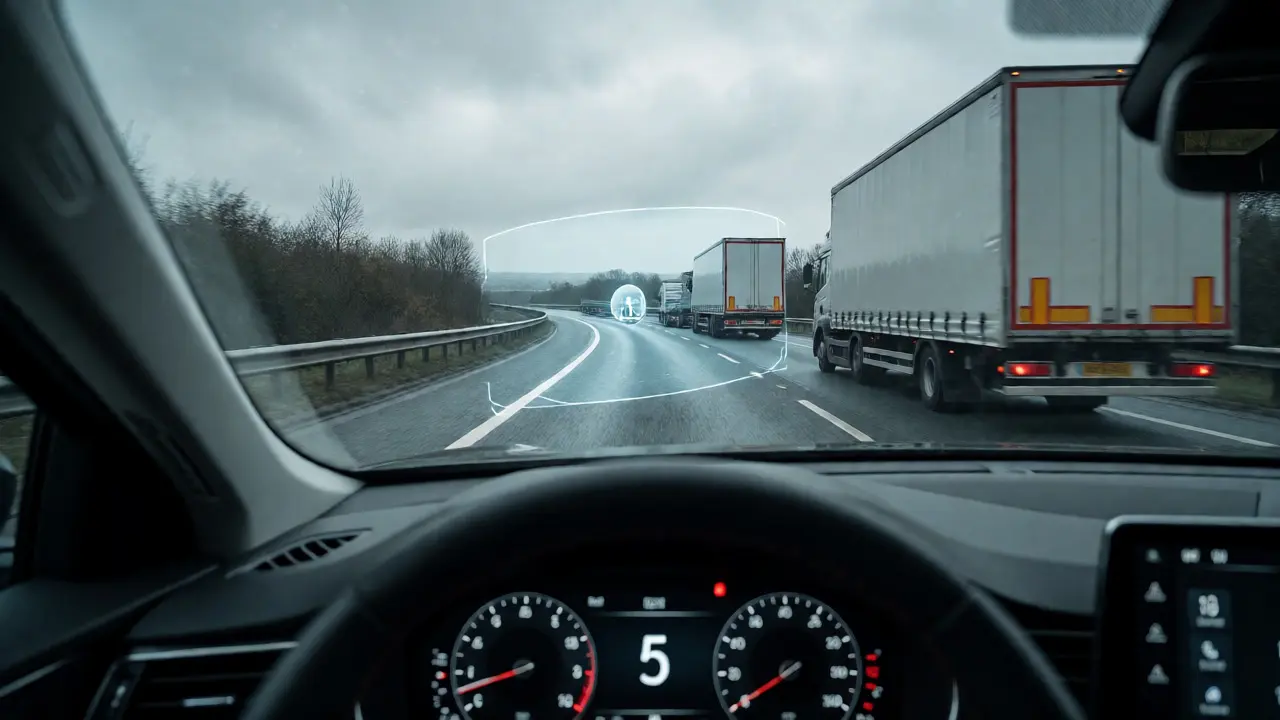
You’re stuck in traffic on the M4 outside Bristol. Your car’s screen lights up with a warning: 5G connectivity has detected a stalled lorry two miles ahead, hidden behind a bend you haven’t even reached yet. You didn’t see it. Your radar didn’t pick it up because of the curve. But your car knew. This isn’t science fiction; it’s the immediate reality of what happens when we stop treating cars as isolated metal boxes and start connecting them to the world via fifth-generation networks.
If you’ve been hearing buzzwords like "V2X" or "latency reduction" thrown around at tech conferences, you might wonder if this actually changes how you drive today. The short answer is yes, but not in the way most marketing brochures suggest. We aren’t just getting faster downloads for Netflix in the back seat. We are fundamentally rewiring how Advanced Driver Assistance Systems (ADAS) perceive danger.
The Speed Trap: Why Latency Matters More Than Bandwidth
Most people think 5G is about downloading movies in seconds. For vehicles, that’s irrelevant. You don’t need to stream 4K video while braking. You need information instantly. In the automotive world, milliseconds are the difference between a near-miss and an accident. Traditional cellular networks (4G LTE) have a latency-the time it takes for data to travel from point A to point B-of around 30 to 50 milliseconds. That sounds fast until you realize that at 70 mph, your car travels roughly 1 meter every 20 milliseconds.
5G networks reduce this latency to under 1 millisecond in ideal conditions, and reliably to 1-10 milliseconds in real-world urban environments. This ultra-reliable low-latency communication (URLLC) allows a vehicle to react to external data almost instantaneously. If a pedestrian steps out from behind a parked van, their smartphone can broadcast a signal to nearby cars before you even see them. With 4G, that message might arrive too late to trigger an automatic brake intervention. With 5G, it arrives in time to save a life.
V2X Communication: Giving Cars Eyes Behind Their Heads
The biggest leap forward enabled by 5G is Vehicle-to-Everything (V2X) communication. Think of current ADAS as having excellent eyesight but no peripheral awareness beyond line-of-sight. Cameras and LiDAR sensors are powerful, but they struggle with occlusions-things blocking the view, like large trucks, hills, or sharp corners.
V2X uses 5G to create a shared digital map of the road in real-time. Here is how the ecosystem breaks down:
- Vehicle-to-Vehicle (V2V): Your car talks to other cars. If the car three lanes over slams on its brakes, yours knows immediately, even if that car is out of your visual range.
- Vehicle-to-Infrastructure (V2I): Traffic lights, road signs, and smart poles send data directly to your dashboard. Imagine knowing exactly how many seconds are left on a green light so you can adjust your speed to glide through without stopping.
- Vehicle-to-Pedestrian (V2P): Smartphones worn by cyclists or pedestrians act as beacons, alerting drivers to their presence even in poor weather or darkness.
This network effect means your car’s perception system is no longer limited by physics. It extends your sensory reach hundreds of meters ahead, creating a "digital twin" of the road environment that updates dozens of times per second.
How 5G Supercharges ADAS Performance
Advanced Driver Assistance Systems rely on sensor fusion-combining data from cameras, radar, and ultrasonic sensors to build a picture of the world. 5G adds a fourth layer: cloud-based intelligence. Because 5G offers massive bandwidth (up to 10 Gbps), vehicles can offload heavy computational tasks to edge servers located close to the highway.
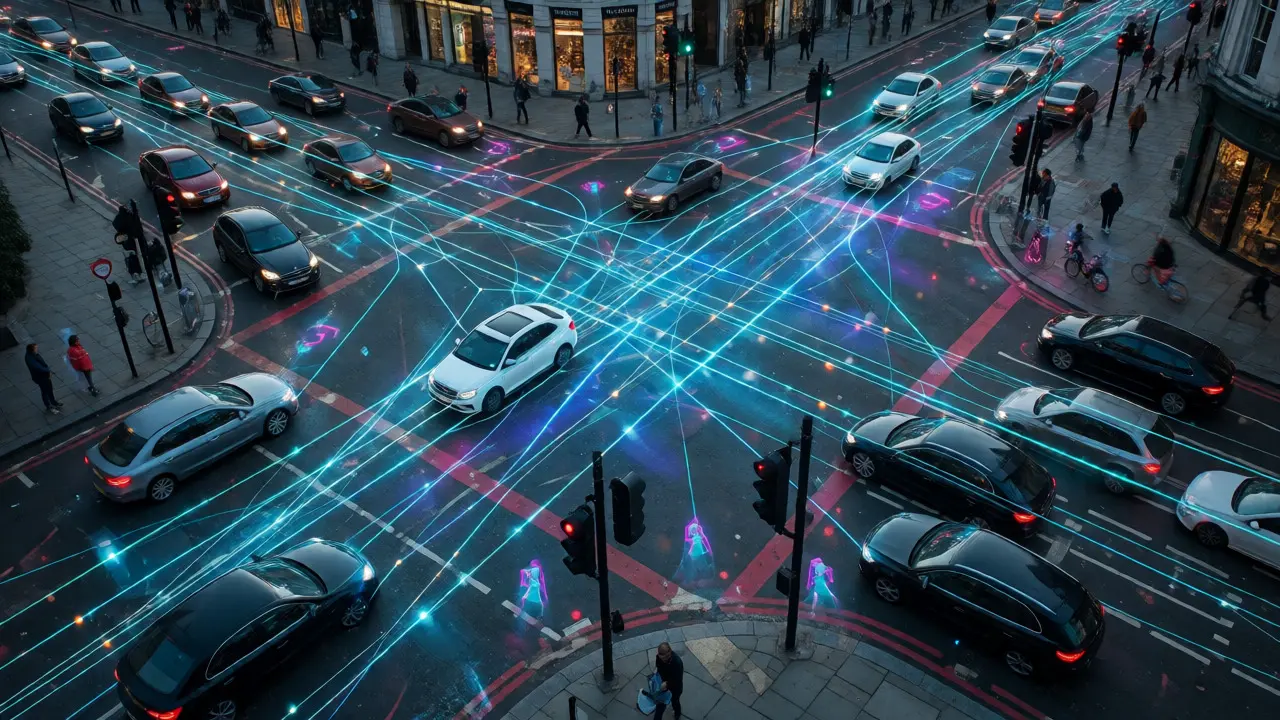
Consider a complex intersection in London during rush hour. Processing all that raw sensor data locally requires expensive, power-hungry hardware. With 5G, the car sends compressed sensor data to a nearby edge computing node. The server analyzes traffic patterns from thousands of vehicles simultaneously and sends back optimized steering or braking instructions. This reduces the load on the car’s onboard computer, allowing manufacturers to use cheaper, more energy-efficient chips while still delivering high-level autonomy.
| Feature | 4G LTE | 5G NR | Impact on Driving |
|---|---|---|---|
| Latency | 30-50 ms | 1-10 ms | Faster emergency braking response |
| Reliability | 99% | 99.999% | Consistent safety alerts in tunnels/cities |
| Connection Density | ~100k devices/km² | ~1M devices/km² | Supports dense urban traffic without lag |
| Data Rate | Up to 1 Gbps | Up to 10 Gbps | Enables HD map streaming and OTA updates |
Over-the-Air Updates and Predictive Maintenance
Beyond safety, 5G transforms ownership. Remember when updating your car’s software meant visiting a dealership for an hour? With high-speed 5G connections, manufacturers push Over-the-Air (OTA) updates seamlessly. These aren’t just bug fixes; they can unlock new features. A Tesla or BMW might receive a patch that improves lane-keeping precision or adds a new entertainment app overnight.
Predictive maintenance also gets a boost. Modern cars generate gigabytes of diagnostic data daily. 5G allows this data to be streamed continuously to the manufacturer’s cloud. Algorithms analyze engine performance, battery health, or tire pressure trends in real-time. If a component shows signs of failure, the car schedules a service appointment automatically before you even notice a strange noise. This shifts the model from reactive repair to proactive care, reducing breakdowns on motorways.
Challenges Still on the Road
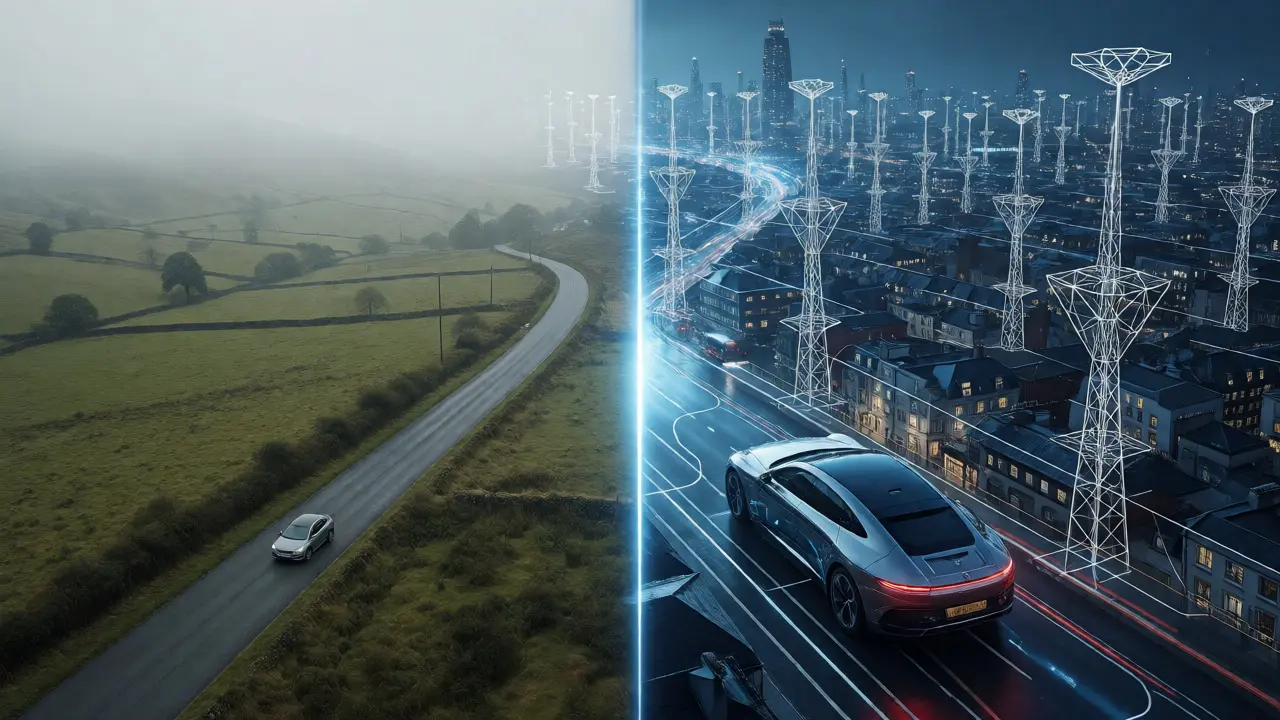
It’s not all smooth sailing. Deploying 5G infrastructure across entire countries is expensive and slow. While cities like Manchester and London have robust coverage, rural areas in Wales or Scotland may still rely on spotty 4G. This creates a "connectivity gap." If your car relies heavily on V2X data, losing signal in a tunnel could theoretically degrade certain assisted-driving features.
Furthermore, cybersecurity risks increase with connectivity. Every connected device is a potential entry point for hackers. Manufacturers must implement rigorous encryption standards to ensure that a malicious actor can’t spoof a traffic light signal or interfere with braking commands. The industry is currently standardizing these protocols under bodies like the 3GPP, ensuring that a Ford in France can securely talk to a Volkswagen in Germany.
What This Means for You Today
You don’t need to buy a self-driving robotaxi tomorrow to benefit. Many modern cars already include 5G modems as standard or optional extras. When shopping for a new vehicle, check if the infotainment system supports 5G. Look for specific ADAS packages that mention "connected services" or "cloud-based navigation." These features will only get better as the network matures.
For fleet managers, the implications are huge. Logistics companies using 5G-enabled vans can optimize routes based on live traffic data fed directly from the road, saving fuel and time. Insurance providers are also starting to offer usage-based policies where safe driving behavior, verified by connected telematics, leads to lower premiums.
Do I need a 5G subscription for my car?
Yes, typically. Just like your phone, your car needs a SIM card or eSIM with a data plan to access 5G networks. Some manufacturers bundle free data for the first few years, covering basic navigation and safety features. Premium plans might cost extra for streaming or advanced diagnostics.
Will 5G make my car fully autonomous?
Not on its own. 5G is an enabler, not the brain. Full autonomy (Level 5) requires sophisticated AI, LiDAR, cameras, and legal frameworks. 5G helps Level 3 and Level 4 systems function more safely and reliably by providing external context, but the decision-making logic remains largely onboard or in edge clouds.
Is 5G in cars safe from hacking?
Modern implementations use end-to-end encryption and secure boot processes. However, as connectivity increases, the attack surface grows. Regular OTA security patches are crucial. Always keep your car’s software updated to protect against newly discovered vulnerabilities.
Can I use 5G for Wi-Fi hotspots in the car?
Absolutely. Most 5G-enabled cars act as mobile routers, allowing passengers to connect laptops and tablets. This is particularly useful for remote work or long trips, offering speeds comparable to home broadband in many areas.
What happens if I lose 5G signal?
Your car will automatically fall back to 4G LTE. Critical safety functions like automatic emergency braking usually rely on onboard sensors (radar/cameras) rather than the network, so core safety features remain active even without internet connection. However, features like live traffic rerouting or V2X alerts will pause until signal returns.