
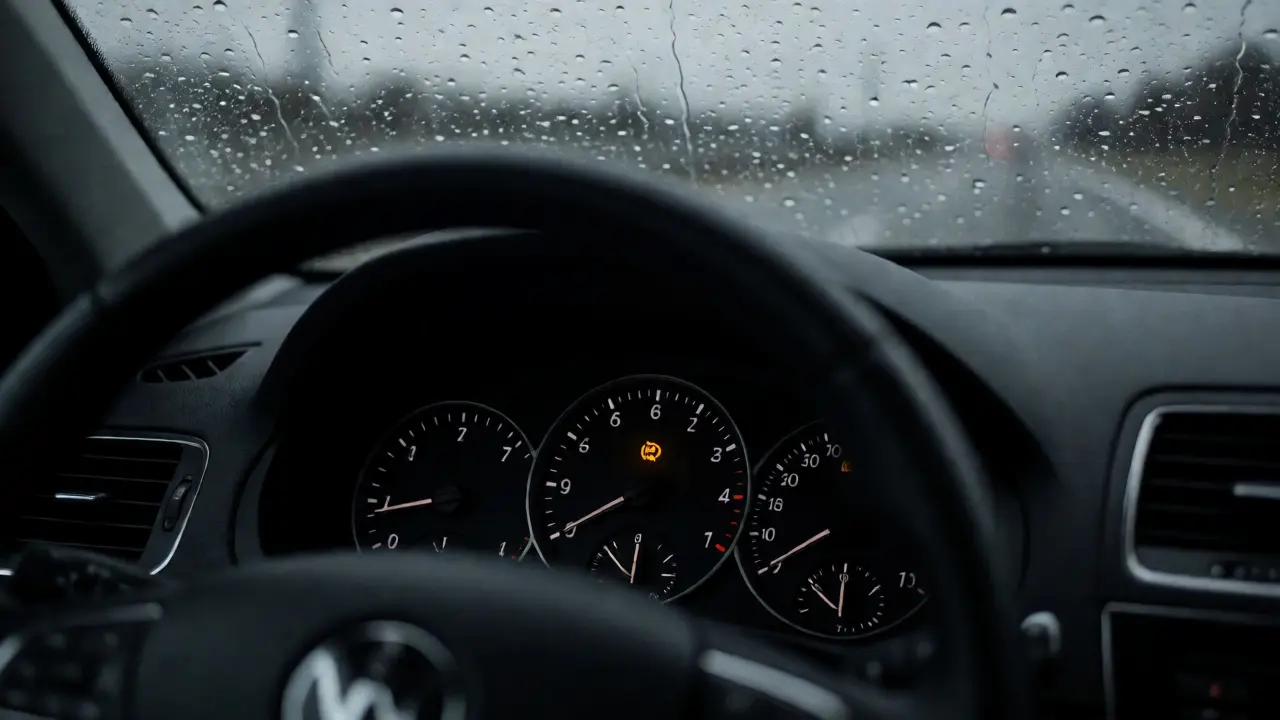
You’re driving down the M5 on a wet Tuesday morning, and suddenly that amber dashboard icon pops up. It’s not your engine check light, but it’s close enough to make your stomach drop. That little circle with ABS inside it means your Anti-lock Braking System has decided to take an unscheduled break. Here’s the good news: your regular brakes still work. You can stop your car. The bad news? If you slam on the pedals in a panic, your wheels might lock up, sending you into a skid instead of a controlled stop. So, what actually triggered this warning, and do you need to rush to a mechanic or can you fix it yourself?
Quick Summary / Key Takeaways
- Safety First: Your primary brakes remain functional even when the ABS light is on, but emergency stopping performance is reduced.
- Most Common Culprit: Dirty or faulty wheel speed sensors cause roughly 70% of ABS warning lights.
- DIY Check: Inspect fuse boxes and clean sensor connectors before assuming expensive repairs are needed.
- Professional Help: Issues with the ABS control module or pump usually require specialized diagnostic tools and expertise.
- Inspection Impact: In the UK, an illuminated ABS light is a mandatory 'fail' item during MOT testing if the system was fitted as standard.
What Is the Anti-lock Braking System Doing Anyway?
To fix the problem, you need to understand what broke. Anti-lock Braking System (ABS) is a safety feature designed to prevent your wheels from locking up during hard braking. Think of it as a rapid-fire pulse for your brakes. Instead of squeezing the caliper shut and holding it there, the system releases and reapplies pressure dozens of times per second. This allows you to steer while braking hard, which is crucial when avoiding obstacles on slick roads.
The brain behind this operation is the ABS Control Module. This electronic unit monitors data from four key sources: the wheel speed sensors located at each corner of your vehicle. If one wheel slows down faster than the others-a sign it’s about to lock-the module triggers a hydraulic valve to reduce brake pressure on that specific wheel. When any part of this loop fails, the computer disables the system entirely for safety and turns on that amber light to tell you something is wrong.
The Usual Suspects: Why Does the Light Come On?
It’s rarely catastrophic failure. More often, it’s a minor interruption in communication between the sensors and the module. Here are the most frequent reasons your ABS light stays lit.
Faulty Wheel Speed Sensors
This is the number one reason. Each wheel has a small sensor reading a toothed ring attached to the axle or hub. These sensors are exposed to road grime, brake dust, and water. Over time, magnetic debris builds up on the sensor tip, blocking its ability to read the teeth accurately. Or, the wiring harness leading from the sensor to the main body gets chafed by suspension movement. A broken wire means no signal, and no signal means the ABS gives up.
Blown Fuses
Before blaming complex electronics, check the simple stuff. The ABS system draws significant power when activating the pump. If the fuse protecting this circuit blows, the entire system shuts down. This happens occasionally due to age, vibration, or a short circuit elsewhere in the wiring. It’s a cheap and quick fix, so always start here.
Low Brake Fluid Level
While less common, some vehicles link the brake fluid level sensor to the ABS warning light. If your master cylinder reservoir drops below a certain point-perhaps due to worn brake pads lowering the fluid line-the system may interpret this as a fault. Top up the fluid with the correct DOT specification (usually DOT 4 for modern cars) and see if the light resets after a few drive cycles.
Defective ABS Pump or Valve Block
If the sensors and fuses are fine, the issue might be mechanical. The ABS pump contains electric motors and solenoid valves that physically modulate brake pressure. These components wear out. If a valve sticks open or closed, or the motor seizes, the system detects the anomaly and throws a code. This is a more expensive repair because the pump is often integrated with the module, requiring a replacement assembly.
Diagnosing the Issue Without Guesswork
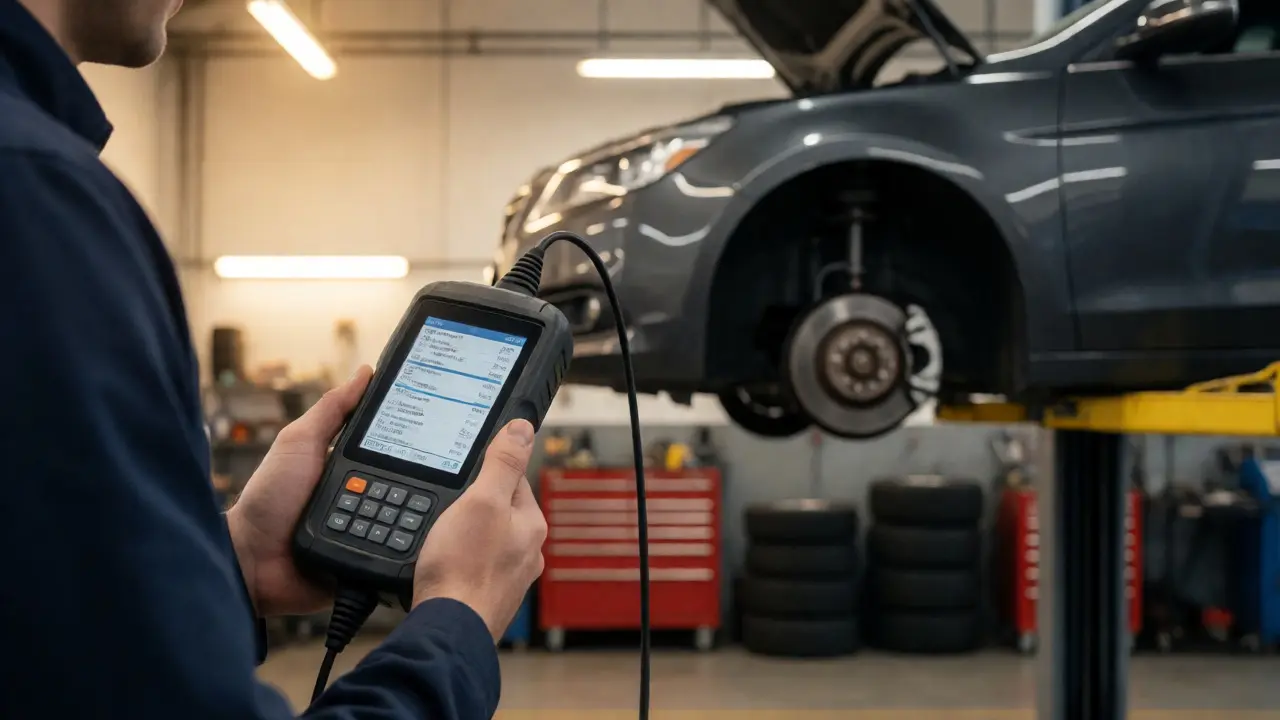
Modern cars don’t just turn on a light; they store specific error codes. While older vehicles might have flashed blink codes via the dashboard, most post-2000 models require an OBD-II scanner capable of reading chassis systems. Standard cheap scanners often only read engine faults. You need a tool that supports ABS/SRS protocols.
When you plug in a compatible scanner, look for codes like C0031 (Left Front Wheel Speed Sensor Circuit). This tells you exactly which corner to investigate. If you get multiple sensor codes simultaneously, suspect a shared ground wire or a failing ABS module rather than four simultaneous sensor failures. That would be statistically unlikely.
| Fault Code Pattern | Likely Cause | Difficulty Level |
|---|---|---|
| C00xx (Specific Wheel) | Faulty sensor, dirty tone ring, or broken wiring at that wheel. | Easy/Medium |
| C1xxx (Pump/Motor) | Failed ABS pump motor or relay stuck. | Hard |
| C2xxx (Valve Solenoids) | Stuck or shorted hydraulic valve within the block. | Hard |
| Uxxxx (Communication) | Loss of communication between ABS module and ECU (CAN bus issue). | Medium/Hard |
Step-by-Step Fixes You Can Try Yourself
Don’t let a garage bill scare you off trying basic diagnostics first. Many ABS issues stem from accessible components.
1. Check the Fuse Box
Locate your owner’s manual and find the fuse diagram. Look for a fuse labeled “ABS,” “ESP,” or “Brake.” Pull it out and inspect the metal filament. If it’s broken, replace it with one of the same amperage. If it blows again immediately, you have a short circuit, likely in the wiring harness.
2. Clean the Wheel Speed Sensors
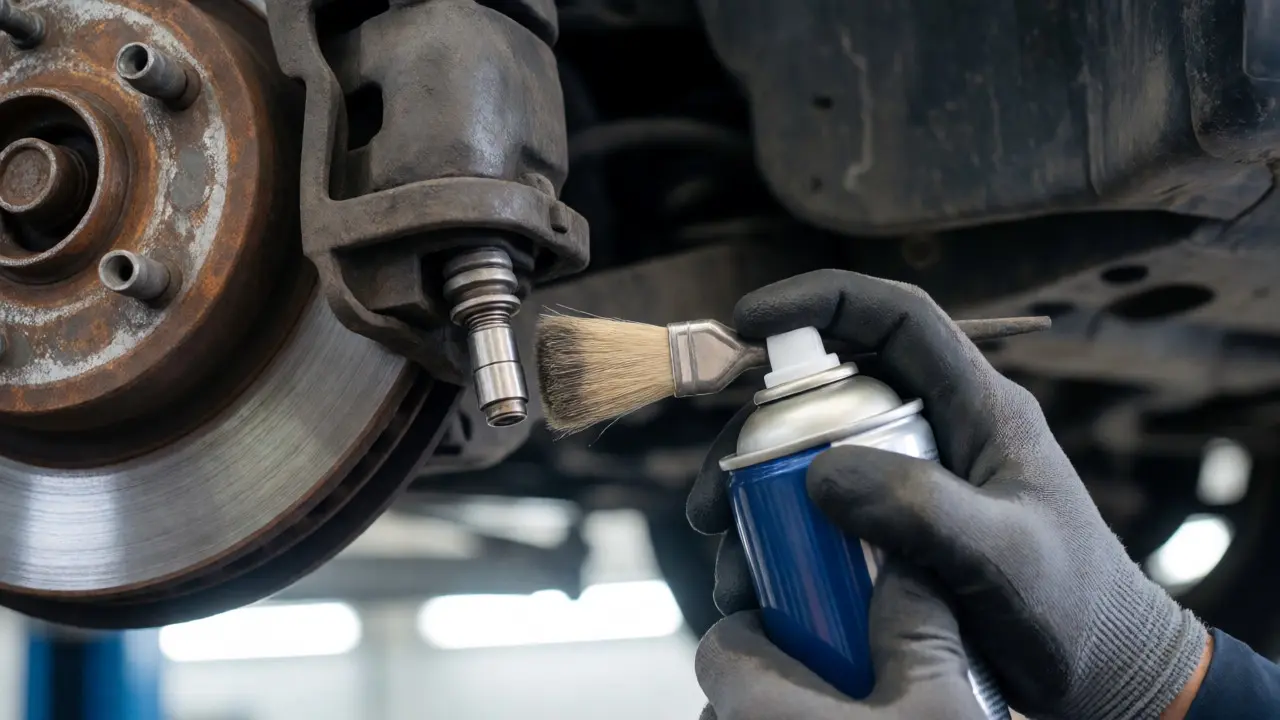
This is a classic DIY job. Jack up the affected corner (based on your scan tool data), remove the wheel, and locate the sensor. It’s usually held by a single bolt near the brake disc. Unplug the connector. Use a non-metallic brush and brake cleaner to gently wipe the sensor tip. Do not use steel wool or screwdrivers, as you can damage the delicate magnetic core. Reinstall and test drive. Often, this clears the light after a few miles of driving.
3. Inspect Wiring Harnesses
Follow the wire from the sensor back toward the chassis. Look for spots where the insulation is rubbed through against the suspension arm or subframe. Tape up minor nicks with electrical tape. If wires are severed, you’ll need soldering skills or a crimp connector kit to repair them.
4. Reset the System
Sometimes, clearing the code isn’t enough. After fixing a sensor, disconnect the negative terminal of your car battery for 15 minutes. This drains residual power from the capacitors in the ABS module, forcing a full reset upon reconnection. Drive the car for a few miles; the light should stay off if the fix worked.
When to Call a Professional Mechanic
If cleaning sensors and checking fuses doesn’t solve it, you’re likely dealing with internal component failure. Replacing an ABS Control Unit often requires programming. New modules come blank and must be coded to match your vehicle’s VIN and configuration using manufacturer-specific software. A generic auto-parts store swap won’t work without this step.
Similarly, bleeding air from the hydraulic lines after replacing the pump is tricky. Air trapped in the ABS block causes spongy brakes and persistent errors. Specialized scan tools can run automated bleed procedures, cycling the pumps and valves to push air out. Without this equipment, you risk leaving air bubbles in the system, compromising brake feel.
Related Safety Systems to Check
Your ABS doesn’t work in isolation. It shares data with other stability features. If the ABS light is on, you might also see icons for Electronic Stability Control (ESC) or Traction Control System (TCS). Since these systems rely on the same wheel speed data, a single sensor failure disables all three. Don’t ignore the ESC light thinking it’s separate; fixing the ABS root cause will usually clear the others too.
MOT and Insurance Implications in the UK
If you live in the UK, an illuminated ABS warning light is a serious matter for your MOT test. As long as the vehicle was originally equipped with ABS, a failed system results in a major defect classification, meaning an automatic fail. You cannot pass until the light is extinguished and the system passes a functional check.
Regarding insurance, you generally don’t need to declare a faulty ABS unless you’re modifying the vehicle or if the fault affects braking distance significantly. However, if you claim for an accident caused by a skid, an insurer might argue contributory negligence if you drove with a known safety defect. Keep receipts for repairs to prove you addressed the issue promptly.
Can I drive with the ABS light on?
Yes, but with caution. Your conventional hydraulic brakes still function normally. However, you lose the anti-lock feature, meaning wheels can lock during hard stops, especially on wet or icy surfaces. Avoid aggressive driving and increase following distances until repaired.
How much does it cost to fix an ABS warning light?
Costs vary widely. Cleaning a sensor might cost £0 if you do it yourself. Replacing a single wheel speed sensor typically ranges from £50 to £150 including labor. Replacing the ABS pump/module can cost between £300 and £800 depending on the vehicle make and whether programming is required.
Will the ABS light go off by itself?
Sometimes. If the fault was intermittent (like a loose connection that temporarily made contact), the light may turn off after several successful ignition cycles. However, if the component is genuinely broken, the light will remain on permanently until the underlying issue is resolved.
Does low brake fluid cause the ABS light?
In many modern vehicles, yes. The ABS module monitors fluid levels to ensure proper hydraulic pressure. If the level is low, the system assumes a leak or severe pad wear and disables ABS as a precaution. Always check the master cylinder reservoir first.
Why did my ABS light come on after new tires?
This often happens if tire sizes differ slightly from the original spec, causing wheel rotation discrepancies. Alternatively, technicians may have damaged a wheel speed sensor or bent the tone ring during tire fitting. Check the sensors at the corners where tires were changed.
Comments
Mark Harvey
good read saved me a trip to the shop last week turned out it was just a dirty sensor on my rear left wheel cleaned it with brake cleaner and light went off after a few miles
September 6, 2026 at 04:05
Anthony Miller
It is profoundly irritating how many individuals continue to operate vehicles with compromised safety systems simply because they lack the discipline to perform basic maintenance. One must consider the moral implication of driving a car where the primary anti-skid mechanism has failed due to negligence rather than mechanical inevitability. It is not merely an inconvenience; it is a reckless endangerment of oneself and every other motorist sharing the roadway. If one cannot spare fifteen minutes to inspect a fuse or clean a sensor, perhaps one should reconsider their fitness to operate heavy machinery in public spaces.
September 6, 2026 at 15:44
Susan Cole
I appreciate the clarity on the MOT implications. I had no idea it was an automatic fail item. I will be checking my fluid levels tonight.
September 6, 2026 at 22:25
alex kobri
there is something philosophical about the abs light really
it represents the boundary between control and chaos
when that light comes on you are reminded that your safety net is electronic and fragile
i think people underestimate the psychological weight of knowing your brakes might lock up unexpectedly
it changes how you drive
you become more cautious more aware
maybe that is the real fix
not the sensor but the mindset
September 7, 2026 at 15:17
Elizabeth Brooks
great info here but i wanted to add that sometimes the tone ring itself gets damaged or has metal shavings stuck to it which mimics a bad sensor so always check the toothed ring when you have the wheel off its easy to miss if you only look at the sensor tip also some cars need a specific scan tool to reset the light even after repair dont assume disconnecting battery works for all makes especially newer german cars
September 8, 2026 at 14:45
Amara Akbar
Thank you for highlighting the distinction between regular braking and ABS functionality. It is crucial for drivers to understand that while the vehicle remains stoppable, the loss of modulation during emergency stops significantly alters stopping distances. For those attempting DIY repairs, please remember to document your steps carefully, as reassembly errors can lead to further complications. You are doing well by taking proactive measures.
September 8, 2026 at 21:47
Quintin Franzese
Oh, fantastic. Another reason why modern cars are essentially rolling computers that hate us. I guess I'll just keep my old truck with drum brakes and hope for the best. At least when my truck breaks, it's obvious because smoke comes out. With this, it's just a little amber eye judging you silently from the dashboard.
September 10, 2026 at 21:38
Tamara Miller
This article is... adequate, I suppose. However, it fails to adequately address the sheer incompetence of modern automotive manufacturing standards. Why must we rely on such delicate sensors? Why couldn't engineers design a system that doesn't fail because of a little road grime? It is frankly insulting to the consumer's intelligence and wallet. We pay thousands for these features only to have them break down due to minor environmental factors. It reflects poorly on the entire industry's commitment to durability.
September 11, 2026 at 05:56
Deb Kortyna, MBA
The financial implications outlined herein are indeed concerning. A replacement ABS pump assembly costing upwards of eight hundred pounds is a significant expenditure for the average household budget. Furthermore, the mandatory nature of the MOT inspection transforms what might otherwise be a deferred maintenance issue into an immediate financial burden. One must also consider the potential insurance ramifications, however subtle, regarding contributory negligence. It is imperative that vehicle owners treat this warning light with the utmost seriousness to avoid both legal and fiscal repercussions.
September 11, 2026 at 17:36
Savara Gunn
useful tips. i tried cleaning mine myself and it worked. saved money.
September 12, 2026 at 19:33