
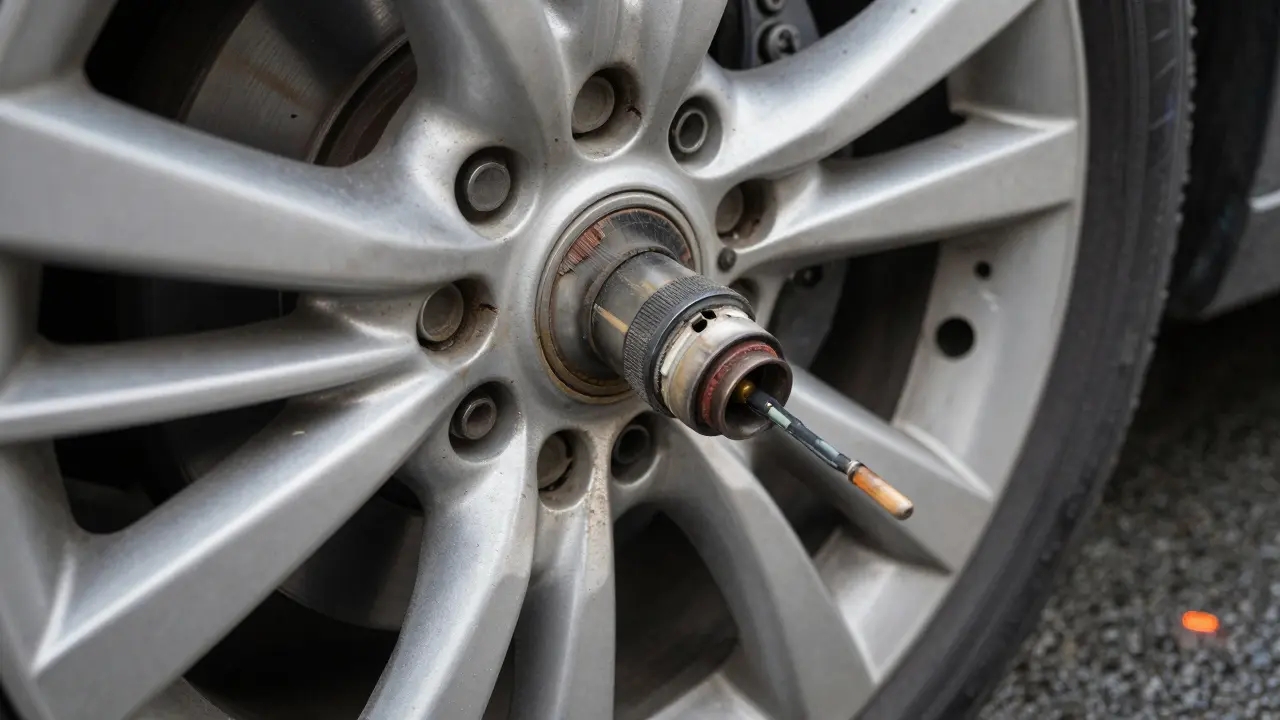
When the ABS warning light comes on, it’s not just a random glitch-it’s your car telling you something’s wrong with the anti-lock braking system. And more often than not, the issue lies with the wheel speed sensors or the ABS module. If you’ve ever slammed on the brakes in the rain and felt the pedal vibrate, you’ve experienced ABS working. But when the system fails, you lose that safety net. And that’s dangerous.
Why ABS Matters
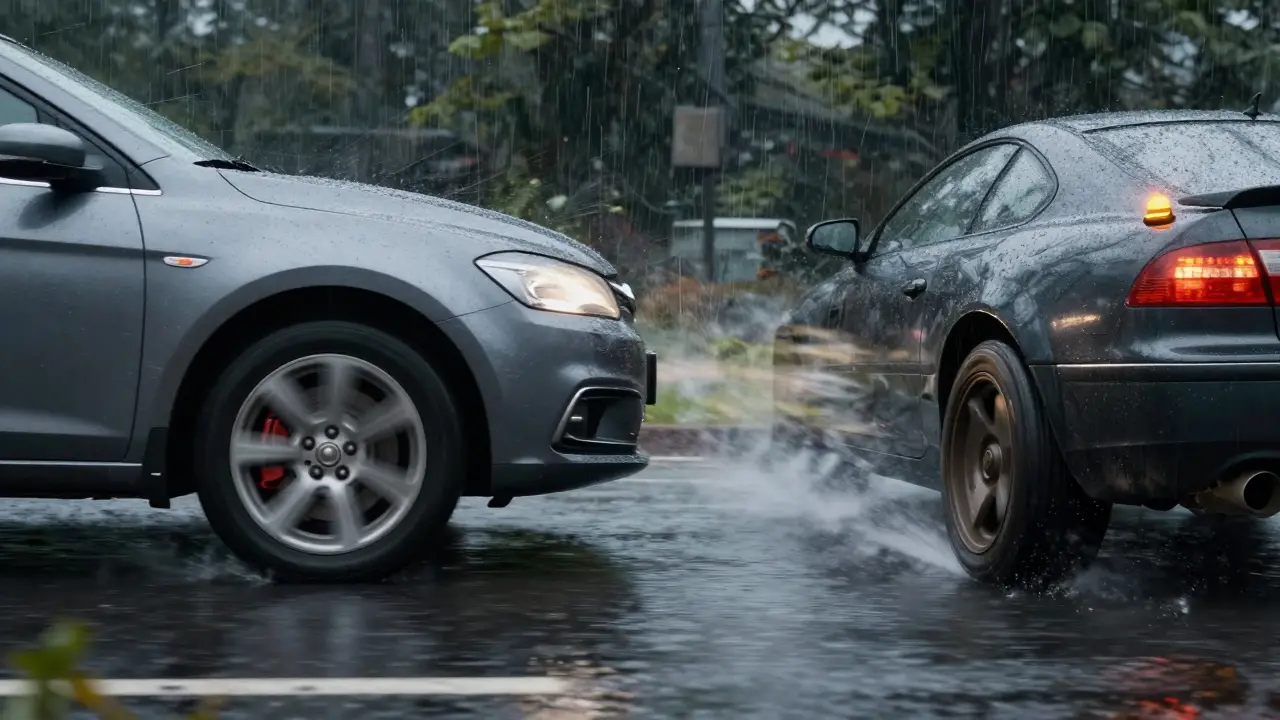
ABS stands for Anti-lock Braking System. It prevents your wheels from locking up during hard braking, especially on wet or icy roads. Without ABS, your car could skid out of control. The system uses sensors on each wheel to monitor how fast they’re spinning. If one wheel starts slowing down too fast-like it’s about to lock-the ABS module cuts brake pressure to that wheel, lets it spin again, then reapplies pressure. It does this up to 15 times per second. It’s fast, precise, and lifesaving.
But here’s the catch: if any part of this system fails, the whole thing shuts down. The warning light turns on. And you’re left with regular, non-ABS brakes. That’s still better than nothing, but you’ve lost a major safety feature.
Wheel Speed Sensors: The Eyes of the ABS
Each wheel has a small sensor, usually mounted near the hub or axle. These sensors look like tiny metal cylinders with a wire leading to the car’s computer. Inside, they use a magnet and a coil to detect how fast the toothed reluctor ring (attached to the wheel bearing) spins. As the teeth pass by, they create a tiny electrical pulse. The ABS module reads these pulses and calculates wheel speed.
These sensors are simple, but they’re also fragile. Here’s what usually goes wrong:
- Corrosion-Water and road salt build up on the sensor tip, blocking the signal. This is common in coastal areas or places that salt roads in winter.
- Broken wiring-The wire leading to the sensor can rub against sharp metal or get pinched. A frayed wire means no signal.
- Debris buildup-Metal shavings, dirt, or brake dust can stick to the sensor tip. Even a thin layer can mess with the magnetic field.
- Physical damage-If you’ve hit a curb hard or had a fender bender, the sensor might be cracked or misaligned.
One bad sensor can trigger the ABS light. But here’s the trick: the system doesn’t always tell you which wheel is faulty. That’s why you need a scan tool.
How to Diagnose a Bad Sensor
You can’t just eyeball it. You need data. A basic OBD2 scanner won’t cut it-you need one that reads ABS codes. Most auto parts stores will scan your car for free, but make sure they check the ABS system, not just the engine. Common codes you’ll see:
- C1201: Wheel Speed Sensor Circuit Malfunction (Front Left)
- C1202: Wheel Speed Sensor Circuit Malfunction (Front Right)
- C1203: Wheel Speed Sensor Circuit Malfunction (Rear Left)
- C1204: Wheel Speed Sensor Circuit Malfunction (Rear Right)
Some cars use a single code like C1210 for “ABS System Fault,” which means you’ll need to dig deeper. If the code points to one wheel, start there.
Here’s a quick test you can do yourself:
- Jack up the car and spin each wheel by hand.
- Listen for a clicking sound. That’s the sensor picking up the reluctor ring. If you hear nothing, the sensor might be dead or too far away.
- Check the sensor’s wiring. Look for cracks, fraying, or corrosion near the connector.
- Use a multimeter to test resistance. Most sensors read between 800 and 2,000 ohms. If it’s open (infinite resistance) or shorted (near zero), it’s bad.
Don’t forget to clean the sensor tip. Use a clean cloth and brake cleaner. Don’t use a wire brush-it can damage the sensor. Just wipe it gently.
The ABS Module: The Brain Behind the System
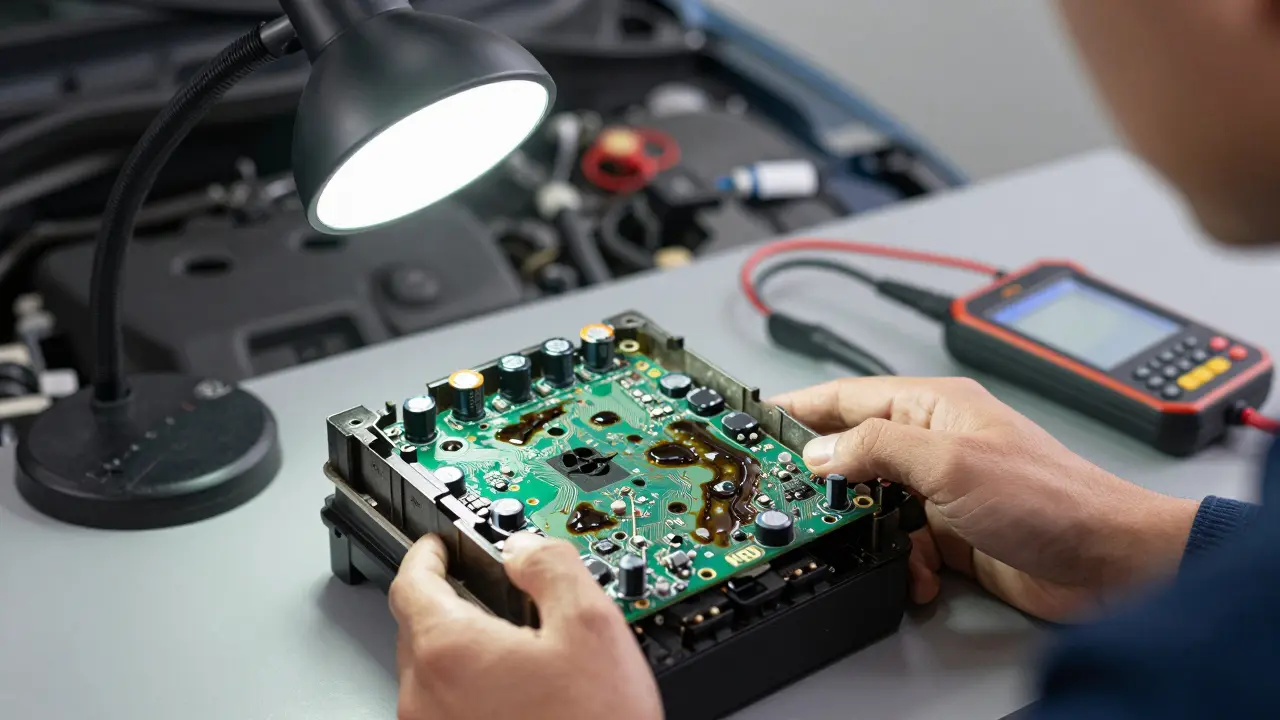
If all the sensors check out, the problem could be deeper: the ABS control module. This is the computer that processes all the sensor data and controls the brake pressure. It’s usually located near the master cylinder under the hood, sometimes inside the wheel well.
ABS modules don’t fail often, but when they do, it’s expensive. Signs of a bad module:
- ABS light stays on even after replacing all sensors
- Brakes feel spongy or unresponsive
- Brake pedal pulses without you pressing hard
- Multiple wheel speed sensor codes at once
Here’s the catch: the module can fail because of water damage. If your car has been flooded, or if the seals around the module have cracked over time, moisture gets in. Corrosion on the circuit board kills it.
Many people replace the whole module, but that’s not always necessary. Some shops offer module rebuilding. They open it up, clean the board, replace bad capacitors, and reseal it. It costs about a third of a new module. For a 2018 Toyota Corolla, a new module runs $600. A rebuilt one? Around $180.
What Happens If You Ignore It
You might think, “I drive slowly. I don’t need ABS.” But that’s not how it works. ABS doesn’t just help in emergencies-it helps in everyday situations. A sudden stop for a child running into the street. A patch of black ice on the motorway. A deer darting across the road.
Without ABS, your car can spin out. You lose steering control. In the UK, nearly 12% of winter accidents involve loss of vehicle control due to braking issues. That’s not a small number.
Also, if the ABS light is on, your car will fail its MOT. The tester will check for active ABS faults. No fix, no pass.
Costs and Fixes
Here’s what you’re likely to pay in the UK (as of 2026):
| Component | Parts Cost | Labor Cost | Total Estimate |
|---|---|---|---|
| Wheel Speed Sensor (per unit) | £40-£120 | £50-£80 | £90-£200 |
| ABS Module Replacement | £500-£900 | £100-£150 | £600-£1,050 |
| ABS Module Rebuild | £150-£250 | £80-£120 | £230-£370 |
| Wiring Repair | £15-£40 | £60-£100 | £75-£140 |
Replacing one sensor is usually the cheapest fix. If you’re handy, you can do it yourself in under an hour. Just unplug the old one, unclip it, and install the new one. No bleeding, no alignment, no special tools.
Prevention Tips
Keep your ABS system healthy:
- Wash the undercarriage twice a year, especially after winter. Salt eats sensors and wiring.
- Check brake fluid levels. Low fluid can cause air in the system, which affects ABS performance.
- Don’t ignore warning lights. Even if the brakes feel fine, the system is compromised.
- Use quality replacement parts. Cheap sensors from eBay often fail within months.
When to Call a Pro
You can test sensors and clean connections yourself. But if:
- The ABS light comes back after replacing sensors
- You get multiple sensor codes
- The brake pedal feels wrong
- You suspect water damage to the module
Then it’s time for a specialist. A good mechanic will use a diagnostic scanner that reads live data from each wheel. They’ll see if one sensor is sending erratic signals-like spikes or drops-before it fully fails. That’s how they catch problems early.
Can I drive with the ABS warning light on?
Yes, but with caution. Your regular brakes still work, but you’ve lost anti-lock protection. Avoid hard braking, especially on wet or icy roads. Get it checked as soon as possible. Driving without ABS increases your risk of losing control in an emergency.
Can a bad battery cause the ABS light to come on?
Rarely, but it’s possible. A weak battery can cause voltage fluctuations that confuse the ABS module. If the light came on after a jump-start or after replacing the battery, try resetting the system by disconnecting the battery for 15 minutes. If the light stays off, the battery was the issue. If it comes back, the problem is elsewhere.
Do all cars have the same ABS sensors?
No. Sensors vary by make, model, and year. Some use magnetic sensors, others use Hall-effect sensors. Some are integrated into the hub assembly, others are separate. Always match the part number. Using the wrong sensor can cause false codes or system failure.
How long do wheel speed sensors last?
They’re designed to last the life of the vehicle, but real-world conditions shorten that. In snowy or salty climates, they often fail between 80,000 and 120,000 miles. In dry areas, they can last over 150,000 miles. Corrosion and physical damage are the main killers.
Will replacing the ABS module fix the light?
Only if the module is the actual problem. Most of the time, it’s not. Replacing the module without checking sensors first is expensive guesswork. Always test sensors and wiring before replacing the module. A professional scan tool can show you live data from each sensor to confirm.
If your ABS light came on after a recent brake job, double-check that the sensors weren’t accidentally knocked out of position. A small misalignment can cause a fault. And if you live in Bristol, where rain and salt are common in winter, keep an eye on your undercarriage. A quick rinse every few months can save you hundreds.
Comments
Yashwanth Gouravajjula
In India, road salt isn't a thing but dust and potholes kill sensors faster than rain. Clean the sensor area with compressed air before replacing anything.
March 5, 2026 at 16:09
Janiss McCamish
I fixed my ABS light myself for $30. Just cleaned the rear right sensor with brake cleaner. No tools needed. Don't overthink it.
March 6, 2026 at 21:09
Kevin Hagerty
Wow someone actually wrote a novel about a light on the dash. Congrats. Now can we get a PhD in not crashing your car?
March 8, 2026 at 20:28
ravi kumar
My Tata Indica had ABS issues after monsoon. Water got into wiring harness near rear axle. Simple fix: seal with silicone and reroute wire. No replacement needed.
March 10, 2026 at 15:57
Kristina Kalolo
I had the same code C1204 last year. Took it to a shop that specializes in brake systems. They found a corroded connector behind the passenger wheel well. Took 20 minutes to clean.
March 12, 2026 at 14:32
Megan Blakeman
I love how something so technical can be fixed with just a cloth and some brake cleaner... it's almost poetic. Like cleaning a window to let the light back in. 🌞
March 14, 2026 at 07:58
Akhil Bellam
Most people don't even know what a reluctor ring is. You'd think a car owner should know the basics before driving. Honestly, it's a wonder anyone makes it to work alive.
March 15, 2026 at 05:22
Amber Swartz
I had my ABS light on for 8 months. I ignored it. Then one rainy night, I had to swerve. The car went sideways like a drunk hockey puck. I cried. Then I fixed it.
March 15, 2026 at 08:59
Robert Byrne
You're all missing the point. The real issue is that manufacturers design these systems to fail. They know you'll pay for a $600 module instead of a $40 sensor. It's corporate greed.
March 16, 2026 at 10:53
Meredith Howard
I appreciate the depth of this guide. It's rare to see such careful attention to technical detail without overwhelming the reader. Thank you for taking the time to explain not just what to do, but why it matters. This is the kind of information that builds trust in communities.
March 18, 2026 at 05:48
Pamela Tanner
Always check the wiring harness routing. Many cars have the sensor wires running along sharp metal edges. A few inches of heat-shrink tubing and a zip tie can prevent a $200 repair down the line.
March 18, 2026 at 22:55
Richard H
If you're driving a foreign car and your ABS is acting up, it's probably because you didn't get it serviced at the dealership. American cars don't have these problems. Just sayin'.
March 19, 2026 at 09:24