
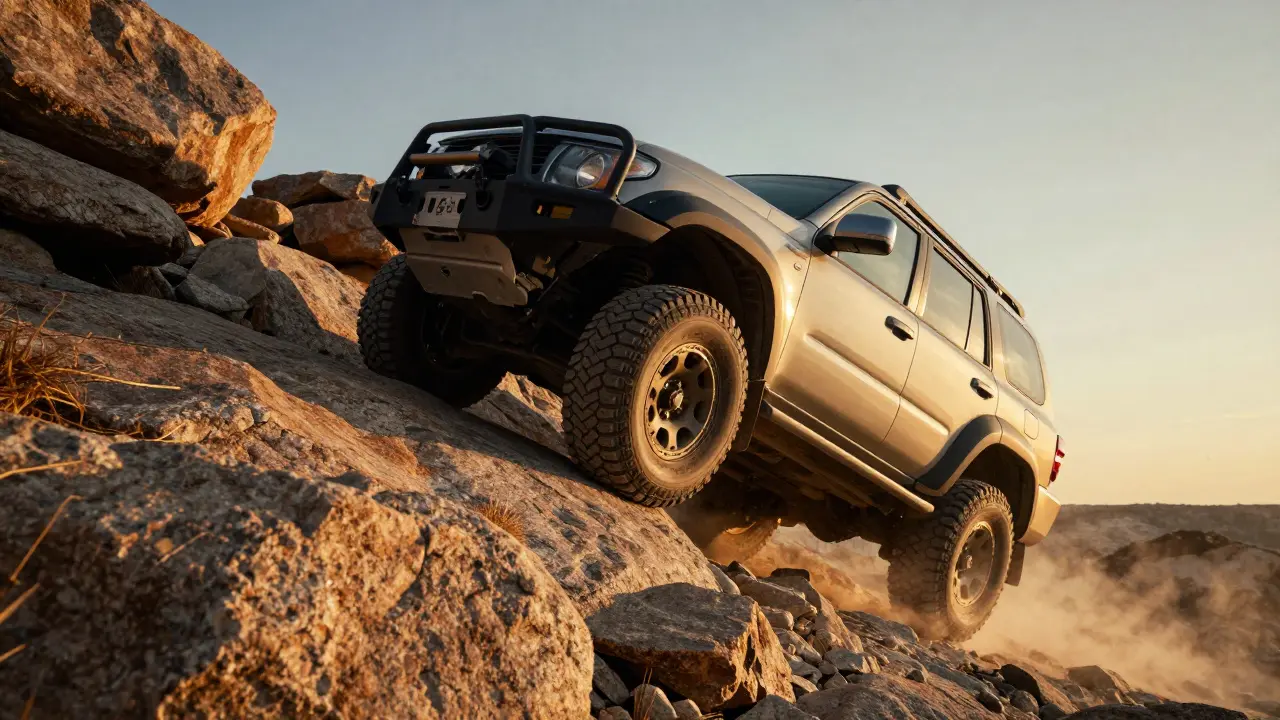
You pack the tent, load the cooler, and check your map. The trailhead is three miles away, but the first mile looks like a rocky washboard road that would rattle the teeth out of a sedan. This is where the difference between a city crossover and a true adventure SUV is a vehicle engineered for off-road capability and rugged terrain exploration becomes clear. You don’t just want to look tough; you need to actually get there.
In 2026, the market is flooded with vehicles claiming to be "off-road ready." But marketing speak doesn’t help when you’re stuck on a steep incline or bottoming out on a granite slab. To explore confidently, you need to understand the mechanical realities behind the badges. It’s not about horsepower alone. It’s about geometry, traction management, and durability.
The Geometry of Getting Stuck (And Not Staying There)
Before we talk about engines or transmissions, we have to talk about angles. If your vehicle can’t physically fit over an obstacle without scraping its undercarriage, no amount of torque will save you. Three numbers matter most here: approach, departure, and breakover angles.
- Approach Angle: The maximum slope you can climb before the front bumper hits the ground. A good adventure SUV has an approach angle of at least 30 degrees. Anything less means you’ll be kissing rocks with your grille.
- Departure Angle: How steep a hill you can descend before the rear bumper drags. This is crucial for exiting campsites or steep trails.
- Breakover Angle: The angle of the roof relative to the ground when the front and rear wheels are on different levels. A low breakover angle means you’ll high-center on ridges.
Ground clearance is the other half of this equation. For serious exploring, you want at least 9 inches of clearance. Many modern crossovers sit at 6 or 7 inches. That extra inch or two is the difference between crawling over a log and getting hung up on it. When shopping, look for models that offer factory skid plates. These protect your oil pan, fuel tank, and transfer case from sharp rocks. Without them, one bad rock hit could leave you stranded miles from civilization.
Traction Systems: Beyond Basic Four-Wheel Drive
Having four wheels turning isn't enough. You need them to turn *together* and *smartly*. Modern adventure SUVs use sophisticated electronic systems to manage power distribution. Here is what you need to know about the acronyms.
Four-Wheel Drive (4WD) is a drivetrain system that powers all four wheels simultaneously for improved traction. In traditional part-time 4WD systems, you manually engage the front axle. This is great for mud and snow but dangerous on dry pavement because it causes binding in the drivetrain. Full-time 4WD allows you to drive in 4WD mode on any surface, thanks to a center differential that allows the front and rear axles to rotate at different speeds.
Then there are locking differentials. An open differential sends power to the wheel with the least resistance. If one wheel is in the air, it spins freely while the other wheel on the same axle gets zero power. A locking differential forces both wheels on an axle to turn at the same speed. This is essential for rock crawling. While many entry-level SUVs lack this feature, dedicated adventure models often come with at least one locking diff (usually the rear) as standard or optional equipment.
Electronic Limited-Slip Differentials (eLSD) are becoming common in premium brands. They use brake force to simulate a locked differential by braking the spinning wheel, forcing power to the wheel with grip. It’s not as robust as a mechanical lock, but it’s effective for moderate trails and requires less maintenance.
Engine Choices: Torque vs. Horsepower
When you’re climbing a muddy hill at 5 mph, you don’t need top-end speed. You need low-end torque. Diesel engines have long been the king of off-roading because they produce massive torque at low RPMs. However, in 2026, turbocharged gasoline engines and hybrid powertrains are closing the gap.
Turbochargers provide instant boost, giving you that punchy feel when you need to accelerate out of a rut. Hybrid systems offer an interesting advantage: electric motors provide instant torque from zero RPM. This helps you crawl over obstacles smoothly without jerking the transmission. Plus, the ability to run silently on electric power is useful for wildlife viewing or stealth camping.
However, hybrids add complexity. More electronics mean more potential points of failure in remote areas. If you plan to go truly off-grid, a simple, proven gasoline engine might be safer. Consider your typical trip length. Are you staying within a day’s drive of a town? A hybrid might work. Are you heading into the backcountry for a week? Stick to simplicity.
Comparison: Top Adventure SUVs for 2026
| Vehicle Model | Ground Clearance (inches) | Approach Angle (degrees) | Drivetrain Type | Locking Diffs Available? |
|---|---|---|---|---|
| Jeep Wrangler Rubicon | 10.8 | 44.0 | Part-time 4WD | Yes (Front & Rear) |
| Ford Bronco Badlands | 11.6 | 43.0 | Part-time 4WD | Yes (Rear Standard) |
| Toyota 4Runner TRD Pro | 9.6 | 33.0 | Full-time 4WD | No (E-KDSS only) |
| Land Rover Defender 110 | 11.5 | 38.0 | Full-time 4WD | Yes (Electronic) |
| Subaru Forester Wilderness | 9.0 | 23.0 | Symmetrical AWD | No |
Note the Subaru Forester Wilderness in the table above. It’s a capable crossover, but it lacks the extreme angles and locking diffs of the others. It’s perfect for gravel roads and light snow, but it won’t handle serious rock crawling. Choose based on your actual terrain, not just the badge.
Tires: The Most Important Upgrade
You can buy the most expensive off-road SUV money can buy, but if it comes with highway tires, you’re limited. Tires are the only thing touching the ground. They determine your traction, your comfort, and your safety.
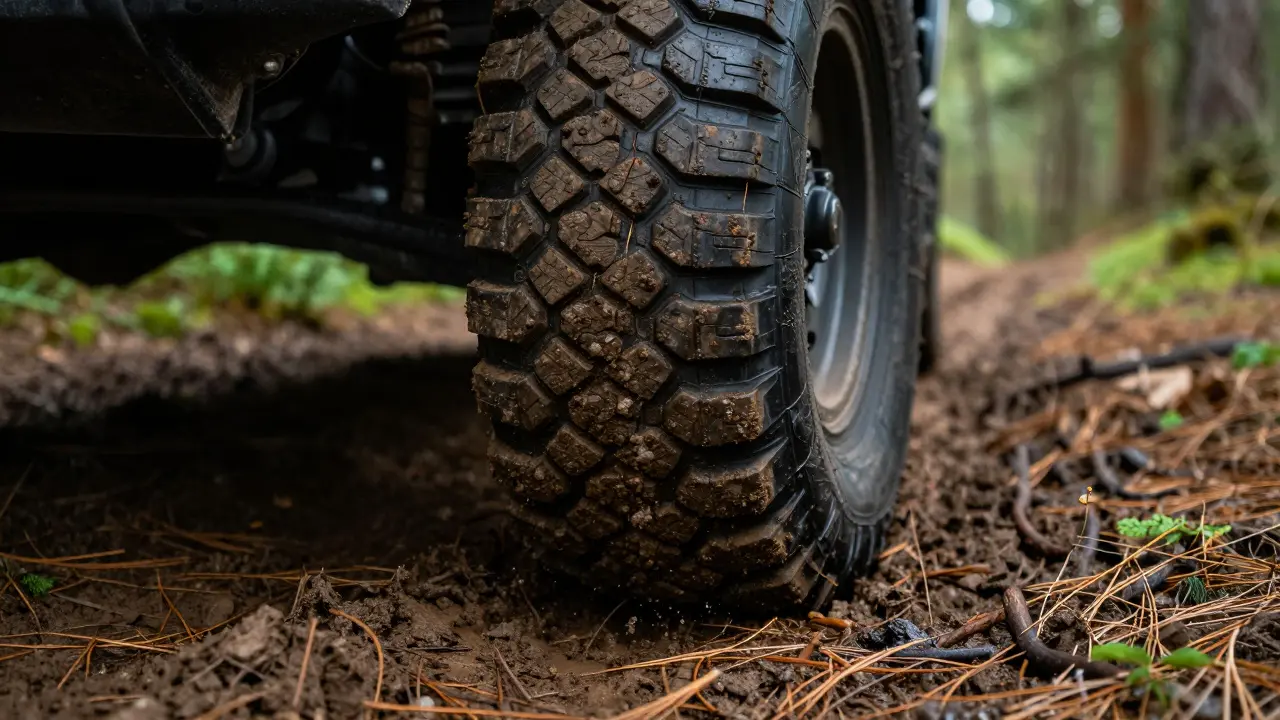
Factory tires are usually all-season touring tires designed for noise reduction and fuel economy. They have shallow tread patterns that clog up in mud and lack the sidewall strength for rocks. For adventure driving, you need All-Terrain (A/T) or Mud-Terrain (M/T) tires.
- All-Terrain (A/T): The best compromise for daily drivers. They handle pavement well enough for commuting but have deeper treads and tougher sidewalls for dirt, gravel, and light mud. Brands like BFGoodrich KO2 or Michelin LTX M/S2 are popular choices.
- Mud-Terrain (M/T): Aggressive tread blocks designed to throw mud out of the way. They excel in deep mud and loose soil but are noisy on pavement and wear out faster. Use these only if you spend more than 50% of your time off-road.
Don’t forget tire pressure. Lowering your tire pressure ("airing down") increases the contact patch, allowing the tire to conform to rocks and sand. For hard-packed dirt, drop to 25-28 PSI. For sand, go lower, around 15-18 PSI. Always carry a portable air compressor to reinflate when you return to pavement. Driving on low-pressure tires on highways can destroy your wheels.
Preparation and Safety for Remote Exploration
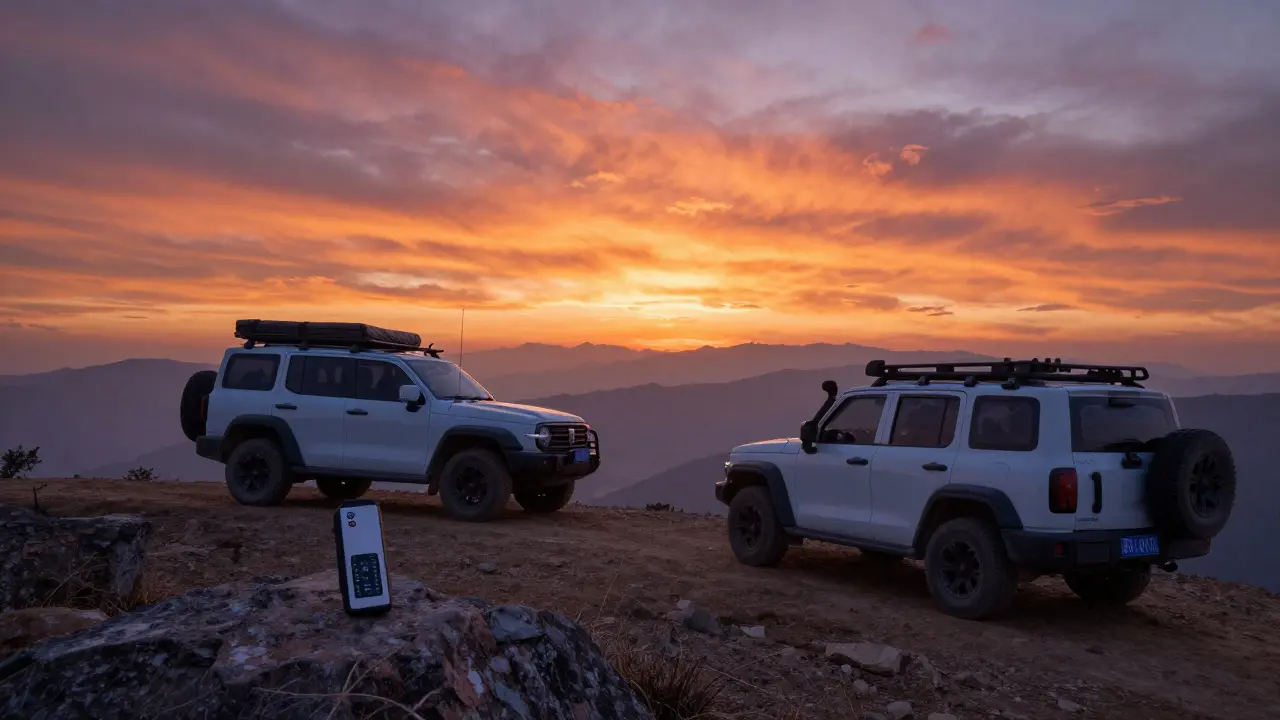
Capability means nothing if you aren’t prepared. Off-roading adds risk. Help may be hours away. Your vehicle should carry specific recovery gear.
- Recovery Straps: Kinetic ropes for dynamic pulls or static straps for winching. Never use a chain; if it breaks, it becomes a projectile.
- Shackles: Heavy-duty shackles rated higher than your vehicle’s weight. Connect your straps securely.
- Winch: A front-mounted winch with synthetic rope is invaluable for self-recovery. Ensure it’s rated for at least 1.5 times your vehicle’s gross weight.
- Communication: Cell service is unreliable in mountains and deserts. Carry a satellite messenger (like Garmin inReach) or a ham radio.
- First Aid Kit: Include trauma supplies. Bleeding control is critical in remote accidents.
Before every trip, check your fluids, tire pressure, and battery health. Tell someone your route and expected return time. The best adventure is the one where you come home safely.
Common Mistakes to Avoid
New off-roaders often make costly errors. Here are the big ones to watch for.
Overconfidence: Just because your SUV has a "Rock Mode" button doesn’t mean it’s invincible. Electronics can fail. Read the terrain before committing. If you’re unsure, walk the path first.
Ignoring Maintenance: Off-roading puts stress on components. Check your suspension bushings, ball joints, and U-joints regularly. Water crossings can damage electrical connectors. Dry them out after every wet trip.
Wrong Tire Choice: Putting mud tires on a car you mostly drive in the city is a waste of money and fuel. Match your tires to your primary use case.
Skipping Recovery Training: Watch videos, yes, but practice using your winch and straps in a safe environment. Knowing how to rig a snatch block can save your vehicle when you’re stuck.
Future Trends in Adventure Vehicles
The landscape of adventure SUVs is shifting. Electric vehicles (EVs) are entering the off-road space. Models like the Rivian R1T and the upcoming Hummer EV offer instant torque and low centers of gravity due to battery placement. This makes them surprisingly agile on trails. However, range anxiety remains a real concern. Charging infrastructure in remote areas is sparse. For now, hybrids and gas-powered trucks remain the pragmatic choice for long-distance exploring.
Another trend is modularity. Manufacturers are designing vehicles with easy-to-remove panels and standardized mounting points for accessories. This allows you to customize your rig for fishing, skiing, or camping without permanent modifications that void warranties.
What is the best budget-friendly adventure SUV?
The Toyota 4Runner SR5 and the Jeep Wrangler Sport are often considered the best entry points. They hold their value well, have vast aftermarket support, and offer solid off-road capabilities without the premium price tag of top-tier trims. Used models from 2020-2023 offer excellent value in 2026.
Do I need a locking differential for light off-roading?
For light trails, gravel roads, and snow, a locking differential is not necessary. Good all-terrain tires and a competent traction control system are sufficient. Locking diffs become essential for rock crawling, deep mud, or situations where one wheel loses all traction.
Can I take a crossover off-road?
Yes, but with limits. Crossovers like the Subaru Outback or Honda CR-V can handle maintained dirt roads, fire roads, and light snow. They lack the ground clearance, skid plate protection, and low-range gearing needed for serious technical off-roading. Stay on established paths.
How often should I service my off-road SUV?
Off-roading accelerates wear. Change your oil more frequently if you drive in dusty conditions. Inspect suspension components every 6 months or 10,000 miles. Check fluid levels in the transfer case and differentials annually. After water crossings, inspect electrical connections and brake rotors for rust.
Are electric SUVs good for off-roading?
Electric SUVs offer incredible torque and precise control, making them fun on trails. However, range limitations and lack of charging stations in remote areas make them risky for long expeditions. They are best suited for day trips near civilization or base-camping scenarios where you can charge overnight.