
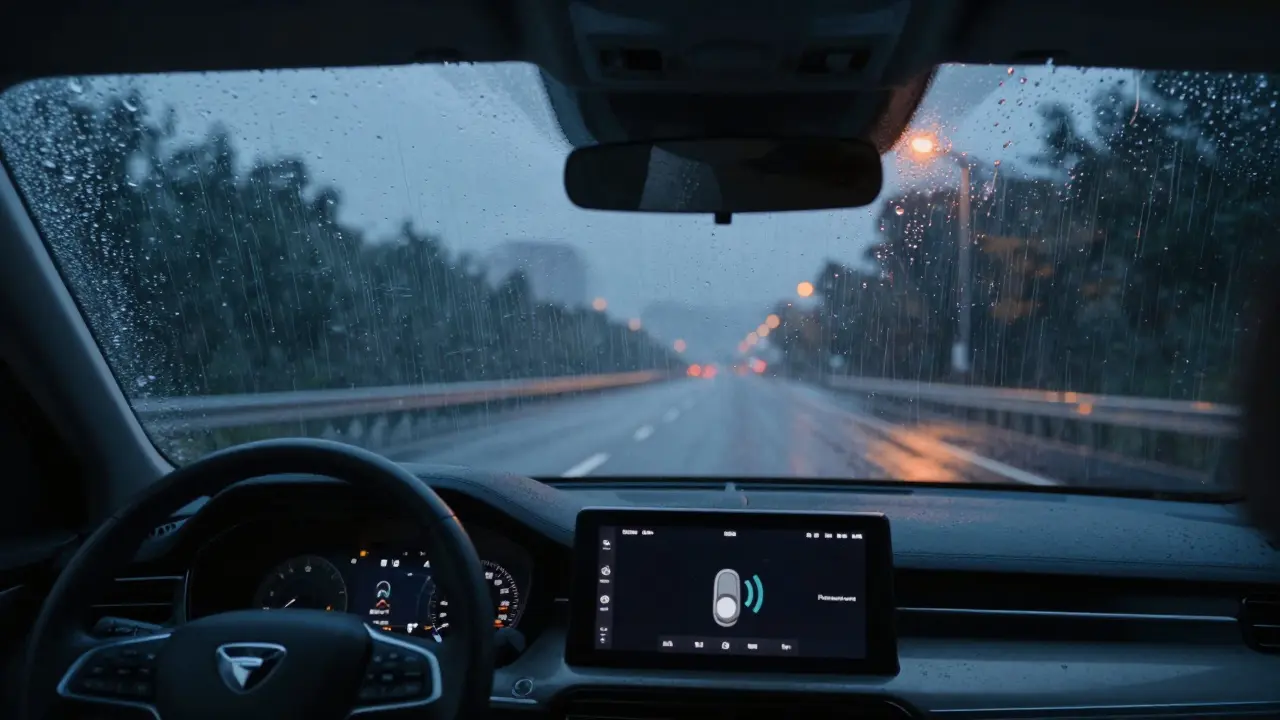
Imagine you are driving home on a dark, rainy night. Your car’s sensors are working hard, but the world outside is chaotic. Suddenly, your brakes lock up without warning. Or worse, they don’t lock up when you need them most. This is the reality of Autonomous Emergency Braking, or AEB. It is one of the most critical safety features in modern vehicles, yet it is far from perfect. Many drivers treat AEB as an autopilot that will save them from every accident. That belief can be dangerous.
AEB systems rely on cameras, radar, and sometimes lidar to detect obstacles. These sensors have blind spots and weaknesses. Heavy rain, blinding sun glare, or even a white van at night can confuse the system. Understanding these limits isn't just about tech specs; it is about keeping yourself and others safe on the road. You need to know when the car might fail so you can stay alert and take control.
How AEB Systems Actually Work
To understand why AEB fails, you first need to know how it succeeds. Most modern cars use a combination of radar and camera technology. Radar sends out radio waves that bounce back off objects. It is great at measuring distance and speed, regardless of lighting conditions. Cameras, on the other hand, "see" the world like human eyes. They identify what an object is-a car, a pedestrian, or a sign.
The computer in your car fuses data from both sources. If the radar says something is close and the camera confirms it is a vehicle, the system triggers the brakes. Some high-end models also use lidar, which uses laser pulses to create a 3D map of the surroundings. However, lidar is expensive and less common in standard consumer vehicles. The goal is redundancy. If one sensor fails, another should pick up the slack. But this fusion process is where errors often begin.
The Impact of Weather on Sensor Performance
Weather is the biggest enemy of autonomous driving aids. Rain, snow, fog, and ice do more than make the roads slippery; they actively degrade sensor performance. Here is how specific weather conditions break AEB logic:
- Heavy Rain: Water droplets scatter radar waves. This creates "noise" in the system. The car might interpret a cluster of raindrops or debris kicked up by another vehicle as a solid obstacle. This leads to phantom braking. Conversely, heavy rain can obscure camera lenses, preventing the system from identifying a stopped car ahead.
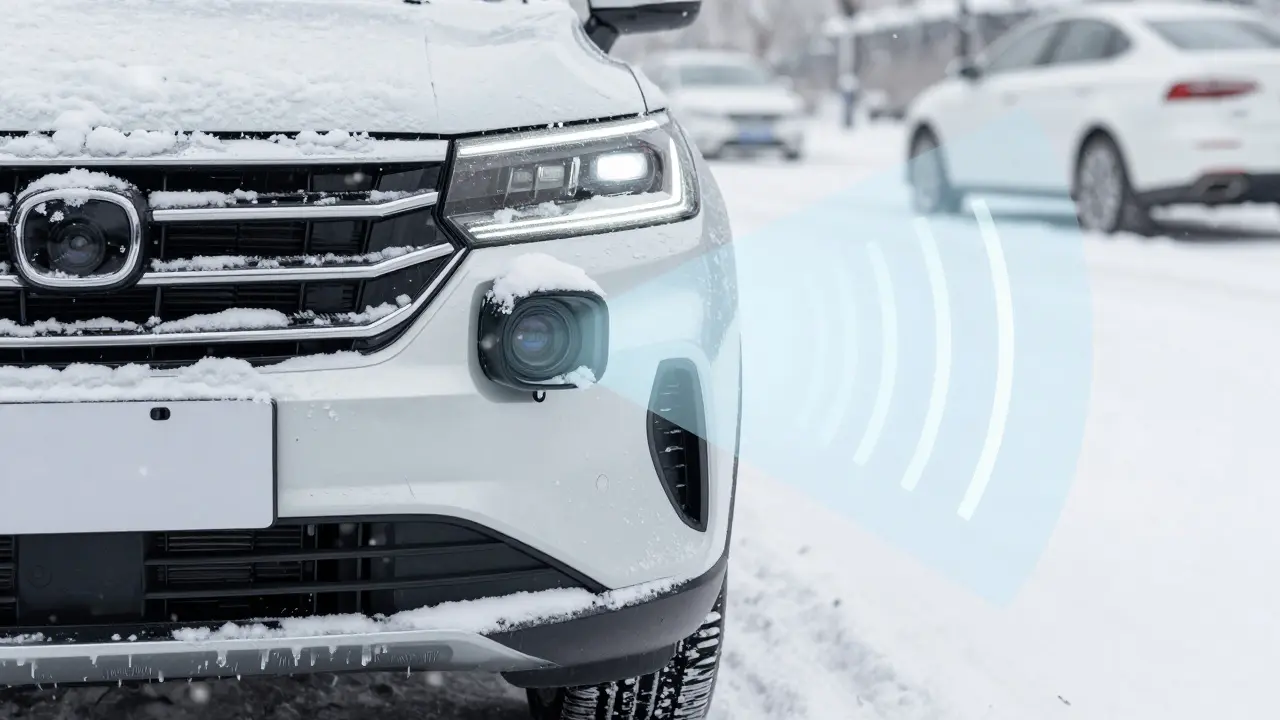
- Snow and Ice: Snow accumulation on the windshield or sensor housing blocks the camera's view entirely. Ice on the bumper can block radar signals. In freezing conditions, the contrast between a white car and a snowy road drops significantly. Cameras struggle to distinguish edges, making it harder to detect vehicles.
- Fog: Fog scatters light and radio waves. While radar penetrates fog better than visible light, dense fog still reduces its effective range. Cameras become nearly useless in thick fog, relying solely on radar. If the radar target is small or has a low reflection coefficient, the AEB system may not trigger.
If you drive in severe weather, assume your AEB is partially disabled. Increase your following distance and keep your hands firmly on the wheel. No system is designed to replace human judgment in extreme conditions.
Lighting Conditions and Visual Blind Spots
Lighting plays a crucial role in how cameras perceive the world. Since many AEB systems rely heavily on visual data to classify objects, poor lighting can lead to catastrophic failures.
Glare and Sunlight: Driving into the setting sun can blind your camera just as it blinds you. The dynamic range of automotive cameras is limited. Bright sunlight can wash out the image, causing the system to miss brake lights or pedestrians. Similarly, oncoming headlights at night can cause lens flare, reducing visibility for the sensor suite.
Nighttime Challenges: At night, cameras depend on available light. Unlit rural roads are particularly dangerous. A pedestrian wearing dark clothing against a dark background is nearly invisible to optical sensors. Radar helps here, but if the pedestrian is crossing diagonally or moving slowly, the radar might not register them as an immediate threat until it is too late.
Tunnel Transitions: Entering a tunnel causes a sudden shift in lighting. The camera needs time to adjust exposure. During this split second, the system may lose track of surrounding vehicles. Exiting a tunnel presents the same issue in reverse. These moments require heightened driver attention.
False Positives: Phantom Braking Explained
A false positive occurs when the AEB system applies the brakes when there is no actual danger. This is known as "phantom braking." It is frustrating, embarrassing, and potentially dangerous if it happens at highway speeds behind a fast-moving traffic flow.
Why does this happen? The system misinterprets static objects or environmental cues as threats. Common triggers include:
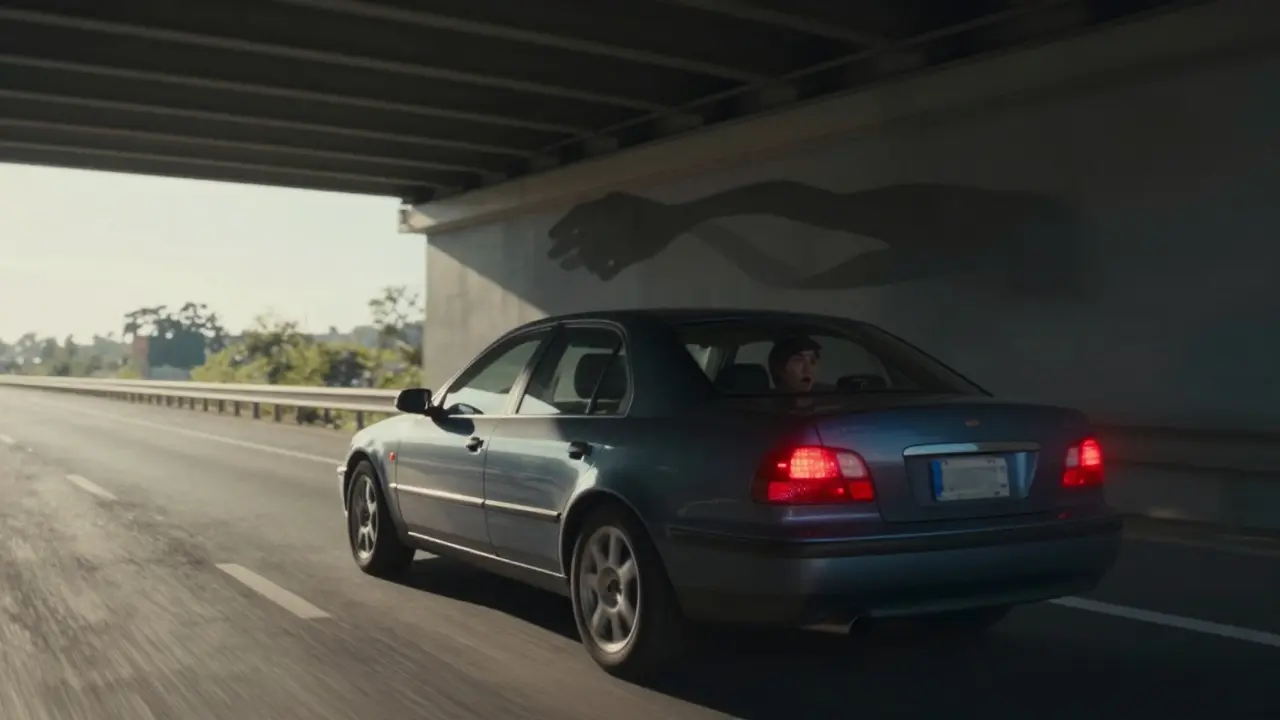
- Bridges and Overpasses: As you approach a bridge, the shadow cast by the structure can look like a large, stationary object to the camera. The radar might also reflect off the metal supports. The car thinks it is about to hit a wall and slams the brakes.
- Road Signs and Barriers: Large billboards or guardrails on the side of the road can confuse the system, especially if you are changing lanes near them. The software might think you are drifting into a collision course with the sign.
- Debris and Animals: A piece of trash blowing across the lane or a small animal darting out can trigger a hard stop. While stopping for an animal might seem good, doing so unexpectedly at 70 mph can cause a rear-end collision from the car behind you.
Manufacturers are constantly updating software to reduce false positives, but the trade-off is tricky. Making the system too sensitive causes phantom braking. Making it too insensitive risks missing real collisions. Finding the balance is an ongoing engineering challenge.
False Negatives: When the System Fails to Act
False negatives are far more dangerous than false positives. This is when the AEB system fails to detect a genuine hazard. Several scenarios commonly lead to these failures:
Cross-Traffic Collisions: Many AEB systems are optimized for frontal collisions. They are less effective at detecting vehicles crossing your path perpendicularly, such as at intersections or T-junctions. If a car runs a red light and crosses your path, your AEB might not react because the object enters the detection zone too late or moves too quickly sideways.
Pedestrians and Cyclists: Detecting vulnerable road users is difficult. Cyclists have a smaller radar cross-section than cars. Pedestrians, especially children, can be obscured by bushes or parked cars. Until the pedestrian steps fully into the open road, the system may not classify them as an imminent threat. By then, it might be too late to stop safely.
Non-Standard Vehicles: AEB systems are trained on typical cars and trucks. They may struggle with unusual shapes, such as horse-drawn carriages, construction equipment with irregular profiles, or motorcycles lying on their sides. The lack of recognizable features confuses the classification algorithms.
Driver Behavior and System Dependency
The biggest limitation of AEB is not technical; it is psychological. When drivers know their car has advanced safety features, they tend to pay less attention. This is called "risk compensation." You might text while driving, stare out the window, or follow too closely because you believe the car will save you.
AEB is a last-resort safety net, not a primary driving tool. It cannot predict complex human behaviors, such as a driver suddenly swerving into your lane. It reacts only after a collision becomes likely. If you are distracted, you lose the ability to intervene before the system engages. Human reaction times combined with proactive steering are often more effective than reactive braking alone.
Always maintain a safe following distance. Use the "three-second rule" or longer in bad weather. Keep your eyes on the road and your hands on the wheel. Treat AEB as a helpful assistant, not a replacement for your own awareness.
| Scenario | Sensor Affected | Type of Error | Risk Level |
|---|---|---|---|
| Heavy Rain/Snow | Camera & Radar | False Positive (Phantom Brake) or False Negative | High |
| Blinding Sun Glare | Camera | False Negative | Medium |
| Crossing Traffic | Radar/Camera Fusion | False Negative | Very High |
| Bridge Shadows | Camera | False Positive | Low (Annoyance) |
| Dark-Clothed Pedestrian | Camera | False Negative | Very High |
Maintaining Your Sensors for Optimal Performance
You can improve the reliability of your AEB system with simple maintenance habits. Dirty sensors are a leading cause of failure. Make sure your windshield is clean, especially around the rearview mirror where the camera is usually mounted. Mud, dirt, or snow covering the front grille or bumper can block radar signals.
Check your owner’s manual for specific cleaning instructions. Some manufacturers recommend using only water and soft cloths to avoid damaging sensor coatings. Regularly update your car’s software. Manufacturers release patches that improve object recognition and reduce false positives. Ignoring these updates means missing out on critical safety improvements.
Does AEB work in complete darkness?
AEB systems use radar, which works well in the dark. However, cameras rely on light. In complete darkness, the camera component may fail to identify objects, leaving only radar to detect hazards. Radar is good at distance but poor at classification. So, while AEB can still function, it is less reliable than in daylight. Always drive cautiously at night.
What causes phantom braking?
Phantom braking happens when the system mistakes a non-threat for an obstacle. Common causes include shadows from bridges, road signs, debris, or reflections on wet roads. The camera sees a shape, and the radar confirms proximity, triggering the brakes unnecessarily. Software updates often address these specific triggers.
Can I disable AEB in my car?
In many regions, including the EU and UK, it is illegal to permanently disable AEB due to safety regulations. Some cars allow temporary deactivation through settings menus, but it usually reactivates automatically when you restart the engine. Do not attempt to modify the system hardware, as this voids warranties and compromises safety.
How does snow affect AEB sensors?
Snow can cover camera lenses and radar housings, blocking their view. Additionally, snow reduces contrast on the road, making it harder for cameras to distinguish vehicles. If your car warns you that sensors are obstructed, clear the snow gently. Never use sharp tools to scrape sensors.
Is AEB effective against pedestrians?
Modern AEB systems are increasingly effective at detecting pedestrians, especially during the day. However, performance drops significantly at night, in poor weather, or if the pedestrian is wearing dark clothing. The system may not stop the car completely but can reduce impact speed. Always remain vigilant around people on foot.