
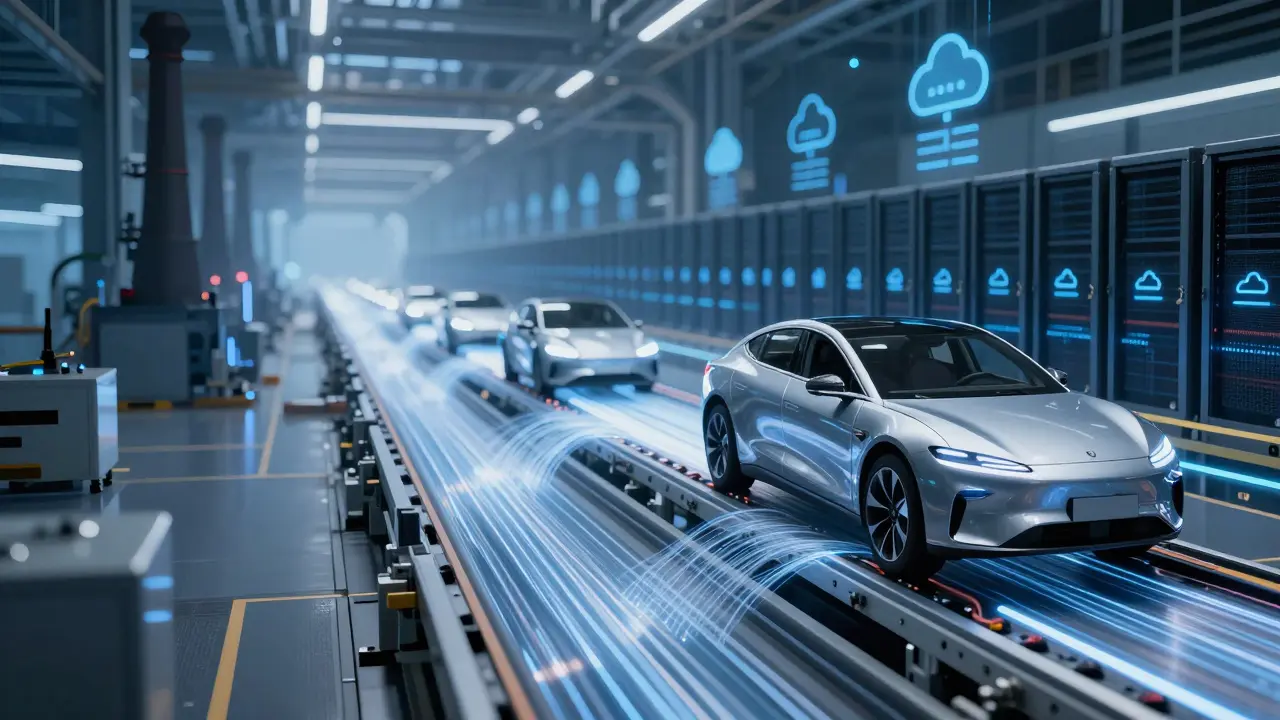
The landscape of the global automotive industry, a sector defined by mass production and brand loyalty for over a century, is undergoing its most significant structural shift since the invention of the assembly line. We are witnessing an era of aggressive industry consolidation, where traditional boundaries between manufacturers, suppliers, and tech companies are blurring. This isn't just about bigger logos; it's about survival in an economy driven by electrification and software.
For decades, the rule was simple: build cars, sell cars, repeat. Today, that model is collapsing under the weight of rising development costs, stringent emissions regulations, and the need to compete with agile technology giants. As we move through 2026, the question isn't whether automotive manufacturer mergers will happen-it's who will be left standing when the dust settles. The stakes involve everything from your next vehicle purchase to the stability of global supply chains.
Why Consolidation Is Accelerating Now
You might wonder why this wave of deals is hitting us so hard right now. The primary driver is the sheer cost of transitioning to electric vehicles (EVs). Developing a new internal combustion engine platform used to cost around $1 billion. In contrast, developing a dedicated EV platform, including battery chemistry research and high-voltage architecture, can easily exceed $5 billion. For smaller or mid-sized brands, this price tag is insurmountable without partners.
Consider the case of Stellantis, formed by the merger of Fiat Chrysler Automobiles and PSA Group. While initially celebrated as a way to share platforms across brands like Jeep, Peugeot, and Opel, even this giant faces pressure to merge further or partner with Asian tech leaders to keep pace with battery innovation. The math is brutal: if you cannot achieve economies of scale in battery procurement and software development, you become obsolete.
Furthermore, regulatory pressure plays a massive role. Governments in Europe, China, and increasingly North America have set strict deadlines for banning new gasoline car sales. These mandates force manufacturers to invest heavily in green technology immediately. Merging allows companies to pool R&D budgets, spreading the risk of these expensive transitions across a larger revenue base.
- Rising R&D Costs: EV and autonomous driving tech require billions in annual investment.
- Regulatory Deadlines: Emissions laws force rapid pivots that small players can't afford alone.
- Software Dependency: Cars are becoming computers on wheels, requiring tech talent scarce in traditional auto firms.
Key Players and Recent Moves
The recent history of automotive consolidation offers clear clues about the future. We’ve seen legacy giants try to absorb newer, more agile competitors. A prime example is the attempted acquisition of Volvo by Geely years ago, which has evolved into a complex partnership where both entities share technology while maintaining separate brand identities. This "co-opetition" model is becoming the norm rather than the exception.
In North America, the dynamic is different. Here, we see a tug-of-war between established OEMs and the rise of Tesla. While Tesla remains independent, its market dominance forces others to seek alliances. We’ve seen rumors and negotiations involving General Motors and various battery startups, aiming to secure supply chains through equity stakes rather than full mergers. This vertical integration strategy is a form of consolidation that doesn't always result in a single corporate name but creates tightly controlled ecosystems.
In Asia, the trend is toward state-backed consolidation. Chinese automakers like BYD and NIO are expanding rapidly, often acquiring European brands or technology firms to gain credibility and IP. BYD’s acquisition of semiconductor companies highlights how auto makers are no longer just buying factories; they are buying the brains behind the hardware.
| Company/Entity | Action Type | Strategic Goal | Impact on Market |
|---|---|---|---|
| Stellantis | Merge (FCA + PSA) | Platform sharing & Scale | High efficiency, brand dilution risks |
| Volkswagen Group | Partnerships (Hyundai) | Joint EV Platform Dev | Reduced R&D spend, faster rollout |
| Mercedes-Benz | Acquisition (Infineon stake) | Semiconductor Security | Supply chain resilience |
| Toyota | Joint Venture (Panasonic) | Battery Production | Vertical integration |
The Role of Software and Tech Giants
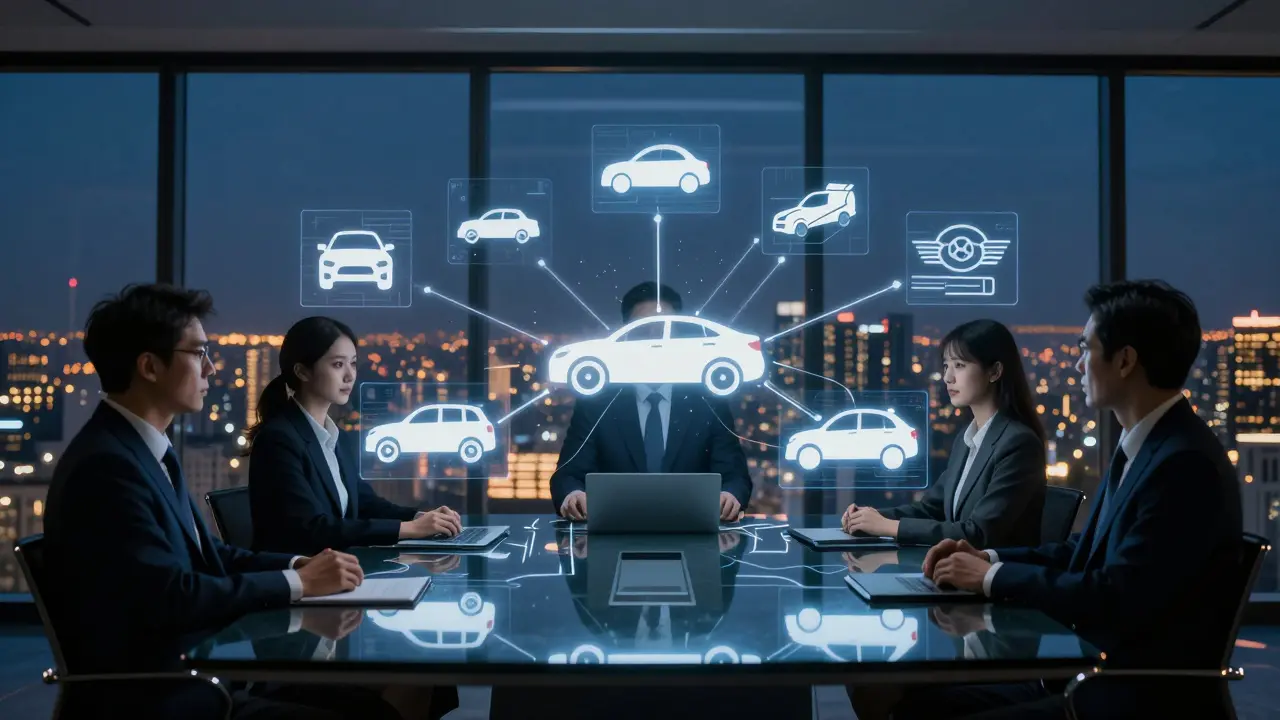
A critical aspect of modern consolidation is the influx of non-auto companies. Apple, despite pausing its own car project, continues to license its operating systems to automakers. Similarly, Microsoft and Amazon are deeply embedded in the cloud infrastructure that powers connected vehicles. This creates a new layer of dependency.
Traditional manufacturers realize they cannot build their own operating systems efficiently. Instead of hiring thousands of software engineers, many are opting to partner with or acquire tech firms specializing in AI and connectivity. This leads to hybrid entities where the car is merely the hardware shell for a software service. The value proposition shifts from horsepower to data processing power.
This shift also changes the nature of competition. It’s no longer just Ford vs. Chevy; it’s Ford’s software ecosystem vs. GM’s user experience. Consolidation here means bundling services-navigation, entertainment, insurance-into the vehicle subscription model. This recurring revenue stream is highly attractive to investors and drives further M&A activity in the digital space.
Impact on Supply Chains and Labor
When companies merge, the first thing that gets scrutinized is the supply chain. Redundancies are cut. If two merged companies each have a supplier for door handles, one contract is terminated. This increases bargaining power against suppliers but can destabilize local economies that rely on those contracts. We’ve seen this play out in regions where plant closures followed major consolidations.
Labor unions face a unique challenge. On one hand, larger companies offer more job security due to diversification. On the other, automation and software-driven efficiencies mean fewer humans are needed per vehicle produced. The workforce is shifting from assembly line mechanics to software testers and battery technicians. Reskilling programs are becoming a mandatory part of any merger agreement in regulated markets like Germany and California.
Moreover, the geographic center of gravity is shifting. Consolidation is accelerating the move of manufacturing hubs closer to battery raw material sources or major consumer markets. This reduces logistics costs but requires massive capital expenditure, further favoring large, consolidated entities over nimble startups.
What This Means for Consumers
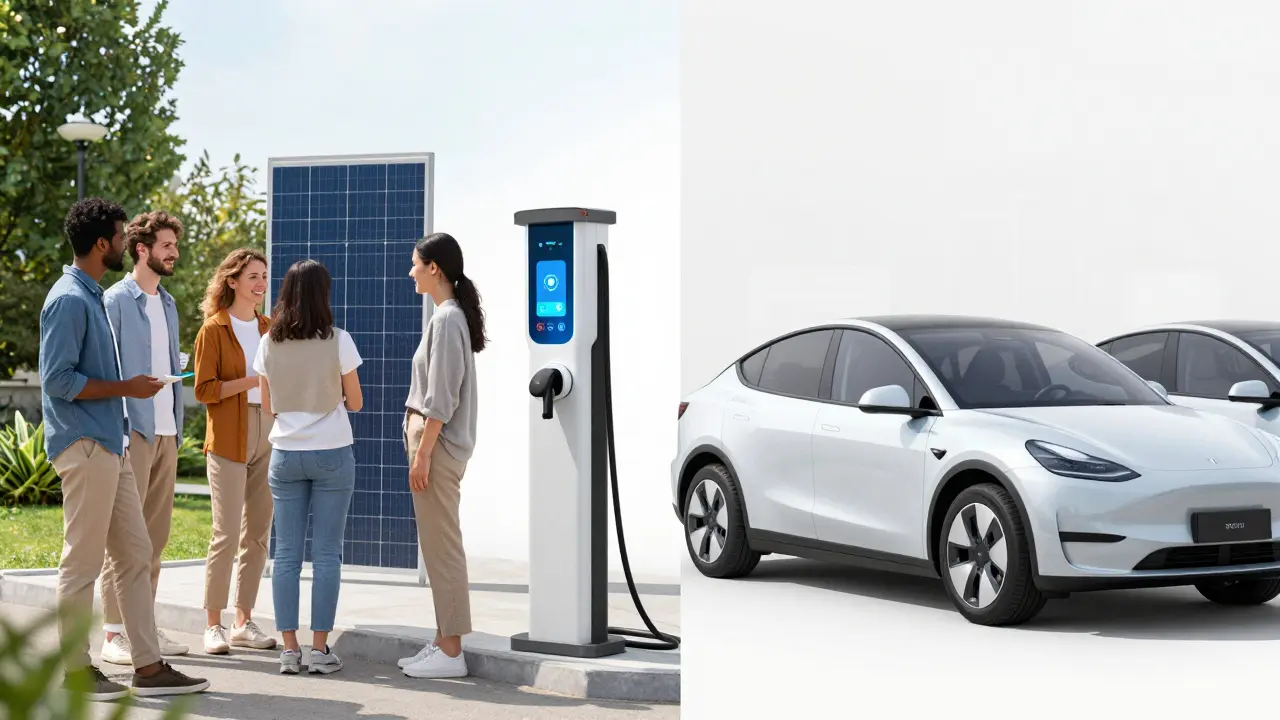
As a buyer, you might feel confused by the changing logos and overlapping models. Will your favorite brand disappear? Possibly. But the immediate impact is likely positive: faster innovation. Consolidated companies can bring new technologies to market quicker because they share platforms. An EV developed for one brand can be rebadged and sold under another within months.
However, there is a risk of reduced choice. If the market consolidates into three or four mega-corporations, distinct brand personalities may fade. You might find that a luxury sedan and a budget hatchback share the same underlying code and components, differing only in trim and marketing. This homogenization could lead to price stagnation if competition diminishes.
On the flip side, ownership costs may drop. Shared parts mean cheaper repairs and wider availability of components. Additionally, the integration of software services could make vehicles safer and more convenient, with over-the-air updates fixing issues without a trip to the dealership.
- Pros: Faster adoption of safety features, lower repair costs, better tech integration.
- Cons: Potential loss of unique brand identity, higher initial prices due to tech bundling, less competitive pricing in the long run.
Future Outlook: Beyond 2026
Looking ahead, expect consolidation to extend beyond manufacturing into the energy sector. Automakers will likely merge with or acquire renewable energy providers to create closed-loop charging networks. Imagine buying a car that comes with a solar-powered home battery and grid management software, all from one provider.
We will also see more cross-border mergers as national regulations align. The European Union’s push for unified EV standards is already prompting German and French manufacturers to look at deeper integration. In the US, federal incentives for domestic battery production are encouraging partnerships between legacy OEMs and new energy firms.
The era of the standalone car company is ending. The future belongs to mobility ecosystems-vast, interconnected networks of hardware, software, and energy services. Whether you call it a merger, a partnership, or a consortium, the result is the same: a more integrated, efficient, and technologically advanced automotive industry.
Will my favorite car brand disappear due to consolidation?
Not necessarily. Most mergers aim to preserve brand heritage while sharing underlying technology. Brands like Porsche, Audi, and Volkswagen remain distinct despite being part of the same group. However, niche brands with low sales volumes are at higher risk of being phased out or repositioned.
How do automotive mergers affect car prices?
In the short term, prices may rise due to the high cost of integrating new technologies and restructuring. In the long term, economies of scale should lower production costs, potentially leading to more affordable vehicles, especially for mass-market models.
Are electric vehicles the main reason for these mergers?
Yes, primarily. The transition to EVs requires massive investments in battery technology, charging infrastructure, and new manufacturing processes. Smaller companies cannot afford this alone, making partnerships and mergers essential for survival.
What happens to jobs during automotive consolidation?
Job losses often occur in administrative roles and redundant manufacturing plants. However, new jobs are created in software development, battery engineering, and data analysis. The net effect depends on the specific deal and the region's ability to reskill workers.
Will consolidation reduce competition in the auto market?
There is a risk of reduced competition if too few large players dominate the market. However, regulators closely monitor these deals to prevent monopolies. Additionally, new entrants from the tech sector continue to challenge traditional incumbents, keeping the market dynamic.
Comments
allison berroteran
it is fascinating to consider how the very definition of ownership is shifting in this new era where the car becomes less of a static object and more of a dynamic service platform that evolves over time through software updates and integrated energy solutions which fundamentally alters our relationship with the machine we drive every single day
May 11, 2026 at 20:07
Michael Jones
the soul of driving is being erased by spreadsheets and silicon chips we used to have cars that were expressions of engineering passion now they are just rolling data centers waiting for a subscription renewal it feels like we are losing something vital about human freedom and mechanical connection
May 13, 2026 at 07:48
Gabby Love
actually looking at the supply chain logistics it makes sense because redundancy is expensive and sharing platforms reduces waste significantly so while the brand identity might dilute the actual cost efficiency helps keep prices stable for consumers in the long run
May 14, 2026 at 23:39
Michael Thomas
US needs to stop letting foreign companies buy our tech. National security risk.
May 16, 2026 at 10:01
Abert Canada
down here in south africa we see the same trends but with different players the key is local manufacturing incentives otherwise you just become an assembly plant for global giants and lose all the skilled labor jobs that actually matter for community stability
May 16, 2026 at 16:25
Thabo mangena
I would like to draw attention to the fact that the consolidation of automotive manufacturers is not merely a business strategy but a fundamental shift in the global economic landscape that requires careful consideration of ethical implications regarding labor rights and environmental sustainability across all participating nations
May 17, 2026 at 14:58
Karl Fisher
oh please tell me you think your vintage beetle has more soul than a tesla model s plaid i bet you still use a map book and crank the window up manually how quaint truly tragic that you cannot appreciate the sheer elegance of over-the-air updates fixing your braking system remotely
May 19, 2026 at 09:48
Scott Perlman
its gonna be cool when cars fix themselves no more mechanic visits just wait for the update to download
May 20, 2026 at 10:29
Xavier Lévesque
sounds like a great plan until the server goes down and your brakes stop working then you realize you don't own your car you just rent access to it from a corporation that cares more about shareholder value than your safety
May 22, 2026 at 04:39
Sandi Johnson
sure let's just trust the algorithm to decide if my tires need replacing because nothing says freedom like having a corporate dashboard determine whether I can start my engine or not
May 23, 2026 at 08:04
Jen Kay
one must acknowledge that while the romantic notion of the independent garage mechanic is charming the reality of modern vehicle complexity demands specialized knowledge that only large consolidated entities can afford to provide thus ensuring higher safety standards even if it comes at the cost of personal autonomy
May 24, 2026 at 06:02