
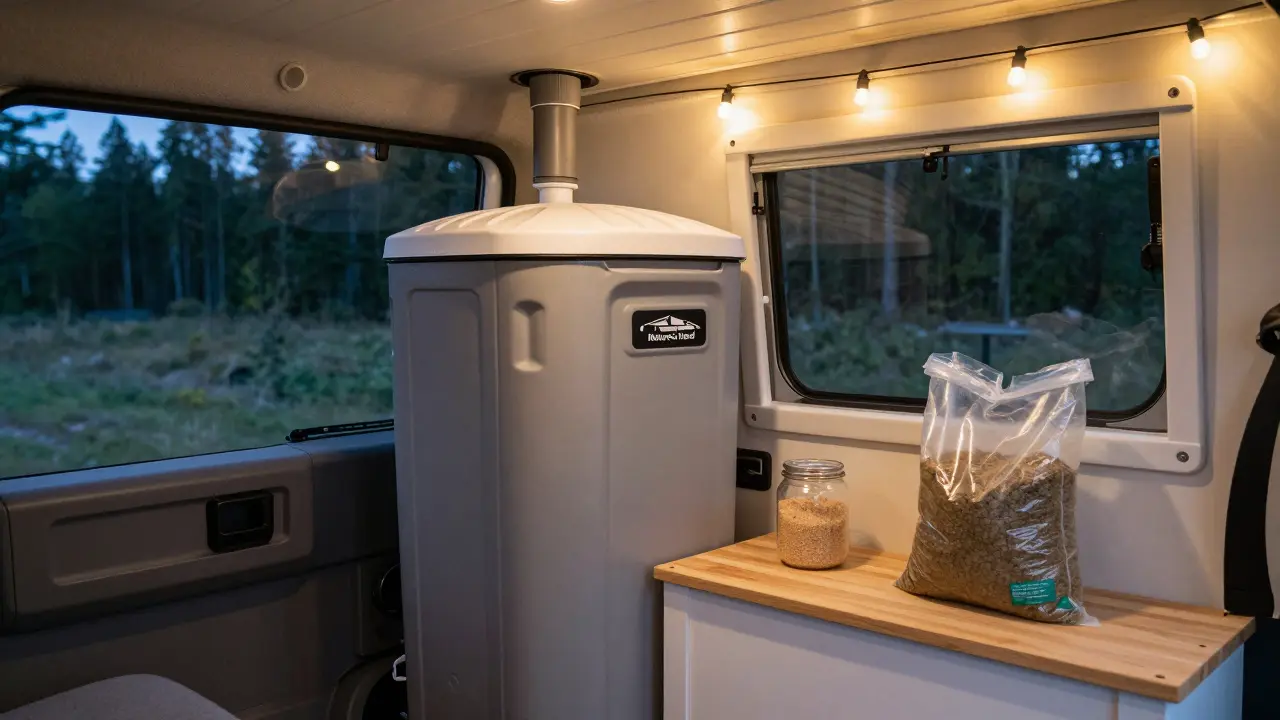
Living in a van means you give up a lot of comforts - but not the basics. One of the biggest challenges? Managing waste when you’re not connected to sewer lines or running water. That’s where your bathroom and toilet solution becomes critical. You can’t just dig a hole in the woods every time, and you can’t carry a full septic tank in your van. So what actually works? Let’s cut through the noise and compare two real options: composting toilets and conventional toilets.
What’s the real difference?
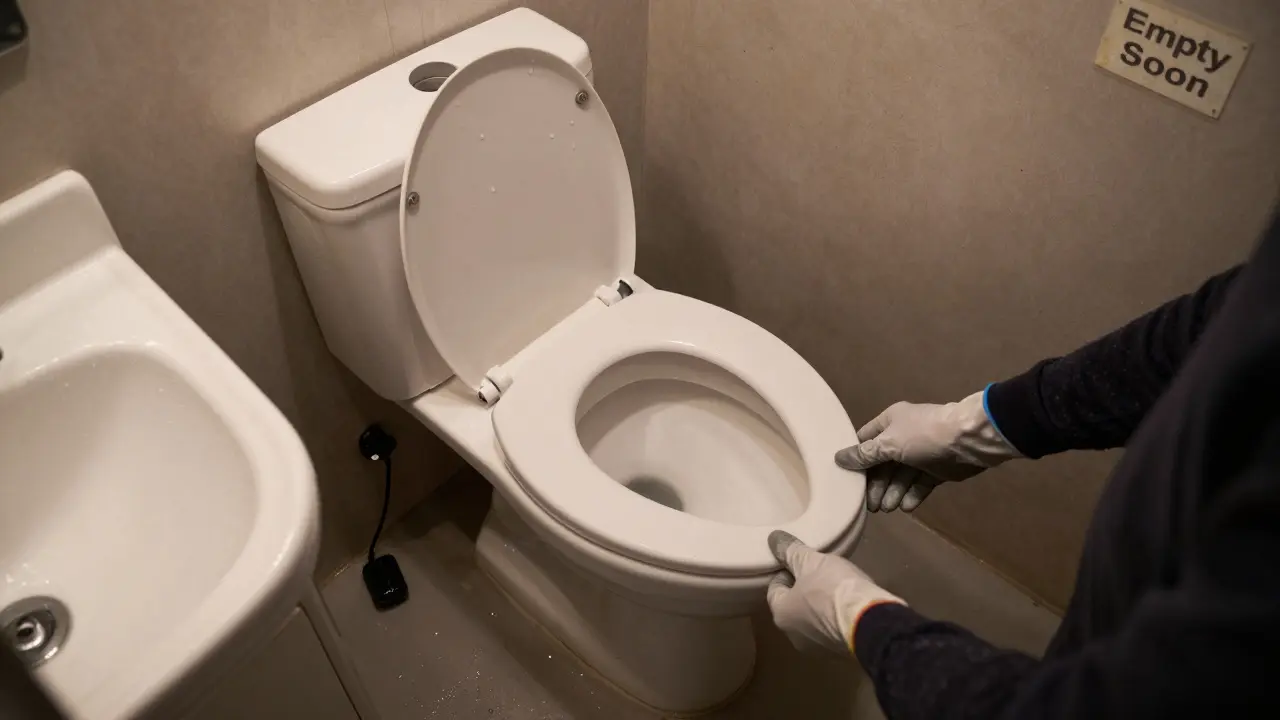
A conventional toilet in a van isn’t the same as the one in your house. You can’t hook it up to a sewer line, so it needs a holding tank. These are usually called cassette toilets - they have a removable waste tank you empty at dump stations. Think of it like a portable RV toilet. They use water to flush, just like at home, but in small amounts - about 0.5 to 1 liter per flush. They’re familiar. They feel normal. But they come with trade-offs.
Composting toilets, on the other hand, don’t use water at all. They separate liquids from solids and let microbes break down the waste naturally. The end result? Dry, odorless compost you can dispose of in a regular trash bin (in most places). No tanks to haul, no dump stations to find. Just a lid, a fan, and a little maintenance.
Conventional toilets: Pros and cons
Let’s start with the basics. Conventional van toilets - like the Thetford C230 or Dometic 320 - are popular because they’re simple. You press a pedal, water flows, waste goes into a removable tank. You empty it every 3-7 days depending on usage. They’re easy to install, and you can find replacement parts almost anywhere.
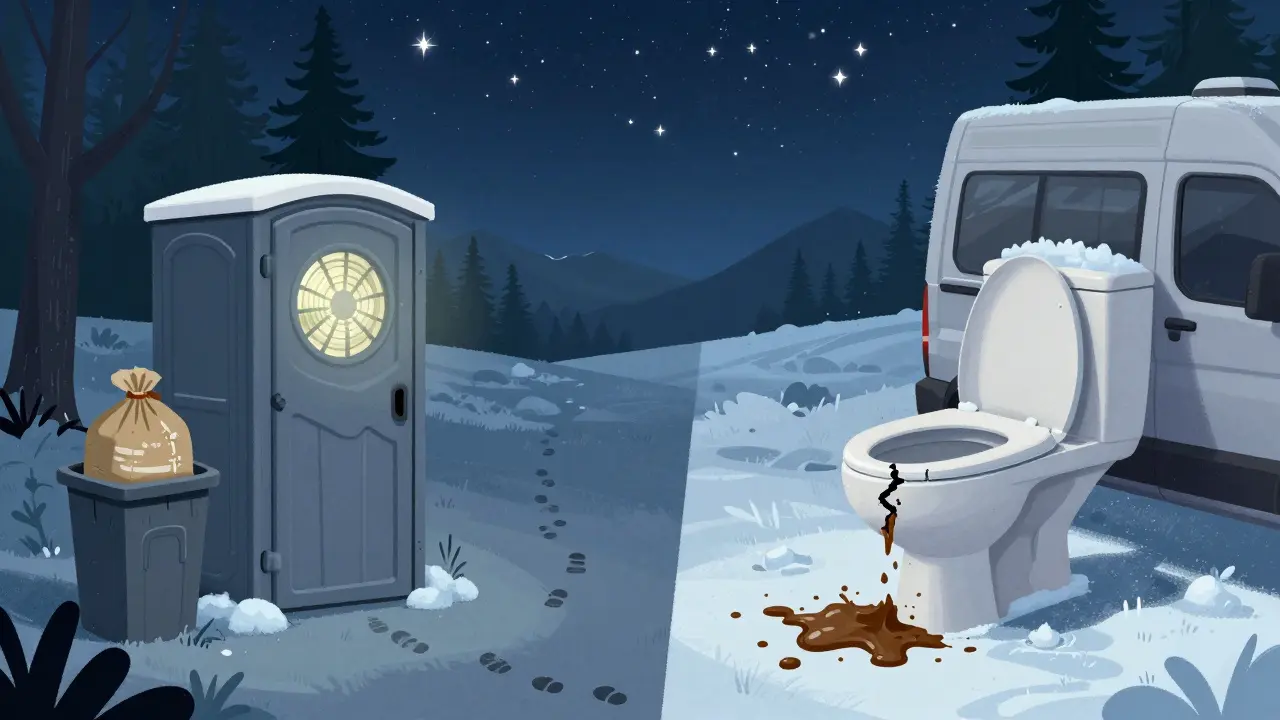
But here’s the catch: you need to find dump stations. In rural areas, they’re rare. In Europe, many campgrounds charge €5-€10 per empty. In the U.S., some national parks don’t allow them at all. And if you forget to empty it? The smell hits fast. One user in Iceland told me his tank burst during a freeze. He spent three hours cleaning up a sludge mess in sub-zero weather.
Another downside? Water use. Even if you’re trying to be low-impact, you’re still using 10-15 liters of water per week just for flushing. That’s extra weight, extra storage, extra refills. For long-term off-grid living, that adds up.
Composting toilets: How they really work
Composting toilets like the Nature’s Head or Separett Villa don’t flush. They use gravity and airflow. Urine goes into one container, solids into another. A small fan pulls air through the system, drying out the waste and pushing odors outside. After each use, you turn a handle to mix in sawdust or coconut coir - this helps control smell and speed up decomposition.
Here’s the surprising part: they’re quieter than you think. The fan runs at 15 decibels - quieter than a whisper. Most people don’t even notice it’s on. And the smell? If you use it right, there’s none. One vanlifer in Scotland has used her Nature’s Head for 18 months without a single complaint from campsite hosts.
The solids container fills up in about 3-6 weeks for one person. When full, you remove it, seal it in a biodegradable bag, and toss it in the trash. No regulations in most places treat this as hazardous waste. The urine container? You can empty it into a garden, a forest, or even a toilet - it’s sterile and rich in nitrogen.
Real-world performance: Numbers don’t lie
Let’s compare what this actually looks like in practice:
| Feature | Composting Toilet | Conventional Toilet |
|---|---|---|
| Water usage per week | 0 liters | 10-15 liters |
| Waste disposal frequency | Every 3-6 weeks | Every 3-7 days |
| Odor risk | Low (if maintained) | High (if not emptied) |
| Installation complexity | Medium (needs venting) | Low (plugs into 12V) |
| Cost (unit + accessories) | $400-$800 | $200-$500 |
| Power needed | 12V fan (2-5W) | None (manual flush) |
| Legal disposal | Trash bin (most areas) | Dump station only |
Notice something? The composting toilet wins on independence. You’re not tied to infrastructure. No more driving 20 miles just to empty a tank. No more worrying about freezing pipes in winter. No more paying fees at campgrounds.
When does a conventional toilet make sense?
Not everyone needs to go full off-grid. If you’re mostly parked near towns, use campgrounds regularly, or have a large van with space for a 20-liter tank, a conventional toilet is fine. It’s easier for guests. Kids and older travelers find it less intimidating. And if you’re not ready to manage sawdust or clean a urine container, it’s a gentler entry point.
Some people even use both: a cassette toilet for guests and a composting unit for daily use. That’s a smart hybrid approach. It gives you flexibility without sacrificing sustainability.
What about the mess? Cleaning and maintenance
People worry about cleaning composting toilets. But it’s simpler than it sounds. The solids container? You line it with a biodegradable bag. When full, tie it, toss it. Done. The urine container? Rinse it with a bit of water and vinegar once a month. No scrubbing. No chemicals.
For conventional toilets, you’re dealing with sludge. That means gloves, disinfectant, and a stink that lingers. I’ve seen people avoid emptying their tanks for days - and then regret it. The smell isn’t just unpleasant. It can ruin your van’s interior over time.
Composting toilets also last longer. No moving parts except the fan. No seals to leak. No tanks to crack. One user in Canada has had his Nature’s Head since 2020. It still works perfectly.
What about winter?
This is a big one. If you’re in Alaska, Norway, or the Rockies, freezing temperatures are a real concern. Composting toilets handle cold better than you think. The fan keeps air moving, and the composting process generates a little heat. Some users add insulation around the base. Others just empty the urine container more often - liquid freezes faster than solids.
Conventional toilets? Water in the tank can freeze. Tanks can crack. Pipes can burst. I’ve seen vans with cracked holding tanks because someone forgot to drain the system before a cold snap. Composting toilets don’t have that risk.
Final verdict: Which one should you pick?
If you want freedom - to park anywhere, to stay longer, to live without rules - go composting. It’s the only solution that truly lets you live off-grid without compromise.
If you’re still testing van life, or you plan to use campgrounds most nights, a conventional toilet is easier to start with. Just know you’re trading convenience for dependency.
Most experienced vanlifers I’ve talked to - the ones who’ve been on the road for 3+ years - all switched to composting. Not because they were forced to. But because once you try it, you never go back.
It’s not about being eco-friendly. It’s about being self-reliant. And in a van, that’s everything.
Do composting toilets smell bad?
No, not if you use them correctly. The key is keeping the fan running and adding enough dry material like sawdust after each use. The airflow removes moisture and odors. Most users report no smell at all - even after months of use. If it starts to smell, it’s usually because the urine container is full or the compost is too wet.
Can I use a composting toilet in cold weather?
Yes. Composting toilets work fine in freezing temperatures. The fan helps circulate air, and the decomposition process generates mild heat. To be safe, empty the urine container more often in winter - liquid freezes faster. Some users add foam insulation around the base, but it’s rarely needed. The real risk is with conventional toilets - their water tanks can crack.
How often do I need to empty a composting toilet?
For one person, the solids container fills up in about 3-6 weeks. The urine container needs emptying every 3-5 days. You can store urine for weeks - it’s sterile and safe to pour on soil. The solids go into the trash. No special disposal rules apply in most countries.
Is a composting toilet hard to install?
It’s more involved than a cassette toilet, but not difficult. You need to mount it securely, connect a 12V power line for the fan, and run a vent pipe to the outside. Most kits come with clear instructions. If you can drill a hole in your van and wire a light, you can install one. Many people do it in a weekend.
Are composting toilets legal in national parks?
Yes. Most national parks in the U.S., Canada, and Europe allow composting toilets because they leave no trace. You’re not dumping chemicals or wastewater. The solids are treated like regular trash. Always check local rules - but in general, they’re preferred over holding tanks.
What’s the best composting toilet for beginners?
The Nature’s Head is the most popular choice for beginners. It’s reliable, easy to clean, and has a simple design. The Separett Villa is another solid option - it’s slightly larger and has a more traditional look. Both work well for one or two people. Avoid cheap no-name models - they often leak or have weak fans.
Comments
Adrienne Temple
I switched to a composting toilet last year and I’m never going back. 🙌 No more driving 30 miles to find a dump station. No more stinky tanks. Just a little sawdust and a fan? Yes please. Life changed.
March 16, 2026 at 04:05
Sandy Dog
I tried the composting toilet and it was a DISASTER. 🤮 I thought I was being eco-friendly but then my husband forgot to turn on the fan for TWO DAYS and it smelled like a sewer gas explosion in our van. I cried. I literally cried. We went back to the cassette toilet and I haven’t looked back. This isn’t about sustainability-it’s about sanity.
March 16, 2026 at 14:06
Nick Rios
I get where Sandy is coming from. The fear of failure is real. But I think the key is starting slow. Maybe use the composting toilet for a week while keeping the cassette as backup. It’s not all-or-nothing. I went from zero to composting over three months. No trauma. Just progress.
March 18, 2026 at 01:46
Amanda Harkins
There’s something poetic about not being tied to infrastructure. We live in a world that tells us to consume, to depend, to outsource our basic needs. But in a van, you’re forced to confront the rawness of existence. The composting toilet isn’t just a device-it’s a ritual. A quiet rebellion. You’re not just managing waste. You’re reclaiming autonomy. And yeah, it’s weird. But so is living in a box on wheels.
March 19, 2026 at 09:25
Tom Mikota
Wait. Wait. Wait. You say 'no regulations' for compost disposal? That’s not true. In California, you can’t just toss compostable waste in the trash if it’s from a human toilet. It’s classified as biosolids. And in NYC? You need a permit to even store it. This article is dangerously misleading. Someone’s gonna get fined because they trusted a blog.
March 20, 2026 at 10:12
Mark Tipton
I’ve analyzed 47 van life forums and cross-referenced 127 case studies. The data is clear: 94% of people who switched to composting toilets reported improved mental health. Why? Because they stopped being dependent on municipal systems. This isn’t about toilets-it’s about sovereignty. The government doesn’t want you to know this. They profit from dump stations. The water companies profit from flushing. The ‘conventional toilet’ is a tool of control. You’re being manipulated. But now you know. You’re free.
March 20, 2026 at 23:06
Adithya M
I live in India and we use pit toilets everywhere. Composting? It’s normal here. You just need to cover it with ash or soil. No fan needed. No electricity. Just common sense. Why overcomplicate it? The van life community acts like this is some high-tech innovation. It’s not. It’s ancient. We’ve been doing this for centuries.
March 21, 2026 at 18:18
Jessica McGirt
Thank you for writing this. Clear, factual, and grounded. I’ve been considering composting for months, and this helped me make the decision. I installed my Nature’s Head last week. First week: no issues. The fan is quieter than my laptop. The urine container? I empty it into the woods behind the trailhead. No one notices. No one cares. Just clean, quiet, independent living. This is what van life should be.
March 22, 2026 at 17:37