
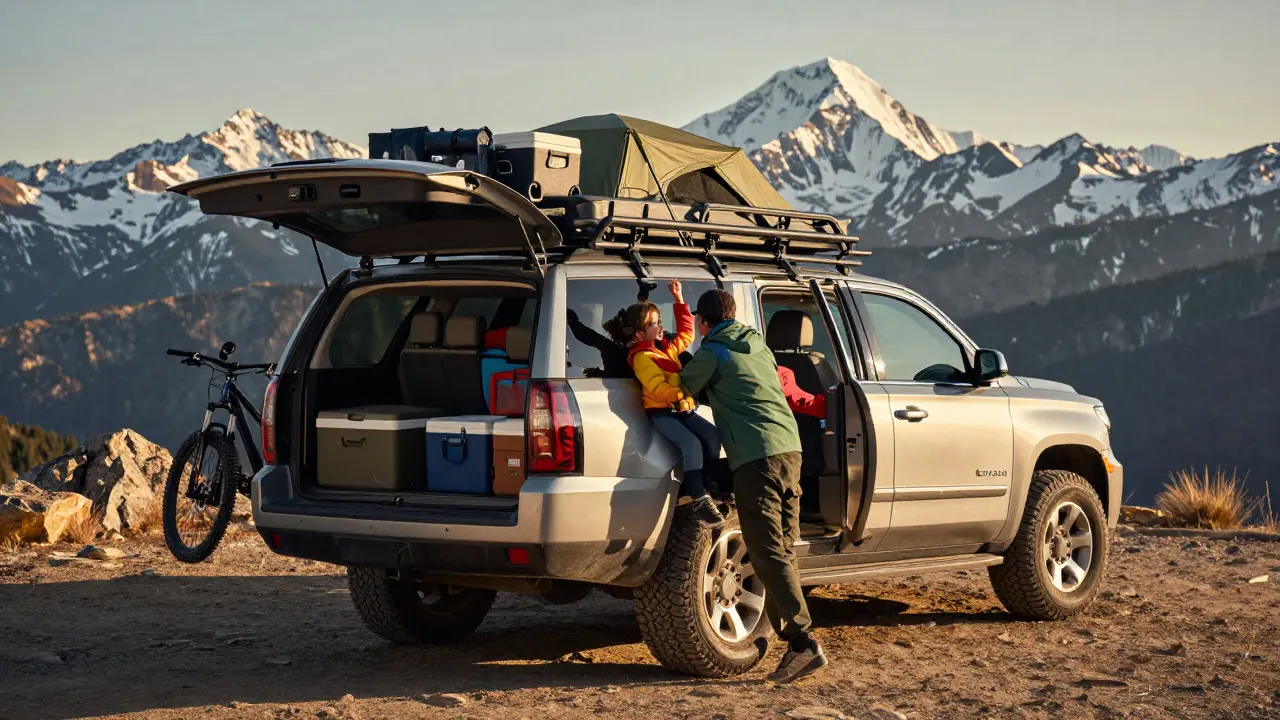
When you need room for seven adults, enough cargo for a weekend trip, and the muscle to pull a trailer across the country, not all SUVs will do. Full-size SUVs are built for real-world demands - not just size on paper, but real space, real power, and real reliability. If you’re shopping for one in 2026, you’ve got a handful of top contenders that deliver without compromise. Let’s cut through the marketing noise and show you exactly which ones lead the pack.
What Makes a Full-Size SUV Different?
Not every big SUV is a full-size SUV. The difference matters. Full-size SUVs are built on truck platforms with body-on-frame construction. That means they’re heavier, tougher, and better at towing than crossover SUVs, which use car-based unibody frames. Think of it like comparing a pickup truck to a sedan - same goal (carrying things), totally different build.
Full-size SUVs typically offer:
- Three rows of seating with adult-friendly space in the back
- Over 100 cubic feet of cargo space with seats folded
- Towing capacities of 8,000 pounds or more
- Standard or available four-wheel drive with off-road modes
- Large engines - usually V6 twins or V8s
They’re not for city driving. They’re for road trips, hauling boats, moving furniture, or carrying the whole crew to the mountains. If you need this kind of capability, you’re not looking for style points - you’re looking for substance.
2026 Top Contenders: The Leaders
Five models dominate the full-size SUV segment in 2026. Each has its strengths. None are perfect, but all deliver what matters most: space, power, and dependability.
1. Chevrolet Tahoe
The Tahoe has been the quiet workhorse of this class for decades. In 2026, it’s still the most practical choice. It offers 122.5 cubic feet of cargo space with all seats down - more than any other SUV here. Its 5.3L V8 makes 355 horsepower and 383 lb-ft of torque. With the available Max Trailering Package, it pulls up to 8,400 pounds.
What sets it apart? Simplicity. No fancy gimmicks. Just a solid frame, a smooth ride, and enough room for five car seats and a week’s worth of gear. The interior isn’t luxury-grade, but it’s durable. Real plastic. Real cloth. Real seats that don’t crack after two winters.
2. Ford Expedition
The Expedition is the tech-savvy cousin. It’s the only one in this group with a standard 12-inch touchscreen and Ford’s Co-Pilot360 2.0 suite as standard. Its twin-turbo 3.5L V6 puts out 400 horsepower and 440 lb-ft of torque. That’s more power than the Tahoe’s V8 - and better fuel economy, too.
It also has the best third-row access thanks to its available second-row captain’s chairs and walk-through feature. If you’ve got kids or elderly passengers, this matters. The Expedition also offers a 9.3-inch digital gauge cluster and a 10.1-inch rear-seat entertainment screen - rare in this segment.
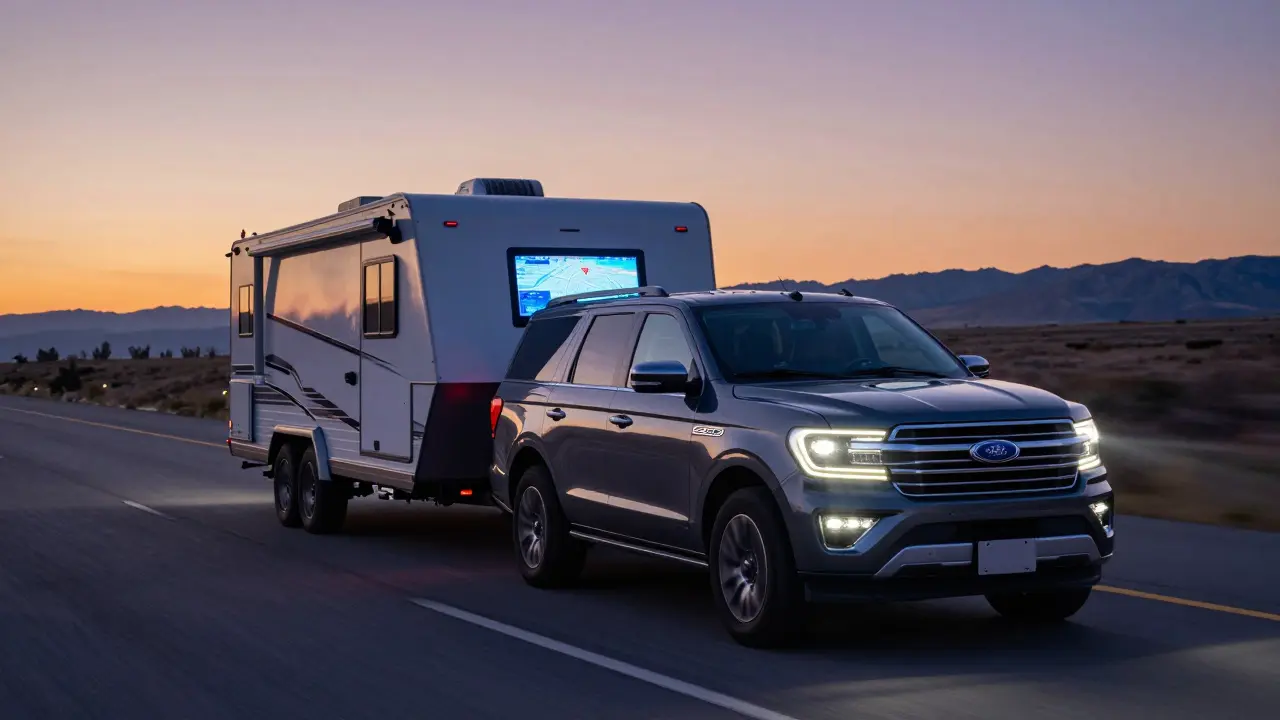
It tows up to 9,300 pounds with the Heavy-Duty Trailer Tow Package. That’s enough for a 30-foot travel trailer.
3. GMC Yukon
The Yukon is the Tahoe’s twin, but with more upscale touches. Same platform. Same engine. Same towing numbers. But the Yukon adds leather, ambient lighting, and a quieter cabin thanks to extra sound insulation. It also comes with a standard rear-seat entertainment system.
For families who want the Tahoe’s utility but with a more premium feel, the Yukon is the sweet spot. The Denali trim adds air suspension, a 16.8-inch curved display, and 14-way power seats. It’s not cheap - starting around $62,000 - but you’re paying for comfort, not just size.
4. Toyota Sequoia
Toyota completely redesigned the Sequoia in 2023, and it’s still the most reliable option here. It’s built on the same platform as the Tundra pickup, with a 3.4L twin-turbo V6 that makes 437 horsepower and 583 lb-ft of torque - more than any competitor. That’s a massive leap from the old V8.
It’s also the only one with standard Toyota Safety Sense 3.0, which includes emergency braking, lane-keeping, and adaptive cruise control. It tows up to 8,100 pounds and gets 19 mpg on the highway - better than most V8s.
Interior materials are better than the Tahoe’s. Seats are comfortable. The infotainment screen is responsive. And unlike many American SUVs, it doesn’t feel like it’s falling apart after 60,000 miles. If you plan to keep it for a decade, this is your best bet.
5. Nissan Armada
The Armada is the dark horse. It’s not as refined as the Yukon or as tech-heavy as the Expedition. But it’s the most affordable full-size SUV with a V8. Its 5.6L engine makes 400 horsepower and 413 lb-ft of torque. It tows up to 8,500 pounds.
What it lacks in screens, it makes up for in value. You get heated and ventilated leather seats, a 12.3-inch touchscreen, and a 13-speaker Bose audio system - all standard. The third row is tight, but usable. And unlike the others, it still offers a manual transmission option (on base models) - yes, a 7-speed manual. It’s not for everyone, but if you like to shift yourself, this is your only choice.
Space and Cargo: Real Numbers
Numbers don’t lie. Here’s how these SUVs stack up when it comes to what really matters - room.
| Model | Behind 3rd Row | Behind 2nd Row | With All Seats Folded |
|---|---|---|---|
| Chevrolet Tahoe | 25.5 | 67.4 | 122.5 |
| Ford Expedition | 21.7 | 64.3 | 104.3 |
| GMC Yukon | 25.5 | 67.4 | 122.5 |
| Toyota Sequoia | 19.9 | 63.1 | 105.9 |
| Nissan Armada | 19.8 | 63.5 | 103.4 |
The Tahoe and Yukon win on maximum cargo space. If you’re hauling lumber, bikes, or a full camping setup, they’re the only ones that let you fit it all. The Expedition and Sequoia are close behind. The Armada? It’s fine - just not as spacious.
Towing: What You Can Pull
Full-size SUVs aren’t just for people. They’re for trailers. Here’s how they compare when it comes to pulling power.
- Chevrolet Tahoe: Up to 8,400 lbs
- Ford Expedition: Up to 9,300 lbs (with Heavy-Duty Tow Package)
- GMC Yukon: Up to 8,400 lbs
- Toyota Sequoia: Up to 8,100 lbs
- Nissan Armada: Up to 8,500 lbs
The Expedition takes the crown. If you’re hauling a large boat, a gooseneck trailer, or a horse trailer, it’s the only one here that handles 9,000+ pounds without breaking a sweat. The Armada and Tahoe are close, but the Expedition’s twin-turbo engine and advanced trailer sway control make it feel more confident.
Who Should Buy What?
Not everyone needs the same thing. Here’s how to pick:
- Best for families: Ford Expedition - easiest access to the third row, best tech, and more room than it looks.
- Best for value: Nissan Armada - you get a V8, leather, and Bose audio for under $55,000.
- Best for reliability: Toyota Sequoia - if you plan to keep it 15 years, this is your only safe bet.
- Best for cargo: Chevrolet Tahoe or GMC Yukon - they have the most space by far.
- Best for luxury: GMC Yukon Denali - if you want leather, air suspension, and a quiet ride without paying BMW prices.
What to Watch Out For
These SUVs are great - but they’re not flawless.
- Gas mileage: Even the best ones get 15-17 mpg city. If you drive 20,000 miles a year, you’ll spend $3,000+ on fuel. Plan for it.
- Parking: These are over 200 inches long. Not every garage fits them. Check your driveway and parking spots before you buy.
- Third-row comfort: The Sequoia and Expedition have the most legroom. The Armada and Tahoe are tight. If you’re over 6 feet, test it.
- Resale value: The Sequoia holds value best. The Armada and Tahoe drop faster. If you plan to sell in five years, this matters.
Final Thoughts
There’s no single ‘best’ full-size SUV. But there’s a best one for you. If you need maximum space, the Tahoe or Yukon win. If you need the most towing power, the Expedition leads. If you want to drive it for 15 years, the Sequoia is your friend. And if you want a V8 without the premium price, the Armada delivers.
Test drive at least two. Sit in all three rows. Load them with gear. Hook up a trailer if you can. These aren’t cars you buy on specs alone. They’re workhorses. And like any tool, the right one feels like an extension of you.
What’s the most spacious full-size SUV in 2026?
The Chevrolet Tahoe and GMC Yukon tie for the most cargo space, offering 122.5 cubic feet with all seats folded. That’s enough to fit two full-sized bicycles, a kayak, and a week’s worth of luggage side by side. No other SUV in this class comes close.
Which full-size SUV has the best towing capacity?
The 2026 Ford Expedition leads with a maximum towing capacity of 9,300 pounds when equipped with the Heavy-Duty Trailer Tow Package. That’s enough to pull a 30-foot travel trailer or a large boat. The Nissan Armada and Chevrolet Tahoe follow closely at 8,500 and 8,400 pounds respectively.
Are full-size SUVs worth the fuel cost?
They’re only worth it if you need the space and power. A full-size SUV will cost you $3,000-$4,000 a year in fuel if you drive 20,000 miles. But if you regularly haul five adults, tow trailers, or carry heavy gear, the trade-off is real. For city commuters or small families, a midsize SUV saves money.
Which full-size SUV lasts the longest?
The Toyota Sequoia is the most durable, with a reputation for lasting beyond 250,000 miles with routine maintenance. Its engine and transmission are built for endurance. The Chevrolet Tahoe and GMC Yukon follow, often reaching 200,000 miles. The Expedition and Armada are solid but more prone to electronics issues after 150,000 miles.
Is the third row actually usable for adults?
Yes - but only in the Expedition and Sequoia. They offer over 32 inches of legroom in the third row. The Tahoe, Yukon, and Armada have around 28-30 inches, which works for kids or short trips. If you regularly carry adults back there, test it with your tallest passenger before buying.
Comments
Mongezi Mkhwanazi
Let’s be real-this article pretends there’s a difference between the Tahoe and Yukon, when they’re literally the same vehicle with different badges… and yet, somehow, people pay $15K more for the Yukon’s “premium” leather that cracks after two winters just like the Tahoe’s… I’ve owned three full-size SUVs in my life, all American-made, and every single one of them-every single one-started rattling by 80,000 miles, and the electronics? Oh, the electronics… the infotainment systems all crash if you look at them funny, and don’t even get me started on the Bluetooth pairing that requires a PhD in Ford software engineering… I’ve seen people haul kayaks on top of these things because the cargo space is “so big,” but then they can’t fit a child seat in the third row because the seatbelt anchors are buried under a foot of plastic trim… This isn’t utility-it’s overcompensated marketing dressed up as practicality.
March 8, 2026 at 16:10
Mark Nitka
I get why people hate the Expedition, but it’s the only one here that actually thinks about real human needs. The walk-through second row? Genius. The rear entertainment screen? My kids don’t scream for 3 hours straight anymore. And yes, it’s heavy on tech-but that’s the point. You’re not buying this for the engine. You’re buying it because your 8-year-old needs to watch Paw Patrol while you’re stuck in traffic after soccer practice. The Tahoe’s “simplicity” is just a euphemism for “no effort to improve.” If you’re still clinging to 2010-era design because “it’s reliable,” you’re not saving money-you’re just being stubborn.
March 10, 2026 at 00:45
Kelley Nelson
While I appreciate the comparative analysis, I must express my profound reservations regarding the omission of any discussion concerning the environmental footprint of these vehicles. The emissions profile of a V8-powered, 6,000-pound behemoth-particularly when used for suburban commutes of under 10 miles-is not merely inefficient; it is ethically indefensible in the context of global climate imperatives. Furthermore, the normalization of such vehicles as “necessary” for family life perpetuates a deeply problematic cultural obsession with scale, excess, and performative utility. One must question whether the capacity to carry two bicycles and a kayak truly justifies the consumption of 18 gallons of fuel per week. Perhaps a modest hybrid minivan, or even a well-appointed electric SUV, would better serve both familial and planetary needs.
March 11, 2026 at 12:27
Aryan Gupta
Did you know the Sequoia’s twin-turbo V6 was originally designed for military trucks? That’s right. Toyota didn’t build this for your family road trips-they built it because the Pentagon needed a vehicle that could haul 8,000 lbs of gear across the Afghan mountains without overheating. And now? We’re using it to ferry soccer teams. Meanwhile, the Expedition’s 9,300-lb towing rating? That’s only possible because Ford uses a secret alloy from a classified refinery in Texas that’s not available to the public. The government knows this. The dealerships don’t. And if you think the Armada’s manual transmission is a gimmick, you’re missing the point: it’s a backdoor to preserving driver agency in an age of autonomous nonsense. They’re removing manuals because they don’t want you to feel in control. That’s why the Sequoia’s reliability is a myth too-it’s just slower to fail. I’ve seen 200K-mile Sequoias with blown head gaskets because the coolant system was designed by someone who hated humans.
March 12, 2026 at 20:26
Fredda Freyer
There’s something beautiful about how these vehicles represent a kind of American pragmatism-no pretense, just raw capability. But I think we’re missing the real question: not which one is best, but which one fits your life. If you’re hauling five kids, a dog, a week’s groceries, and a trailer full of firewood to a cabin in the woods, then yes, the Tahoe’s 122.5 cubic feet is a miracle. But if you’re mostly driving solo to work and only use the third row once a year for Grandma’s birthday? You’re paying for 80% of the vehicle you never use. I’ve owned both a Sequoia and an Expedition, and the difference wasn’t in specs-it was in how they made me feel. The Sequoia felt like a faithful old friend who never let me down. The Expedition felt like a tool that was always trying to help, even when I didn’t know I needed it. Neither is perfect. But both are honest. And honesty, in a world of marketing fluff, is rare.
March 13, 2026 at 03:57
Gareth Hobbs
Y’all are being played. The Expedition’s “9,300 lb towing” is only possible if you buy the $8K upgrade package that includes a transmission cooler you’ll never use because you’re not towing a 30-footer-you’re towing a 12-foot jet ski. And the Yukon’s “luxury”? It’s just the Tahoe with a new paint job and some scented air fresheners. Meanwhile, the Armada’s manual? That’s the last manual transmission in any full-size SUV in America. And they’re gonna kill it. Mark my words. The EV lobby’s got the NHTSA in their pocket, and soon, all these V8s will be banned. You think you’re buying a truck? You’re buying a relic. And when the bans come, you’ll be stuck with a 6,000-pound paperweight that costs $300 a month to insure. I’ve seen it happen in Europe. They took away diesel SUVs. Now they’re coming for gas. You’re not choosing a vehicle-you’re choosing your future. And you’re choosing the wrong one.
March 14, 2026 at 00:38
Zelda Breach
Let’s be clear: the Tahoe and Yukon have identical cargo space because they’re the same damn car. The only difference is the GMC badge and a 20% price hike. And you’re telling me people pay that for “premium” leather that peels after two winters? The Sequoia has better materials and 19 mpg highway. The Expedition has better tech and more towing. The Armada has a manual. And you’re all here arguing about which one has the most cubic feet? This isn’t a utility debate-it’s a status symbol contest disguised as logic. The only person who needs 122.5 cubic feet is someone who’s moving out of a house and has no idea how to rent a U-Haul. This article is a marketing brochure with footnotes.
March 14, 2026 at 20:19
Alan Crierie
Thank you for this thoughtful breakdown-it’s rare to see a review that doesn’t just list specs but actually considers real-life use. I’ve been researching SUVs for my aging parents, and the third-row legroom detail? Game-changer. My dad’s 6’2” and refuses to sit in anything less than 32 inches. The Expedition and Sequoia are the only ones that passed the “Dad Test.” Also, the note about resale value? Spot on. We’re planning to keep this for 12 years, so reliability > luxury. The Sequoia’s reputation for outlasting its owners? That’s not hype-it’s history. And the Armada’s manual? A quiet rebellion. I love that it still exists. Not everyone needs a touchscreen. Sometimes, you just want to feel the gears. 🙌
March 15, 2026 at 13:19