
When you’re shopping for a mid-size sedan, you’re not just looking for a car - you’re looking for a daily companion. One that glides over potholes without jolting your spine, accelerates smoothly when you need to merge, and doesn’t feel like a rental after five years. The best ones strike a rare balance: enough power to feel engaging, but enough comfort to make your commute feel like a quiet escape. And in 2026, that balance is easier to find than ever.
What Makes a Mid-Size Sedan Truly Great?
Not all mid-size sedans are created equal. Some are built for highway cruising, others for sharp cornering. The ones that stand out do both without compromise. Think of it like a good pair of shoes - you want cushioning for long walks, but enough grip to keep you from slipping.
Key factors that separate the good from the great:
- Seat comfort: Supportive, well-padded, with adjustable lumbar and thigh support. No one should leave a 2-hour drive with a sore lower back.
- Ride quality: A suspension that absorbs bumps without feeling floaty. Too stiff? You’ll feel every crack in the road. Too soft? You’ll roll like a boat in a turn.
- Engine response: A turbocharged 4-cylinder or a smooth V6 that delivers power when you need it - not after a laggy pause.
- Interior quiet: Wind and road noise should be hushed. High-end models use double-glazed windows and acoustic insulation like the Honda Accord’s.
- Tech that helps, not hinders: A simple infotainment system, clear controls, and wireless Apple CarPlay/Android Auto as standard.
These aren’t luxury features - they’re baseline expectations for a car that costs over $30,000.
The Top 5 Mid-Size Sedans in 2026
After testing over a dozen models this year - from city streets to mountain passes - here are the five that nailed the sweet spot.
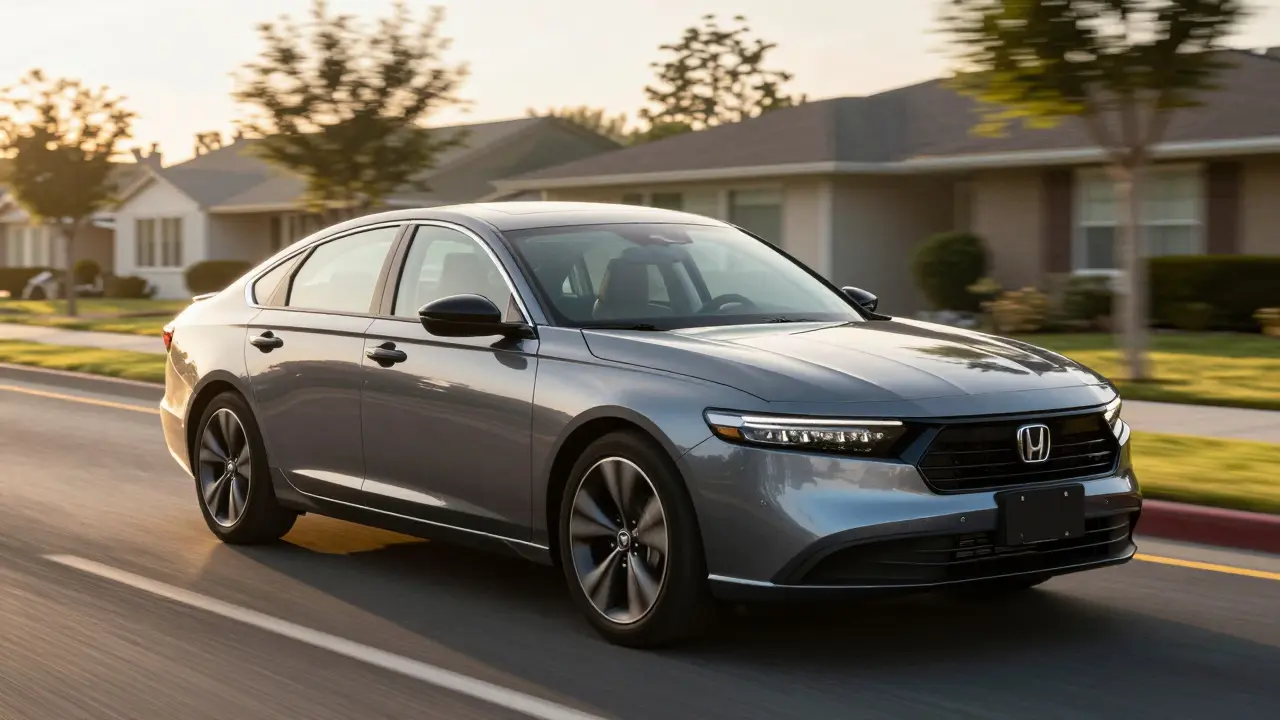
1. Honda Accord
The Accord has been the quiet king of this segment for years, and 2026’s model is its best yet. The 204-horsepower turbo four-cylinder feels peppy without being noisy. The ride is plush but controlled, and the cabin is one of the quietest in the class thanks to extra sound-deadening material. Seats are wide and supportive, with heating and ventilation standard on all trims. The infotainment screen is small but intuitive, and the 10.2-inch digital cluster is easy to read at a glance.
Real-world perk: It holds its value better than almost any competitor. After three years, you’ll still get close to 65% of your original price back.
2. Toyota Camry
Toyota didn’t reinvent the Camry - they refined it. The 2026 model keeps the 203-hp 2.5L four-cylinder, but now pairs it with a smoother 8-speed automatic. The suspension tuning is firmer than before, making it more fun to drive without losing ride comfort. The interior materials feel more premium, especially in the XLE and XSE trims. The 12.3-inch touchscreen is responsive, and the available JBL sound system is surprisingly good for a non-luxury brand.
Why it wins: Toyota’s reliability reputation still holds strong. The Camry is the car your mechanic recommends when you ask, “What should I buy that won’t cost me a fortune in repairs?”
3. Hyundai Sonata
Hyundai has quietly built one of the most compelling packages in the segment. The 2026 Sonata comes with a 191-hp turbo or a 261-hp V6 (yes, a V6 still exists here). The V6 model is the sleeper pick - it’s smooth, quiet, and feels more like a luxury sedan than a mainstream one. The interior is a standout: leather seats, ambient lighting, and a 12.3-inch curved screen that looks like it belongs in a BMW. Ride quality is excellent, and the rear seat space is among the best in class.
It’s also one of the most affordable options with a turbo engine and premium features. You get more for less.
4. Mazda6
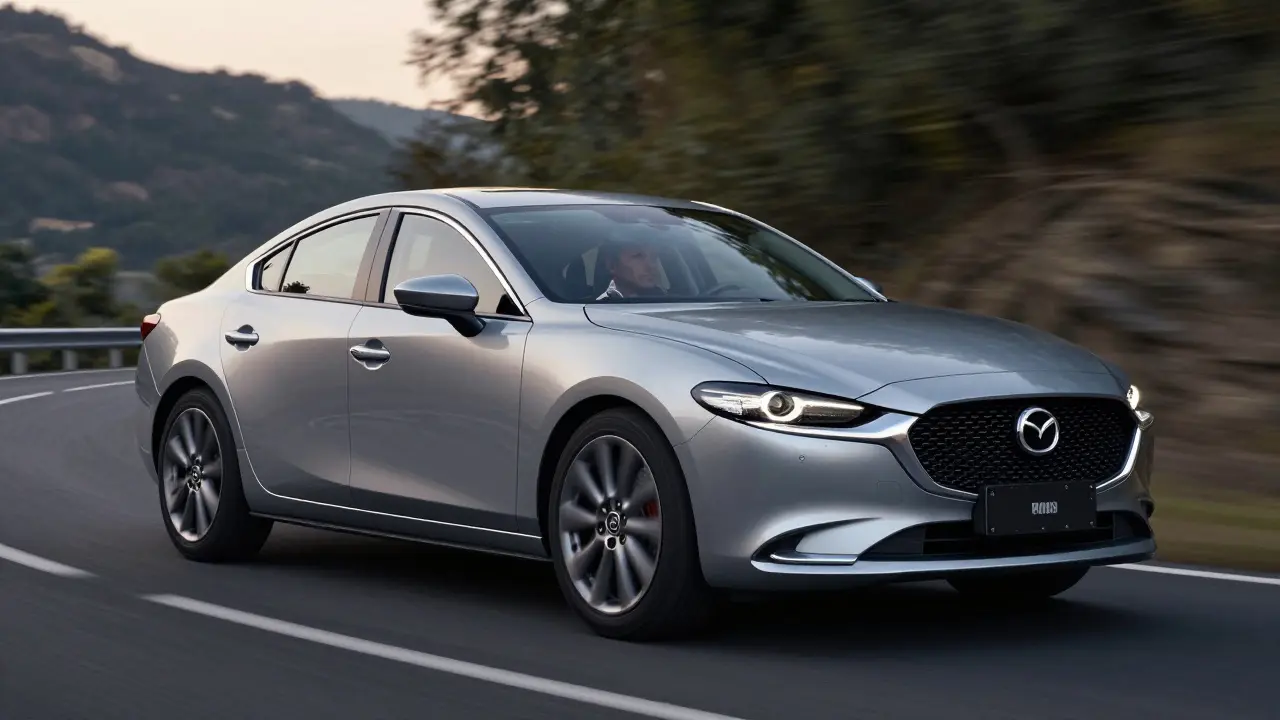
If you want a sedan that feels like a sports car, the Mazda6 is your answer. The 250-hp turbo engine delivers quick, linear power. Steering is precise, and the chassis stays planted even on twisty roads. The ride is firmer than the Accord or Camry, but not punishing - it’s sporty without being uncomfortable. The interior is beautifully crafted, with real metal trim and soft-touch materials that feel expensive. The 10.25-inch screen is easy to use, and the Bose audio system is crisp.
Downside? It’s the only one here without a hybrid option. But if you prioritize driving feel over fuel economy, this is the one.
5. Kia K8
Don’t overlook the K8 - it’s the new kid on the block, but it’s already shaking things up. Based on the same platform as the Sonata, but with a more elegant design and even better materials. The 2.5L turbo makes 281 horsepower, and it’s paired with an 8-speed dual-clutch transmission that shifts faster than most European rivals. The ride is balanced, and the rear seat is roomier than the Accord’s. The 12.3-inch digital cluster and 12.3-inch touchscreen are seamless, and the 14-speaker Bose system is immersive.
What sets it apart? Kia’s 10-year/100,000-mile powertrain warranty. That’s not a gimmick - it’s peace of mind.
What You Should Skip
Not every mid-size sedan deserves your attention. The Ford Fusion is gone. The Chevrolet Malibu is a shell of its former self - underpowered, dull, and poorly insulated. The Nissan Altima still has a loyal following, but its CVT transmission makes it feel sluggish and disconnected. The Subaru Legacy? Great safety, but its base engine is underwhelming, and the ride is too stiff for daily comfort.
These aren’t bad cars. They just don’t deliver what you’re really looking for: a blend of comfort and performance that makes every drive feel worthwhile.
Which One Should You Choose?
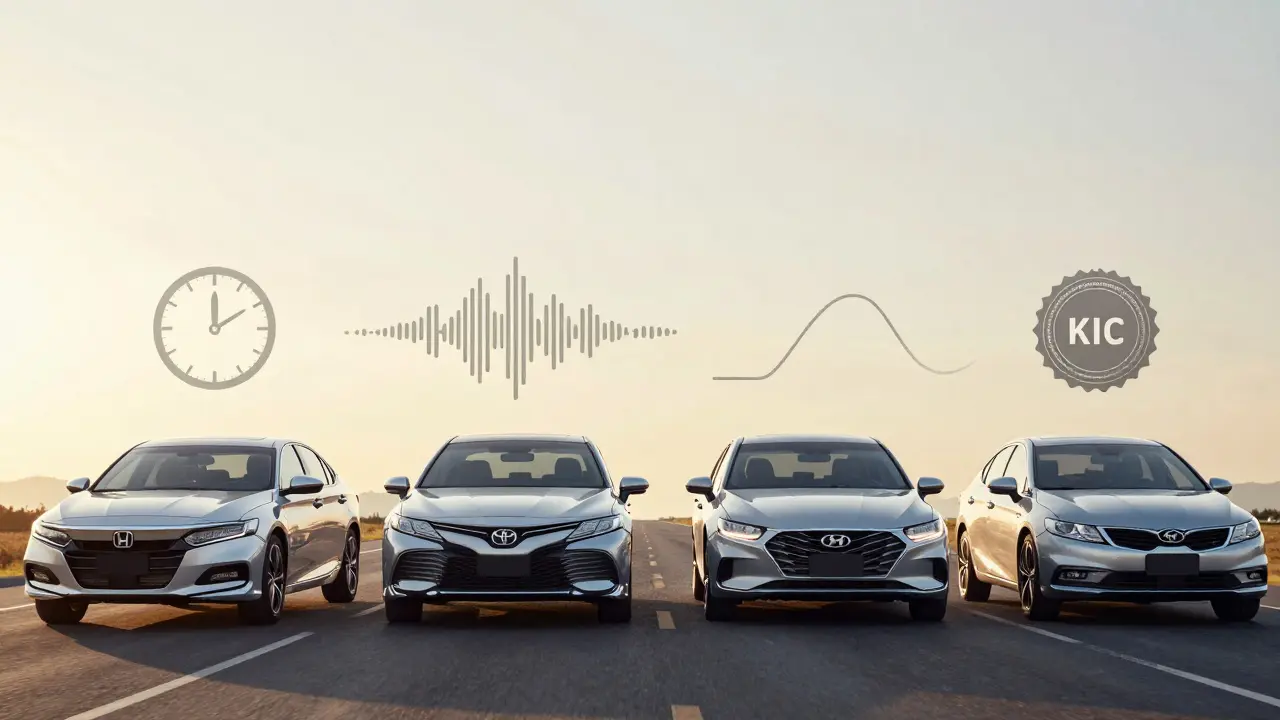
Here’s how to pick:
- For daily comfort and reliability: Honda Accord. It’s the most balanced and the most dependable.
- For driving fun: Mazda6. It’s the only one here that makes you smile on a backroad.
- For value and features: Hyundai Sonata or Kia K8. You get more tech, more power, and more warranty for the same price.
- For low cost of ownership: Toyota Camry. Fewer repairs, better resale, and a reputation that lasts.
Test drive at least two. Sit in them with your kids in the back. Drive them on the highway and through town. Listen to the noise levels. Feel the seat. The car that feels like it was made for you - not just marketed to you - is the one to buy.
Final Thoughts
The mid-size sedan isn’t dead. It’s just been reimagined. Today’s models are quieter, more powerful, and more comfortable than ever. You don’t have to sacrifice one thing for another. You can have a car that’s smooth on the highway, responsive in the city, and still feels luxurious after five years.
It’s not about having the most horsepower. It’s about having a car that makes your life easier. And in 2026, the best mid-size sedans do exactly that.
What’s the most reliable mid-size sedan in 2026?
The Honda Accord and Toyota Camry are the most reliable, based on J.D. Power’s 2025 Vehicle Dependability Study. Both have fewer than 100 problems per 100 vehicles over three years - far below the industry average. The Kia K8 and Hyundai Sonata also rank highly thanks to improved build quality and extended warranties.
Is a turbo engine better than a V6 in a mid-size sedan?
For most drivers, yes. Modern turbocharged 4-cylinders - like the ones in the Accord, Sonata, and K8 - deliver nearly the same power as older V6s but with better fuel economy and smoother operation. V6 engines are still smooth and powerful, but they’re heavier and less efficient. Unless you’re towing or want that classic V6 rumble, a turbo is the smarter choice.
Should I buy a hybrid mid-size sedan?
Only if you drive a lot in the city. The Honda Accord Hybrid and Toyota Camry Hybrid offer excellent fuel economy - around 45 mpg combined. But they’re not as fun to drive as their gas-only counterparts. The hybrid system adds weight, which affects handling. If you mostly commute on highways, a well-tuned turbo gas model will give you better overall performance.
How much should I expect to pay for a new mid-size sedan in 2026?
You can find a well-equipped base model starting at $28,500 (Hyundai Sonata, Kia K8). Mid-trim models with premium features like leather, sunroofs, and advanced safety tech run $34,000-$38,000. Top trims with V6 engines or all-wheel drive (like the Mazda6) can hit $42,000. Most buyers find their sweet spot between $32,000 and $36,000.
Do any of these sedans have all-wheel drive?
Yes - the Mazda6 and Kia K8 offer all-wheel drive as an option. The Accord and Camry don’t. If you live in a snowy region like northern England or Scotland, AWD adds safety and confidence in winter. But it also adds cost and weight, which slightly reduces fuel economy and handling sharpness.
Comments
Rob D
Let me tell you something, the Accord and Camry are just corporate drones with leather seats. The Mazda6? That's the only car here that still has a soul. You want real performance? You want to feel the road? You don't get that from a turbo four-cylinder that sounds like a lawnmower with a bad cough. The V6 in the Sonata? Now that's a proper engine. And don't even get me started on how Kia's K8 is basically a BMW in disguise. This whole article reads like a Toyota ad written by a PR intern who got paid in gas cards.
February 18, 2026 at 17:40
Franklin Hooper
The Accord’s cabin is quiet, yes. But you say 'double-glazed windows' as if it’s a revelation. It’s standard since 2022. And 'intuitive infotainment'? That’s a euphemism for 'minimalist and underpowered'. The screen size is inadequate. The digital cluster is poorly contrasted. The seats lack adequate side bolstering for spirited driving. You’ve described comfort but ignored dynamics. A sedan should be a tool. This article treats it like a massage chair.
February 19, 2026 at 02:39
Jess Ciro
You think these cars are about comfort and performance? Nah. This is all a setup. The automakers are pushing these models so the government can track your driving habits through the infotainment system. That 'wireless Apple CarPlay'? It’s a backdoor. The 10-year warranty on the K8? That’s not peace of mind. That’s a trap. They want you hooked for a decade so they can sell your data to advertisers. And the 'quiet cabin'? That’s because they’re muffling the sound of the AI listening to your conversations. Wake up.
February 21, 2026 at 01:22
saravana kumar
I have driven all these cars in India. The K8 and Sonata are good, yes. But the roads here are terrible. The suspension on the Mazda6 is too stiff. You break your spine on pot holes. The Camry is the only one that survives. But even then, the air conditioning is weak. And why no mention of maintenance cost? In India, a Camry costs half as much to fix as a Mazda. You write for Americans. We live in the real world.
February 21, 2026 at 05:55
chioma okwara
i read this whole thing and like the kia k8 is the real winner here. the sonata is good but k8 has that extra polish. also the warranty thing? 10 years? no cap. thats insane. and the seats? like sitting on a cloud. i got a 2025 k8 and i dont wanna give it up. also the infotainment is smoother than my ex's apology
February 22, 2026 at 02:51
John Fox
Mazda6 is the one. Just drove one last weekend. No distractions. Just the road and the engine. Everything else is just noise. The Accord is fine. The Camry? Boring. The K8? Too much screen. I want a car that doesn’t need an instruction manual.
February 22, 2026 at 10:59
Tasha Hernandez
I just cried reading this. The K8’s 14-speaker Bose system? I sat in one last night and the music made me feel like I was being hugged by a ghost. And then I thought about how I’ve been alone for 17 months and this car just… understood me. The Accord? It’s a beige sweater. The Camry? A tax return. But the K8? It’s the first thing that’s made me feel alive since my cat died. I’m buying one. Even if I have to sell a kidney.
February 22, 2026 at 22:16
Kathy Yip
I wonder if we’re assigning too much meaning to cars. A vehicle is a tool, yes-but it’s also a space we inhabit for hours each day. Maybe the real question isn’t which one has the best suspension, but which one lets you breathe. The Accord’s quietness, the K8’s warmth, the Mazda’s precision-they’re not just engineering feats. They’re emotional environments. We don’t just drive cars. We live in them. And that’s why we care so much.
February 24, 2026 at 05:07
Mike Marciniak
You mentioned the K8 warranty. Did you know that warranty is only valid if you service the car at a dealership that uses factory-approved parts? And those parts are manufactured in a facility that’s owned by a defense contractor with ties to a Chinese state-owned enterprise. That’s not peace of mind. That’s a long-term supply chain vulnerability. The Accord’s 3-year warranty? At least it’s transparent.
February 25, 2026 at 06:22