
If you’ve ever felt the pull of dirt under your tires and the thrill of a trail that doesn’t care if you’re prepared-you already know what off-roading is. It’s not just driving. It’s testing your vehicle, your nerves, and your respect for the land. America has some of the most extreme, beautiful, and challenging off-road trails in the world. But not all trails are made equal. Some will make your truck look like a toy. Others will feel like a Sunday drive with a view. Here are the top off-road trails in the U.S., ranked by difficulty, terrain, and what you really need to make it through.
Moab’s Rubicon Trail, Utah
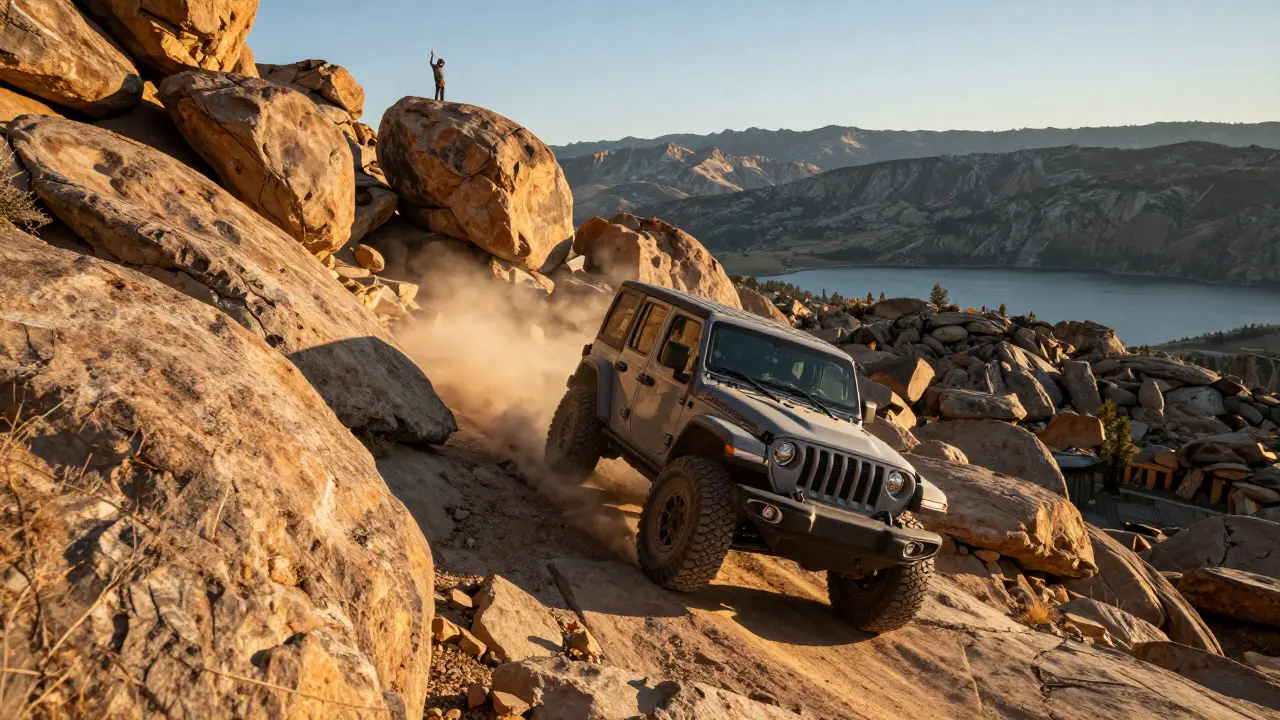
The Rubicon Trail isn’t just famous-it’s legendary. Stretching 22 miles through the Sierra Nevada foothills near Lake Tahoe, this trail is the gold standard for 4x4 enthusiasts. Rock crawling here isn’t optional. It’s the whole point. You’ll navigate boulders the size of small cars, steep climbs with zero traction, and narrow ledges where one wrong turn means a long ride down. The trail is rated extreme-only for vehicles with lockers, high clearance, and drivers who’ve done their homework. Even then, you’ll likely need a spotter. The trail is well-marked, but the rocks aren’t. Many people bring spare tires, winches, and a recovery strap just in case. The reward? A view of the Emerald Bay from above that feels like you’ve climbed into another world.
Hell’s Revenge, Moab, Utah
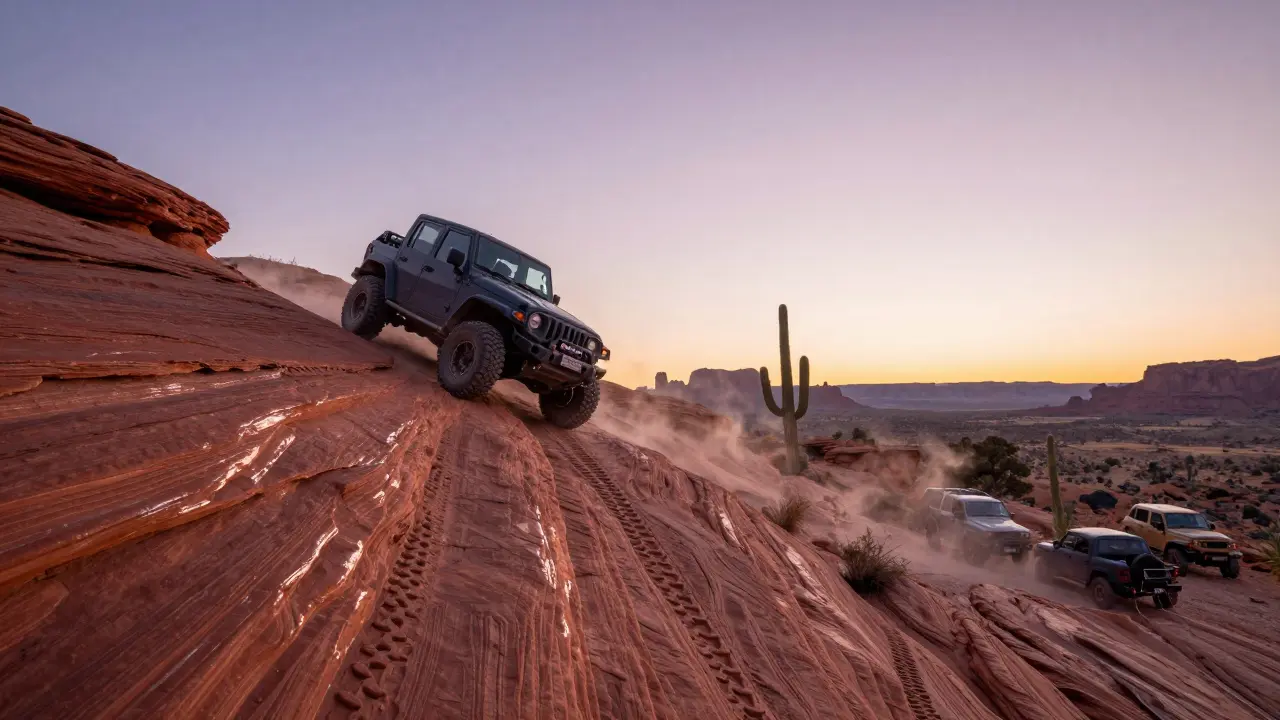
Just a few miles from downtown Moab, Hell’s Revenge lives up to its name. This 11-mile loop is packed with steep sandstone ledges, deep ruts, and sudden drops. The infamous “Slickrock” section is a 45-degree climb over slick, red rock that feels like driving on a greased-up bowling ball. Your tires need serious grip, and your suspension needs to be tuned for punishment. This trail is rated hard to extreme. Beginners sometimes try it after watching YouTube videos. They rarely make it past the first climb. Even experienced drivers get stuck here. That’s why you’ll see trail crews with tow ropes parked at the bottom. Bring extra water. The sun here doesn’t ask permission-it just bakes you.
The White Rim Road, Canyonlands National Park, Utah
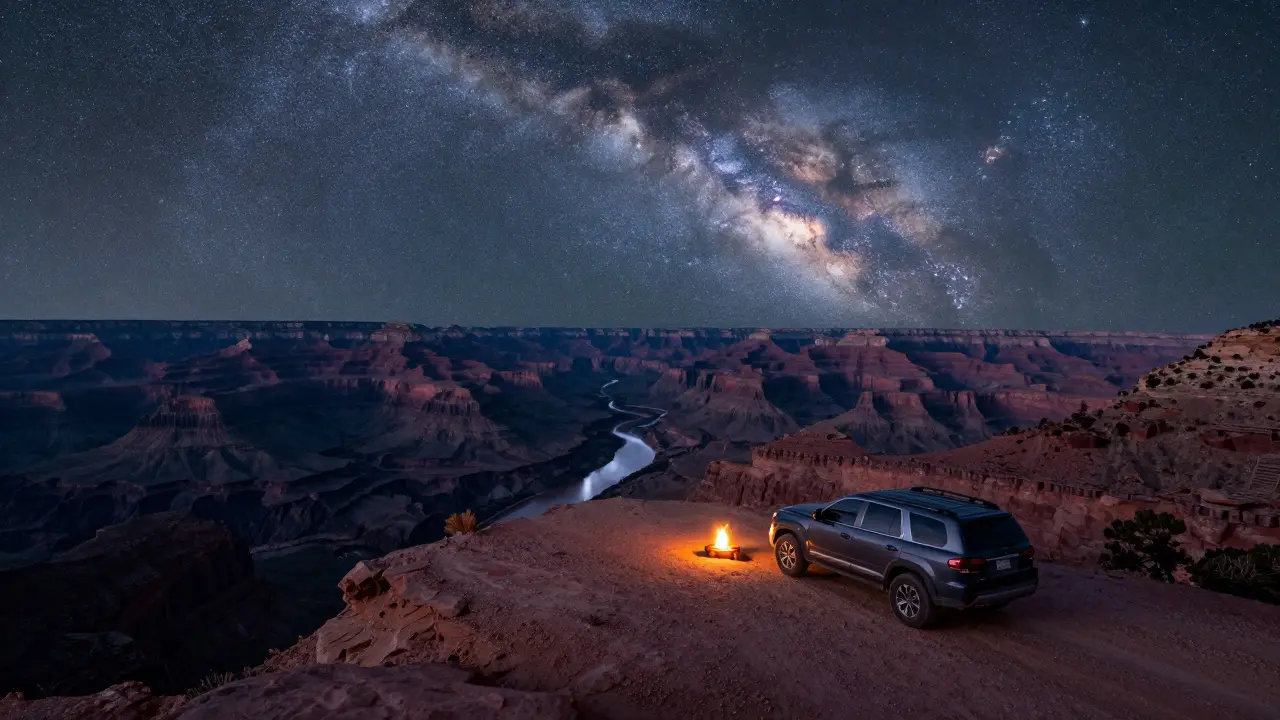
If you want a long, scenic ride with fewer rocks and more sky, the White Rim Road is your pick. This 100-mile loop sits 1,000 feet above the Colorado and Green Rivers. The surface is mostly hard-packed sand and gravel, with occasional slickrock patches. It’s rated moderate, making it one of the few trails in Utah that’s doable with a stock SUV-though a lifted vehicle with all-terrain tires is still better. The trail takes two full days to complete, and there’s no cell service. You’ll need to carry all your water, food, and fuel. Campsites are primitive but stunning. You’ll see arches, canyons, and stars so bright they feel like they’re falling out of the sky. It’s not technical, but it’s physically demanding. Don’t underestimate the distance.
The Dunes at ORV Area, OHV, California
Forget paved roads. The Imperial Sand Dunes are a 50-square-mile playground of soft, shifting sand dunes that rise over 300 feet. This is where ATVs, dirt bikes, and heavy trucks go to play. The surface changes every day-wind reshapes the dunes, and new ruts form overnight. It’s rated moderate to hard depending on conditions. A stock vehicle will sink. You need a sand tire, a snorkel (to keep dust out of the engine), and a recovery board. Many people come with trailers full of gear, tents, and coolers. It’s a social scene too-campfires at night, music, and people trading stories. But don’t be fooled: the wind here can knock over a small trailer. Stay on designated routes. Rangers patrol, and fines for going off-trail can hit $500.
The Rubicon Trail, Michigan
Wait-there’s another Rubicon? Yes. And it’s nothing like Utah’s. Michigan’s Rubicon Trail is a 25-mile loop in the Huron-Manistee National Forest, built for rock crawling and muddy climbs. It’s rated hard. The trail is packed with boulders, steep inclines, and knee-deep mud pits. Unlike Utah’s dry rock, this trail gets soaked in spring and fall. You’ll need a winch, a snorkel, and a high-clearance vehicle. Many drivers come here to train before heading west. The trail is well-maintained, with marked obstacles and a community of locals who help each other out. It’s not scenic like Moab, but it’s brutally honest. If you can handle Michigan’s Rubicon, you can handle almost anything.
Black Bear Pass, Colorado
Perched at 12,000 feet above sea level, Black Bear Pass is one of the most dangerous trails in the Rockies. The road is narrow, with no guardrails. One side is a cliff. The other is a drop-off into a canyon that drops 1,000 feet. The surface is loose scree, wet rock, and exposed tree roots. It’s rated extreme. You need a 4x4 with low-range gearing, locking differentials, and a spotter. Even then, weather changes fast. Snow can roll in by noon. Rain turns the trail into a slide. Many vehicles get stuck here. Some never get unstuck. The view from the top is worth it-snow-capped peaks, alpine lakes, and silence so deep you hear your own heartbeat. But this isn’t a trail for ego. It’s a trail for respect.
The Mauna Kea Summit Road, Hawaii
Most people think of beaches when they think of Hawaii. But Mauna Kea’s summit road is one of the most unique off-road experiences in the country. The road starts as paved, then turns to gravel, then to loose volcanic cinders. The final mile is a 1,000-foot climb over ash and rock at 13,796 feet. It’s rated moderate-but only if you’re acclimated. Altitude sickness hits fast here. Your engine struggles. Your tires lose grip. And the air is so thin, your lungs burn. You need a 4x4 with good ground clearance and low-range gearing. No SUVs with AWD. They’ll get stuck. The summit is cold, even in summer. Bring layers. The view of the stars at night? Unmatched. The stars here are so clear, you can see the Andromeda Galaxy with your naked eye. But this trail is not a casual drive. It’s a high-altitude expedition.
What You Need Before You Go
Trail difficulty isn’t just about rocks and sand. It’s about preparation. Here’s what every off-roader should carry:
- Recovery gear: A winch, tow straps, and shovel. If you get stuck, you won’t be rescued.
- Tire pressure: Lower your PSI before hitting rough terrain. 15-20 PSI gives better grip.
- Communication: Satellite messengers like Garmin inReach work where cell service dies.
- Water and food: At least 1 gallon per person per day. Heat drains you faster than you think.
- Vehicle inspection: Check brakes, suspension, and fluid levels. A loose bolt on a trail can cost you more than money.
And never go alone. Even experienced drivers get in trouble. A buddy with a second vehicle can mean the difference between a story and a rescue mission.
Trail Difficulty Explained
Not all trails label their difficulty. But here’s what the ratings usually mean:
- Easy: Paved or gravel roads. Stock SUVs handle fine. No 4x4 needed.
- Moderate: Dirt roads, shallow ruts, some rocks. 4x4 recommended. Tires should be all-terrain.
- Hard: Deep ruts, steep climbs, boulders. Locking differentials and winch required.
- Extreme: Technical rock crawling, near-vertical drops, no room for error. Built-for-trail vehicles only.
Remember: a trail’s rating depends on your vehicle. A lifted Jeep with lockers might breeze through a “hard” trail. A stock truck? It’s a death trap.
What Not to Do
Off-roading isn’t a game. It’s a responsibility. Here’s what you must avoid:
- Driving on closed trails. Many are protected for wildlife or cultural reasons.
- Going solo. Always have someone with you-or at least a way to call for help.
- Ignoring weather. Flash floods, snow, and mud can turn a safe trail into a trap overnight.
- Leaving trash. Even a water bottle left behind can harm animals.
- Assuming your vehicle is “trail-ready.” Stock SUVs aren’t built for Moab. Don’t risk it.
The best off-roaders aren’t the loudest. They’re the ones who know when to turn back.
Can I drive an SUV on off-road trails?
It depends. A stock SUV can handle easy or moderate trails like the White Rim Road or some gravel forest roads. But for anything harder-like Hell’s Revenge or the Rubicon-you need a vehicle with low-range 4WD, locking differentials, high ground clearance, and off-road tires. Most stock SUVs lack these features and will get stuck or damaged.
Do I need a winch for off-roading?
If you plan to tackle hard or extreme trails, yes. A winch isn’t just helpful-it’s essential. Many trails have sections where you’ll get stuck, especially in mud, sand, or steep rock. Even experienced drivers get stuck. A winch gives you independence. Without one, you’re relying on others to help you out-and that’s not always possible in remote areas.
Are off-road trails open year-round?
No. Many trails close seasonally due to weather, snow, or wildlife protection. For example, Black Bear Pass in Colorado is only open from late June to October. The Dunes in California are closed after heavy rain. Always check with the managing agency before you go. Trails can change overnight.
What’s the best vehicle for off-roading?
There’s no single “best” vehicle-it depends on the trail. For rock crawling, a Jeep Wrangler Rubicon with lockers is ideal. For desert sand, a Toyota 4Runner with sand tires and a snorkel works well. For long-distance trails like the White Rim, a lifted Ford F-150 Raptor offers comfort and power. The key is matching your vehicle to the terrain-not chasing the most expensive rig.
Can I rent an off-road vehicle in the U.S.?
Yes. Companies like TuffRide, Outfitterz, and Overland Vehicle Systems offer rentals in Moab, Moab, and other trail hubs. Rentals usually include a winch, recovery gear, and a trail map. Prices range from $200-$500 per day. Make sure the rental includes insurance for off-road damage-most standard policies don’t cover it.
Next Steps
Start small. Pick one easy or moderate trail and test your gear. Learn how your vehicle behaves on dirt, sand, and rocks. Talk to local off-road clubs-they know the real conditions, not just the brochures. And when you’re ready to go further? The trails won’t wait. But your preparation should.
Comments
poonam upadhyay
Wow. Just… wow. This article is a masterclass in how to write about off-roading without turning it into a gear-porn catalog. I’ve done Hell’s Revenge twice - once in a stock Toyota 4Runner, once in a lifted JL - and let me tell you, the second time felt like flying. The first? I cried. Not from fear. From pride. I got stuck. I got out. I didn’t break anything. That’s the real win. Also, the sun here? It doesn’t bake you. It devours you. Bring a hat. Bring ice. Bring a therapist.
March 9, 2026 at 18:14
Shivam Mogha
Winch is mandatory on any trail above moderate. No exceptions.
March 11, 2026 at 15:18
OONAGH Ffrench
I’ve driven the White Rim in winter. Snow on sand. It’s surreal. No one else was there. Just me, the wind, and the Colorado River far below. I didn’t need a winch. I didn’t need a spotter. I needed silence. And that’s what this sport gives you - not adrenaline. Not ego. Just quiet. The land doesn’t care if you’re tough. It only cares if you’re present. Read this again. Then go sit on a rock. Just sit. Let the trail speak to you.
March 12, 2026 at 09:55
mani kandan
Great breakdown. I especially appreciate the note on vehicle matching. Too many people think a lifted Tacoma is a magic wand. It’s not. It’s a liability if you don’t know your limits. I took my 2018 Tacoma on the Michigan Rubicon last fall. Mud up to the axles. Winch worked perfectly. But the real hero? My recovery board. No fancy gear. Just a simple plank. Sometimes, the simplest tools save the day. Also - air it down. Always. Even on gravel. It’s not optional. It’s physics.
March 12, 2026 at 10:54
Rahul Borole
It is imperative to underscore the critical importance of pre-trip vehicle inspection. A loose bolt, a marginal brake pad, or a marginal fluid level may appear trivial in a controlled environment but can precipitate catastrophic failure in remote, high-stress terrain. Furthermore, the assertion that stock SUVs are unsuitable for hard or extreme trails is not merely accurate - it is a non-negotiable safety standard. Off-road driving is not recreational. It is a technical discipline requiring disciplined preparation, not bravado. I commend the author for emphasizing the necessity of satellite communication devices. In the absence of cellular infrastructure, a Garmin inReach is not a luxury - it is a lifeline. One cannot overstate this.
March 13, 2026 at 07:46
Sheetal Srivastava
Let’s be real - this whole ‘trail rating’ system is corporate BS. The Rubicon isn’t ‘extreme’ - it’s a tourist trap now. You can’t even find a rock that hasn’t been bolted by some dude with a $100k Jeep and a GoPro. And Mauna Kea? Please. Half the people who drive up there are in F-150s with 265 tires and zero clue. They think ‘AWD’ means ‘off-road.’ It doesn’t. AWD is a marketing lie. Real off-roading is about mechanical advantage, not marketing. And don’t get me started on rental companies. They don’t even know what a locker is. They just rent out Jeeps with Netflix screens and call it ‘adventure.’
March 13, 2026 at 15:40
Bhavishya Kumar
There is a grammatical error in the section titled 'The Rubicon Trail, Michigan.' It states: 'Stretching 22 miles through the Sierra Nevada foothills near Lake Tahoe' - this is incorrect. The Michigan Rubicon is in the Huron-Manistee National Forest. The original Rubicon is in Utah. The text conflates the two. This is a factual inaccuracy. Also, 'P.S.' is not a proper closing. It should be 'Sincerely' or omitted. Tone is inconsistent. The article reads like a blog post masquerading as a guide. It lacks scholarly rigor.
March 14, 2026 at 12:59
ujjwal fouzdar
You know what off-roading really is? It’s not about the trail. It’s not about the vehicle. It’s about the moment you realize you’re not in control. That’s the truth. The rocks don’t care. The sand doesn’t care. The wind doesn’t care. And when you finally stop fighting it - when you stop trying to conquer - that’s when the trail gives you something. Not a trophy. Not a photo. A quiet. A stillness. A whisper. You don’t find it on the summit. You find it in the stuck. In the silence between the winch’s groan and the wind’s sigh. That’s the real reward. The view? Just a bonus.
March 14, 2026 at 22:36
Anand Pandit
Love this list. I’ve done 12 of the 15 trails mentioned here - and yeah, I got stuck on Hell’s Revenge too. But here’s the thing - the people who help you out? They become your family. Last year, I helped a girl get her Ford Ranger out of a mud pit on Michigan’s Rubicon. She didn’t have a winch. I didn’t have a winch. We used tree branches, rocks, and a tire iron. Took two hours. We shared snacks. We laughed. She gave me her dad’s old compass. I still carry it. Off-roading isn’t about gear. It’s about people. Don’t go alone. But don’t go just to drive. Go to connect.
March 15, 2026 at 12:55
Reshma Jose
Y’all are overthinking this. I drive my lifted RAV4 on the Dunes. No winch. No snorkel. Just low tire pressure and a cooler full of watermelon. I’ve never gotten stuck. People act like you need a NASA-grade rig. Nah. Just respect the sand. And don’t be that guy who drives in circles screaming Metallica. Chill. It’s a dune. Not a race track.
March 16, 2026 at 07:24
rahul shrimali
Winch. Air down. Never alone. Done.
March 18, 2026 at 06:33
Eka Prabha
Let’s be honest - this whole off-road trend is just another form of colonial recreation. These trails are sacred to Indigenous communities. The government lets tourists drive over burial grounds and ceremonial sites because ‘no one’s hurt.’ But the land remembers. The dust doesn’t just settle. It carries memories. And every tire mark? It’s a wound. You think you’re ‘connecting’ with nature? You’re just leaving your footprint on a grave. And the ‘trail ratings’? A marketing ploy to sell more tires. The real danger isn’t the rocks. It’s the delusion that you’re a pioneer. You’re not. You’re a tourist with a winch.
March 19, 2026 at 16:39
Bharat Patel
There’s a quiet truth here - the trails don’t change. We do. Ten years ago, I thought off-roading meant proving I could climb a rock wall. Now I go just to sit. To watch the clouds move over the canyon. To hear how silence sounds different at 12,000 feet. The vehicle? Just a tool. The trail? Just a path. The real journey is inside. The more I drive, the less I need to prove. And that’s the greatest victory of all.
March 20, 2026 at 05:35
Bhagyashri Zokarkar
OMG this post is like the best thing ever. I just got my first Jeep Wrangler and I’m so excited. I did the white rim thing and it was like wow I was like oh my god the stars were so bright like literally I could see the milky way and I was like crying and then I got stuck in the sand and I was like oh no but my friend helped me and we had a campfire and ate hot dogs and I think I’m in love with off roading now. I’m gonna do the rubicon next month. Wish me luck. Also I think you should add like the trail in arizona where you drive on the edge of the canyon and it’s like super narrow and you can see the ground falling away and it’s so scary but so beautiful. I saw it on tiktok. It’s called like ghost road or something. I think it’s in arizona. Please add it. I need to know if it’s real. I’m scared but also so ready. Love you guys. Xoxo
March 22, 2026 at 05:28
Rakesh Dorwal
Let’s cut through the noise. America’s trails are the best because America built them. No other country has the land, the freedom, or the spirit to let people drive where they want. The government doesn’t own the dirt. We do. And if you’re afraid to go because some ‘sacred site’ or ‘wildlife’ might be disturbed - then you shouldn’t be here. This isn’t a nature walk. This is American grit. The Rubicon, the Dunes, Black Bear - they’re not just trails. They’re testaments. To independence. To courage. To the fact that we don’t ask permission. We go. And if you’re too scared? Stay home. The trail doesn’t need you.
March 23, 2026 at 09:58