
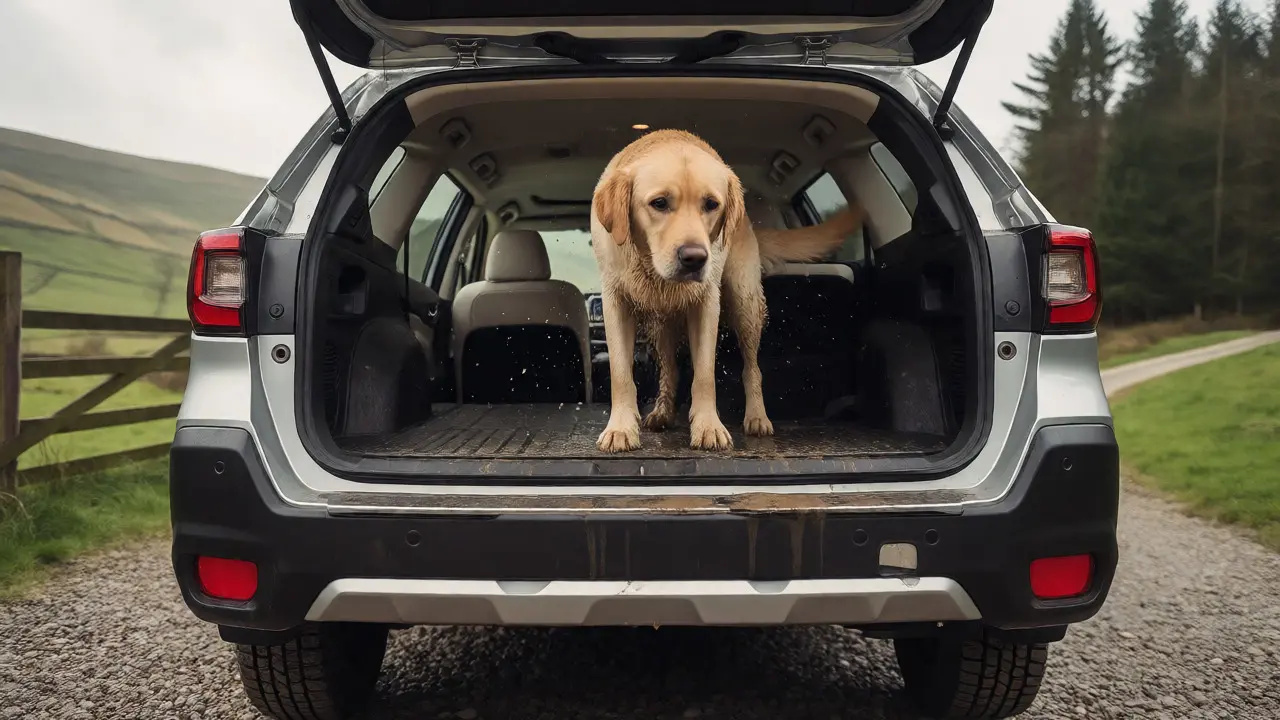
You know the drill. You’ve just finished a muddy walk in the Mendip Hills, your Labrador is shaking off half the county’s topsoil onto your driveway, and you’re staring at the back of your hatchback wondering if it’s going to survive another year of this abuse. If you’re serious about taking your dog everywhere, a standard sedan or even a small crossover often fails the sniff test-literally and figuratively. The real issue isn’t just about having enough room; it’s about cargo height, durability, and how easily you can contain the chaos.
Most people buy an SUV thinking any boot will do. They don’t realize that a low cargo floor means their Great Dane has to jump three feet into a crate, risking hip injuries over time. Or they pick a vehicle with leather seats that look great until one accident with a muddy paw turns them into permanent stains. We’re breaking down which SUVs actually work for dog owners in 2026, focusing on the metrics that matter: vertical clearance, floor load capacity, and the ecosystem of accessories that keep your interior from looking like a kennel.
Why Cargo Height Is More Important Than Total Volume
When you look at spec sheets, manufacturers love to talk about cubic feet of storage. But for dog owners, that number is misleading. A large volume with a narrow opening is useless if you can’t get a 70-pound crate through the door. What matters is the Cargo Floor Height and the vertical clearance from the floor to the roof lining. This determines two things: whether your dog can jump in comfortably without hurting their joints, and whether tall crates (like the popular Gunner or Impact cases) fit upright without being wedged in.
If you have a senior dog or a breed prone to joint issues, like German Shepherds or Labradors, a high step-in height is a dealbreaker. Ideally, you want a cargo floor no higher than 30 inches from the ground. Anything above 34 inches requires a ramp or a lift, which adds hassle every single time you go out. Conversely, if you’re transporting multiple dogs in stacked crates, you need maximum vertical height. A lower roofline might save fuel, but it kills your ability to stack anything vertically.
Top Contenders: The Heavy Hitters of 2026
Not all SUVs are created equal when it comes to handling four-legged passengers. Based on current market models available in the UK and US, these stand out for specific reasons related to accessibility and durability.
| SUV Model | Cargo Floor Height (Inches) | Max Vertical Clearance (Inches) | Floor Load Capacity (Lbs) | Best For |
|---|---|---|---|---|
| Subaru Outback | 29.5 | 41.2 | 1,000 | All-rounder / Moderate Size Dogs |
| Mazda CX-50 | 30.1 | 38.5 | 900 | Style + Durability / Medium Breeds |
| Toyota Land Cruiser | 31.5 | 43.0 | 1,200 | Large Crates / Off-Road Access |
| Ford Bronco Sport | 28.8 | 36.0 | 850 | Urban Use / Small-Medium Dogs |
| Chevrolet Tahoe | 32.0 | 45.5 | 1,500 | Multiple Large Dogs / Stacking |
The Subaru Outback remains the gold standard for many dog owners not because it’s the biggest, but because it’s the most accessible. Its symmetrical all-wheel drive handles muddy trails well, and the cargo floor is low enough that most medium-to-large dogs can hop in without assistance. The flat floor when seats are folded is also a massive plus-it prevents crates from sliding around during sudden stops.
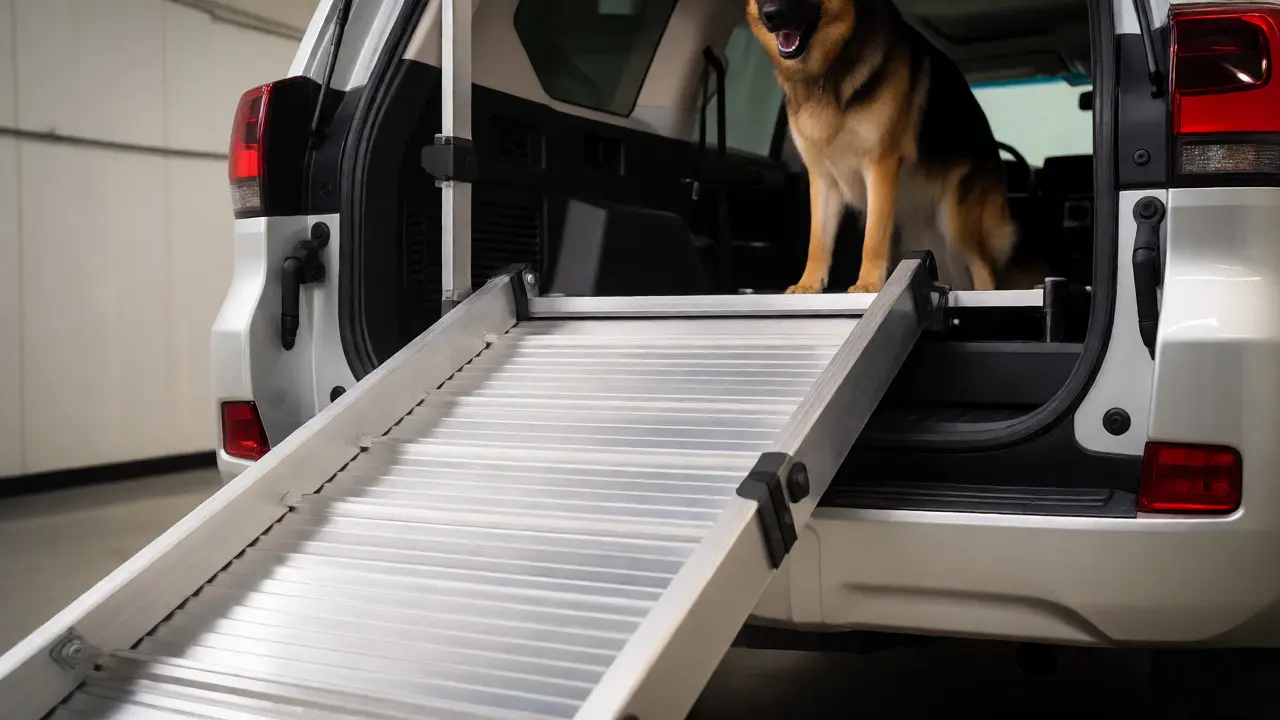
If you need more muscle, the Toyota Land Cruiser (and its sibling, the Lexus GX) offers incredible load capacity. It’s built to take a beating. The rubberized flooring options from the factory mean you can hose out the boot after a beach day. However, the step-in height is noticeable, so plan on buying a sturdy ramp if your dog is elderly.
The Critical Role of Interior Materials
Leather looks premium, but it’s a nightmare for wet dogs. Water beads up, runs into seams, and causes mold underneath the foam padding if it doesn’t dry properly. Fabric holds mud, but it’s harder to clean thoroughly. The sweet spot in 2026 is synthetic vinyl or heavy-duty rubber mats that cover the entire cargo area.
Look for SUVs that offer "easy-clean" packages. Brands like Volvo and Tesla have moved toward washable fabrics that resist staining better than traditional cloth. But honestly, no upholstery survives a golden retriever shedding season without protection. That’s why the best strategy isn’t finding the perfect seat material-it’s covering what you have with high-quality barriers.
Essential Accessories That Actually Work
You can buy every gadget under the sun, but only a few make life easier. Here’s what’s worth your money and what’s a waste.
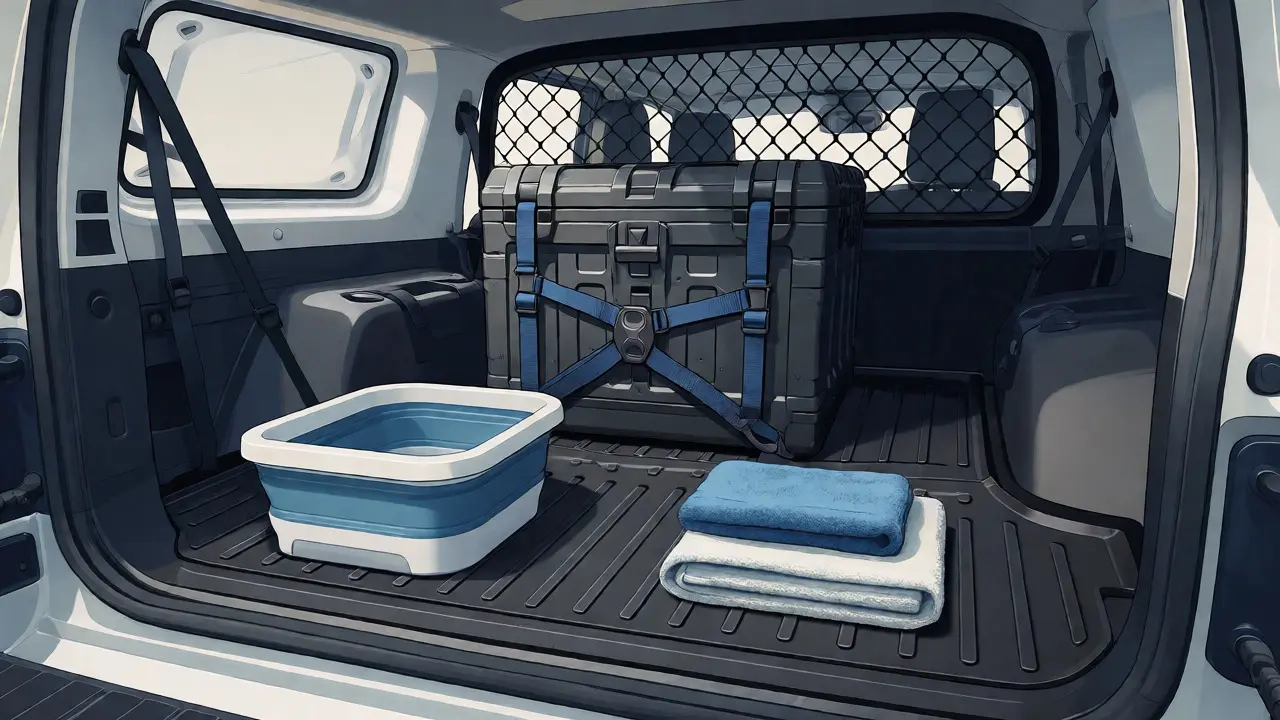
- Rubber Liners: Skip the carpeted ones. Get a custom-fit rubber mat that extends up the sides of the wheel wells. It catches water, mud, and drool, and you can pull it out and rinse it in the garden.
- Crates vs. Harnesses: If your dog is anxious, a hard-sided crate is safer. It gives them a den-like feeling and protects them in a crash. For calm dogs, a crash-tested harness attached to anchor points saves space. Look for harnesses certified by Center for Pet Safety.
- Window Guards: Dogs love sticking their heads out, but flying debris can injure eyes. Mesh window guards allow airflow while keeping bugs and stones out. They clip directly onto the window frame and are cheap insurance.
- Portable Wash Stations: Collapsible basins and microfiber towels kept in the car prevent you from dragging muddy paws into your kitchen. Some newer SUVs even have integrated tailgate showers, but a simple bucket works fine.
One often overlooked accessory is a barrier net. If you’re driving alone with a large dog, a net prevents them from jumping into the front seat and distracting you. It’s a simple safety feature that keeps the driver focused and the dog contained.
Matching the SUV to Your Dog’s Lifestyle
Your choice should depend on your routine, not just the dog’s size. Do you hike weekly? Do you visit cities where parking spaces are tight? Do you transport multiple animals?
For urban dwellers with small-to-medium dogs, compact SUVs like the Honda HR-V or Hyundai Kona are sufficient. Their Magic Seat configurations (in Honda) allow you to fold the rear seats up to create a well-like space for taller items or crates. It’s clever engineering that maximizes vertical space in a small footprint.
For rural owners who tow trailers or carry gear alongside the dog, body-on-frame SUVs like the Jeep Grand Cherokee or GMC Yukon are better. They handle heavier loads and rougher terrain without straining the suspension. Plus, their third-row seating can be folded flat to create a massive, uninterrupted cargo bay.
Pitfalls to Avoid When Buying Used
If you’re shopping second-hand, inspect the cargo area closely. Smell is the first indicator. A musty odor often means previous owners didn’t clean up accidents, leading to bacterial growth in the carpet padding. Check the floor hinges for rust, especially if the car was used for beach trips. Saltwater accelerates corrosion.
Also, check the condition of the seatbelts and anchor points. Dog owners often tug on these attachments. If the webbing is frayed or the plastic buckles are cracked, replace them immediately. Safety features degrade faster in pet-heavy vehicles.
Maintenance Tips for Long-Term Survival
Keeping your SUV dog-friendly requires a routine. Vacuum the cargo area weekly, not monthly. Hair gets embedded in fabric quickly. Use a squeegee to remove hair from rubber mats-it’s faster than vacuuming.
Rotate your accessories. If you use a crate, take it out once a month and let the boot air out completely. Moisture trapped under a crate can cause mildew on the floor pan. And always keep a dedicated bag in the car with cleaning supplies: enzymatic cleaner for urine spots, paper towels, and spare trash bags. Being prepared saves you from frantic searches at petrol stations.
Is it safe to leave my dog alone in the SUV?
It depends on the temperature and duration. Even with tinted windows, SUV interiors can heat up rapidly in sunlight. Never leave a dog in a parked car for more than a few minutes in warm weather. In cooler months, ensure the car is locked and secure, but be aware that leaving a dog unattended can lead to anxiety-related destruction of upholstery.
Do I need a ramp for my dog?
If your SUV has a cargo floor height above 30 inches, or if your dog is a senior, a puppy, or has joint issues, yes. Repeatedly jumping into a high boot can cause long-term spinal and hip problems. Portable aluminum ramps are lightweight and easy to store under the cargo floor.
Which SUV has the lowest cargo floor?
Crossovers generally have lower floors than traditional SUVs due to their car-based platforms. Models like the Subaru Outback, Mazda CX-5, and Ford Escape typically have floors between 28 and 30 inches. True body-on-frame SUVs usually sit higher, often exceeding 32 inches.
Can I install a dog partition myself?
Yes, most partitions use tension rods that wedge between the wheel arches or seatbacks. Installation takes minutes and requires no tools. Ensure the partition is rated for your dog's weight; a flimsy net won't stop a 60lb dog from launching forward during a hard brake.
Are electric SUVs good for dog owners?
They can be. EVs often have lower centers of gravity and quieter rides, which reduces anxiety for noise-sensitive dogs. However, some early models had limited cargo height due to battery placement. Newer 2025/2026 models have optimized packaging, making them increasingly viable for larger breeds.