
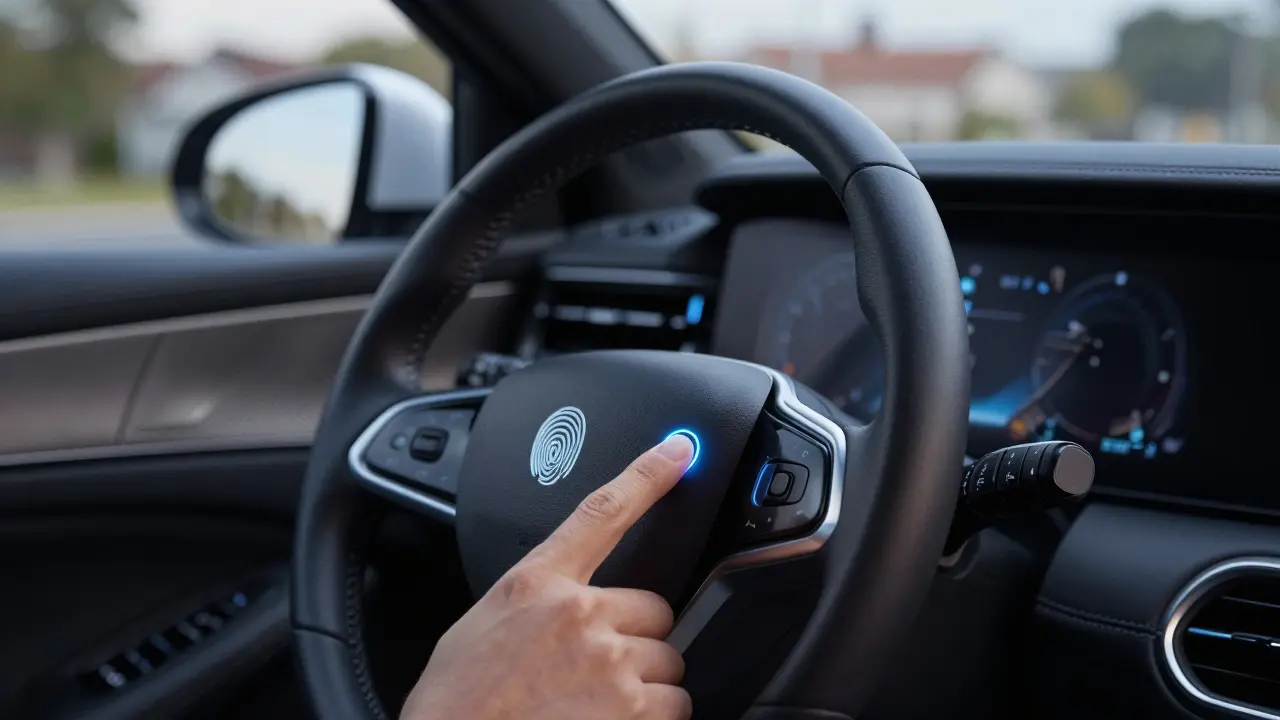
Imagine sitting in your car, the engine purring to life before you even touch the key fob. The seats slide into your exact position, the climate control adjusts to your preferred temperature, and your favorite playlist starts playing automatically. This isn't a scene from a sci-fi movie; it is the reality of biometric access in modern vehicles. As we move through 2026, automakers are rapidly replacing traditional keys with advanced sensors that recognize who you are. But how does this technology actually work, and is it ready for daily use?
The Shift from Keys to Identity
For decades, the car key was just a piece of metal. Then came the remote fob, which added convenience but remained a physical object you could lose or steal. Now, the industry is moving toward a keyless, identity-based system. Instead of proving you have a key, you prove you are the authorized user. This shift addresses two major pain points: security and personalization.
Traditional immobilizers prevent theft by checking for a valid chip in the key. However, relay attacks-where thieves amplify the signal from your fob inside your house-are becoming more common. Biometrics offer a layer of security that cannot be relayed. Your fingerprint or facial structure is unique to you. If someone steals your phone or wallet, they still cannot start your car without your biological data.
| Method | Security Level | Convenience | Vulnerability |
|---|---|---|---|
| Physical Key | Low | Low | Loss, duplication |
| Key Fob | Medium | High | Relay attacks, loss |
| Fingerprint Scanner | High | High | Wet/dirty hands |
| Facial Recognition | Very High | Very High | Lighting conditions |
How Fingerprint Recognition Works in Vehicles
Fingerprint scanners in cars are not new, but their integration has become seamless. You will typically find these sensors on the steering wheel, near the gear shifter, or embedded in the door handle. When you place your finger on the sensor, the system captures the ridges and valleys of your print. It then converts this image into a digital template-a string of numbers representing the unique patterns.
This template is stored locally in the car's secure enclave, not on a cloud server. This local storage is crucial for privacy. If the car's database were hacked remotely, millions of identities could be compromised. By keeping the data offline, the risk is minimized. Once the scan matches the stored template, the car unlocks the doors and allows the engine to start.
In 2026, most systems support multiple users. A family can register up to five fingerprints. When Dad scans his finger, the seat moves back, and the radio switches to news stations. When Mom scans hers, the seat adjusts forward, and the navigation app opens her commute route. This level of personalization happens in under two seconds.
The Rise of Facial Recognition Technology
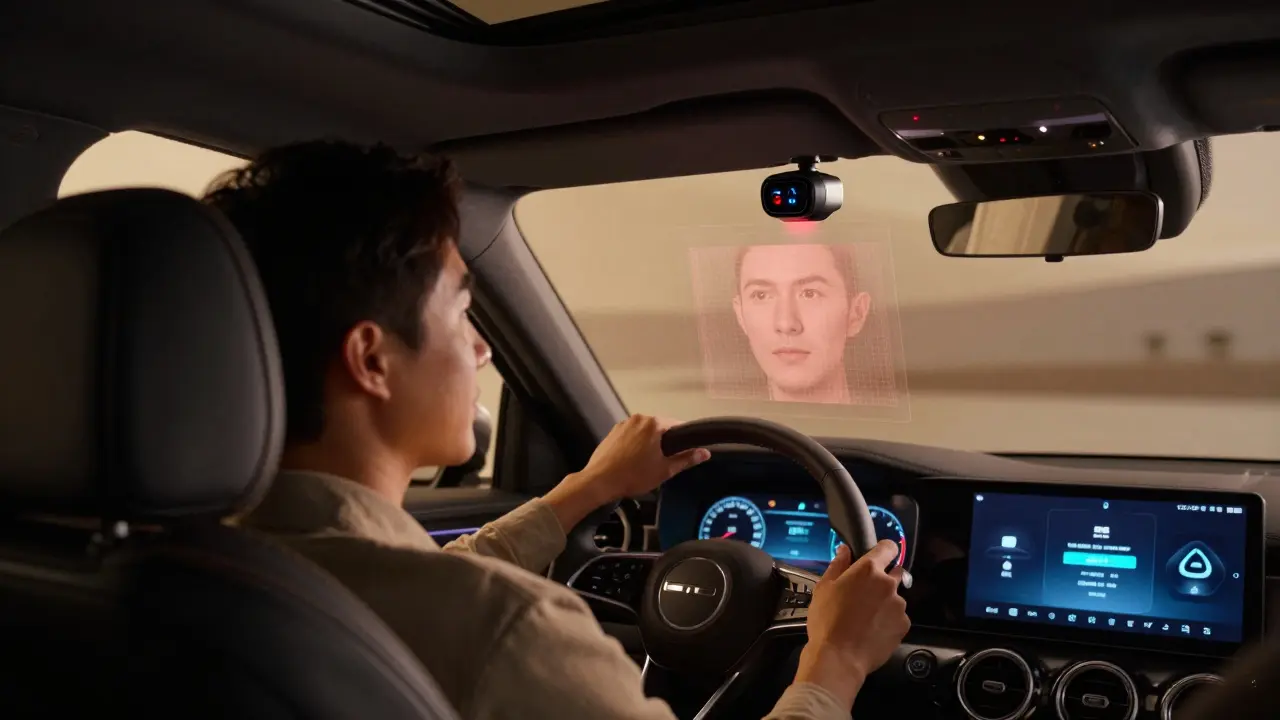
If fingerprint scanning is convenient, facial recognition is effortless. Cameras mounted on the A-pillar or the rearview mirror constantly monitor the cabin. Using infrared light, these cameras create a 3D map of your face, ensuring that a photo or video cannot trick the system. This is known as liveness detection.
The process works like this: as you approach the car, the exterior camera may wake the system. Once inside, the interior camera confirms your identity. If it recognizes you, the car configures itself instantly. Some advanced models even detect if you are wearing sunglasses or a hat, adjusting their algorithms accordingly. In low-light conditions, such as parking at night, the infrared illuminators ensure the camera still sees clearly.
Beyond unlocking the car, facial recognition plays a critical role in safety. Many modern systems include drowsiness detection. If the camera notices your eyes closing or your head nodding, the car alerts you with a sound or vibration. In some cases, it can pull over safely if you become unconscious. This dual-purpose functionality makes facial recognition a valuable addition to active safety suites.
Privacy Concerns and Data Security
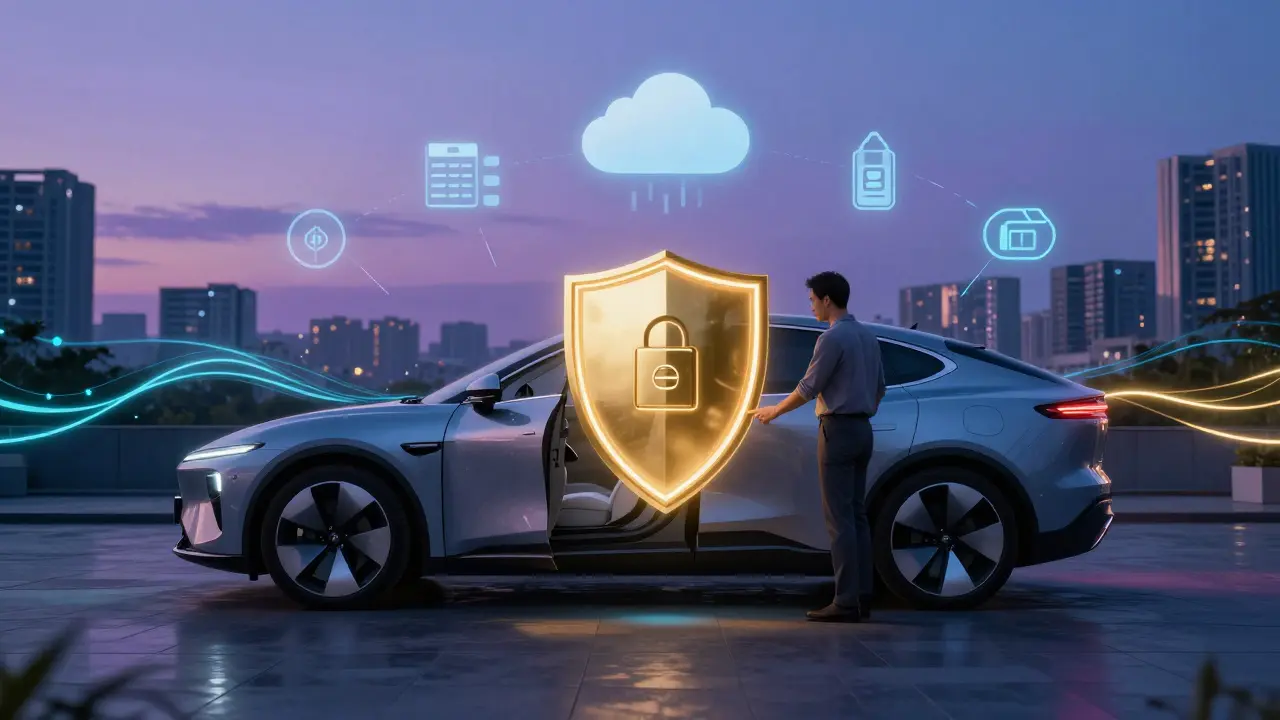
With great convenience comes great responsibility. The biggest concern with biometric data is privacy. Unlike a password, you cannot change your fingerprint or face if it is stolen. Therefore, manufacturers must implement robust security measures. Most leading brands use end-to-end encryption for any data transmission between the car and your smartphone or cloud account.
Data residency is another key issue. In Europe, strict GDPR regulations require that biometric data be processed locally whenever possible. Manufacturers like BMW, Mercedes-Benz, and Tesla have adopted policies where biometric templates remain on the device. They do not sell this data to third parties. However, users should always read the privacy policy to understand what data is collected and how long it is retained.
There is also the question of consent. What happens if a passenger is scanned without their knowledge? Most systems allow drivers to disable cabin monitoring when guests are present. This feature ensures that only the driver's biometric data is used for personalization, while passengers remain anonymous to the system.
Real-World Performance and Limitations
No technology is perfect. Fingerprint scanners can struggle with wet or dirty hands. If you have been gardening or washing dishes, the sensor might fail to read your print. In these cases, having a backup method, such as a PIN code or a physical key blade, is essential. Facial recognition can be affected by drastic changes in appearance, such as growing a beard or changing hairstyle. While algorithms are improving, they may occasionally misidentify users during significant transitions.
Weather conditions also play a role. Heavy rain or snow can obscure exterior cameras, delaying the wake-up sequence. Similarly, extreme sunlight can sometimes interfere with optical sensors. Manufacturers are addressing these issues with better hardware shielding and adaptive software. For example, some systems now use ultrasonic sensors as a backup to optical ones in poor visibility.
Despite these limitations, the overall reliability is high. Most users report successful authentication rates above 98% in normal driving conditions. The convenience of never carrying a key again outweighs the occasional need to retry a scan.
Future Trends in Automotive Biometrics
As we look ahead, biometric access will become even more integrated. Voice recognition is already being combined with facial and fingerprint data for multi-factor authentication. This means the car might ask for your voice command after recognizing your face, adding an extra layer of security for high-value actions like selling the car or accessing sensitive settings.
Another trend is the use of biometrics for health monitoring. Sensors can detect heart rate variability and stress levels through skin contact or facial analysis. This data could help adjust the cabin environment to reduce driver fatigue. Imagine the car dimming the lights and playing calming music because it detects you are stressed after a tough day at work.
Finally, interoperability will improve. In the future, your biometric profile might sync across all your devices. Unlocking your phone could simultaneously unlock your car, creating a seamless ecosystem. This requires standardization across brands, which is currently underway through industry alliances.
Choosing the Right System for You
When shopping for a new car in 2026, consider how much you value convenience versus privacy. If you frequently share your car with family members, a system that supports multiple profiles is essential. Look for features that allow easy switching between users. If you are concerned about data security, choose a brand that emphasizes local processing and transparent privacy policies.
Test drive the system before buying. See how quickly it responds to your presence. Check if it works well in different lighting conditions. Ask about backup methods in case the biometric sensors fail. A good system should feel invisible, working smoothly in the background without requiring your attention.
Can biometric data be stolen from my car?
It is highly unlikely. Modern cars store biometric data as encrypted templates, not raw images. These templates are useless to hackers without the decryption key, which is stored securely in the car's hardware. Additionally, most systems keep data local, reducing the risk of remote breaches.
What happens if I lose my key fob?
If your car relies solely on biometrics, you do not need a fob. However, most cars still include a physical key blade or a PIN code entry as a backup. If you lose your primary access method, you can use the backup to enter the car and disable the lost fob via the infotainment system.
Do biometric systems work in cold weather?
Yes, but performance may vary. Fingerprint sensors can struggle with very dry or cracked skin in winter. Facial recognition generally performs well in cold weather, provided the camera lens is clear of ice or frost. Manufacturers often heat the sensors slightly to maintain accuracy.
Can children use biometric access?
Most systems are designed for adults. Children's fingerprints and facial structures change rapidly, making consistent recognition difficult. Additionally, safety regulations often restrict children from starting the vehicle. Parents can set up child locks and parental controls instead.
Is facial recognition safe for night driving?
Yes. Facial recognition systems use infrared light, which is invisible to the human eye. This allows them to work perfectly in complete darkness without distracting the driver or affecting night vision.