
Every year, thousands of car accidents happen because drivers can’t see what’s beside or behind them. Even experienced drivers miss vehicles in their blind spots - and rear-view cameras alone don’t always help when you’re backing up in tight spaces. That’s where blind spot monitoring and rear-view safety systems come in. These aren’t luxury add-ons anymore. They’re now standard on most new cars sold in the UK and the US, and for good reason.
How Blind Spot Monitoring Works
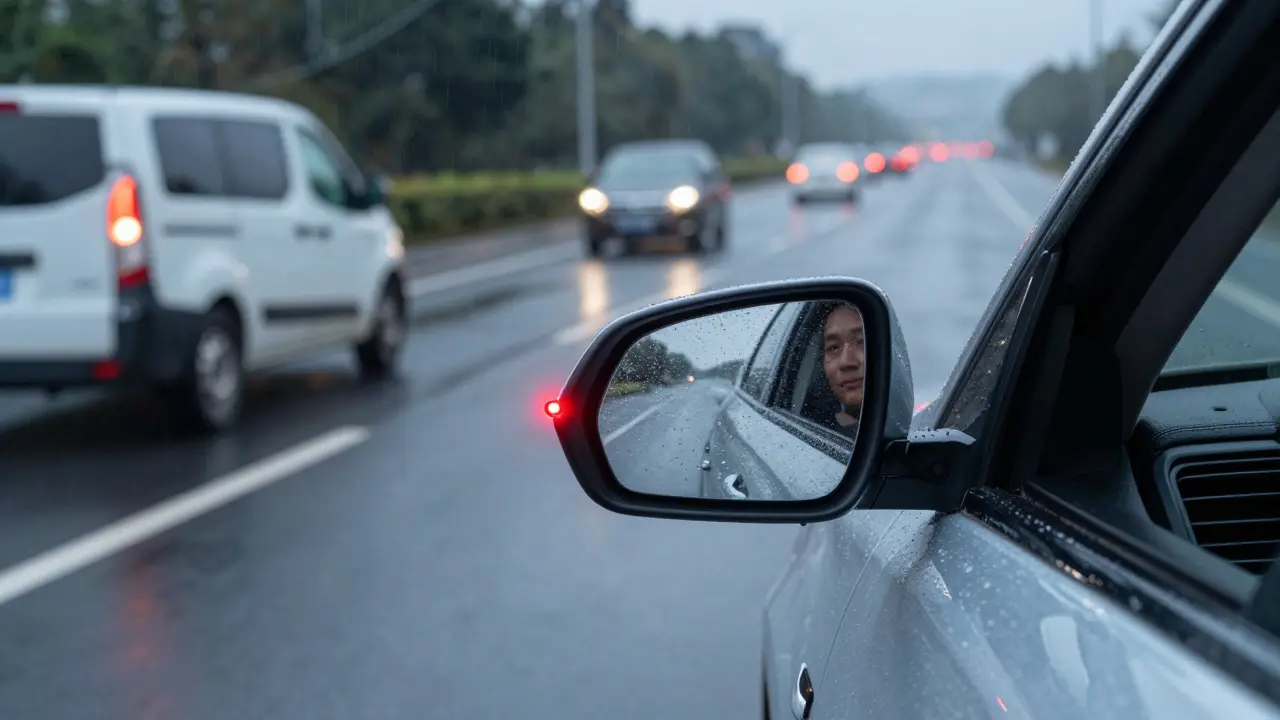
Blind spot monitoring (BSM) uses radar sensors, usually mounted in the rear bumper or side mirrors. These sensors scan the areas next to and behind your car, where your mirrors can’t reach. When another vehicle enters that zone, the system alerts you - often with a small light in the side mirror. Some systems also give you an audible beep or vibrate the steering wheel if you try to change lanes while a car is in your blind spot.
It’s not magic. The sensors are designed to ignore stationary objects like guardrails or signs. They focus only on moving vehicles, especially those approaching from behind at speeds over 10 mph. That’s why you won’t get a warning when a cyclist is passing you slowly - the system is calibrated to catch cars and trucks that could cause serious collisions.
Studies by the Insurance Institute for Highway Safety (IIHS) show that cars with blind spot monitoring have 14% fewer lane-change crashes than those without. In the UK alone, this system prevents roughly 7,000 accidents each year.
Rear-View Safety Systems: More Than Just a Camera
While blind spot monitoring helps you see what’s beside you, rear-view safety systems help you see what’s behind you. Most modern cars come with a rear-view camera that activates automatically when you shift into reverse. But the best systems go beyond a simple video feed.
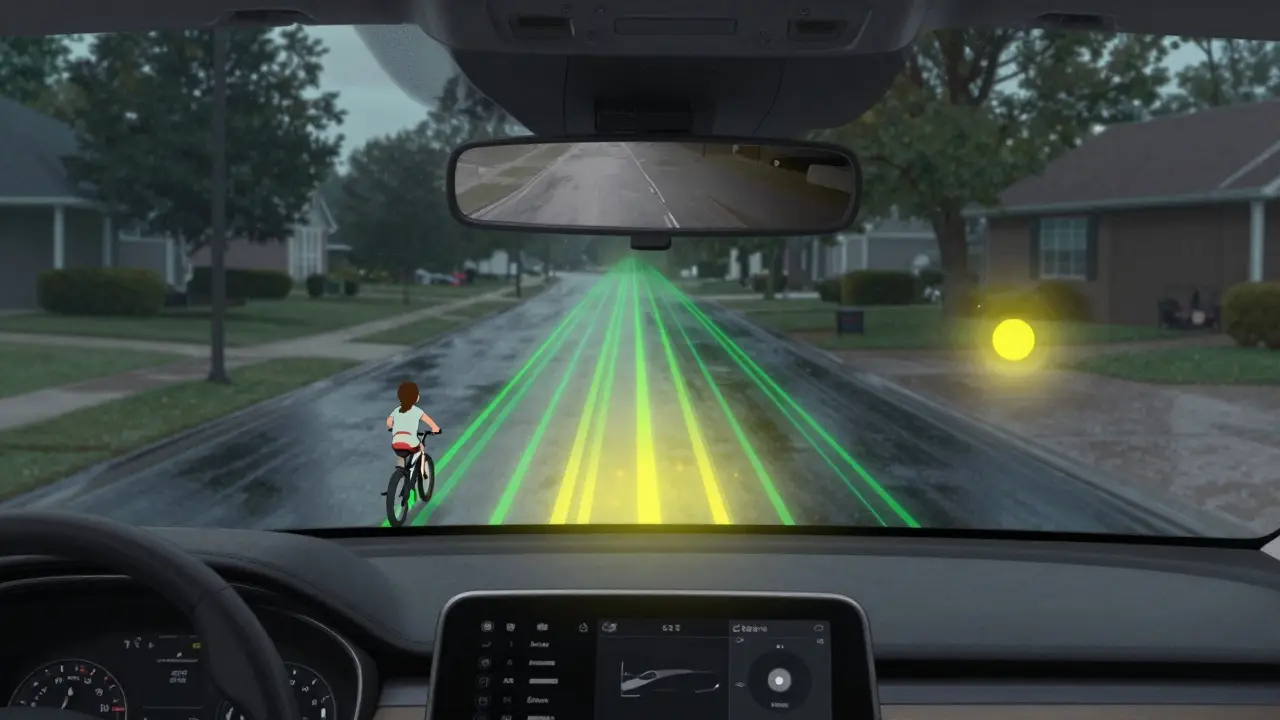
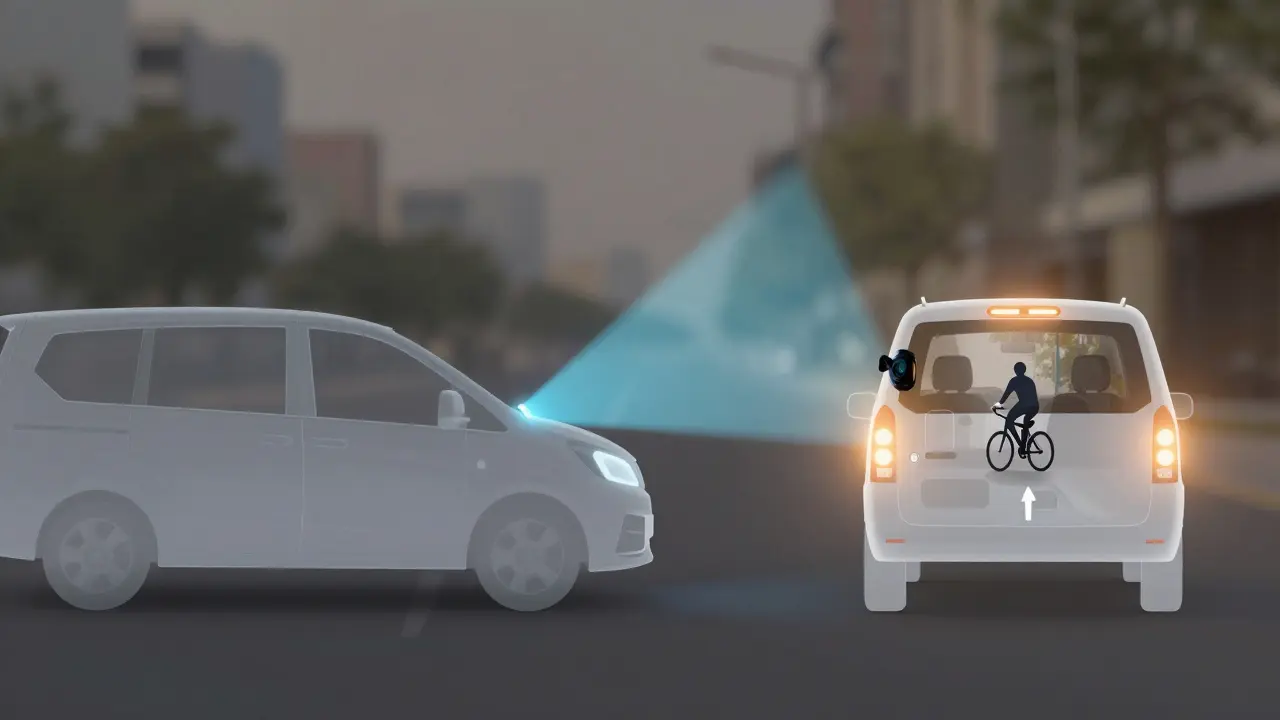
Advanced rear-view systems combine the camera with dynamic guidelines that adjust based on your steering angle. If you turn the wheel left while backing up, the lines on screen shift to show you where the car will go. Some even include cross-traffic alert - if a car or cyclist is speeding toward you from the side while you’re reversing, the system beeps and flashes a warning on the screen.
These systems are especially useful in urban areas, where driveways, parking lots, and narrow streets make reversing risky. In 2025, the National Highway Traffic Safety Administration (NHTSA) reported that rear-view cameras reduced backing-over accidents by 46% in the US. That’s about 200 lives saved annually.
What’s the Difference Between BSM and Rear Camera Systems?
People often confuse blind spot monitoring with rear-view cameras. They’re not the same. One watches your sides; the other watches your back.
- Blind spot monitoring detects vehicles in your side zones - the area you can’t see in your mirrors.
- Rear-view safety systems show you what’s directly behind your car while reversing.
Some cars combine both into one package called a “surround-view system,” which uses multiple cameras to give you a bird’s-eye view of your car. But even then, radar-based blind spot detection is still more reliable than camera-only systems when it comes to detecting fast-moving vehicles in low-light or rainy conditions.
Common Misconceptions
Many drivers think these systems can replace looking over their shoulder. They can’t. No technology is perfect. Sensors can get blocked by snow, mud, or even a dirty license plate. A rear camera might fog up after a cold morning drive. Radar sensors can misread a large motorcycle as a car - or miss a small child on a scooter.
These systems are designed to give you a second chance, not to take over your driving. Always check your mirrors and turn your head before changing lanes or reversing. Think of blind spot monitoring and rear-view systems as your co-pilot, not your autopilot.
Do Older Cars Have These Systems?
If you’re driving a car made before 2018, you probably don’t have factory-installed blind spot monitoring or rear-view safety systems. But you’re not stuck. Aftermarket kits are available and easy to install.
For example, companies like Rear View Safety and Haloview offer wireless blind spot sensors that attach to your side mirrors and connect to a small display inside your car. These cost between £100 and £250 and work well on sedans, SUVs, and even vans. Rear-view cameras can be added for as little as £60, and many include night vision and waterproof housing.
Installation usually takes under two hours. Most kits don’t require cutting wires - they plug into your reverse light circuit. If you’re handy with a screwdriver, you can do it yourself. If not, a local garage can install it for under £80.
What to Look for When Buying a New Car
Not all blind spot and rear-view systems are created equal. Here’s what to check before you sign the papers:
- Radars or cameras? Radar-based blind spot monitoring works better in rain, fog, and darkness. Camera-only systems can get blinded by dirt or glare.
- Alert type - Visual warnings (light in mirror) are best. Audible alerts can be ignored. Vibration in the seat or steering wheel adds another layer of awareness.
- Field of view - Good systems cover at least 10 meters behind and beside your car. Cheaper ones only detect vehicles within 3 meters.
- Cross-traffic alert - This feature warns you of cars approaching from the side while reversing. It’s a lifesaver in parking lots.
- Automatic braking - Some high-end systems can apply the brakes if you’re about to hit something while reversing. Not essential, but very helpful.
Brands like Volvo, Subaru, and Toyota lead in reliability and coverage. Even budget brands like Hyundai and Kia now include solid systems on entry-level models.
Real-Life Scenarios Where These Systems Save Lives
Imagine this: You’re on the M4 heading toward Bristol. You check your mirrors, signal, and start to change lanes. A van you didn’t see is right beside you, moving faster than you thought. Your blind spot monitor flashes red. You pause. The van passes. No crash. That’s the system working.
Or picture this: You’re backing out of a driveway in a quiet residential street. A kid on a bicycle rounds the corner. Your rear-view camera shows nothing - the bike is too low. But your cross-traffic alert beeps loudly. You stop. The child passes safely behind you. That’s the system working again.
These aren’t hypotheticals. In 2024, a UK transport report documented 127 cases where blind spot monitoring prevented a collision, and 89 where rear-view systems stopped a backing accident. These are real people, real families, saved by simple technology.
When These Systems Fail - And What to Do
Even the best systems have limits. Snow covering your sensors? The system turns off. A faulty wiring harness? Warning lights disappear. A software glitch? The camera goes black.
Most cars will show a warning on the dashboard if the system isn’t working - a yellow icon that says “Blind Spot System Fault” or “Rear Camera Unavailable.” If you see that, don’t ignore it. Take your car to a mechanic. These aren’t just inconveniences - they’re safety risks.
Also, don’t assume the system is working just because the light is on. Test it. Park your car, have someone walk or drive slowly beside you, and see if the alert triggers. If it doesn’t, get it checked.
Are These Systems Worth It?
If you drive on busy roads, park in tight spots, or have kids or elderly passengers, the answer is yes. These systems reduce stress, prevent accidents, and can even lower your insurance premiums. Some UK insurers offer up to 10% off for cars with factory-installed blind spot and rear-view systems.
They’re not foolproof. But they’re the next best thing to having a second set of eyes. And in today’s traffic, that’s priceless.
Do all new cars have blind spot monitoring?
Most new cars sold in the UK and EU since 2022 include blind spot monitoring as standard. However, very basic models - like some city cars or entry-level vans - may still offer it as an optional extra. Always check the spec sheet before buying.
Can blind spot systems detect motorcycles?
Yes, but not always reliably. Radar sensors are designed to detect larger metal objects, so a motorcycle may be missed if it’s small, angled, or moving slowly. Always double-check your mirrors before changing lanes, even if the system doesn’t alert you.
Is rear-view camera better than parking sensors?
They serve different purposes. Rear-view cameras show you what’s behind you visually. Parking sensors beep when you’re close to objects. Together, they’re powerful. But a camera gives you context - you can see the shape and movement of objects, not just distance. For most drivers, a camera is more useful.
Can I turn off blind spot monitoring?
Yes, most systems let you disable the alert through the infotainment menu. But there’s rarely a good reason to do so. The system is designed to help you, not annoy you. Only turn it off if it’s giving false alarms constantly - then get it checked instead.
How long do blind spot sensors last?
Radar sensors typically last the life of the car - 10 to 15 years. The biggest threat is physical damage. A rear-end collision, a curb strike, or even pressure washing too close to the bumper can break them. If the system stops working after an accident, have it inspected immediately.
Comments
Jessica McGirt
These systems are lifesavers, honestly. I used to dread parallel parking in downtown Chicago until I got a car with blind spot monitoring and cross-traffic alert. Now I don’t even hesitate. I still check my mirrors-always-but the system gives me that extra second to react when a delivery van sneaks up. It’s not perfect, but it’s the closest thing to having a co-pilot who never sleeps.
And seriously, if your car doesn’t have this, get an aftermarket kit. They’re cheap, easy to install, and way better than a near-miss story.
February 16, 2026 at 02:27
Donald Sullivan
Yeah right. These systems are just another way for car companies to charge you more for basic functionality. I’ve had three cars with ‘advanced safety’ and two of them gave false alarms when a trash bag blew across the road. I turned the damn thing off. If you can’t look over your shoulder, maybe you shouldn’t be driving.
February 17, 2026 at 07:12
Ronak Khandelwal
Love how tech is quietly making roads safer without us even noticing 😊
It’s not about replacing human judgment-it’s about giving it a little nudge. Like a gentle whisper: ‘Hey, there’s a truck there.’
I drive a 2015 Hyundai and added a $120 wireless blind spot sensor last year. Changed my life. No more anxiety on the highway. My mom, who’s 72, now drives to her book club without panic. Technology done right doesn’t shout-it supports.
And yes, motorcycles get missed sometimes. But that’s why we still have neck muscles. 🙌
February 17, 2026 at 15:19
Jeff Napier
They say these systems save lives but have you ever wondered who’s really behind the data?
Radar sensors? More like government-approved surveillance tools disguised as safety features. Who’s collecting the data from your blind spot? Who’s logging your lane changes? The car companies? The insurance giants? The same ones who raised premiums after ‘accident reduction’ stats came out?
And don’t get me started on rear cameras. You think that’s for your safety? Nah. It’s for the AI to learn how you park so it can take over eventually. Wake up.
I drive a 1998 Civic. No camera. No sensors. Just me, the road, and my eyes. I’m free.
And yes, I’ve hit a mailbox. So what? I learned.
February 17, 2026 at 15:43
Sibusiso Ernest Masilela
Oh wow, another ‘tech is saving lives’ sermon from the Silicon Valley choir. Let me guess-you also wear a fitness tracker, drink almond milk lattes, and think Tesla’s ‘autopilot’ is a godsend?
Real drivers don’t need blinking lights and beeping alerts. They use mirrors. They turn their heads. They have *spatial awareness*. You people are turning driving into a video game where the HUD tells you when to move.
I’ve driven in Lagos, London, and LA. The safest drivers? The ones who didn’t have a single sensor. They had judgment. You have a panic button.
And yes, I’ve seen those ‘aftermarket kits’-they look like junk from a 2005 Best Buy clearance bin. Pathetic.
February 19, 2026 at 04:33
Mike Zhong
Let’s not romanticize this. These systems are statistical band-aids. The fact that we need radar to tell us when a car is beside us says something deeply wrong about modern driving culture. We’ve outsourced attention. We’ve trained ourselves to trust blinking lights over our own senses.
And yet-when the system fails, as it inevitably does, we don’t look up. We stare at the dashboard. We wait for the beep. We become passive.
Blind spot monitoring doesn’t make us safer. It makes us complacent. The 14% reduction in crashes? Maybe. But the 100% increase in overreliance? That’s the real cost.
February 20, 2026 at 02:02
Salomi Cummingham
I just want to say-thank you for writing this. Truly.
My husband, God rest his soul, was hit by a truck while changing lanes on the M6 last year. He didn’t have blind spot monitoring. He checked his mirror. He didn’t see anything. He signaled. He moved. And then-nothing. Just silence. And then, not silence. Just… pain.
Since then, I’ve pushed every family member to get a car with these systems. My daughter’s 2023 Civic? Full suite. My sister’s van? Aftermarket sensors. I cried when I saw the warning light flash as she changed lanes last week-because for the first time, I felt hope.
It’s not magic. It’s not perfect. But it’s a chance. And in this world, chances are rare.
So thank you. For reminding us that safety isn’t a luxury. It’s a quiet, stubborn act of love.
February 21, 2026 at 16:50
Johnathan Rhyne
Y’all are overthinking this. It’s not a revolution. It’s a damn mirror with a light. And yes, motorcycles get missed. So what? You’re supposed to look over your shoulder anyway. The system’s not there to replace your eyes-it’s there to catch the 37% of drivers who are too busy scrolling through TikTok to check their blind spot.
Also-‘parking sensors vs camera’? Camera wins. Always. Sensors tell you ‘something’s close.’ A camera shows you it’s a kid on a scooter, not a mailbox. Context, people.
And if your sensor gets blocked by snow? Wipe it. Like you wipe your windshield. Basic maintenance. Don’t blame the tech because you’re lazy.
February 23, 2026 at 09:57