
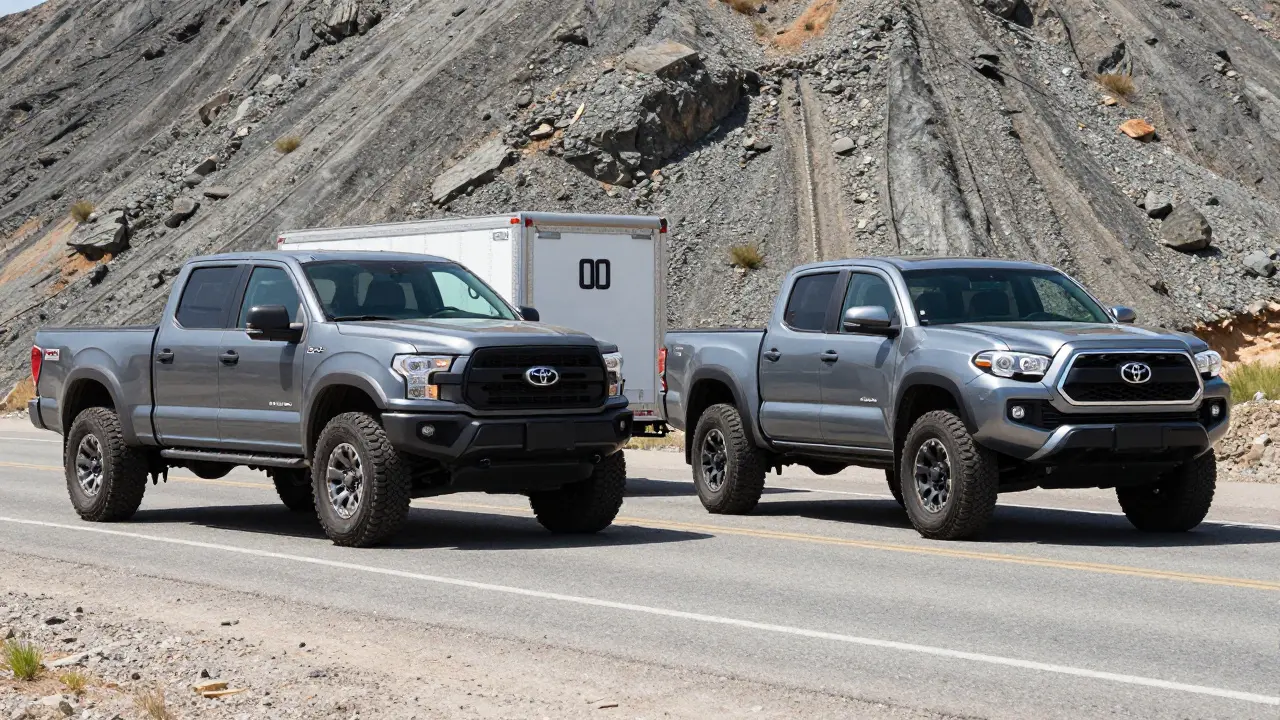
When you’re shopping for a new truck, one of the biggest decisions isn’t about color, engine size, or tech features-it’s the chassis. Body-on-frame versus unibody isn’t just engineering jargon. It affects how your truck handles potholes, how well it tows a trailer, and even how comfortable your daily commute feels. And if you’ve been told one is "better," you’ve been sold a half-truth.
What Exactly Is Body-on-Frame?
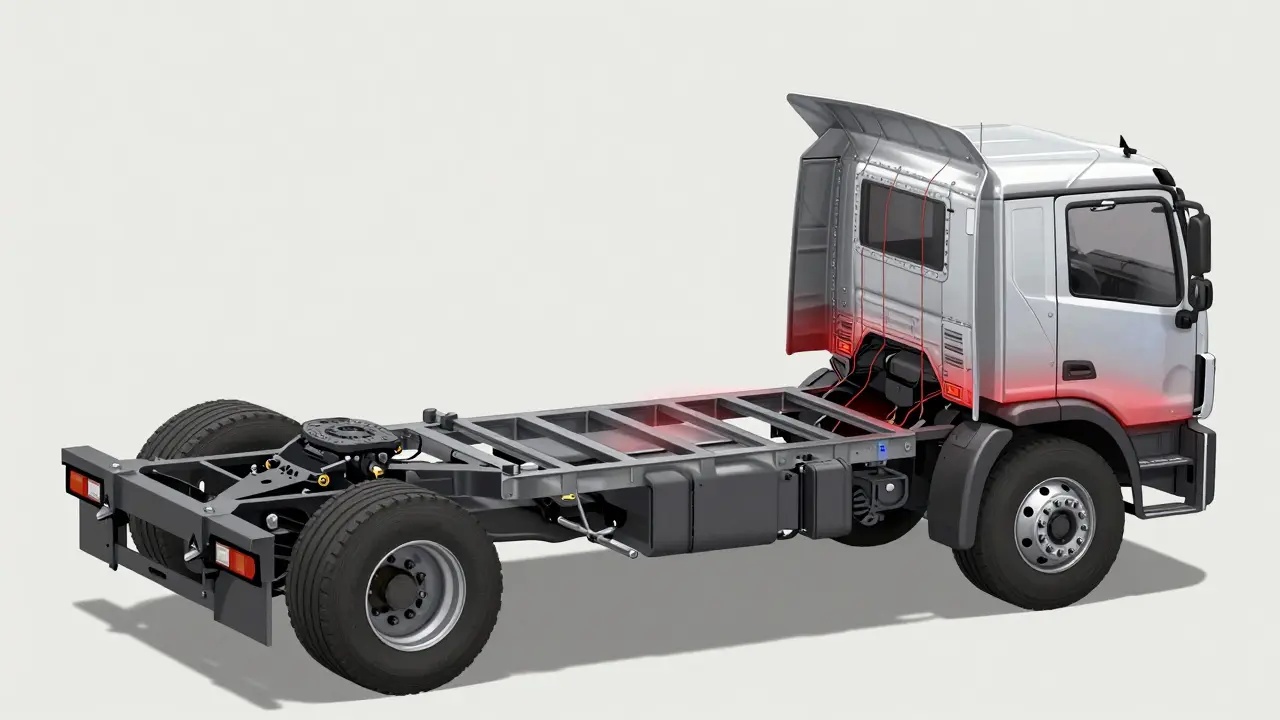
Body-on-frame construction is the old-school way trucks have been built since the 1920s. Think of it like a ladder frame-two strong steel rails running the length of the truck, connected by crossmembers. Then, the truck’s body (cab, bed, fenders) is bolted right on top. It’s a separate structure, like putting a box on a sturdy metal skeleton.
This setup isn’t just tradition-it’s functional. The frame absorbs the punishment. When you’re hauling 10,000 pounds of equipment or dragging a 7,000-pound trailer across rough terrain, the frame takes the stress. The body doesn’t twist. It doesn’t flex. It just sits there, bolted on. That’s why Ford F-150s, Ram 1500s, and Chevrolet Silverados still use this design for their heavy-duty models.
But here’s the trade-off: weight. A body-on-frame truck can easily weigh 500 to 800 pounds more than a comparable unibody model. That extra metal means better durability, but it also means lower fuel economy and slower acceleration. If you’re mostly driving on paved roads, you’re carrying around a lot of unused strength.
What Is Unibody Construction?
Unibody (or unitized body) construction is what most cars use today. Instead of a separate frame, the body and chassis are welded together into one rigid unit. Think of it like a single, hollow metal box that’s been engineered to handle stress from every direction.
Modern unibody trucks-like the Toyota Tacoma, Nissan Frontier, and even the latest Ford Ranger-use this design to shave off weight while improving handling. Without a heavy frame underneath, the truck sits lower, corners better, and rides smoother on highways. The suspension works more efficiently because it’s not fighting extra mass.
But unibody doesn’t mean weak. Engineers use high-strength steel, aluminum, and complex geometry to make these chassis incredibly stiff. In fact, the 2025 Toyota Tacoma’s unibody has 30% more torsional rigidity than its 2020 predecessor. That’s not a marketing gimmick-it’s real-world data from crash tests and load simulations.
Strength: Who Wins When the Load Gets Heavy?
If you’re hauling heavy equipment, towing a travel trailer, or driving off-road on rocky trails, you care about strength. And here’s where body-on-frame still holds an edge-when the load is extreme.
Body-on-frame trucks can handle payloads over 3,000 pounds and towing over 12,000 pounds without breaking a sweat. Why? Because the frame is designed to flex slightly under load, absorbing shock before it reaches the cab. The connection points between the body and frame are reinforced with heavy-duty bolts and bushings. It’s like having a shock absorber built into the structure itself.
Unibody trucks have improved dramatically. The 2024 Chevrolet Colorado, for example, can tow up to 7,700 pounds and carry 1,500 pounds of cargo. That’s enough for most people. But if you’re regularly towing 9,000+ pounds or driving a flatbed with a loader on the back, you’ll notice the unibody flexing more. You might hear creaks. You might feel the bed sway. It’s not dangerous-but it’s not ideal for heavy, constant use.
Real-world test: A 2023 Ram 1500 (body-on-frame) towed a 10,000-pound trailer for 500 miles over gravel roads. No body flex, no squeaks, no issues. A 2024 Toyota Tacoma (unibody) towed the same trailer under the same conditions. The bed vibrated noticeably. The rear suspension bottomed out twice. Not a failure-but a difference you feel.
Ride Quality: Smoothness on the Highway
Now, if you’re driving to work, dropping the kids off, or road-tripping on highways, ride quality matters more than raw strength.
Unibody trucks win here. Because they’re lighter and have lower centers of gravity, they handle like a car. Steering is more precise. Cornering is more stable. Suspension travel is better tuned for pavement. The 2025 Ford Ranger, for instance, rides like a crossover SUV. It doesn’t bounce over speed bumps. It doesn’t wallow on highway curves. It just glides.
Body-on-frame trucks? They’re stiffer. They’re heavier. Their suspension is built for load-bearing, not comfort. Even with air springs and adaptive dampers, they still feel like trucks. You feel every crack in the road. You feel the sway when a semi passes. That’s not a flaw-it’s a trade-off for durability.
One owner of a 2022 Ford F-150 said: "I upgraded from a Tacoma. The F-150 is better for towing, but I swear, every pothole in my neighborhood feels like a speed bump. I miss the smooth ride of the unibody."
Off-Road and Work Use: Which Should You Pick?
Off-road enthusiasts used to swear by body-on-frame. And for good reason. The separation between body and frame means the suspension can move independently. When one wheel drops into a rut, the frame twists-but the body stays level. That’s why Jeep Wranglers and Toyota Land Cruisers use it.
But modern unibody trucks have caught up. The 2025 Toyota Tacoma TRD Pro uses a reinforced unibody with multi-link rear suspension and electronic locking differentials. It outperforms older body-on-frame rivals on technical trails. The key? Advanced engineering, not just brute force.
For work trucks, though, the old rules still apply. If you’re running a construction crew, hauling steel beams, or pulling a 12,000-pound dump trailer, body-on-frame is still the safe bet. Unibody trucks are great for light-duty work, but they’re not designed for daily abuse at the edge of their limits.
Cost, Fuel, and Longevity
Body-on-frame trucks are cheaper to repair. If you crash the front end, you can replace the frame without touching the cab. If the bed rusts out, you can swap it for a new one. That’s why fleet operators and rental companies still buy them.
Unibody trucks cost more upfront. But they’re more fuel-efficient. A 2025 Ram 1500 (body-on-frame) gets 19 mpg combined. A 2025 Toyota Tacoma (unibody) gets 24 mpg. Over 100,000 miles, that’s $1,800 in fuel savings-assuming $4.50/gallon.
Longevity? Both can last 200,000+ miles. But body-on-frame trucks often outlive their unibody rivals in commercial use. Why? Because when the body wears out, you can replace it. With unibody, if the frame rusts or cracks, the whole truck is often totaled.
Which One Should You Choose?
Here’s the simple breakdown:
- Choose body-on-frame if you: tow over 8,000 pounds regularly, haul heavy equipment daily, drive off-road on rough terrain, or need maximum durability for work.
- Choose unibody if you: mostly drive on paved roads, tow under 6,000 pounds, want better fuel economy, prefer a car-like ride, or use your truck as a daily driver.
Most people don’t need a body-on-frame truck. The average American towed just 3,200 pounds last year, according to the Truck Manufacturers Association. You probably don’t need the extra strength.
But if you’re a contractor, rancher, or outdoor enthusiast who pushes your truck hard-don’t compromise. The old design still has its place.
Are unibody trucks strong enough for towing?
Yes, modern unibody trucks are strong enough for most towing needs. Models like the Toyota Tacoma, Ford Ranger, and Chevrolet Colorado can tow up to 7,700 pounds and carry over 1,500 pounds of cargo. That covers 90% of personal use cases. But if you’re regularly towing over 8,000 pounds or hauling heavy construction gear, a body-on-frame truck is still the safer, more reliable choice.
Do body-on-frame trucks last longer than unibody trucks?
In heavy-use scenarios, yes. Body-on-frame trucks are easier to repair. If the bed rusts or the cab gets damaged, you can replace those parts without scrapping the whole truck. Unibody trucks integrate the body and frame, so major damage often means the entire vehicle is totaled. For daily drivers with light use, both can last 200,000 miles or more.
Why do some trucks still use body-on-frame if unibody is better for ride quality?
Because strength and durability matter more than comfort for work trucks. Body-on-frame separates the load-bearing frame from the passenger cabin. This lets the frame twist under heavy loads without affecting the cab’s structure. Unibody trucks are stiffer and lighter, but they can’t handle the same level of abuse without flexing or creaking. For farmers, contractors, and off-roaders, that trade-off is worth it.
Is a unibody truck safer in a crash?
Modern unibody trucks are engineered with advanced crumple zones and high-strength steel, making them just as safe-if not safer-than body-on-frame models. Crash test ratings from the IIHS and NHTSA show nearly identical safety scores between top unibody and body-on-frame trucks. The key is how the structure absorbs energy, not whether it’s one piece or two.
Can I upgrade a unibody truck to handle heavier loads?
You can add heavy-duty suspension kits, upgraded axles, and reinforced hitch systems-but you’re working against the design. Unibody trucks aren’t built to handle extreme loads. Adding aftermarket parts might improve capacity slightly, but it won’t match the inherent strength of a body-on-frame chassis. If you need heavy-duty capability, it’s better to start with the right truck.
Comments
Kieran Danagher
Body-on-frame is just engineering conservatism dressed up as 'durability'. I've seen unibody Tacomas tow 8k lbs for 100k miles with zero structural issues. The flex you're calling 'a problem' is just the chassis doing its job-absorbing torque, not transmitting it to your spine. Stop romanticizing the 1980s.
March 21, 2026 at 01:16
Sheila Alston
People don't realize how much government subsidies and corporate lobbying keep body-on-frame alive. The EPA doesn't penalize trucks for fuel waste because 'they're work vehicles.' Meanwhile, my 2023 Ranger gets 26 mpg and hauls my 6k lb camper like it's a backpack. The real question is: who benefits when you buy a 6,000 lb truck for a 2,000 lb job?
March 22, 2026 at 14:00
Patrick Sieber
I'm Irish, work in construction, and drive a 2022 F-150. I get the appeal. But I also own a 2024 Tacoma for weekend trips. The difference isn't just engineering-it's psychological. Body-on-frame makes you feel invincible. Unibody makes you feel competent. One's a tank. The other's a precision tool. Both have their place.
March 22, 2026 at 15:14
poonam upadhyay
OMG I CAN'T BELIEVE YOU GUYS ARE STILL TALKING ABOUT THIS LIKE IT'S A DEBATE!!! THE TRUTH IS CORPORATE AMERICA WANTS YOU TO BUY HEAVY, GASSY, EXPENSIVE TRUCKS BECAUSE THEY MAKE MORE MONEY ON THEM!!! UNIBODY IS THE FUTURE AND ANYONE WHO SAYS OTHERWISE IS EITHER A TRUCK BRO OR A CLIMATE DENIER!!!
March 23, 2026 at 11:57
mani kandan
The real beauty of unibody is not just in weight savings but in how it changes the entire vehicle dynamics. Lower center of gravity, better weight distribution, improved aerodynamics. It’s not about replacing body-on-frame-it’s about evolving beyond the limitations of a 100-year-old design. We’re not just building trucks anymore. We’re building mobile living spaces.
March 24, 2026 at 07:17
OONAGH Ffrench
I've driven both. The unibody rides smoother. The body-on-frame survives abuse. Neither is better. One suits the city. The other suits the field. Choose based on use. Not marketing.
March 26, 2026 at 02:18
Shivam Mogha
Tow under 6k? Unibody. Over 8k? Body-on-frame. Simple.
March 27, 2026 at 21:21
sampa Karjee
It is amusing how Americans fetishize brute-force engineering while ignoring the global reality. In India, Europe, and even Canada, unibody trucks dominate because efficiency is not a compromise-it is the standard. The obsession with weight and 'durability' is a cultural artifact of excess. Modern materials do not require steel beams to be strong.
March 29, 2026 at 14:36
Natasha Madison
You think this is about engineering? It's about control. The government lets truck manufacturers sell heavier vehicles because they know people will buy them. Then they tax fuel. Then they blame you for climate change. It's a pyramid scheme disguised as a pickup truck. You're being played.
March 30, 2026 at 02:28
Rahul Borole
The evolution of vehicle architecture reflects broader societal priorities. Unibody construction aligns with sustainability, efficiency, and technological integration. Body-on-frame persists not due to superiority, but due to inertia, legacy supply chains, and entrenched consumer perception. The future belongs to those who optimize, not those who amplify.
March 31, 2026 at 07:55