
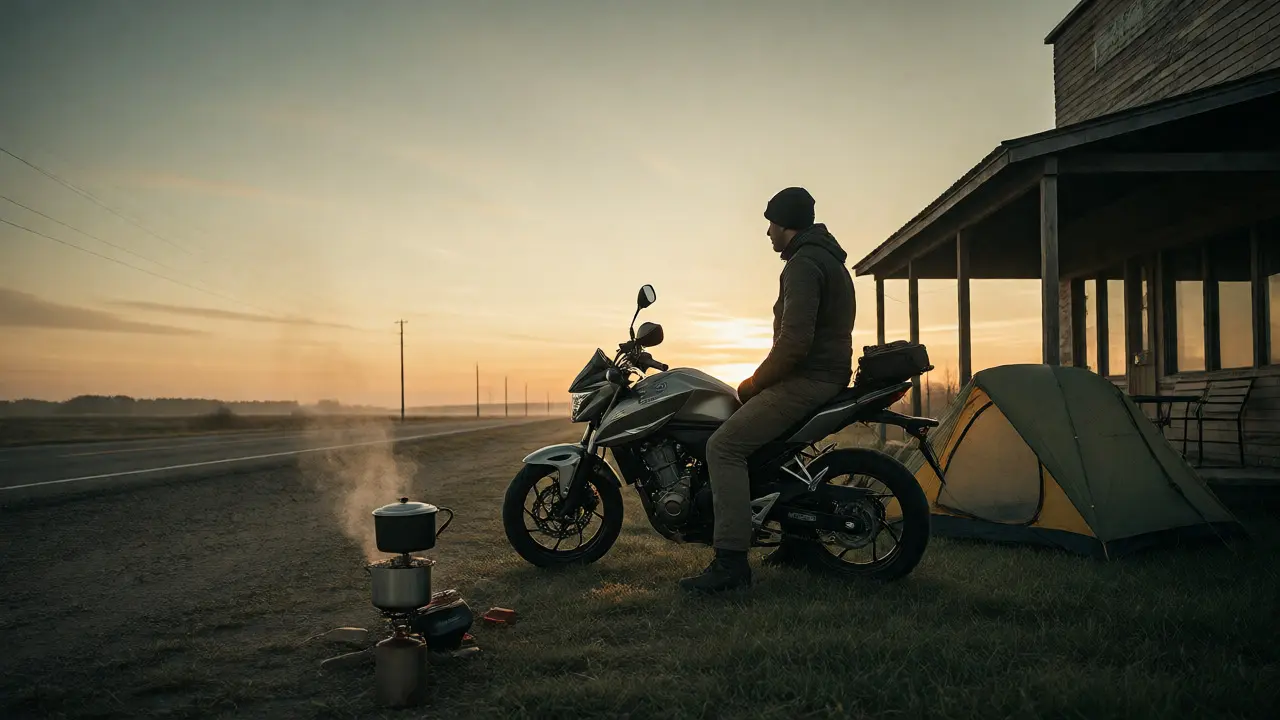
Imagine waking up in a tent pitched on a patch of grass behind a friend’s pub, making instant coffee with water boiled on a camping stove, and hitting the road by 8 AM. You’ve got two days of food in your tank bag, a full tank of gas, and zero hotel bills. This isn’t a survivalist fantasy; it’s how I spent last summer crossing three states on a used Honda CB500F without going broke. The magic number? Fifty dollars a day. Yes, fifty. In an era where luxury touring costs more per night than most people’s rent, doing a motorcycle road trip on this budget is entirely possible if you strip away the comforts that aren’t essential to the ride itself.
Most riders assume that traveling by bike means staying in nice motels, eating at sit-down restaurants, and treating every stop as a vacation day. That mindset drains wallets fast. To hit that $50 target, you have to treat your journey like a logistics operation rather than a holiday. You’re not paying for service; you’re paying for movement and basic sustenance. If you can handle sleeping under a tarp and eating protein bars for lunch, you’ll find that the freedom of the open road doesn’t require a second mortgage.
The Math Behind the Magic Number
Let’s break down why $50 is tight but doable. It assumes you own the bike or have already paid for the rental. It also assumes you are solo. If you’re carrying a passenger, add roughly 15-20% for fuel weight and potential double meals, though sharing accommodation costs can offset this. Here is the baseline daily breakdown for a mid-size motorcycle (400cc-650cc) covering about 200 miles:
- Fuel: $15-$20. A 50mpg bike using 4 gallons covers 200 miles. At current US averages, this fluctuates, so budget conservatively.
- Food: $15. Breakfast is free (oats/coffee from camp). Lunch is a packed sandwich or gas station wrap ($5). Dinner is a simple meal cooked on a small stove or a cheap fast-food combo ($10).
- Lodging: $0-$10. Mostly wild camping or Couchsurfing. Occasional campground fees or a split share of a hostel bunk when rain hits.
- Miscellaneous: $5-$10. Water refills, minor tolls, parking meters, or emergency tire repair kits.
If you slip into a hotel for one night, you blow the weekly average unless you make up for it with four nights of free camping. Discipline is key. One impulse buy-a fancy souvenir or a steak dinner-can ruin the week’s budget. Keep a strict cash envelope system if you struggle with digital spending tracking.
Gear That Saves Money vs. Gear That Costs More
Your gear determines your comfort, which directly impacts your ability to stick to a low-cost itinerary. If you’re cold, wet, or exhausted, you’ll seek out expensive amenities just to feel human again. Therefore, investing in reliable, multi-use gear upfront saves money later. You don’t need Gore-Tex jackets that cost $400. You need layers that work.
A waterproof shell over a fleece layer is cheaper and more versatile than a single-piece heated suit. For shelter, a lightweight bivy sack or a compact hammock weighs less and sets up faster than a traditional tent, encouraging you to stop anywhere rather than driving another 30 miles to find a designated site. When it comes to storage, soft luggage (tank bags, tail bags, panniers) is often cheaper than hard cases and easier to pack. Hard cases rattle and dent; soft bags mold to your load.
| Item Type | Budget Option | Premium Option | Why Budget Wins Here |
|---|---|---|---|
| Shelter | Bivy Sack / Hammock | 4-Season Tent | Lighter, faster setup, lower wind resistance |
| Cooking | Alcohol Stove + Pot | Canister Stove System | Fuel is ubiquitous (denatured alcohol), no cartridges to buy |
| Storage | Duffel + Dry Bags | Hard Panniers | No mounting hardware needed, flexible capacity |
| Navigation | Smartphone Mount | GPS Unit | Free apps (OsmAnd), real-time traffic data |
Accommodation Hacks for Two-Wheelers
Paying for a bed is the biggest budget killer. To keep lodging near zero, you need to be creative. Wild camping-pitching your tent outside established campgrounds-is legal in many parts of the US, especially on Bureau of Land Management (BLM) land in the West. Check local regulations before setting up shop. In the East, state forests often allow dispersed camping for free.
Another powerful tool is hospitality networks. Platforms like Warmshowers are specifically designed for cyclists and motorcyclists. Riders host other riders for free, offering a garage space for your bike and a floor for your sleeping bag. It’s not just free lodging; it’s local intel. Your host might tell you which backroad has the best curves or where the cheapest diner serves huge portions. Always offer to help clean up or bring a small gift, like six-pack of beer or local snacks, as a thank-you.
When you absolutely must pay for a roof, look beyond hotels. Hostels are increasingly common in tourist hubs and often have private rooms or dorms that are far cheaper than motels. Some hostels even have secure parking for bikes. Alternatively, consider university dorm rentals during summer breaks when students are gone. These options provide security and showers without the premium price tag.
Eating Well Without Eating Out
Restaurant meals add up quickly. Three meals a day at $15 each equals $45, leaving only $5 for everything else. To stay within budget, you need to cook. But cooking on a road trip requires minimal equipment and maximum efficiency.
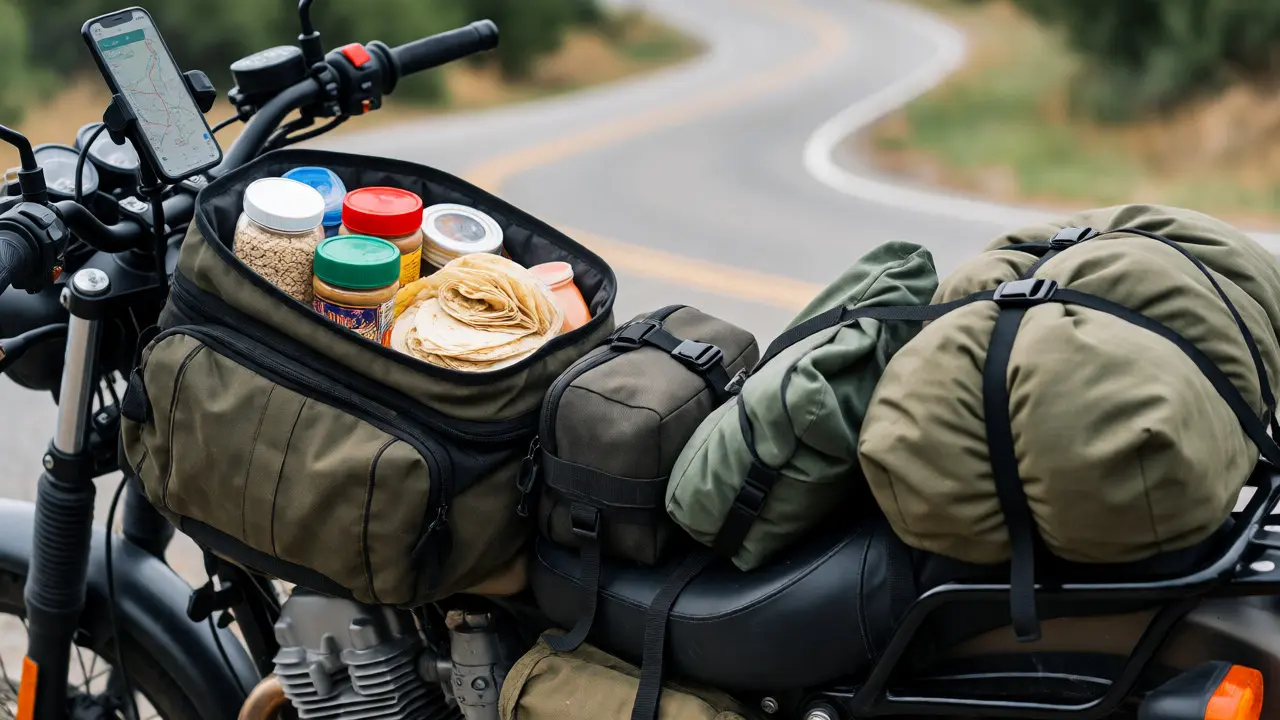
Focus on calorie-dense, non-perishable foods. Oats, peanut butter, tortillas, canned beans, and instant noodles are your friends. They don’t require refrigeration (if you skip the cooler) and cook in minutes. Buy these in bulk at large grocery stores before you leave town, not at roadside convenience marts where prices are inflated by 50%. If you carry a small cooler, use frozen water bottles as ice packs-they melt into drinking water instead of warm slosh.
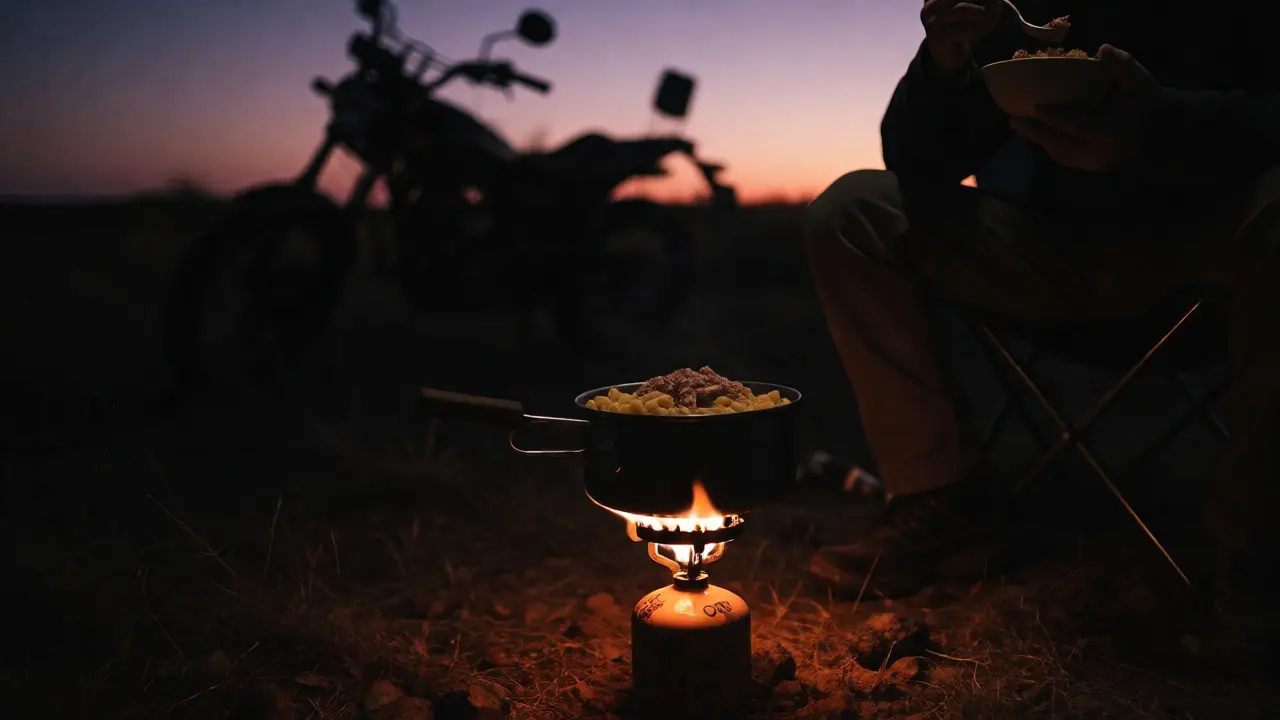
For dinners, aim for "one-pot" meals. Pasta with jarred sauce and canned tuna is filling, cheap, and easy to clean up. If you’re passing through a rural area, look for farm stands selling eggs and vegetables. Fresh ingredients from locals are often cheaper than supermarket produce and support the community you’re visiting. Avoid buying bottled water constantly; carry a reusable bottle and refill at public parks, libraries, or rest stops.
Maintenance and Unexpected Costs
Bikes break. Tires go flat. Chains snap. If you don’t account for maintenance, your $50/day budget will vanish the moment something goes wrong. Before you leave, spend a weekend doing a thorough inspection. Check tire tread depth, brake pads, chain tension, and fluid levels. Fix anything questionable now, not later.
Carry a basic toolkit and know how to use it. Most breakdowns on long trips are minor: loose bolts, blown fuses, or punctured tires. Learning to plug a tubeless tire takes ten minutes and saves you a tow truck fee. If you run tubed tires, carry spare tubes and tire levers. A portable air compressor or foot pump is invaluable for maintaining proper pressure, which improves fuel economy and safety.
Set aside a contingency fund separate from your daily spend. Aim for $100-$200 total for the entire trip, held in reserve. This isn’t for souvenirs; it’s for emergencies. If you don’t use it, great-it becomes your return ticket home or a celebration meal. If you do use it, you won’t be stranded in a strange town with an empty wallet.
Planning Routes That Save Fuel and Time
Not all roads are created equal. Highway miles burn fuel faster than city stop-and-go, but they cover distance quicker. However, highways are boring and often lack scenic value. Backroads are slower but more enjoyable and usually have fewer tolls.
Use route planning apps that allow you to avoid tolls and highways. Apps like Scenic Route or MapMyRide let you prioritize interesting turns over straight lines. Plan your daily mileage based on terrain. 200 miles on flat interstate is different from 200 miles on winding mountain passes. Mountain riding consumes more mental energy and fuel due to constant shifting and braking. Adjust your expectations accordingly.
Also, consider the time of year. Shoulder seasons (spring/fall) offer better deals on accommodations and less crowded roads. Summer peaks drive up prices everywhere. Winter riding is cheaper but requires heavier gear and careful weather monitoring. Riding in the rain is miserable unless you’re properly geared, so check forecasts religiously. A rainy day might force you to spend $40 on a motel room, disrupting your budget flow.
Is $50 a day realistic for a motorcycle trip in 2026?
Yes, but it depends heavily on location and style. In rural areas or regions with abundant free camping (like the Western US), $50 is achievable. In major cities like New York or San Francisco, lodging alone could exceed that limit, requiring couch-surfing or hostel stays to balance the books.
Do I need a specific type of motorcycle for budget touring?
No, but smaller displacement bikes (under 750cc) generally offer better fuel economy and lower insurance/maintenance costs. Adventure bikes are popular for their versatility, but heavy cruisers may consume more fuel. Reliability matters more than brand prestige.
How do I handle laundry on a budget trip?
Wash clothes by hand in the sink or shower using biodegradable soap. Hang them to dry overnight. Carry quick-dry synthetic fabrics that don’t need ironing. Visiting laundromats occasionally costs $5-$10, which fits within the miscellaneous budget if planned ahead.
What is the biggest hidden cost of motorcycle touring?
Fuel price volatility and unexpected mechanical repairs. Gas prices vary significantly by region, so plan routes around cheaper stations. Mechanical issues are inevitable; having a contingency fund prevents minor problems from becoming financial disasters.
Can I bring a passenger while sticking to the $50 budget?
It’s harder but possible. Shared costs for lodging and some meals help, but fuel consumption increases slightly, and finding free camping spots suitable for two people is tougher. Communication about expectations is crucial to avoid friction.