

You’re parked in a quiet spot in the Cotswolds, the sun is setting, and you reach for a cold beer or some fresh cheese. But wait-does your fridge actually work? If you’ve ever spent a night worrying about whether your food will spoil or if you’ll wake up to a dead battery because of your cooler, you know the pain. Choosing the right camper van refrigerator is one of the biggest decisions in building a van. It’s not just about keeping things cold; it’s about power consumption, noise levels, installation space, and cost.
The market is flooded with options, mostly falling into three main camps: traditional 12V thermoelectric coolers, modern compressor fridges, and older absorption fridges. Each has its place, but they are wildly different in how they perform and what they demand from your electrical system. Let’s break down which one actually fits your lifestyle, rather than just throwing money at the shiniest box.
Key Takeaways
- Compressor fridges are the gold standard for off-grid living due to high efficiency and freezing capability, though they come with a higher upfront cost.
- Absorption fridges run silently on gas or electricity but struggle in hot weather and cannot freeze effectively without significant power or fuel.
- Thermoelectric (12V) coolers are cheap and simple but only cool to about 20°C below ambient temperature, making them poor choices for summer camping.
- Your choice depends heavily on your budget, how long you stay off-grid, and whether you need actual ice cream or just chilled drinks.
Understanding the Three Main Technologies
To make a smart choice, you need to understand how these boxes actually move heat. It’s not magic; it’s physics, and each method has distinct strengths and weaknesses.
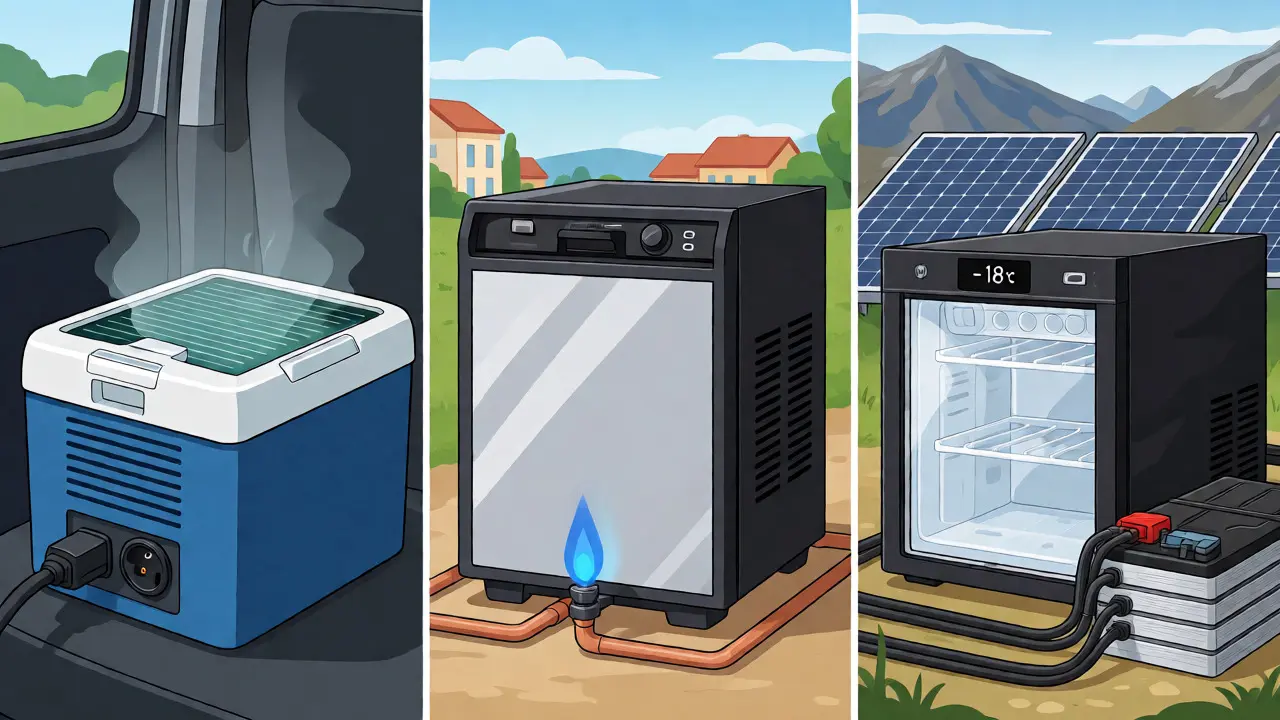
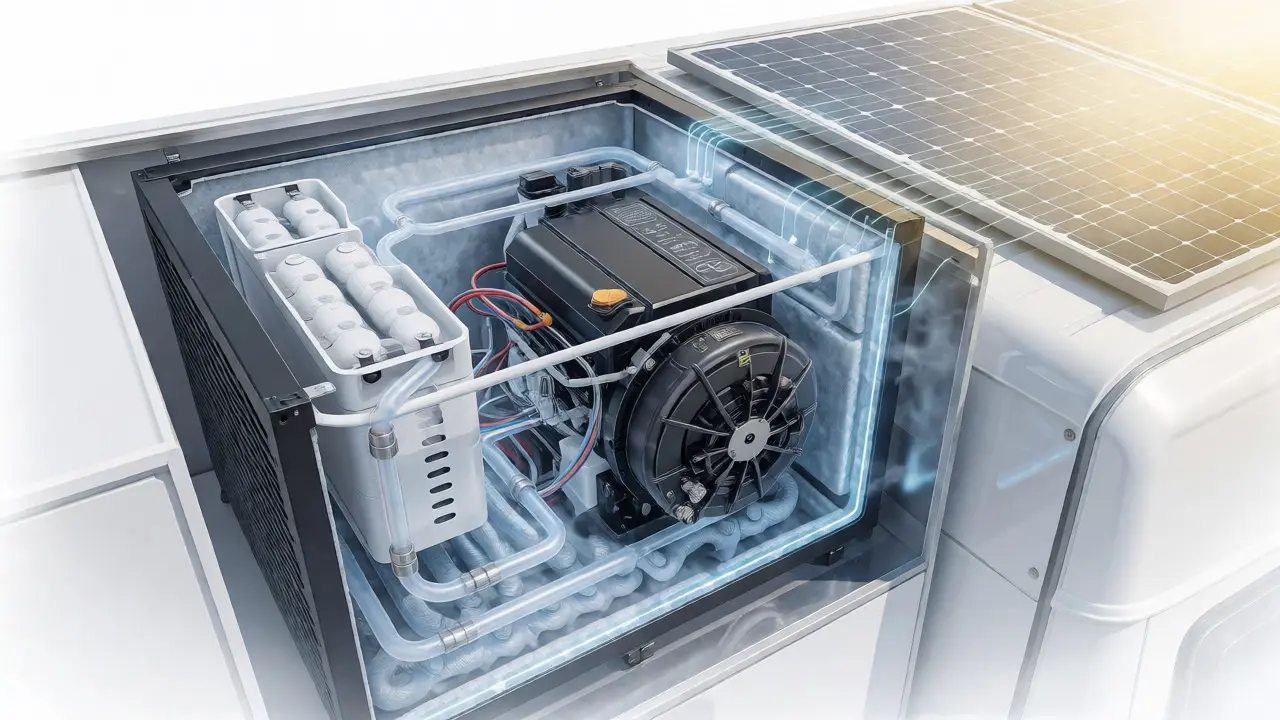
Compressor refrigerators use the same technology as the fridge in your kitchen at home. They circulate a refrigerant through coils using an electric motor-driven compressor. This allows them to achieve very low temperatures, often down to -18°C (-0.4°F), regardless of the outside air temperature. Because they cycle on and off based on internal temperature, they are incredibly energy-efficient once the target temp is reached. Brands like Dometic CFX3 or Isotherm Cruise dominate this space for good reason. They can run on 12V DC directly from your leisure battery, bypassing the need for an inefficient inverter.
Absorption refrigerators operate without moving parts. They use a heat source-usually propane gas or 230V AC electricity-to drive a chemical reaction involving ammonia and hydrogen. Since there’s no compressor, they are completely silent. However, they are sensitive to tilt (usually needing to be within 3 degrees of level) and lose efficiency dramatically when the outside temperature exceeds 30°C (86°F). You’ll find these in many factory-built campervans because they were historically cheaper to install alongside existing gas systems.
Thermoelectric coolers (often marketed simply as "12V fridges") use the Peltier effect. When current passes through two different conductors, one side gets hot and the other gets cold. There is no compressor, no gas, and no complex mechanics. They are lightweight and cheap, often costing under £100. But here’s the catch: they don’t generate cold; they just move heat away. If it’s 35°C outside, the best they can do is bring the inside down to about 15°C. That’s lukewarm, not cold.
Power Consumption: The Battery Killer
In van life, watts are currency. If your fridge eats too much power, you need more solar panels, bigger batteries, and heavier wiring. Here is how the technologies stack up against your leisure bank.
| Fridge Type | Avg. Daily Draw (12V) | Freezing Capability | Efficiency Rating |
|---|---|---|---|
| Compressor (e.g., Dometic CFX) | 0.8 - 1.5 kWh (approx. 70-125 Ah) | Yes, down to -18°C | High |
| Absorption (Gas/Electric Hybrid) | 2.0 - 3.0 kWh (if electric only) | Marginal, rarely below 0°C | Low |
| Thermoelectric (12V Cooler) | Variable, constant draw approx. 4-6A | No, cools relative to ambient | Very Low |
Notice the gap between compressor and absorption models when running on electricity. An absorption fridge running on 12V via an inverter is notoriously inefficient. Most people run absorption fridges on gas specifically to save their battery. But if you want to go fully electric (no gas bottles), a compressor fridge is practically mandatory. A modern variable-speed compressor fridge might only pull 1 amp per hour on average over a day, whereas a fixed-speed older model or a poorly insulated thermoelectric unit could drain a 100Ah battery in less than two days.
Installation and Space Considerations
Where you put the fridge matters as much as which one you buy. Compressor fridges require ventilation. The compressor generates heat, and that heat needs to escape. If you build a sealed cabinet around a compressor fridge without vents, it will work harder, consume more power, and potentially fail prematurely. Most manufacturers specify minimum clearance gaps-usually 2cm at the back and sides.
Absorption fridges also need ventilation, primarily for the burner if you’re using gas mode. Even in electric mode, the heat exchanger gets hot. More importantly, absorption units must be installed perfectly level. If your van suspension compresses unevenly or you park on a steep slope, the absorption cycle can stop working entirely. You’ll open the door to find warm milk and a confused look on your face. Compressor fridges, by contrast, work fine on slopes up to 30 degrees.
Thermoelectric units are the easiest to install. Many are portable boxes that plug straight into your cigarette lighter socket. No cutting cabinets, no venting, no leveling worries. For weekend warriors who sleep in their vans occasionally, this simplicity is a huge selling point. But for full-time dwellers, the lack of insulation and cooling power usually leads to frustration during summer months.
Cost Analysis: Upfront vs. Long-Term
Let’s talk money. Prices fluctuate, but the hierarchy remains consistent.
- Thermoelectric: £50 - £150. Cheap entry point. Great for testing if you even like van life before investing thousands.
- Absorption: £300 - £600. Mid-range price. Often included in pre-fitted vans. Hidden costs include gas bottle refills and potential maintenance of the burner assembly.
- Compressor: £400 - £1,200+. High upfront cost. However, they last longer (10+ years is common) and have lower running costs if you have solar power.
It’s tempting to buy the cheapest option, but consider the total cost of ownership. If a thermoelectric cooler forces you to buy ice every two days (£5 per bag x 10 bags = £50/month), you’ve paid for a compressor fridge in under a year. Plus, you avoid the hassle of melting ice water leaking onto your floorboards.
Which One Is Right for You?
There is no single "best" fridge. It depends on your specific usage pattern.
Choose a Compressor Fridge if:
You plan to travel off-grid for weeks at a time. You want to freeze meat or ice cream. You have a robust electrical system (lithium batteries + solar). You prioritize reliability and performance over initial savings. This is the choice for serious van lifers in the UK and Europe.
Choose an Absorption Fridge if:
You already have a gas system in your van. You prefer absolute silence (zero fan noise). You mostly camp in mild climates where temps stay below 25°C. You don’t mind topping up gas bottles. This is common in European-style camper conversions.
Choose a Thermoelectric Cooler if:
You are on a tight budget. You only use the van for weekend trips in spring or autumn. You don’t need freezing capabilities. You value portability (you can take the fridge out of the van easily).
Pro Tips for Maximizing Efficiency
Whichever fridge you choose, follow these rules to keep your battery happy and your food safe.
- Pre-cool everything: Don’t put warm groceries into a warm fridge. Cool your food in a cooler with ice first, or let it sit in the shade. Every degree you remove before powering on saves energy.
- Minimize door openings: In a small van, opening the fridge door lets out all the cold air instantly. Know what you want before you open it. Some people organize their fridge with clear bins to see contents without digging.
- Insulate your space: If you’re building a custom cabinet, line it with reflective foam insulation. This helps the fridge maintain temperature with less effort.
- Use a dual-zone if needed: If you need both frozen goods and chilled drinks, a dual-zone compressor fridge lets you set different temps independently. Single-zone units force you to compromise.
Frequently Asked Questions
Can I run a compressor fridge on my car's alternator while driving?
Yes, absolutely. Most modern 12V compressor fridges are designed to run directly off your vehicle's 12V system. They have built-in voltage protection that shuts them off if the battery drops too low, preventing you from draining your starter battery. However, for optimal efficiency, many van builders wire the fridge to the leisure battery bank instead, allowing it to run continuously even when the engine is off.
Why does my absorption fridge smell like gas?
If you smell gas near an absorption fridge, check the flue pipe. Absorption fridges burn propane to create heat, and the exhaust gases (carbon monoxide and water vapor) exit through a vent at the bottom of the van. If the seal is broken or the flue is blocked, fumes can leak into the cabin. Never sleep in a van with a faulty gas fridge; carbon monoxide is odorless and deadly, though added mercaptan gives it that distinctive smell.
Is a thermoelectric cooler worth buying for summer camping?
Generally, no. In the UK, summer temperatures can hit 30°C+. A thermoelectric cooler can typically only lower the internal temperature by about 20°C below ambient. So, if it’s 30°C outside, your "fridge" will be 10°C inside. That’s not cold enough to safely store dairy or meat for long periods, and your drinks won’t be refreshing. They are better suited for cooler months or short trips.
Do compressor fridges make noise?
They make some noise, but far less than older models. Modern variable-speed compressors hum quietly when ramping up to cool down. Once the target temperature is reached, they may run at a very low speed or turn off completely. Compared to the constant buzz of a fan or the clunk of an old compressor, modern units are barely noticeable unless you have your ear pressed against the cabinet. Absorption fridges are truly silent.
How big of a solar panel do I need for a compressor fridge?
For a typical 50L compressor fridge drawing about 1kWh per day, you would ideally want at least 200W of solar panels to cover daily usage, assuming average UK sunlight conditions. However, this varies greatly by season. In winter, you might rely on shore power or a generator. Always size your battery bank to hold at least 2-3 days of autonomy so cloudy days don’t mean spoiled food.