

Car insurance for college students isn’t just expensive-it’s often the biggest surprise after tuition and rent. A 19-year-old in Bristol paying £1,800 a year for coverage isn’t unusual. But here’s the truth: you don’t have to pay that much. Many students slash their bills by 30% to 50% using simple, proven strategies. It’s not about luck. It’s about knowing what insurers reward-and what they punish.
Why is car insurance so expensive for students?
Insurers see drivers under 25 as high risk. Statistically, young drivers are more likely to be in accidents. The Office for National Statistics shows drivers aged 17-24 are involved in 15% of all road crashes despite making up only 7% of licensed drivers. That’s not because they’re reckless-it’s because they lack experience. And experience is the one thing insurers can’t give you, so they charge more to cover the risk.
Adding a student to a parent’s policy often costs less than a standalone policy. But even then, premiums can spike. The key isn’t avoiding the cost-it’s reducing it through discounts, choices, and smart habits.
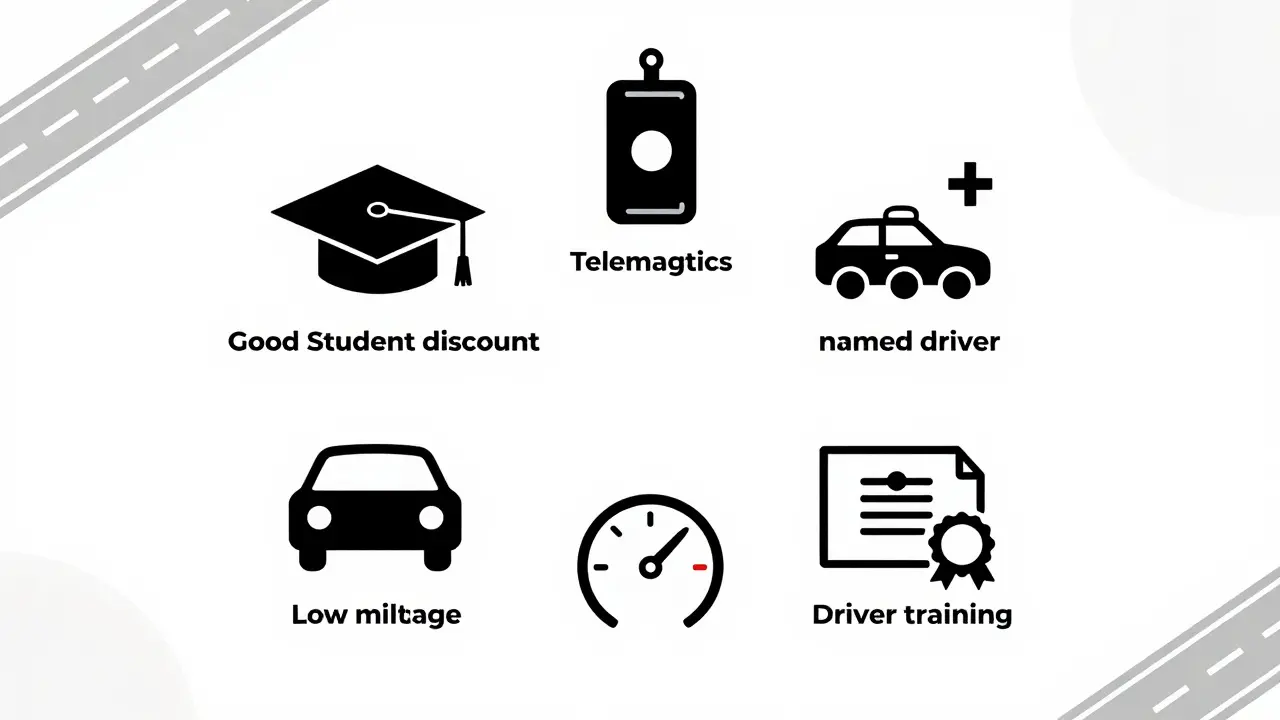
Top 5 discounts college students actually qualify for
Most students don’t ask for discounts. They assume they’re stuck with the quote. That’s a mistake. Here are the five most effective discounts you can claim right now.
- Good Student Discount: If you’re maintaining a B average (3.0 GPA or higher), most UK insurers will give you up to 20% off. You don’t need to be a genius-just consistent. Providers like Admiral, Aviva, and Direct Line all offer this. Proof? A transcript or report card. No need to send it every year-just once, then update if your grades drop.
- Telematics (Black Box) Insurance: This isn’t spying. It’s a tool. A small device or app tracks your driving: speed, braking, time of day. If you drive safely, your premium drops over time. Students who use telematics often pay £400-£700 less per year than those on standard policies. Companies like Marmalade, Zenith, and Insure the Box specialise in this. It works best if you avoid late-night driving and hard braking.
- Named Driver on Parent’s Policy: If you’re not the main driver on your parent’s car, you can be added as a named driver. This cuts costs dramatically. But don’t lie. If you’re the main driver but say you’re not, that’s insurance fraud. Insurers check mileage records and claims history. Be honest, and you’ll save without risk.
- Low Mileage Discount: Most students don’t drive daily. If you drive under 5,000 miles a year, you qualify. Some insurers offer discounts up to 25% for low-mileage drivers. Use your student ID or term dates to prove you’re not commuting daily. Providers like LV= and More Than let you self-report mileage.
- Driver Training Discount: Completing an advanced driving course like Pass Plus (in the UK) can knock 10-20% off your premium. It’s a 6-hour course, often offered by local driving schools. It’s not mandatory, but it’s one of the few discounts that actually improves your skills-and your safety.
Choose the right car, save hundreds
It’s not just about you. The car you drive matters just as much. Insurance groups in the UK range from 1 to 50. Group 1 is cheapest. Group 50 is the most expensive. A Ford Fiesta in Group 1 might cost £600 a year. A VW Golf in Group 20? £1,400. Same student. Same driving record. Different car. Different price.
Before you buy or lease, check the insurance group. Use the Thatcham Research website. Look for cars with:
- Small engines (1.0L-1.2L petrol)
- Good safety ratings (5-star Euro NCAP)
- High security features (factory-fitted alarm, immobiliser)
- Low repair costs (common parts, widely available)
Audi A1, Honda Jazz, Toyota Yaris, and Hyundai i10 are all Group 1-5 cars. Avoid sports models, high-performance engines, and luxury brands-even if they look cool. They’ll cost you more in insurance than in fuel.
Don’t pay for coverage you don’t need
Many students get pressured into comprehensive cover. But is it necessary?
Third-party fire and theft (TPFT) is cheaper than comprehensive. But only if your car is worth less than £2,000. If you’ve got a 10-year-old car with £1,500 market value, paying £1,200 a year for comprehensive doesn’t make sense. The insurer will only pay out £1,500 if it’s written off. You’re paying more than the car’s worth.
On the flip side, if you’ve got a newer car (under 5 years), comprehensive is worth it. It covers you for accidental damage, vandalism, and storms-things that happen often in UK weather. Don’t go cheap on coverage if your car is still valuable.
Ask yourself: If my car was stolen tomorrow, could I afford to replace it? If yes, TPFT might work. If no, go comprehensive.
Pay annually-or use a 0% finance deal
Paying monthly sounds easier. But it’s not cheaper. Most insurers add 10-20% interest to monthly payments. A £900 annual premium becomes £1,080 if paid in 12 instalments.
Instead, save up and pay yearly. If you can’t, look for insurers offering 0% monthly finance. Admiral and Saga offer this. Avoid third-party finance brokers-they charge hidden fees. Always check the APR before signing up.
Set up a direct debit to a separate savings account. Put aside £75 a month. When insurance is due, you’ve got the cash. No debt. No interest.
What to do if you’re still overpaying
Still stuck with a £1,500 quote? Here’s your action plan:
- Compare quotes using comparison sites like Confused.com, MoneySuperMarket, or Gocompare. Don’t just take the first result-check at least three.
- Call insurers directly. Sometimes their online quotes are higher than what they’ll give you on the phone.
- Ask if they offer a no-claims bonus transfer. If you had insurance before university, even for a year, you might be able to carry it over.
- Consider a higher voluntary excess. £500 instead of £250. That can cut your premium by 15%.
- Remove any unnecessary add-ons: courtesy cars, legal cover, breakdown assistance. You can buy those separately if you need them.
Real student story: how Mia saved £820
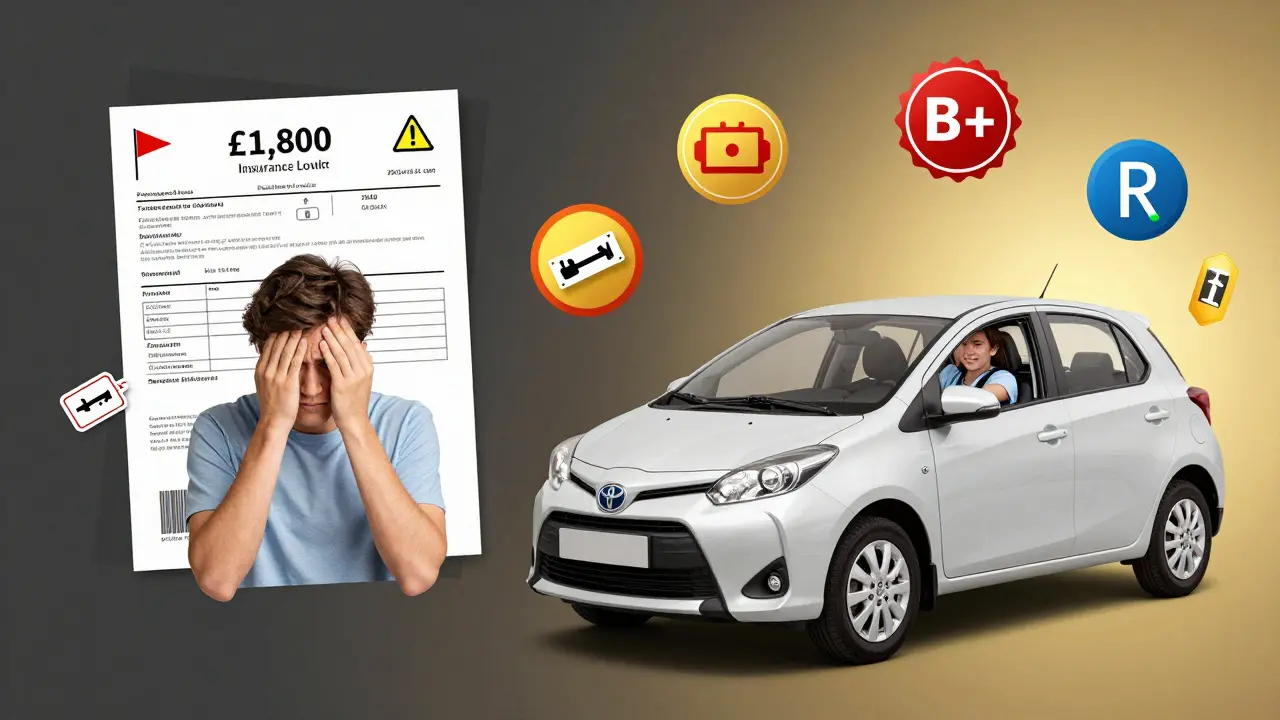
Mia, 20, studies biology in Cardiff. She drove a 2014 Toyota Yaris. Her first quote: £1,640. She did three things:
- Got her GPA verified-B+ average. Saved £250 with the good student discount.
- Switched to telematics with Marmalade. Saved £300.
- Added herself as a named driver on her mum’s policy for weekends. Saved £270.
Her new premium: £820. Half the cost. And she’s still covered.
Common mistakes students make
Don’t fall into these traps:
- Waiting until the last minute: Getting insurance the day before you drive? You’ll pay more. Start comparing 4-6 weeks ahead.
- Choosing the cheapest quote without reading the fine print: Some policies exclude night driving, motorways, or driving outside your home county. Read the exclusions.
- Not updating your address: If you’re living on campus, your insurance must reflect that. Using your parents’ home address as your main location can void your policy.
- Forgetting to cancel old policies: If you switched cars or moved, your old policy might still be active. You’ll be charged even if you’re not driving.
Final tip: Stay claim-free for a year
Your biggest long-term savings come from a no-claims bonus. One year without a claim? You’ll get 30% off next year. Two years? 50%. After five years, you could be paying less than most 30-year-olds.
Don’t make a claim for minor damage. If a scratch costs £300 to fix and your excess is £250, pay out of pocket. You’ll save £400+ next year. That’s more than your monthly rent.
Do I need car insurance if I don’t drive often?
Yes. UK law requires all vehicles on public roads to be insured-even if you only drive once a month. If you don’t use your car at all, you can declare it off the road with a SORN (Statutory Off Road Notification). That removes the legal requirement to insure it, but you can’t drive it on public roads.
Can I use my parent’s no-claims bonus?
No. No-claims bonuses are personal and tied to the policyholder. But if you’re added as a named driver on your parent’s policy, you can start building your own no-claims bonus. Some insurers let you transfer that bonus to your own policy later, usually after 1-2 years of being the main driver.
Does living in a city make insurance more expensive?
Yes. Urban areas like London, Manchester, or Bristol have higher theft and accident rates, so premiums are higher. If you’re studying in a city, expect to pay 15-30% more than if you lived in a village. One way to offset this: park your car in a locked garage overnight or use a secure car park. Some insurers give discounts for secure parking.
What if I’m studying abroad for a term?
If you’re leaving the UK for more than 30 days, tell your insurer. Some will pause your policy or offer a reduced rate. Others may require you to store the car and declare it SORN. Never let your policy lapse-reinstating it later can cost more and reset your no-claims bonus.
Is it cheaper to insure a car I own or one my parents own?
Usually, it’s cheaper to be a named driver on your parent’s policy if you’re under 21. But if you’re 21+ and the car is yours, you might get better rates by insuring it yourself-especially if you have a good driving record. Always compare both options. The cheapest isn’t always obvious.
Next steps: what to do today
Don’t wait until next month. Do this now:
- Check your GPA. If it’s 3.0 or higher, call your insurer and ask for the good student discount.
- Look up your car’s insurance group on Thatcham Research.
- Get three quotes from different insurers using a comparison site.
- Decide if telematics makes sense for your driving habits.
- Set up a savings plan to pay annually.
Car insurance doesn’t have to break the bank. You’re not powerless. With the right moves, you can drive safely and affordably. Start today-and keep saving.
Comments
Bob Buthune
Man I remember when I got my first car in uni... thought I was gonna get wrecked by insurance. Then I found out about telematics and it was like a miracle. My premium dropped from $1,900 to $750 in 6 months. I didn't even change my car. Just started braking like I was driving on ice and boom - savings. I still use the app. Sometimes I check my scores at 2am like it's a video game. 🤖📉🚗
December 20, 2025 at 05:36
Jane San Miguel
While the advice presented is superficially sound, it fundamentally misrepresents the actuarial logic underpinning automotive risk pricing. The notion that GPA correlates with driving safety is a statistical artifact, not a causal mechanism. Furthermore, the conflation of 'low mileage' with 'low risk' ignores exposure-based hazard modeling. A more rigorous approach would involve Bayesian risk adjustment, not cherry-picked discounts.
December 21, 2025 at 15:52
Kasey Drymalla
They don't want you to know this but telematics is just a spy device for the government and insurance companies to track your every move. They use it to build profiles and sell your data to advertisers. I saw a documentary. They even link it to your phone's location. Don't fall for it. They're watching. Always watching.
December 23, 2025 at 14:21
Dave Sumner Smith
Good student discount? That's a scam. They just want you to keep studying so you don't drive as much. They don't care about your grades they care about your odometer. And that Pass Plus course? It's a racket. The driving schools get kickbacks. I know a guy who got paid $500 to fake his certificate. You think they care about safety? They care about profit. Always profit.
December 25, 2025 at 06:50
Cait Sporleder
It is profoundly illuminating to observe the intersection of behavioral economics and automotive risk assessment in the context of young adult drivers. One might posit that the efficacy of the good student discount stems not from a direct causal relationship between academic performance and vehicular prudence, but rather from an indirect proxy: conscientiousness. Students who maintain consistent academic discipline likely exhibit similar traits in temporal planning, risk aversion, and adherence to structured systems - all of which are statistically correlated with lower accident rates. Moreover, the institutionalization of these discounts functions as a form of positive reinforcement, subtly incentivizing the cultivation of long-term, responsible habits beyond mere financial calculus. It is, in essence, a quiet social contract between insurer and insured - one that rewards not just compliance, but character.
December 26, 2025 at 20:48
Paul Timms
Just added myself to my dad’s policy last month. Saved $500. Telematics worked too. Don’t overthink it. Do the basics.
December 28, 2025 at 13:29
Jeroen Post
You think insurance is about safety? Nah. It's about control. They want you to drive slow, drive little, drive boring. They don't want you to live. They want you to be predictable. The GPA discount? It's not about grades. It's about keeping you in school so you're not on the road. The telematics? It's not to help you. It's to track you. You're not a customer. You're a data point. And the car you drive? It's not about safety. It's about how much they can charge you for being alive.
December 29, 2025 at 04:32
Nathaniel Petrovick
bro i did the good student discount and it worked. i got like 18% off. i was shocked. also my car is a 2016 honda fit and it's group 2. so cheap. i just pay 400 a year. best thing i ever did. also pay yearly. dont do monthly. its a trap.
December 30, 2025 at 17:42
Honey Jonson
omg yes!! i did the pass plus course and it was so chill. my instructor was like a cool auntie. we drove around for 6 hours just chillin. i got 15% off and now i feel way more confident. also i park in my garage now. no more street parking. my premium dropped again. you guys are so lucky if you can get telematics. my state doesnt even have it. but still. try the discount. its worth it. 💪
December 31, 2025 at 02:16
Sally McElroy
It’s appalling how normalized this exploitation has become. You’re being told to ‘be responsible’ so that corporations can profit from your restraint. You’re being manipulated into accepting a system that punishes youth while rewarding conformity. The ‘good student’ discount? It’s a tool of social control - rewarding academic obedience while pathologizing natural youthful energy. And telematics? It’s digital surveillance disguised as benevolence. You’re not saving money - you’re surrendering your autonomy. Wake up.
December 31, 2025 at 13:21
Destiny Brumbaugh
USA is the only country that lets you get insurance like this. In the UK they just charge you more and shut up. Here we got choices. I hate how they try to make it sound like its your fault you're young. Nah. Its the system. But still. I got my discount. So i win.
January 2, 2026 at 00:08
Sara Escanciano
Don't believe any of this. Insurance companies lie. They say they give discounts but then they find ways to cancel your policy later. I know someone who got the good student discount and then got dropped after a minor fender bender. They said her GPA dropped. But she didn't even know they were checking. That's how they trap you. Don't trust them. Ever.
January 3, 2026 at 22:14
Elmer Burgos
Hey thanks for this post. I was about to get a stupid expensive car because it looked cool. Now I’m looking at a Yaris. Also just found out I have a B+ so I’m calling my insurer tomorrow. You’re right - it’s not about luck. It’s about doing the boring stuff. And that’s actually kind of empowering.
January 5, 2026 at 15:54
Jason Townsend
They’re lying about the telematics. It’s not just tracking your driving. It’s syncing with your phone. They know when you’re texting. They know when you’re tired. They know when you’re drunk. They don’t need to say it. They just need to scare you into driving slower. That’s how they make money. Fear. Not safety. Fear.
January 7, 2026 at 03:36