
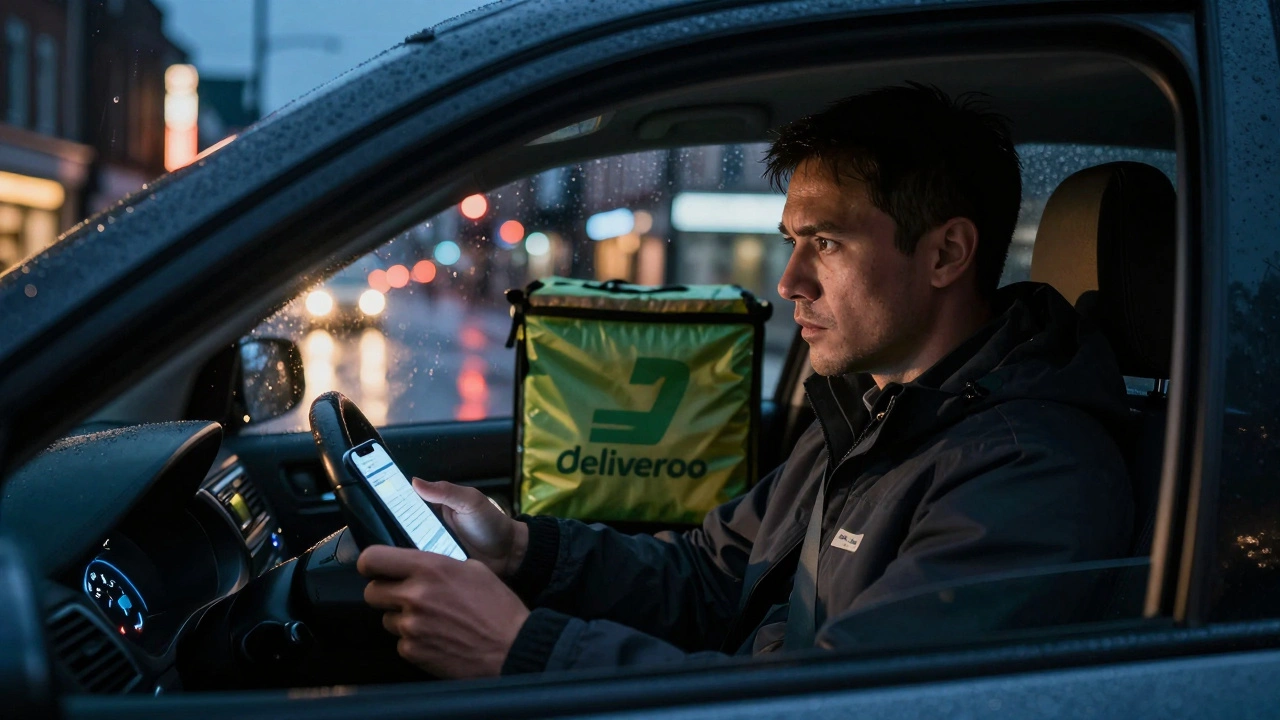
If you drive for Uber Eats, Deliveroo, or just make regular deliveries on your own time, your regular car insurance might not cover you when you’re working. And that’s not a small risk-it’s a full-blown trap. Many delivery drivers in the UK think they’re protected because they have a standard policy. They’re wrong. And when an accident happens, they’re left paying out of pocket, facing fines, or even having their policy canceled retroactively.
Why Your Personal Car Insurance Doesn’t Cover Delivery Work
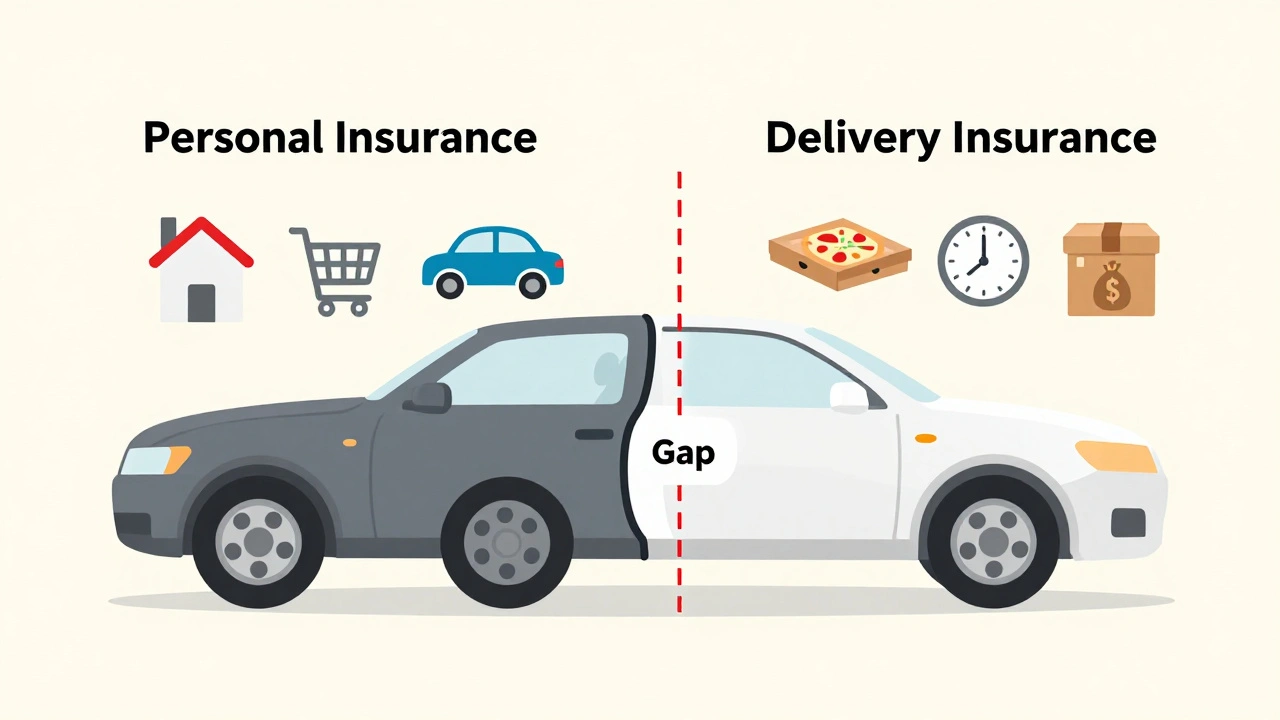
Most standard car insurance policies in the UK are designed for social, domestic, and pleasure use. That means driving to the shops, visiting friends, or going on a weekend trip. It does not include using your vehicle for business purposes-like delivering food, packages, or goods. Even if you’re only working a few hours a week, the moment you start accepting paid deliveries, you’ve crossed into commercial use.The UK’s Financial Conduct Authority (FCA) requires insurers to classify vehicle use clearly. If you’re using your car for hire or reward-no matter how small the job-you need a policy that reflects that. Otherwise, if you get into an accident while on a delivery, your insurer can refuse to pay. They don’t have to. They’re within their rights. And in many cases, they’ll cancel your policy entirely and report you to the Motor Insurers’ Bureau (MIB), which can affect your ability to get insurance in the future.
It’s not just about claims. Police and DVLA can check your insurance status during routine stops. If your policy says “social use” but you’re carrying a delivery bag in the backseat, you could be fined up to £5,000 and get between 6 and 8 penalty points on your license. That’s not a warning-it’s a real penalty that could cost you your job and your right to drive.
Common Coverage Gaps Delivery Drivers Face
Here’s what most delivery drivers don’t realize is missing from their standard policy:- Third-party liability during deliveries: If you hit another car while dropping off a pizza, your personal policy won’t cover the other driver’s repairs or medical bills.
- Damage to your own vehicle: Even if you have comprehensive cover, most insurers will void it if you’re using the car for business without declaring it.
- Loss of earnings: If your car is out of action after an accident, you won’t get paid for the deliveries you missed. Personal policies don’t include income protection.
- Goods in transit: If your food or package gets damaged or stolen while in your car, your personal insurance won’t replace it.
- Public liability: If a customer slips on a wet floor after you leave a delivery and sues you, you’re on your own.
These gaps aren’t theoretical. In 2024, the Association of British Insurers (ABI) reported that over 12,000 claims from gig economy drivers were rejected because of incorrect insurance classification. That’s not a rare mistake-it’s the norm.
How to Fix Your Coverage: Three Real Solutions
You don’t have to live with this risk. There are clear, affordable ways to get properly covered.1. Add Delivery Driver Cover to Your Existing Policy
Many insurers now offer “hire and reward” add-ons. These are usually cheap-often £10 to £25 extra per month-and they extend your current policy to cover delivery work. You don’t need a whole new policy. Just call your insurer and ask for “business use for delivery driving.”Make sure you tell them exactly what you do: food delivery, parcel delivery, courier work. Some insurers offer different rates based on the type of delivery. For example, Deliveroo riders might pay less than those carrying heavy parcels. Be specific. Don’t just say “I use my car for work.” Say, “I deliver food for Uber Eats 20 hours a week.”
Insurers like LV=, Admiral, and Direct Line now offer these add-ons. But don’t assume all of them do. If your current provider says no, move on. There are plenty that will say yes.
2. Switch to a Dedicated Delivery Driver Policy
If you’re driving more than 25 hours a week, or if you’re using your car primarily for deliveries, a dedicated policy might be cheaper and offer better protection. Companies like Zego, Cuvva, and Insure4Van (which covers cars too) specialize in gig economy drivers.These policies often work on a pay-as-you-go model. You turn the policy on when you start a delivery shift and turn it off when you’re done. You’re only paying for the hours you’re working. One driver in Bristol told me he saves £80 a month by using Zego instead of his old comprehensive policy. He only drives 15 hours a week, but he’s fully covered during every shift.
These policies also often include extras like:
- Loss of earnings coverage (up to £500 per week)
- Replacement vehicle access
- Public liability up to £5 million
- Coverage for damaged goods
They’re designed for people who treat delivery driving like a job-not a side hustle.
3. Bundle with Your Delivery Platform’s Insurance
Some platforms like Deliveroo and Just Eat offer limited insurance for their drivers. But here’s the catch: it’s usually only third-party liability, and only while you’re actively on a delivery. It doesn’t cover damage to your own car. It doesn’t cover you between deliveries. And it doesn’t cover you if you’re driving to pick up your first order.Think of platform insurance like a safety net with holes. It helps if you crash into another car while dropping off a burger. But if you hit a tree while driving to the restaurant to pick it up? You’re on your own. Don’t rely on it. Use it as a backup, not your main coverage.
What to Look for in a Delivery Driver Policy
Not all policies are created equal. Here’s what to check before you sign up:- Is delivery driving explicitly listed as covered use? Don’t trust vague wording like “business use.” It must say “delivery,” “hire and reward,” or “food/courier service.”
- Is your vehicle type included? Some policies only cover cars under a certain value or weight. If you drive a van or SUV, confirm it’s eligible.
- Are there mileage limits? Some policies cap how many miles you can drive per day. If you do 100 miles a day, make sure you’re not over the limit.
- What’s the excess? A £500 excess on a claim might sound fine-until you’re paying it after a minor collision. Look for policies with lower excesses if you can afford the higher premium.
- Does it cover multiple drivers? If your partner sometimes uses the car for deliveries too, check if they’re covered under the same policy.
Real Story: What Happens When You Skip the Right Insurance
In March 2024, a delivery driver in Bristol was hit by a van while waiting at a red light during a Deliveroo shift. He had a standard personal policy. The other driver’s insurance paid for his car repairs. But when he tried to claim for his lost wages and damaged phone (which was in the car with the food), his insurer said no. Then they reviewed his policy and found he’d been making deliveries for six months without declaring it. They canceled his policy, reported him to the MIB, and he had to pay £1,200 to get new insurance under a commercial classification.He lost £300 in lost income, £200 in phone repair costs, and £1,200 in insurance fees. Total cost: £1,700. He could have paid £20 a month for the right coverage. That’s £480 a year. He spent over three times that in one accident.
How Much Does Delivery Driver Insurance Cost?
Prices vary based on your age, car, location, and how often you drive. But here’s a realistic range for 2025:| Policy Type | Annual Cost (Est.) | Best For |
|---|---|---|
| Personal policy + delivery add-on | £300-£600 | Drivers doing 10-20 hours/week |
| Dedicated gig economy policy (pay-as-you-go) | £150-£400 | Drivers doing 15-30 hours/week |
| Comprehensive commercial policy | £800-£1,500 | Full-time drivers or van users |
Pay-as-you-go policies often win for part-timers. You’re not paying for coverage you’re not using. And because they’re designed for gig work, they’re easier to understand and manage through an app.
What to Do Right Now
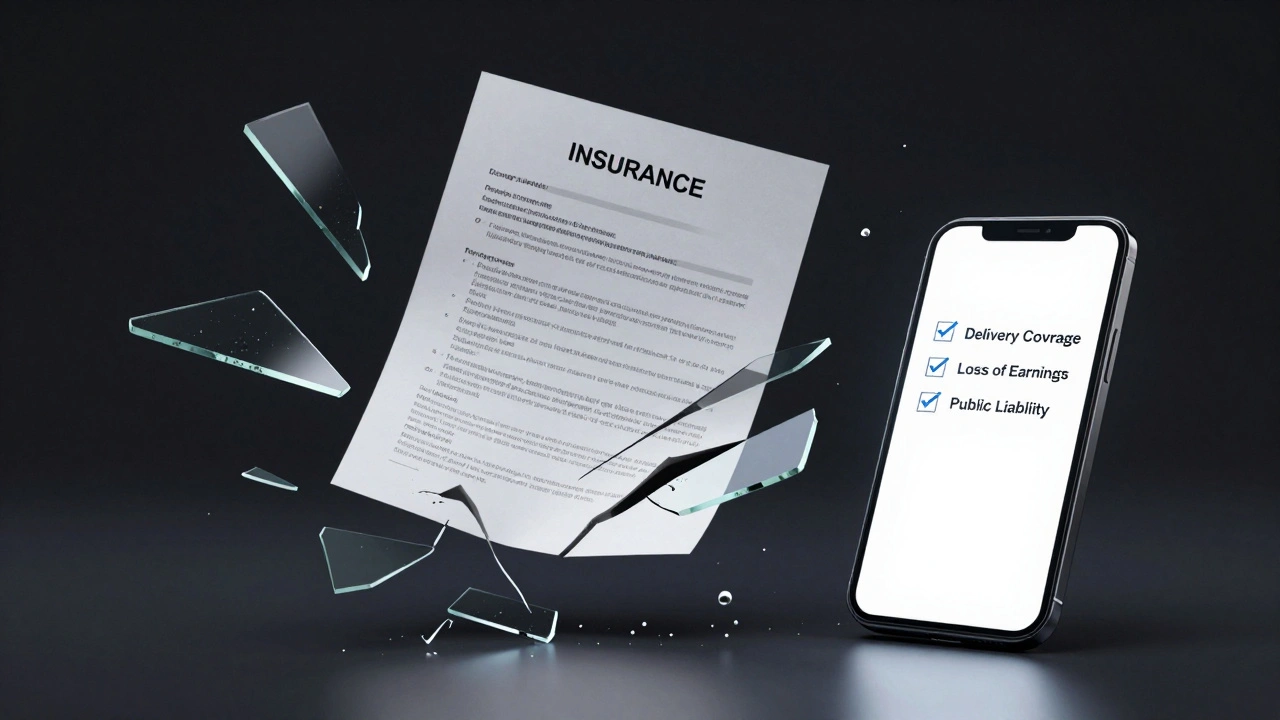
Don’t wait for an accident to teach you this lesson. Here’s your action plan:- Check your current policy documents. Look for the “use of vehicle” section. If it says “social, domestic and pleasure,” you’re not covered for deliveries.
- Call your insurer and ask: “Can I add delivery driving to my policy?” If they say no, ask for a referral to a provider that does.
- Compare Zego, Cuvva, and your current insurer’s add-on. Use comparison sites like Compare the Market or MoneySuperMarket-but filter for “delivery driver” or “hire and reward.”
- Once you’ve chosen, update your policy before your next delivery. Don’t delay.
- Keep a digital copy of your policy in your phone. Show it to police if asked.
There’s no excuse to drive without proper cover. The cost of getting it right is tiny compared to the cost of getting caught.
Frequently Asked Questions
Do I need special insurance if I only deliver on weekends?
Yes. It doesn’t matter how often you deliver. If you’re getting paid to use your car, you need commercial coverage. Even one delivery a week puts you in a different risk category. Insurers don’t care if it’s occasional-they care if you’re making money from it.
Can I use my company car for deliveries?
Only if your employer has given you written permission and the vehicle is insured for commercial delivery use. Most company cars are insured for business travel only-like going to client meetings-not for food or parcel delivery. Using it for gig work without approval can void the policy and get you fired.
What if I’m just picking up a takeaway for a friend and they give me £5?
That’s still considered a commercial activity if money changes hands. Even if it’s not through an app, if you’re being paid to transport something, you’re using your vehicle for hire and reward. Technically, you need coverage. In practice, insurers rarely check for one-off cases. But if you do this regularly-even informally-it’s a risk.
Will my insurance premium go up if I declare delivery use?
It might, but not always. Many insurers now offer competitive rates for delivery drivers. In fact, some pay-as-you-go policies are cheaper than your current personal policy. The key is to shop around. Don’t assume it’ll be expensive-ask for quotes first.
Can I get insurance if I have points on my license?
Yes, but it’ll cost more. Some insurers specialize in high-risk drivers. Zego and Cuvva accept drivers with up to 6 points. If you have more than that, you may need to go through a specialist broker. Don’t give up-coverage is still possible, even with a record.
Comments
Kevin Hagerty
lol so now i need insurance to deliver my buddy a pizza for five bucks? next they'll make me buy a license to breathe. this is why america's dead.
December 14, 2025 at 01:35
Janiss McCamish
This is such an important post. I used to think my personal policy covered gig work until I got rear-ended on a DoorDash run. Got denied. Lost my car for two weeks. Never again.
December 14, 2025 at 14:33
Amanda Ablan
I appreciate how clear this is. So many drivers don't even know the difference between social use and hire/reward. Just called my insurer and added the delivery add-on for $18/month. Felt like a weight lifted.
December 15, 2025 at 17:19
Eric Etienne
Ugh why do people make everything so complicated? Just get Zego. It's literally an app. Turn it on when you start, turn it off when you're done. Done.
December 17, 2025 at 16:45
Yashwanth Gouravajjula
In India, we don't have this problem. Delivery drivers use scooters. Insurance is cheap and always includes commercial use. Maybe we should export this model.
December 19, 2025 at 13:38
Sandy Pan
The real tragedy isn't the insurance gap-it's that companies profit from your labor while leaving you exposed. They don't care if you're covered. They just want you to deliver faster.
December 20, 2025 at 11:58
Johnathan Rhyne
You say 'hire and reward' like it's some arcane Latin phrase. It's just 'getting paid to drive.' If you're hauling goods for money, you're a commercial operator. No one's surprised. Stop pretending this is a revelation.
December 21, 2025 at 05:21
Sibusiso Ernest Masilela
I can't believe people still need to be told this in 2025. You're not a teenager driving to the mall. You're a logistics node in a capitalist machine. If you can't afford proper insurance, maybe don't monetize your wheels. It's not rocket science.
December 22, 2025 at 07:40
Meredith Howard
I read this carefully and I think the most overlooked point is public liability. If someone slips on a wet floor after you leave their doorstep and sues you your personal policy won't touch it and you could lose your house
December 22, 2025 at 09:43
Dylan Rodriquez
To everyone who says 'it's too expensive'-think about what happens if you crash. Medical bills. Lost wages. License suspension. That £1700 story? That’s not a scare tactic. That’s a real life math problem. The insurance is the cheap option.
December 23, 2025 at 11:18
Richard H
This whole thing is a scam. Big insurance wants you to pay more. They invented 'commercial use' to squeeze gig workers. If I'm driving my own car to make money, why should I pay double? This isn't fair.
December 25, 2025 at 08:55
Nathan Jimerson
I was skeptical at first but I added the delivery add-on last month and I haven't looked back. It's not about fear-it's about peace of mind. You're doing important work. You deserve to be protected.
December 27, 2025 at 07:20