

Every parent knows the drill. You buckle your own seatbelt without thinking twice. But when it comes to strapping in a toddler or infant, suddenly your hands shake. Is the belt tight enough? Did I click that latch correctly? Are they actually safe?
The anxiety is real because the stakes are high. A poorly installed child safety seat is a specialized vehicle restraint system designed to protect children during collisions by distributing crash forces across their smaller bodies can be just as dangerous as no seat at all. In fact, studies from organizations like the National Highway Traffic Safety Administration (NHTSA) show that up to 95% of car seats are used incorrectly in some way. That’s not a typo. It’s nearly every single one.
You don’t need to be an engineer to get this right. You just need to understand how these devices work, what the common mistakes are, and how to verify your setup before you drive off. Let’s cut through the confusion and get your child securely locked in.
Understanding the Basics: Types and Stages
Before you touch a single strap, you need to know which stage of seating your child belongs in. Car seats aren’t one-size-fits-all; they evolve as your child grows. Using the wrong type for their age or size is the most fundamental error parents make.
There are four main categories you’ll encounter:
- Rear-Facing Only: These are for infants, typically from birth until they outgrow the height or weight limit (usually around 30-35 pounds). They keep the head, neck, and spine supported in a rear-collision, which is the most common type of accident.
- Convertible Seats: These are the workhorses. They start rear-facing and convert to forward-facing once the child meets the minimum requirements. Most experts recommend keeping kids rear-facing as long as possible, often until age two or even four, depending on the seat’s limits.
- Forward-Facing with Harness: Once a child outgrows the rear-facing limits, they move here. The five-point harness holds them in place until they reach about 40-65 pounds.
- Booster Seats: When the harness is too small, a booster raises the child so the vehicle’s lap and shoulder belts fit properly. This usually starts around age four or when they weigh 40 pounds.
The key takeaway? Don’t rush to switch positions. The safest position is always the one that offers the most support for your child’s current developmental stage. If your convertible seat allows rear-facing up to 50 pounds, let them stay back there.
The Golden Rule: Tightness Matters
If you remember nothing else from this guide, remember this: loose is lethal. The number one mistake in car seat installation is the process of securing a child restraint system to a vehicle using either seat belts or dedicated anchor points to ensure stability during impact is excessive movement. A car seat should feel almost bolted to the car.
To check if the seat is installed tightly enough, use the "one-inch rule." Grab the seat at the belt path-the point where the vehicle’s seat belt or ISOFIX connector attaches-and try to move it side-to-side and front-to-back. If it moves more than one inch in any direction, it’s too loose. Period.
Here is how to achieve that tightness:
- Use the Right Belt Path: Look for arrows on the side of the car seat. Blue arrows usually mean rear-facing; red means forward-facing. Routing the belt through the wrong path compromises the entire structure.
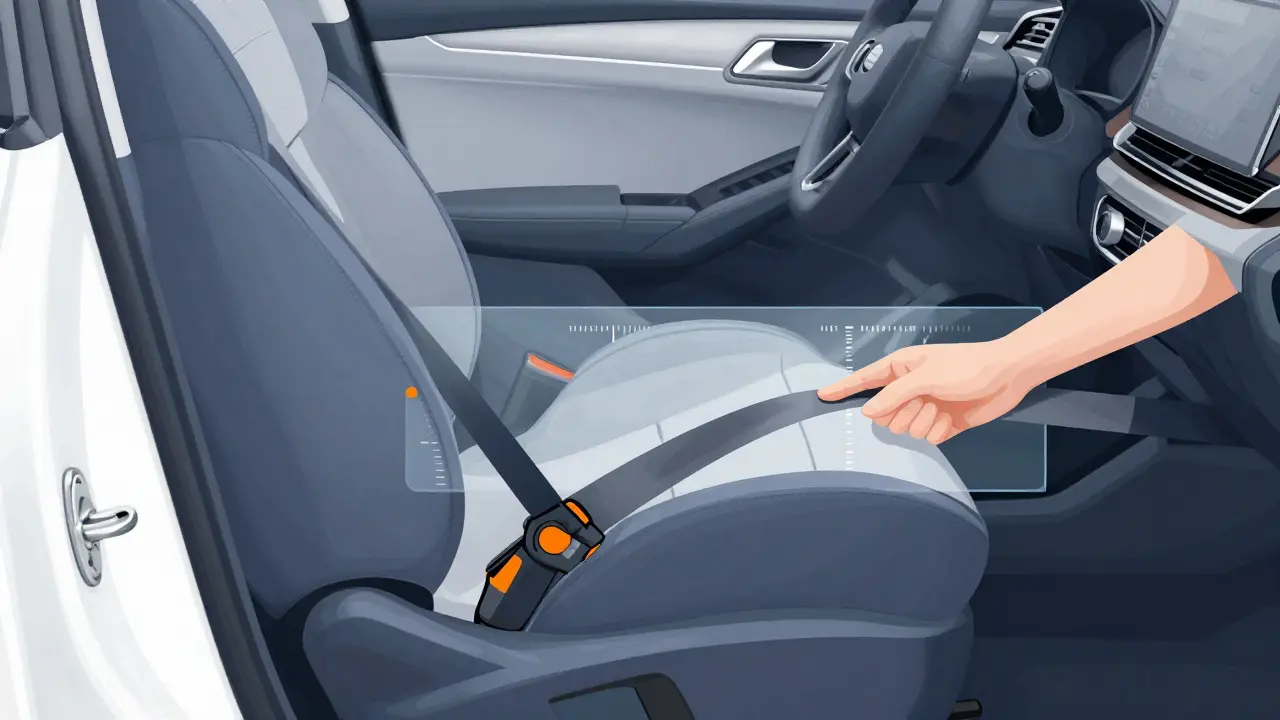
- Lock the Seat Belt: If you’re using the vehicle’s seat belt, you need to lock it down. Most modern cars have locking retracts, but older models might require a locking clip. Pull the belt tight, then push the seat firmly into the vehicle seat while feeding the belt back in slowly.
- Compress the Vehicle Seat: If your car has soft foam seats, press down hard on the vehicle cushion with your knee while tightening the belt. This compresses the foam and eliminates slack.
For ISOFIX installations, listen for the audible click. Then, pull up on the seat to ensure the connectors haven’t slipped off the anchors. Many seats have a visual indicator-a green window turns red if the connection isn’t secure.
Harness Adjustment: Fitting the Child, Not Just the Seat
A perfectly installed seat is useless if the harness is wrong. The harness does the heavy lifting during a crash, so it needs to be positioned precisely on your child’s body.
Start with the slot height. For rear-facing seats, the harness slots must be at or below your child’s shoulders. For forward-facing seats, they must be at or above the shoulders. Never put the straps below the shoulders in a forward-facing position; this increases the risk of submarining, where the child slides under the lap belt.
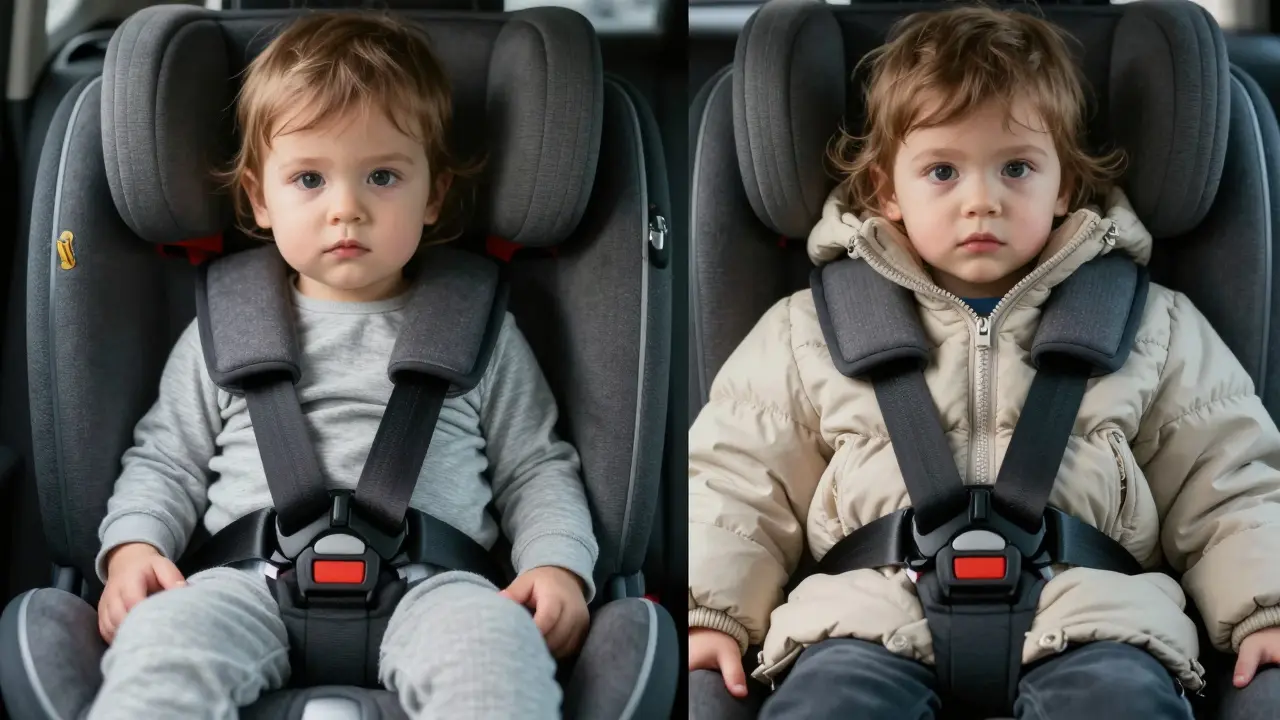
Next, check the tightness of the straps themselves. Perform the "pinch test." Try to pinch the webbing horizontally at your child’s collarbone. If you can gather any excess material between your fingers, it’s too loose. The harness should lie flat against the chest without gaps.
Finally, look at the crotch buckle. It should sit snugly against the child’s body, not dangling loosely. If it’s too far away, the child can slide forward during a sudden stop. Adjust the straps so the buckle rests comfortably but firmly.
Common Pitfalls and How to Avoid Them
Even experienced parents slip up. Here are the most frequent errors that compromise safety:
- Bulky Clothing: Winter coats create dangerous gaps between the child and the harness. In a crash, the coat compresses, leaving loose space for the child to move. Instead, dress your child in thin layers, secure the harness, and then place the coat over them backwards.
- Expired Seats: Plastic degrades over time due to UV exposure, temperature changes, and wear. Most car seats expire seven years after manufacture. Check the label on the bottom or back of the seat for the expiration date. If it’s past, recycle it immediately.
- Second-Hand Risks: Buying a used seat is risky unless you know its full history. You can’t see if it was involved in a moderate or severe crash, which weakens the internal structure. Also, older models may lack current safety features or recall notices.
- Top Tether Neglect: If your forward-facing seat has a top tether strap, use it. This strap connects to an anchor in the car’s cargo area or ceiling and reduces head excursion by up to four inches in a crash. It’s a critical safety feature that many people ignore because it’s inconvenient.
ISOFIX vs. Seat Belt: Which is Better?
In the UK and Europe, ISOFIX is an international standard for attaching child safety seats to vehicles using standardized anchor points located in the vehicle's seat bight is the norm. In the US, it’s called LATCH (Lower Anchors and Tethers for Children). Both systems aim to simplify installation and reduce user error.
| Feature | ISOFIX / LATCH | Vehicle Seat Belt |
|---|---|---|
| Ease of Use | High - Click-and-lock mechanism | Medium - Requires manual tightening and locking |
| Tightness Consistency | Very High - Less user variability | Variable - Depends on user strength and technique |
| Vehicle Compatibility | Universal in cars made after 2006 | All vehicles |
| Cost | Slightly higher for compatible seats | No additional cost |
Generally, ISOFIX is preferred because it removes the guesswork of locking seat belts. However, both methods are equally safe if installed correctly. Always follow the manufacturer’s instructions for your specific seat model. Some seats perform better with seat belts than with ISOFIX, especially heavier convertible seats.
When to Seek Professional Help
If you’re still unsure after reading this, don’t guess. Get help. In the UK, you can visit a Baby Gear Checkpoint is a certified inspection service where trained technicians examine child car seats for correct installation and usage. These checkpoints are free and staffed by experts who can spot issues you might miss.
In the US, look for NHTSA-certified Child Passenger Safety Technicians (CPSTs). They offer inspections at fire stations, hospitals, and police departments. Bring your owner’s manual and your vehicle’s manual to the appointment. They will walk you through every step and verify the fit.
Remember, checking your seat isn’t a one-time event. Re-check it every time you transfer it to another vehicle, after adjusting for growth, or if you suspect it shifted. Your vigilance is the final layer of protection.
How do I know if my car seat is expired?
Look for a sticker on the bottom, back, or side of the car seat. It will list the manufacture date and the expiration date. Most seats expire seven years after production. If the sticker is missing or worn off, assume the seat is expired and replace it.
Can I use a second-hand car seat?
Only if you know its complete history. Ensure it hasn’t been in a moderate or severe crash, isn’t expired, has all original parts and manuals, and hasn’t been recalled. If you can’t verify these facts, buy new.
What is the one-inch rule?
The one-inch rule states that a properly installed car seat should not move more than one inch side-to-side or front-to-back at the belt path. If it moves more, it’s too loose and needs to be tightened.
Should my child wear a winter coat in the car seat?
No. Bulky coats create dangerous gaps between the child and the harness. Dress your child in thin layers, secure the harness tightly, and then place the coat over them backwards to keep them warm without compromising safety.
Is ISOFIX safer than using the seat belt?
Both methods are equally safe when installed correctly. ISOFIX is often easier to use correctly because it reduces user error, but seat belts are perfectly acceptable if you follow the manufacturer’s instructions and ensure a tight fit.
Comments
Antonio Hunter
I have to say that this is one of the most comprehensive guides I have seen on the subject, and it really highlights just how critical it is for us all to take these matters seriously because when you look at the statistics regarding improper installation, it becomes abundantly clear that we are not doing enough as a society to educate ourselves on the nuances of child safety restraint systems. The section about the one-inch rule was particularly enlightening, as I had always assumed that if the seat felt somewhat secure, it was good enough, but now I understand that there is a specific metric we should be aiming for to ensure maximum protection for our little ones during any potential collision events.
May 9, 2026 at 09:14
Paritosh Bhagat
It is absolutely disgraceful that people still ignore basic safety protocols like these, especially when the information is so readily available and clearly explained in articles such as this one, which serves as a moral imperative for every single parent to follow without question or excuse. You would think that after decades of warnings from experts and government agencies alike, we would have moved past this negligence, but no, people continue to prioritize convenience over the lives of their children, which is truly baffling and deeply concerning for the future of our collective responsibility toward safety standards.
May 10, 2026 at 12:06
Ben De Keersmaecker
The distinction between ISOFIX and LATCH systems is often confusing for many parents, but this breakdown clarifies that while the terminology differs across regions, the underlying principle remains consistent in providing a more secure attachment method compared to traditional seat belts alone. I found the comparison table particularly useful in understanding why ISOFIX might be preferred in certain vehicles, although it is important to note that both methods can be equally safe if installed correctly according to the manufacturer's guidelines.
May 11, 2026 at 14:19
Aaron Elliott
One must consider the philosophical implications of relying on technology versus human diligence in ensuring safety, for even the most advanced car seat cannot compensate for the fundamental lack of attention and care that is required in its installation and usage. It is a paradox of modern parenting that we invest in expensive equipment yet fail to engage with the simple instructions that accompany them, thereby rendering the investment moot and exposing our children to unnecessary risks that could have been easily avoided through mere adherence to established protocols.
May 12, 2026 at 09:47
Chris Heffron
Thanks for sharing this info :) I never knew about the pinch test until now, and it sounds like something everyone should definitely try out to make sure their kid is properly secured. It’s crazy how many small details can make such a big difference in safety, so I’m going to go check mine right away!
May 14, 2026 at 00:15
Adrienne Temple
This is super helpful! I always worry about getting everything right, especially with the winter coats part. My daughter loves her puffy jacket, but I didn’t realize it could actually make her less safe in the seat. I’m going to start dressing her in thin layers instead and putting the coat backwards over her harness like you suggested. Thanks for making it easy to understand :)
May 15, 2026 at 01:23
Sandy Dog
Oh my gosh, I literally started shaking reading this because I realized I’ve probably done almost everything wrong since my baby was born, and it just terrifies me to think about what could have happened if we had been in an accident, which feels like a nightmare scenario that I never want to imagine but now I can’t stop thinking about because of how detailed this guide is about all the things I missed. I feel like such a failure as a parent for not knowing about the one-inch rule or the expiration dates, and I’m going to cry myself to sleep tonight worrying about whether my current seat is actually safe or if I need to rush out and buy a new one immediately before anything bad happens to my precious little angel who deserves nothing but the best protection possible in this dangerous world we live in where accidents happen so quickly and without warning.
May 16, 2026 at 13:15
Nick Rios
I appreciate the calm and detailed approach here, as it helps reduce the anxiety many parents feel when trying to figure out these complex safety measures. It’s reassuring to know that there are resources like CPSTs available for those who need extra help, and I think more people should utilize these services rather than guessing on their own. Taking the time to get it right is worth every minute spent.
May 17, 2026 at 04:07
Amanda Harkins
There is a strange irony in how we trust machines to protect our most vulnerable loved ones, yet we hesitate to trust the simple instructions that come with them, creating a cycle of doubt and insecurity that permeates our daily routines and interactions with these devices. We seek certainty in a world that offers none, clinging to the hope that our efforts will suffice, even when evidence suggests otherwise, and perhaps that is the true challenge of modern parenthood: navigating the gap between intention and action.
May 17, 2026 at 23:17
Jeanie Watson
Just another long article telling us what we already know but don’t do anyway. People won’t read this; they’ll just scroll past it and keep doing whatever they want.
May 19, 2026 at 15:22
Tom Mikota
Wow... just wow. Do people really need a step-by-step guide to buckle a seatbelt? I mean, seriously, isn’t common sense supposed to kick in here? Or has society become so dependent on explicit instructions for every minor task that we’ve lost the ability to think for ourselves? It’s almost laughable how much effort goes into explaining something that should be instinctive, yet here we are, reading paragraphs about ‘one-inch rules’ and ‘pinch tests.’
May 19, 2026 at 23:44
Mark Tipton
Let us not forget that the very concept of standardized safety regulations is a construct designed to control parental behavior under the guise of protection, often ignoring the individual nuances of each family’s situation and vehicle type, which leads to a one-size-fits-all approach that may not be optimal for everyone. Furthermore, the push for ISOFIX/LATCH systems can be seen as a corporate strategy to increase sales of newer models, despite the fact that older seat belt installations, when done correctly, offer comparable safety levels, suggesting that the urgency surrounding these updates is largely manufactured by industry interests rather than genuine safety concerns.
May 20, 2026 at 20:02
Adithya M
You are completely missing the point here, and your condescending tone is entirely unwarranted given the seriousness of the topic at hand. It is not about 'common sense' but about precise engineering and verified safety standards that require strict adherence to ensure effectiveness, and dismissing these guidelines as unnecessary is both ignorant and potentially dangerous for anyone who might choose to follow your flawed logic.
May 22, 2026 at 09:37