
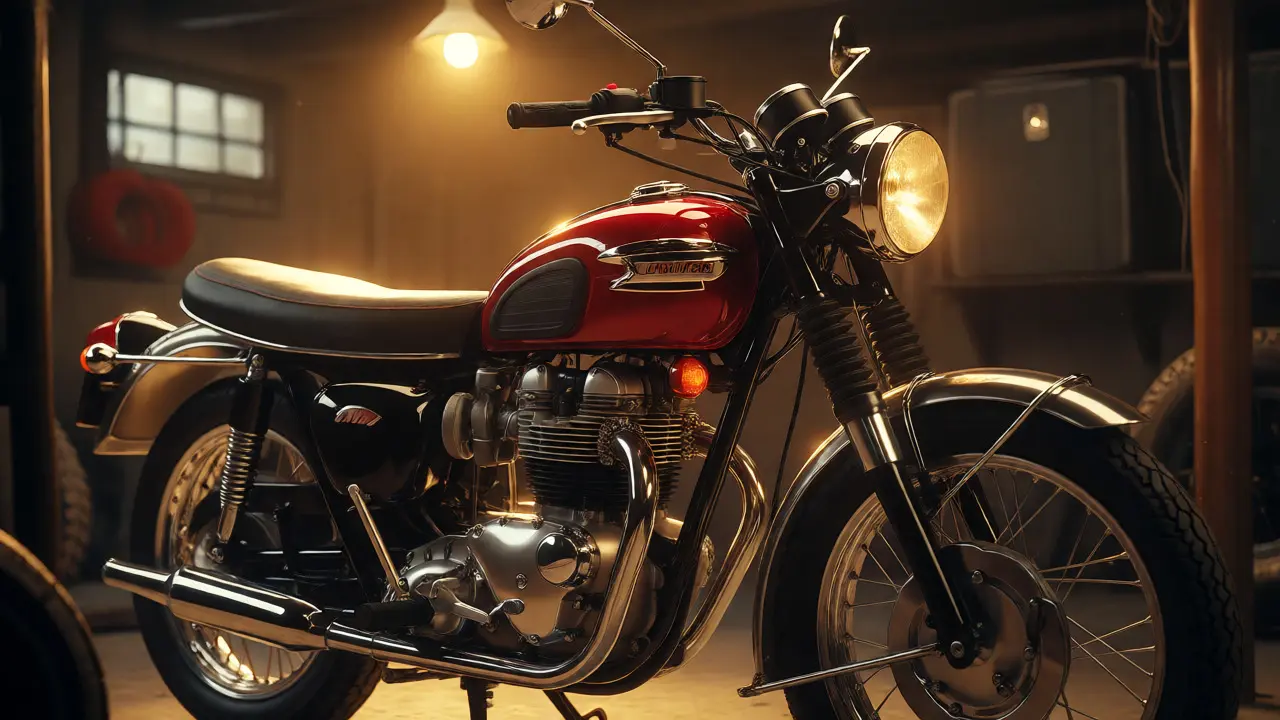
Imagine this: you’ve spent three years restoring a 1968 Triumph Bonneville. You’ve hunted down original parts, polished the chrome until it mirrors your face, and tuned the engine to purr like a kitten. Then, disaster strikes. A car pulls out without looking, and your pride and joy is totaled. The insurer hands you a check for £2,500. But wait-you just spent £12,000 on that restoration. Where did the money go? This isn’t a hypothetical nightmare; it’s the standard outcome if you didn’t understand the difference between agreed value and stated value when buying classic motorcycle insurance.
If you own a vintage or antique bike, standard car insurance logic doesn’t apply. Your machine isn’t depreciating like a modern commuter scooter; it’s likely appreciating. Choosing the wrong valuation method can leave you underinsured by thousands of pounds or overpaying for coverage you don’t need. Let’s break down exactly how these two policies work, where they trap riders, and which one actually protects your wallet in the UK market today.
The Core Problem with Standard Depreciation
Most standard vehicle insurance policies operate on Actual Cash Value (ACV). If you crash a five-year-old Honda CB500, the insurer pays what that specific bike is worth on the used market right now, minus wear and tear. For mass-produced modern bikes, this works fine because there are plenty of comparable models to determine price.
But try finding an exact match for a 1974 Kawasaki H2 Mach IV with matching numbers and original paint. There aren’t many. Insurers using ACV often guess low, assuming the bike is just "old metal." They might value it at scrap yard prices plus a bit extra, ignoring the rarity, the provenance, and the labor hours you invested. This gap between perceived market value and actual replacement cost is why dedicated classic bike insurers exist, and why understanding valuation methods is non-negotiable.
Agreed Value: The Gold Standard for Collectors
Agreed Value is a contract-based approach where you and the insurer decide the worth of your bike before the policy starts. Once signed, that number is locked in. If your bike is written off, the insurer pays that agreed sum, no questions asked about depreciation or current market fluctuations.
This method relies heavily on appraisal documentation. To get an agreed value, you typically need:
- A professional appraisal from a recognized expert or club valuer.
- Photos showing the condition of the bike from multiple angles.
- Receipts for any recent restoration work or upgrades.
- Proof of ownership and registration documents.
The biggest advantage here is certainty. If you agreed on £15,000 for your BSA Gold Star, and it gets stolen or totaled, you get £15,000. It doesn’t matter if the market crashes or booms next week. However, this certainty comes with strings attached. Most agreed value policies require strict storage conditions-often a locked garage-and limited mileage caps, such as 1,000 to 3,000 miles per year. If you exceed these limits, the insurer can void the agreement or reduce the payout.
Stated Value: Flexibility With Risk
Stated Value lets you declare what you think your bike is worth, but the insurer retains the right to dispute it during a claim. You pick a number, say £8,000, and pay premiums based on that figure. Sounds simple, right? Here’s the catch: if you file a claim, the insurer will investigate whether £8,000 was realistic at the time of loss.
If they believe the bike was only worth £6,000, they’ll pay £6,000, even though you paid premiums calculated on £8,000. Worse, some policies allow them to deduct depreciation from your stated value. So, you could end up with less than both your stated amount and the true market value. Stated value is generally cheaper upfront, making it tempting for budget-conscious owners, but it shifts the risk of valuation errors onto you.
This option suits bikes that are older or modified, where finding a professional appraiser is difficult or expensive. It’s also common for lower-value classics where the premium savings outweigh the risk of a slightly reduced payout.
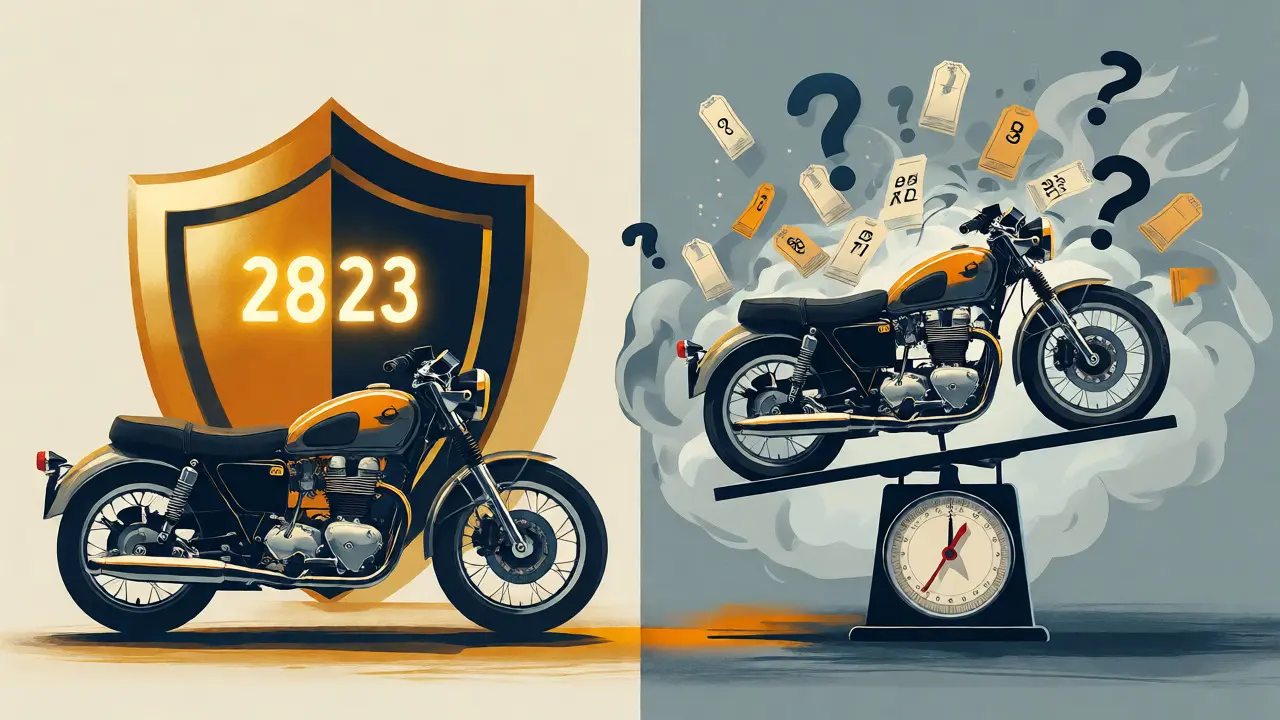
Head-to-Head Comparison
To make the decision clearer, let’s look at how these two options stack up against each other across key factors.
| Feature | Agreed Value | Stated Value |
|---|---|---|
| Payout Certainty | High - Fixed amount paid regardless of market changes. | Low - Insurer can challenge the declared amount. |
| Upfront Cost | Higher premiums due to higher insured amounts. | Lower premiums initially. |
| Documentation Required | Professional appraisal and detailed photos needed. | Minimal; usually just photos and basic details. |
| Depreciation Clause | None - Payout does not decrease with age. | Often included - Payout may be reduced for wear. |
| Best For | High-value, rare, or fully restored bikes. | Lower-value, project bikes, or daily riders. |
When to Choose Which Policy?
Deciding between the two depends entirely on your bike’s profile and how you use it. There is no one-size-fits-all answer, but here are some rules of thumb based on real-world scenarios.
Go for Agreed Value if:
- Your bike is worth more than £5,000-£7,000. At this level, the premium difference is negligible compared to the risk of being underpaid.
- You have done significant restoration work. Insurers rarely reimburse labor costs in stated value claims unless explicitly documented.
- The bike has historical significance or rarity. Unique modifications or limited production runs justify a fixed valuation.
- You keep the bike in a secure, alarmed garage. Agreed value policies often refuse coverage if the bike sits outside overnight.
Consider Stated Value if:
- Your bike is a lower-value classic, perhaps under £3,000.
- You ride it regularly for commuting or touring, exceeding typical mileage caps.
- You haven’t had a formal appraisal done and don’t want to spend £100-£200 on one.
- The bike is a runner rather than a trailer queen, meaning its condition varies more frequently.
Pitfalls That Can Void Your Claim
Even with the right policy type, small mistakes can lead to denied claims. One major issue is undisclosed modifications. If you swap out the original carburetors for modern Keihin units and don’t tell the insurer, they might argue the bike’s character changed, affecting its value. Always declare mods, especially those that increase performance or safety.
Another trap is mileage misrepresentation. Many agreed value policies cap annual mileage at 2,500 miles. If you log 5,000 miles touring Europe, you’re technically in breach of contract. Some insurers offer flexible mileage plans for an extra fee, but you must ask for them upfront. Don’t assume standard terms apply.
Finally, storage matters. In the UK, leaving a classic bike in a shared driveway or a lock-up without proper security can invalidate an agreed value claim. Insurers view these bikes as theft targets. Ensure your policy specifies approved storage locations, and keep receipts for any security upgrades like alarms or immobilizers.
How to Determine the Right Number
Don’t guess your bike’s value. Use resources like the Hagerty Price Guide, which tracks auction results for classic motorcycles globally. Check completed listings on eBay Motors UK for similar models sold recently. Join clubs like the Vintage Sports Motorcycle Club (VSMC) or the British Motorcycle Owners’ Club (BMOC); their members often know the going rate for specific models better than any algorithm.
When setting an agreed value, aim for the retail replacement cost, not the trade-in value. You want enough money to buy a similar bike from a dealer or private seller, not what a quick-sale shop would pay you. Remember, taxes and registration fees add to the final cost, so build a buffer into your agreed sum.
Final Thoughts on Protection
Insuring a classic motorcycle isn’t just about ticking a box for the DVLA. It’s about protecting an asset that holds emotional and financial value. Agreed value offers peace of mind for serious collectors, while stated value provides flexibility for casual enthusiasts. Review your policy annually. As your bike appreciates or you complete more restoration work, update your valuation. A static policy is a dangerous policy in the fluctuating world of classic vehicles.
Can I switch from stated value to agreed value later?
Yes, most insurers allow you to upgrade your policy mid-term. You’ll typically need to provide a new appraisal and pay the difference in premium. This is a smart move if you’ve recently finished a major restoration that increased your bike’s value significantly.
Does agreed value cover spare parts?
Usually, no. Spare parts stored separately are often excluded or require a separate rider. Check your policy wording carefully. Some high-end providers include coverage for accessories and spares up to a certain limit, but it’s not standard.
What happens if my bike is damaged but not totaled?
For partial damage, insurers typically pay for repairs using like-for-like parts. If original parts are unavailable, they may use reproductions unless you specified otherwise. In agreed value policies, the total value isn’t reduced by the repair cost, unlike stated value policies where repeated claims might lower the future valuation.
Is third-party fire and theft enough for a classic bike?
Rarely. Third-party only covers damage you cause to others. Fire and theft adds protection against those specific events. However, it won’t cover accidental collision damage. Given the high cost of repairing vintage frames and engines, comprehensive cover is almost always recommended for classics.
Do I need a professional appraisal for every bike?
Not necessarily. For bikes under £5,000, self-declared values or club valuations might suffice for agreed value policies. For high-value machines (£10,000+), a certified independent appraisal is strongly advised to avoid disputes during a claim.
Comments
Prayagraj Medicose
They don't want you to know this but the insurance companies are actually in on it with the auction houses to keep classic values artificially low so they can pay out less 🤫 It's all a big conspiracy to devalue your passion. I bet if you look closely at the fine print they have a clause that lets them change the 'market value' definition whenever they feel like it. Don't trust any of them.
October 7, 2026 at 09:29
Sherri Jones
This is such a crucial distinction for collectors! 🚲✨ If you are restoring something rare, Agreed Value is absolutely non-negotiable. The depreciation logic just doesn't apply to vintage machines.
Make sure you get a proper appraisal from someone who knows the specific model history, not just a general mechanic. Also, keep every single receipt for parts and labor because that documentation saves you during a claim. 😊👍
October 7, 2026 at 21:33
SHANNON GRUBER
Obviously.
October 9, 2026 at 11:44
Brad Walker
We spend our lives chasing these mechanical ghosts, polishing chrome until our hands bleed, only to be crushed by the indifferent machinery of modern traffic. Is it worth it? Perhaps the risk is part of the romance, or maybe we are just fools clinging to metal that wants to return to the earth. The insurer sees a number; we see a soul trapped in steel.
October 9, 2026 at 17:20
Manoj Kumar
The article fails to adequately address the systemic bias inherent in Western insurance models which prioritize profit over preservation. Furthermore, the assumption that UK regulations mirror global standards is flawed. One must consider the geopolitical implications of currency fluctuation on asset valuation. It is naive to believe that local appraisals hold universal weight.
October 11, 2026 at 05:08
Sean Eagen
Agreed value is the only way. Stated value is a trap for people who dont read the fine print. You end up paying for coverage you never get. Its that simple.
October 12, 2026 at 00:14
Kieran Mitchell
THIS IS WHY BRITISH ENGINEERING RULES THE WORLD!!!
Our Triumphs and BSAs are superior to everything else coming out of Japan or Germany right now!!! If you don't insure your British iron properly, you're basically admitting defeat!!! Get an agreed value or go home!!! 🇬🇧🏍️💥
October 12, 2026 at 05:19
Darlene Hopkins
It’s heartbreaking when restoration work goes unrecognized by insurers. Your bike deserves respect for the hours you put in.
October 12, 2026 at 17:16
Bryce Imbriale
Get out there and ride those classics!! Don't let fear stop you!! Just make sure you pick the right policy so you can focus on the joy of the open road and not the paperwork!! You got this!! 🚀🔥
October 13, 2026 at 12:57
Kathy Mccoy
You're doing great work preserving these pieces of history. Don't let the confusion around insurance types discourage you from protecting what you've built. Start with a clear appraisal and build from there. You've got this!
October 15, 2026 at 01:56