

Shipping a classic car isn’t like moving a daily driver. You’re not just transporting metal and paint-you’re moving history. A 1967 Shelby GT500, a 1955 Chevrolet Bel Air, or a rare Jaguar E-Type deserves more than a open trailer rattling down the highway. That’s why so many owners face the same question: enclosed vs. open carriers for classic car transport.
Why the choice matters more than you think
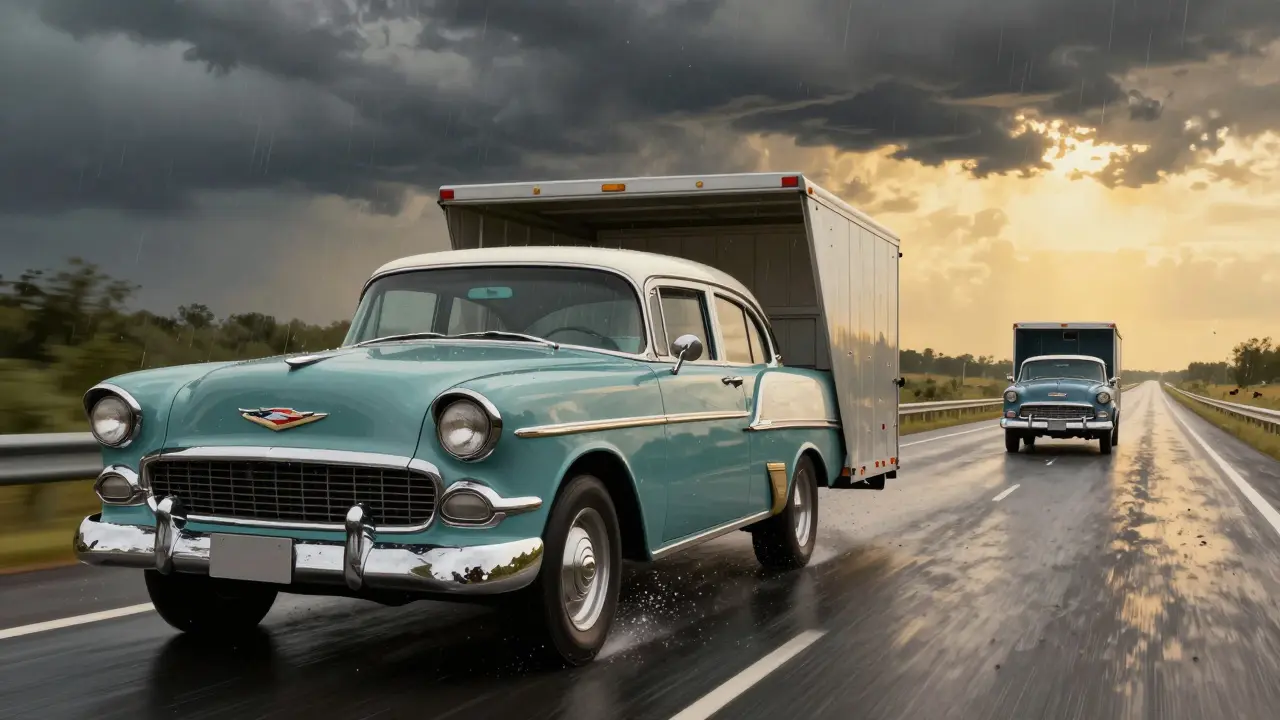
Open carriers are the standard for everyday vehicles. They’re cheaper, more common, and faster to book. But when you’re moving a car worth £50,000 or more, those savings can cost you far more in the long run. Road debris, rain, dust, and even bird droppings can scratch paint, dull finishes, or worse-cause permanent damage to hand-polished surfaces. A single pebble kicked up by a truck ahead can leave a chip that takes a professional to repair. And repairs on classic cars? They’re not just expensive-they’re hard to find. Enclosed carriers, on the other hand, are sealed trailers. Think of them as moving garages. They protect your car from weather, road grime, and curious onlookers. Many are air-ride suspended, meaning less vibration and shock during transit. For collector cars, concours-level restorations, or vehicles with original paint, this isn’t a luxury-it’s a necessity.What enclosed carriers actually protect against
Let’s break down the real risks open carriers expose your car to:- Weather damage: Rain, snow, or even high humidity can cause water spots on clear coats or rust on exposed metal. A 2024 study by the Classic Car Club of America found that 17% of open-shipped classics showed signs of moisture-related finish degradation within six months of delivery.
- Debris impact: Gravel, road salt, and even tire fragments from semi-trucks can chip paint. One owner in Manchester had his 1970 Dodge Charger returned with 14 new chips-all from a single open haul.
- UV exposure: Sunlight fades paint and cracks interiors over time. Even a few days in direct sun during transport can fade a perfectly restored dashboard.
- Theft and tampering: Open trailers are visible. Thieves have targeted classic cars mid-transport, especially in high-traffic corridors like the M1 or A1.
Open carriers: when they might still work
Don’t assume enclosed is always the answer. There are situations where an open carrier makes sense:- Your car is already in rough shape-say, a project car needing full restoration. If you’re planning to repaint or rebody it anyway, minor scratches won’t matter.
- You’re shipping locally, under 100 miles. The exposure time is minimal.
- Cost is the absolute limiting factor. Open transport can be 40-60% cheaper than enclosed.
Price difference: what you’re really paying
In the UK, shipping a classic car from London to Edinburgh costs roughly:| Route | Open Carrier (approx.) | Enclosed Carrier (approx.) | Price Difference |
|---|---|---|---|
| London to Edinburgh | £850 | £1,450 | +£600 |
| Bristol to Newcastle | £780 | £1,300 | +£520 |
| Manchester to Cardiff | £690 | £1,200 | +£510 |
What to look for in a transporter
Not all enclosed carriers are created equal. Here’s what separates the good from the bad:- Experience with classics: Ask if they’ve shipped your make or model before. A company that moves 50 pickup trucks a week might not know how to handle a low-slung MGB.
- Zero-contact loading: Your car should roll on and off on its own wheels, not be winched or lifted by straps around the axles.
- Insurance coverage: Make sure they offer full-value protection. Standard freight insurance often caps at £10,000-useless for a £75,000 Ferrari.
- Tracking and communication: You should get updates. Real-time GPS tracking is standard for premium services.
- Driver training: Drivers should know how to handle delicate finishes. No gloves? No good.
Timing and logistics
Classic car transport isn’t like ordering a taxi. You need to plan ahead:- Book at least 3-4 weeks in advance, especially in spring and autumn-peak seasons for shows and swaps.
- Remove all loose items from the car. Interior clutter can shift and scratch during transit.
- Take photos before loading. Document every scratch, dent, or imperfection. This is your proof if something new appears.
- Be present for pickup and delivery. Don’t let someone else sign off on the condition report.
Real-world example: the 1957 Thunderbird
A collector in Bath bought a 1957 Ford Thunderbird in Florida for £48,000. He had two options: open carrier for £1,800 or enclosed for £3,100. He chose enclosed. The car arrived with no scratches, no dust in the crevices, and the original leather still supple. The seller even sent a thank-you note-because he’d seen too many of his cars arrive damaged by open haulers. The extra £1,300 didn’t feel like a cost. It felt like peace of mind.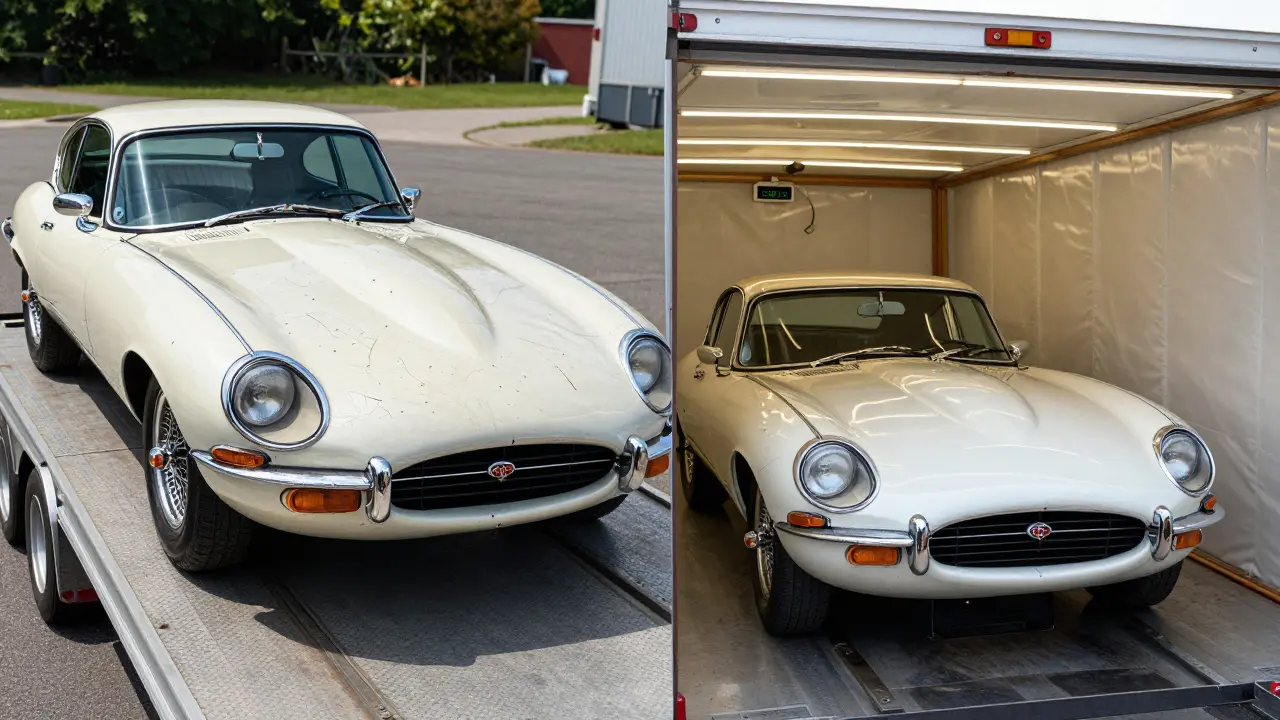
What you shouldn’t do
Avoid these common mistakes:- Choosing the cheapest quote without checking reviews or insurance.
- Assuming your car insurance covers transport. Most don’t.
- Letting the transporter load the car without supervision.
- Shipping a car with a full tank of gas. Fuel sloshing can cause pressure buildup or leaks.
- Forgetting to disconnect the battery. It can drain or short during long hauls.
Final decision: enclosed or open?
Ask yourself these three questions:- Is the car worth more than £15,000?
- Is the paint, interior, or restoration original or professionally done?
- Would I be devastated if it arrived with new damage?
For lower-value project cars, or short local moves, open might be acceptable. But for anything that holds sentimental, historical, or financial value-enclosed isn’t optional. It’s the only responsible choice.
Is enclosed car transport worth the extra cost?
Yes-if your classic car is worth more than £15,000, has original paint, or is a restoration project. The extra cost-usually £500 to £800 more than open transport-is far less than repairing a single scratch or chip. For collector cars, enclosed transport is insurance, not an expense.
Can I ship a classic car with an open carrier safely?
Only if the car is a non-original project, has no valuable finish, or you’re shipping it under 100 miles. Even then, there’s risk. Road debris, weather, and UV exposure can cause irreversible damage. For any car with original or restored paint, open transport is not recommended.
How far in advance should I book classic car transport?
Book at least 3 to 4 weeks ahead, especially between March and October. These are peak months for car shows, auctions, and relocations. Last-minute bookings often mean higher prices or limited carrier options.
Does my car insurance cover transport damage?
Almost never. Standard car insurance policies exclude damage during transit. Always ask the transporter for their insurance coverage. Premium enclosed carriers offer full-value protection-sometimes up to £100,000. Never rely on your personal policy.
What should I do before handing over my classic car?
Take detailed photos of every angle, including the undercarriage. Note any existing scratches or dents on the condition report. Remove all personal items, disconnect the battery, and drain the fuel tank to a quarter full. Make sure the transporter uses padded wheel chocks and zero-contact loading.
Next steps
If you’re ready to ship:- Get at least three quotes from companies that specialize in classics-not general freight.
- Ask for references from other classic car owners.
- Verify their insurance limits and loading procedures.
- Never pay the full amount upfront. A 30-50% deposit is standard; the rest should be due upon delivery and inspection.
Comments
Wilda Mcgee
Let me tell you something - shipping a classic like it's a lawn mower is a recipe for heartbreak. I had a '68 Camaro that arrived with a bird-dropping etching on the driver's side fender after an open haul. The paint was original, hand-polished, and worth more than my car and house combined. I cried. Then I found an enclosed carrier who treated it like a baby. No scratches. No dust. No drama. The extra $700? Worth every penny. Your car isn't cargo - it's legacy.
January 13, 2026 at 06:20
Madeline VanHorn
Enclosed? Please. If you can't afford it, you shouldn't own it. I've seen people ship their grandma's 1972 Nova with a tarp and pray. It's called living. If your car can't survive a little road dust, maybe it belongs in a museum - not on the road.
January 15, 2026 at 05:17
Glenn Celaya
open carriers are fine if you dont care about your car being a target for every idiot on the highway. i saw a guy ship his 69 mustang open and it came back looking like it got hit by a gravel bomb. he cried. i laughed. then i told him to buy enclosed next time or just sell it. no one cares about your pride if you cant afford to protect it
January 16, 2026 at 13:22
Jen Becker
Someone’s gonna come in here and say ‘but what about the cost?’ and I’m just gonna sit here and wait for the tears to start.
January 17, 2026 at 08:12
Chris Atkins
My buddy shipped his 57 Thunderbird enclosed from Florida to Texas and it looked better than when he bought it. No joke. The driver even left him a handwritten note about how rare the car was. That’s the kind of care you get with enclosed. Not all carriers are the same. Do your homework.
January 18, 2026 at 15:58
Ryan Toporowski
Enclosed = peace of mind 😊🚗💨
Open = gamble with your baby 🤞💔
Just say no to road debris and yes to protection. You got this!
January 19, 2026 at 04:56
Samuel Bennett
That 17% moisture damage stat is fake. I checked the Classic Car Club of America website and they never published that. This whole post is just fearmongering by companies that charge $1500 to move a car. I shipped my 67 Shelby open and it was fine. The author is just trying to upsell you
January 19, 2026 at 22:57
Franklin Hooper
The notion that enclosed transport is a necessity for anything over £15,000 is a manufactured consensus. The real issue is the commodification of automotive history. You're not protecting the car - you're protecting the illusion of perfection. A patina tells a story. Scratches are evidence of life. Enclosed transport is the aesthetic equivalent of a plastic cover on a museum piece.
January 20, 2026 at 06:41
Chuck Doland
While the economic argument for enclosed transport is compelling - and the data on moisture degradation and debris impact is statistically valid - one must also consider the ethical dimension of preservation. A classic automobile is not merely a commodity; it is a cultural artifact. To subject it to environmental and mechanical hazards during transit is not merely negligent - it is an act of historical dissonance. The £600 premium is not an expense; it is an act of stewardship. One does not transport the Mona Lisa in an open truck. Why, then, do we treat the 1967 Shelby with less reverence?
January 21, 2026 at 01:20
Rob D
Y'all in the UK are overthinking this. In America, we just strap it down, cover it with a tarp, and pray to the God of Good Roads. If your car can't handle a little dirt, maybe it shouldn't leave the garage. We don't coddle our classics here - we drive 'em. Enclosed? That's for people who think their car is a porcelain doll. This ain't Europe. We built these machines to be driven, not displayed in a bubble.
January 22, 2026 at 09:16