
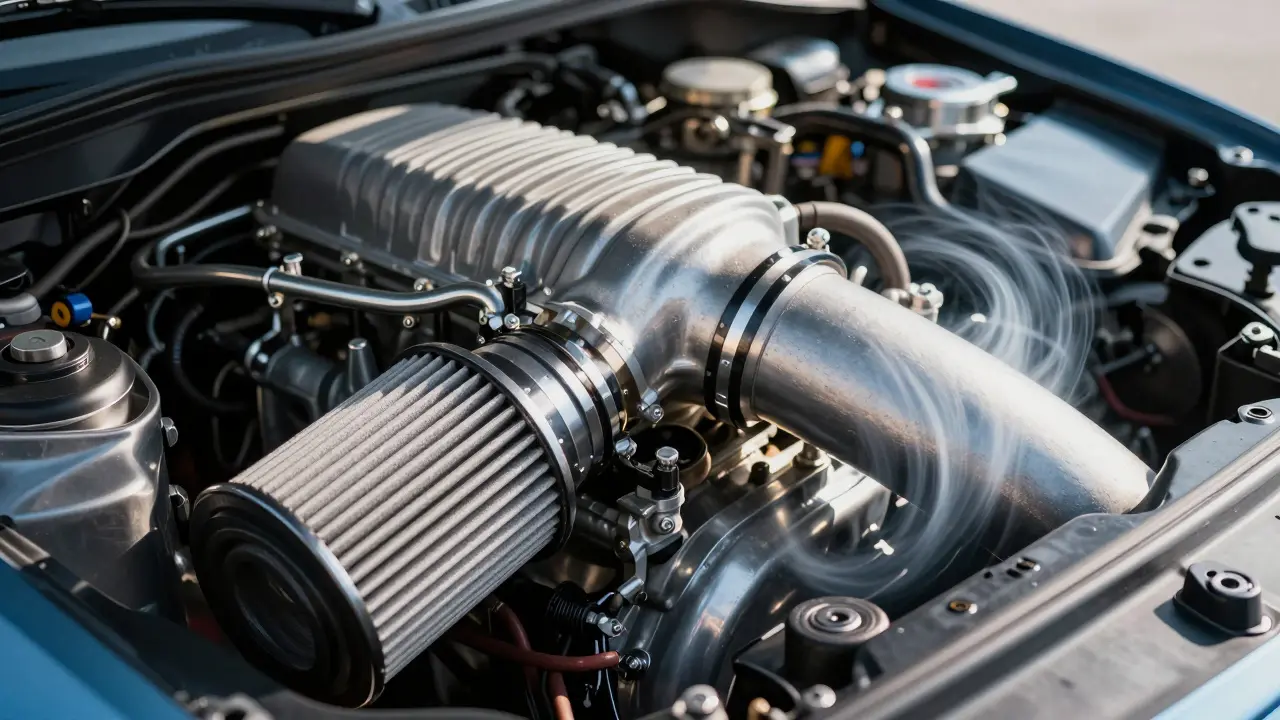
Most car owners think upgrading to a cold air intake is just about looking cool under the hood. But if you’ve ever felt the difference between stock air flow and a tuned cold air intake, you know it’s more than aesthetics. It’s about raw, measurable power - and it’s not just hype.
What a Cold Air Intake Actually Does
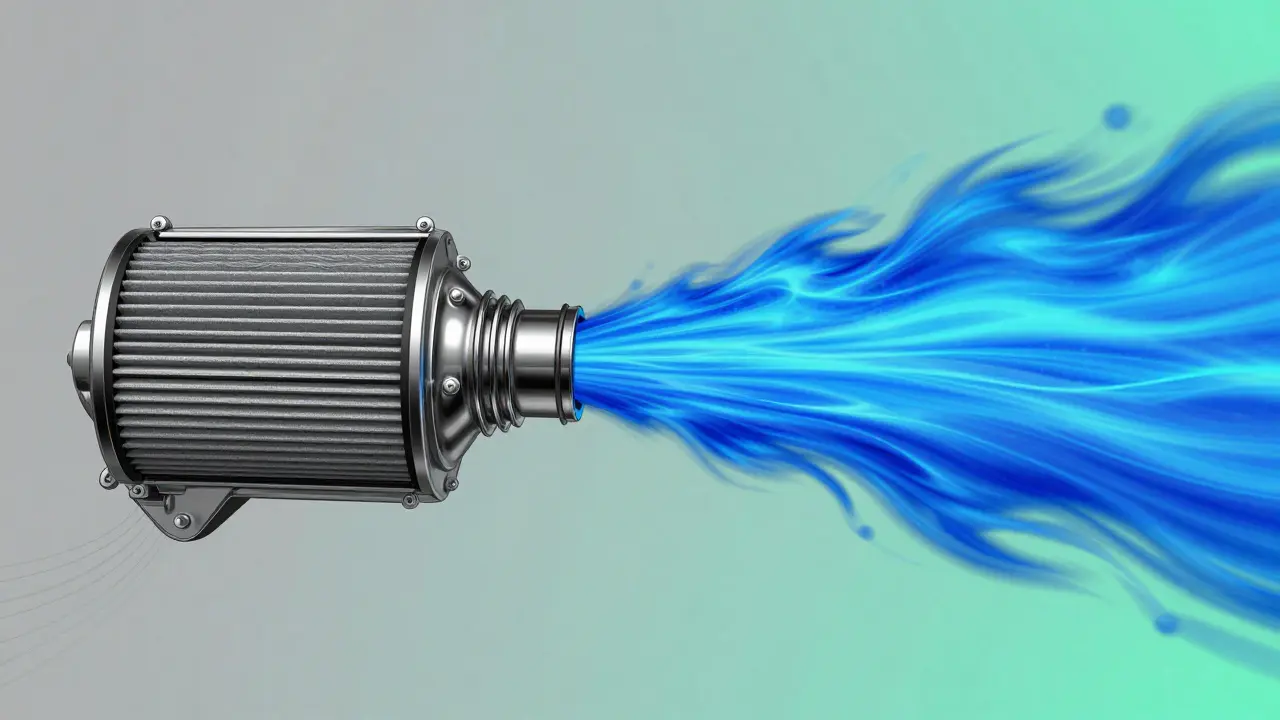
A cold air intake replaces your factory air box and narrow ducting with a larger, smoother path for air to reach the engine. The key word here is cold. Cooler air is denser, which means more oxygen molecules squeeze into each cubic inch. More oxygen means more fuel can be burned efficiently, which creates more power. Simple physics - no magic.
Factory air intakes often pull air from hot spots near the engine or exhaust manifold. A tuned cold air intake reroutes the airflow to a cooler area - usually near the fender or behind the bumper, where air is less heated by engine components. In summer, that difference can be 20°F to 40°F. That’s not a small gap. It’s the difference between a sluggish throttle response and a punchy, immediate surge when you press the pedal.
How Much Power Can You Gain?
Real-world tests from dyno runs on popular models like the Ford Mustang GT, Subaru WRX, and Honda Civic Type R show consistent gains. On naturally aspirated engines, you typically see a 5 to 15 horsepower increase. Turbocharged engines? Those numbers jump to 15 to 30 horsepower. Torque also improves, especially in the mid-range - where you actually use it during daily driving.
One 2024 test on a 2022 Toyota 4Runner with a 3.5L V6 showed a 12 hp gain and 18 lb-ft of extra torque at 3,500 RPM after installing a high-flow cold air intake and pairing it with a simple ECU tune. That’s not just a number - that’s real-world passing power on highways, better hill climbing, and less strain on the engine during heavy loads.
It’s Not Just About the Hardware
Many people buy a cold air intake, install it, and expect instant magic. But without tuning, you’re leaving performance on the table. The engine control unit (ECU) is still running on factory maps designed for the stock airbox. It doesn’t know the airflow has changed - so it might not adjust fuel delivery properly. That can lead to lean conditions, hesitation, or even check engine lights.
Proper tuning means recalibrating the air-fuel ratio, ignition timing, and throttle response to match the new airflow characteristics. This isn’t always a full ECU flash. Many modern cars support piggyback tuners or handheld programmers that adjust fuel maps in real time. Brands like Cobb Tuning, AEM, and K&N offer kits that include tuning software or access to pre-loaded maps for your exact model.
For example, a 2023 Hyundai Elantra N with a cold air intake and no tune might gain 8 hp. With a matching tune, it jumps to 24 hp. That’s more than double the gain. The tune doesn’t just add power - it makes the power smooth, predictable, and safe.

What About Fuel Economy?
Here’s the twist: a properly tuned cold air intake can improve fuel economy - if you drive sensibly. The engine doesn’t have to work as hard to pull in air. Less vacuum restriction means lower pumping losses. In real-world tests, drivers reported 1 to 3 mpg gains on highway cruising after tuning, especially in vehicles with high-revving engines or heavy loads.
But if you start thrashing the throttle because you feel the extra power, you’ll burn that gain quickly. The efficiency boost only sticks if you use the power wisely. Think of it like upgrading your tires - better airflow lets your engine breathe easier, but it doesn’t make you a better driver.
Common Mistakes to Avoid
Not all cold air intakes are created equal. Here’s what goes wrong:
- Too short or poorly placed - Some aftermarket kits pull air from the engine bay instead of the cooler fender well. That defeats the whole purpose.
- Wet filters without proper sealing - Oil from reusable filters can contaminate the mass airflow sensor, causing rough idle or limp mode.
- Skipping the tune - As mentioned, this is the #1 mistake. You’re not just buying hardware - you’re buying a system.
- Ignoring emissions - In states like California or countries with strict emissions laws (like the UK), some intakes aren’t CARB or EU compliant. Always check the product listing for legal status.
One Bristol-based mechanic told me about a customer who installed a cheap, no-name intake and got a P0171 code (system too lean). The fix? A $200 ECU tune. The intake itself cost $150. The customer thought he was saving money - he ended up spending more.
Who Benefits Most?
Not every car needs this upgrade. If you drive a daily commuter with a small 4-cylinder, the gains might feel subtle. But if you have:
- A turbocharged or supercharged engine
- A high-revving naturally aspirated engine (like a Honda K-series or BMW S63)
- A vehicle you tow with or drive on mountain roads
- A car you care about tuning for responsiveness
Then a cold air intake with proper tuning isn’t just an upgrade - it’s a transformation. It’s the difference between a car that feels like it’s breathing through a straw and one that takes a deep, full breath every time you accelerate.
What Comes Next?
After a cold air intake and tune, the next logical step is a performance exhaust. But don’t rush it. Get the intake right first - it’s the foundation. A tuned intake improves airflow into the engine. A better exhaust helps it breathe out. Together, they unlock real performance.
And remember: this isn’t about racing. It’s about making your daily drive feel more alive. Less lag. More connection. More joy.
Do cold air intakes make your car louder?
Yes, but not always in a bad way. A cold air intake often lets you hear the engine breathe - a subtle whoosh or induction noise under acceleration. It’s not a drone or a rumble like a performance exhaust. Most drivers find it satisfying, not annoying. If you’re worried about noise, look for intakes with sound-dampening materials or acoustic liners.
Can I install a cold air intake myself?
Absolutely. Most kits take 60 to 90 minutes with basic hand tools - socket set, screwdrivers, maybe a torque wrench. You’re replacing the factory airbox and tube. No cutting or welding. Many brands include detailed video guides. Just make sure you don’t pinch or kink the hose, and double-check the mass airflow sensor is seated properly. If you’re unsure, a local tuner can install it for under £100.
Will a cold air intake void my warranty?
Not automatically. Under the Magnuson-Moss Warranty Act (and similar EU consumer laws), manufacturers can’t void your warranty just because you installed an aftermarket part - unless they prove it directly caused the failure. If your engine fails due to a faulty turbo, and the intake has nothing to do with it, they still have to cover it. That said, if you’re under warranty and don’t want to risk it, stick to OEM-approved intakes or wait until your warranty expires.
Do I need a tune for every cold air intake?
Not every single one - but you should. Even if your car runs fine without a tune, it’s likely running sub-optimally. The factory ECU might compensate by pulling timing or leaning the mixture, which can reduce power and increase engine temperature. A proper tune ensures you get the full benefit, safely. Think of it like changing your oil - you don’t have to, but you should.
Are all cold air intakes the same?
No. There’s a huge difference between a cheap plastic tube from eBay and a professionally engineered system from K&N, AEM, or Injen. The best ones use smooth, large-diameter tubing, heat shields to block engine heat, and properly sealed air filters. Cheap ones often have sharp bends, thin walls, and poor seals that let hot air in. You get what you pay for - and in engine tuning, performance is everything.
Comments
Mark Nitka
Finally someone breaks it down without the fluff. I did this on my 2021 WRX last summer - stock intake pulled air at 140°F, new one pulled in at 95°F. Dyno showed 22 hp and 28 lb-ft gains. No check engine light. No drama. Just more punch when you need it. And yeah, the whoosh is satisfying as hell.
February 22, 2026 at 09:41
Nicholas Zeitler
I’m so glad you mentioned the tuning part-so many people skip it, and then blame the intake when their car runs poorly! I’ve seen this over and over: $200 intake, $0 tune, $800 repair bill for a melted piston because the ECU was still trying to run on 2015 maps. Please, for the love of torque, tune it!
And don’t get me started on those $50 eBay kits with the flimsy heat shields that rattle like a tin can in a wind tunnel. You’re not saving money-you’re just buying a noise machine.
February 23, 2026 at 16:57
Teja kumar Baliga
Love this post! As someone from India where cars get cooked under the sun, cold air intakes make a real difference. My 2019 Creta’s throttle response improved so much after the upgrade and tune. The engine doesn’t feel like it’s gasping anymore. Also, the sound? A subtle growl when you floor it-makes driving fun again.
February 24, 2026 at 05:58
k arnold
Wow. A whole essay on how to spend $600 to get 15 hp. Congrats, you just turned your Camry into a slightly less slow Camry. Next up: installing a spoiler so the wind knows you’re serious.
February 24, 2026 at 11:06
Tiffany Ho
I just got a cold air intake and didn’t tune it and it’s fine I think? My car runs okay I guess? I didn’t notice much difference but I don’t drive hard so maybe it’s okay? I’m just happy it’s not making weird noises.
February 26, 2026 at 09:01
michael Melanson
For anyone considering this: if your car is a daily driver and you’re not chasing track times, the gains are real but subtle. The biggest benefit isn’t horsepower-it’s the feeling that your engine is no longer fighting you. It’s like switching from a manual toothbrush to an electric one. You don’t notice it until you go back.
February 27, 2026 at 00:30
lucia burton
Let me tell you something about airflow dynamics and thermal efficiency metrics in internal combustion engines-when you optimize the volumetric efficiency by reducing inlet air temperature and minimizing pressure drop across the intake tract, you’re not just increasing peak horsepower, you’re fundamentally altering the engine’s thermodynamic operating envelope. The reduction in pumping losses alone can yield measurable improvements in brake-specific fuel consumption, especially in part-load conditions, which is where 80% of daily driving occurs. This isn’t just a mod-it’s a systemic recalibration of engine behavior.
And if you skip the tune? You’re not just losing gains-you’re creating a lean-burn hazard that can lead to pre-ignition, detonation, and catastrophic engine failure under load. Don’t be that guy.
February 28, 2026 at 09:42
Denise Young
Oh, so now we’re all mechanics? I’ve got a 2020 Civic and I just replaced the air filter. That’s all I needed. You people act like installing a cold air intake is rocket science. It’s a tube. With a filter. On a car. Not a nuclear reactor.
And yes, I know you’re going to say ‘but the tune!’-I’ve been driving for 15 years without a tune, and my car hasn’t exploded yet. Maybe your ego needs it, but my engine doesn’t.
March 2, 2026 at 04:17
Sam Rittenhouse
I remember the first time I heard my engine breathe after the intake and tune. It wasn’t loud. It wasn’t obnoxious. It was like the car had been holding its breath for years-and finally exhaled. That moment? Pure joy. Not because of the numbers, but because I felt connected to the machine again. Like it finally trusted me.
That’s what this is about. Not horsepower. Not torque. Just… presence.
March 2, 2026 at 19:11
Peter Reynolds
My 2018 Accord got a K&N intake and a Cobb tune. Gained 14 hp, 17 lb-ft. No check engine lights. No issues. Fuel economy stayed the same. I drive it like a normal car. The difference? It doesn’t feel like it’s trying to catch its breath on the highway anymore. That’s enough for me.
March 4, 2026 at 06:07
Fred Edwords
There is a critical distinction between a cold air intake and a short ram intake. The former draws air from outside the engine bay; the latter often pulls from within it, defeating the purpose. Many manufacturers market short ram intakes as 'cold air intakes,' which is misleading. Always verify the air source location. Also, ensure the mass airflow sensor is properly calibrated post-installation. Failure to do so can result in inaccurate fuel trims and long-term engine wear.
March 5, 2026 at 14:45
Sarah McWhirter
Have you ever wondered if the government is using your intake system to track your driving habits? I read somewhere that the ECU data from aftermarket modifications gets sent to the DMV. And what about the oil from reusable filters? Isn’t that contaminating the air supply? What if the 'tune' is just a backdoor for corporate surveillance? I’m not saying it’s true-but have you thought about it?
Also, my neighbor’s dog barks louder than my car. Coincidence? I think not.
March 7, 2026 at 05:59
Ananya Sharma
You act like this is some revolutionary breakthrough. In the 90s, we were tuning carburetors with screwdrivers and a sense of smell. Now we need a $400 ECU flash just to make a tube work? This isn’t progress-it’s overengineering. And let’s not forget: every time you install a non-OEM part, you’re contributing to landfill waste. What about sustainability? What about the carbon footprint of shipping these aluminum tubes across the globe? Your 'performance' is just another symptom of consumerist delusion.
Also, the fact that you think a 12 hp gain is 'transformative' proves you’ve never driven a real car. My 1994 Miata made more power than your whole setup-and it had a carburetor, no tune, and a paper filter. You’re all just chasing a feeling you can’t explain.
March 9, 2026 at 01:03
kelvin kind
Did it. Didn’t tune. Still runs. No complaints.
March 9, 2026 at 11:55