
There is a specific kind of panic that sets in when your car makes a sound it has never made before. It’s not just the noise itself; it’s the question hanging in the air: Is this going to leave me stranded on the side of the M4, or can I just ignore it until payday?
Most drivers rely on sight-checking dashboard lights or looking under the hood-but hearing is often the first line of defense for vehicle health. A well-tuned engine hums. A failing bearing screams. The problem isn’t usually identifying that something is wrong; it’s pinpointing exactly what is wrong before a minor annoyance becomes a major repair bill.
You don’t need a degree in automotive engineering to become fluent in the language of car noises. You just need to know what to listen for, when to listen for it, and how to isolate the source. Let’s break down the most common sounds your car might make, what they actually mean, and how you can diagnose them yourself without guessing.
The Squeal That Won’t Quit: Belts and Tensioners
If your car sounds like an angry goose every time you turn the key, especially on a damp morning, you are likely dealing with a serpentine belt issue. This long rubber belt drives several critical components, including the alternator, power steering pump, and air conditioning compressor.
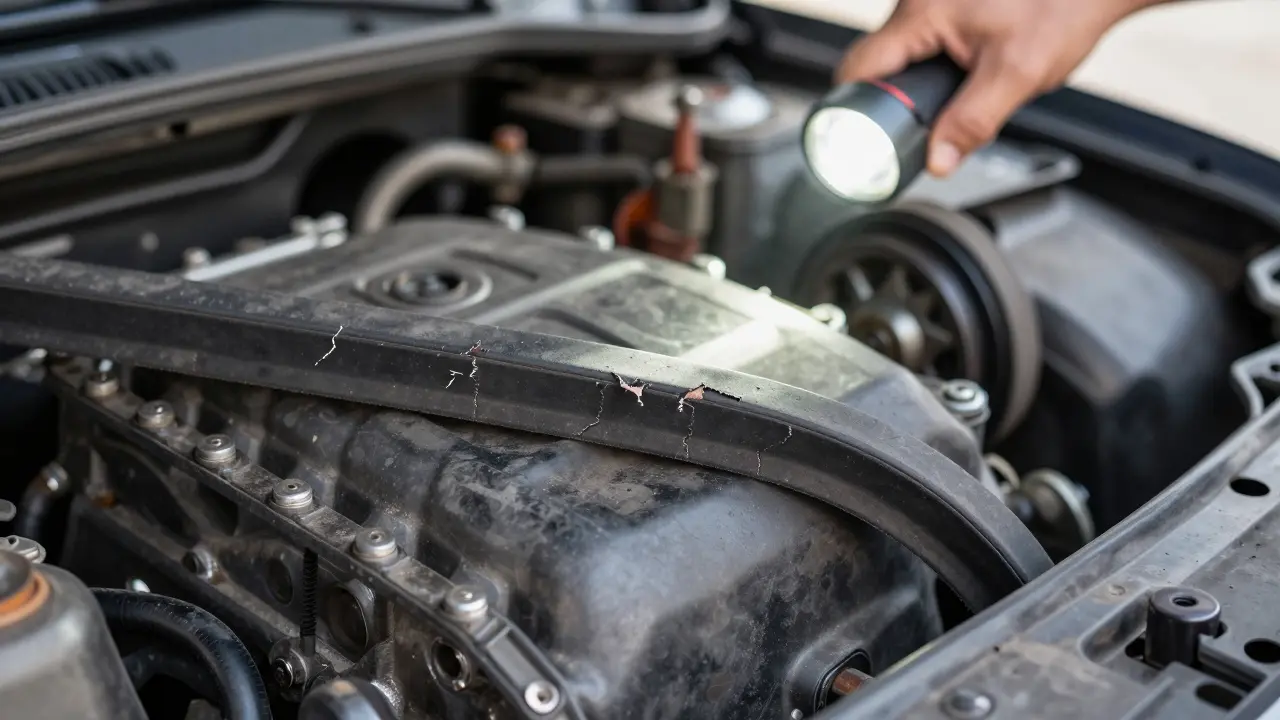
Serpentine Belt is a single continuous belt used in modern engines to drive multiple peripheral devices. Over time, these belts wear down, becoming glazed, cracked, or loose. When the belt slips over the pulleys, it creates that high-pitched squeal. It’s particularly noticeable during startup because the engine is cold, and the belt hasn't expanded slightly from heat yet.Here is how to check it. Open the bonnet and look at the belt. If you see cracks running across the width of the belt, or if the inner ribs look frayed, it needs replacing. Sometimes, the belt is fine, but the tensioner-the spring-loaded wheel that keeps the belt tight-has worn out. If the belt looks good but still squeals, the tensioner pulley might be seizing up.
A quick diagnostic trick: With the engine running (and keeping your hands and clothes clear!), pour a small amount of water onto the belt while it spins. If the squeal stops temporarily, you have confirmed it is a slipping belt. If the noise continues, the issue might be inside one of the accessories driven by the belt, such as the alternator bearings.
Grinding and Growling: The Brake System
Brake noises are rarely subtle. They are designed to be annoying because they indicate safety-critical wear. There are two distinct sounds here: grinding and growling.
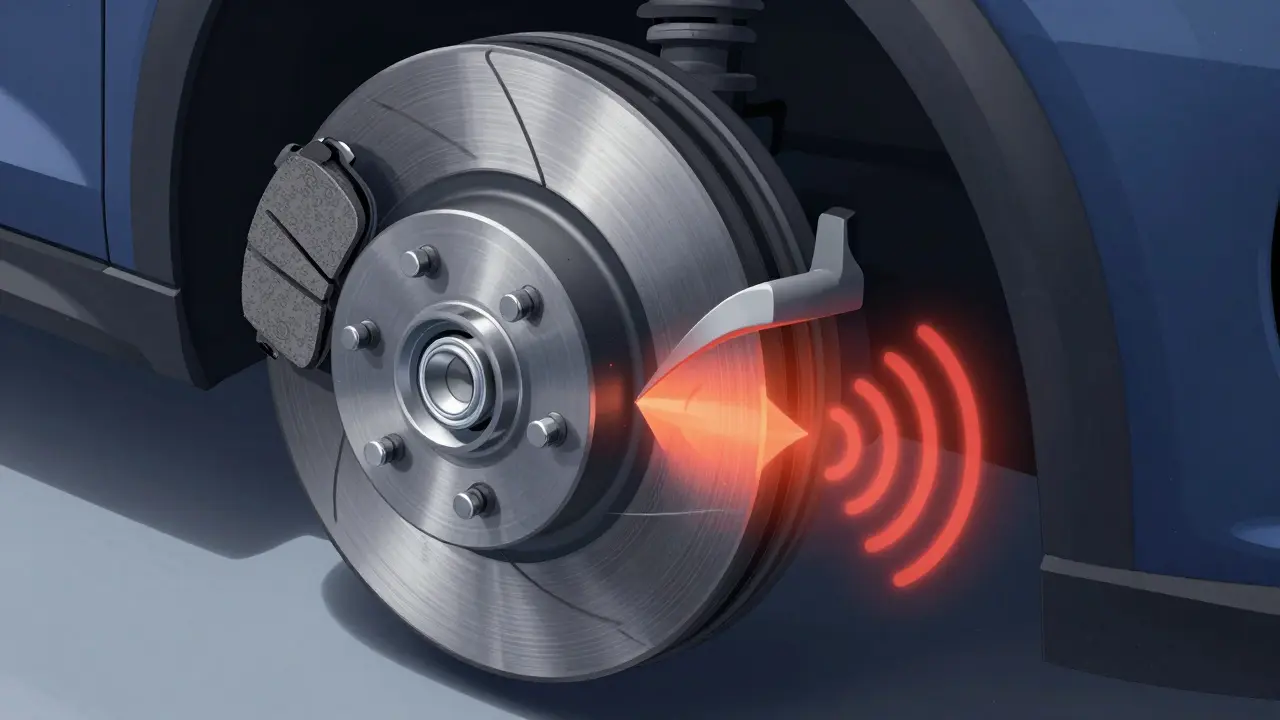
Grinding is metal-on-metal. If you hear a harsh grinding noise when you press the brake pedal, your brake pads have completely worn away, and the backing plate is now eating into your brake rotor. This is an emergency. Stop driving immediately. Replacing rotors is significantly more expensive than replacing pads, so ignoring this sound will cost you hundreds of pounds extra.
Growling or rumbling, especially when turning corners, points to the wheel bearings. A failing wheel bearing sounds like a jet engine taking off, getting louder as you accelerate and changing pitch when you turn left or right. To diagnose this, jack up the car safely and spin each wheel by hand. If you feel roughness, grittiness, or hear a rumble while spinning, that bearing is shot.
| Noise Type | When It Happens | Likely Cause | Urgency Level |
|---|---|---|---|
| High-pitched Squeak | Light braking | Wear indicators on pads | Medium (Schedule service) |
| Metallic Grinding | Hard braking | Pads gone, metal-on-rotor | Critical (Stop driving) |
| Low Growl/Rumble | Driving, changes with turns | Wheel bearing failure | High (Risk of wheel lockup) |
Clunking and Knocking: Suspension and Exhaust
Clunks are tricky because they can come from many places. However, context is everything. Does the clunk happen when you go over a bump? Or does it happen when you accelerate or brake?
If the clunk occurs over bumps, look at your suspension components. Bushings are rubber or polyurethane cushions that connect suspension parts to the chassis. When these dry rot and crack, metal hits metal. You’ll also hear clunks if your shock absorbers are blown. Check your shocks for oil leaks; if they are wet and shiny, they are leaking hydraulic fluid and losing damping ability.
If the clunk happens during acceleration or deceleration, think about the drivetrain. Loose exhaust hangers can cause a rattle or clunk as the pipe shifts under load. More seriously, worn CV joints (constant velocity joints) can click or pop when turning while accelerating. Inspect the CV boot on your drive axles. If the black rubber boot is torn and grease is flung all over the underside of the car, the joint is contaminated and will fail soon.
Hissing and Whistling: Air Leaks and Turbo Issues
A steady hiss coming from the engine bay often indicates a vacuum leak. Modern cars rely on precise air-fuel mixtures. If unmetered air enters the engine through a cracked hose, the engine runs lean, causing rough idling, stalling, and that distinct hissing sound. Follow the sound to its source. Look for cracked rubber hoses connected to the intake manifold or the brake booster.
Whistling, on the other hand, is often related to forced induction or airflow restrictions. If you have a turbocharged car, a whine that increases with RPM is normal. But a loud whistle that doesn't change with throttle input might indicate a boost leak-a hole in the intercooler piping. For non-turbo cars, a whistle when accelerating can mean a clogged air filter. The engine is sucking air hard through a restricted filter, creating a turbine-like sound. Pop the airbox open; if the filter is grey and dusty, replace it. It’s a cheap fix that restores performance.
Rattling and Pinging: Engine Internals
Engine noises are the scariest because they suggest internal damage. However, not all rattles are fatal.
Valve Train Rattle: A light ticking or rattling sound upon cold startup that disappears after a few seconds is usually the lifters or cam followers settling. This is common in many modern engines. As long as it goes away quickly and the engine runs smoothly, it’s generally harmless.
Detonation (Pinging): A metallic knocking sound under heavy acceleration is called pre-ignition or detonation. This happens when the fuel-air mixture explodes too early in the combustion chamber. It can damage pistons. Causes include using low-octane fuel in a high-compression engine, carbon buildup, or faulty oxygen sensors. If you hear pinging, switch to premium fuel for a tank. If it persists, you need a diagnostic scan for sensor codes.
Deep Knocking: A deep, rhythmic thud that gets louder with speed is often a rod bearing knock. This is bad news. It means the lubrication between the connecting rod and the crankshaft is gone. Do not drive the car. Tow it to a mechanic. Continuing to run the engine will destroy the crankshaft.

How to Isolate the Source: A Step-by-Step Guide
Diagnosing noise requires elimination. Here is a practical workflow to narrow down the culprit before you visit a garage.
- Note the Conditions: Write down exactly when the noise happens. Is it cold or hot? Idling or moving? Turning left or right? Braking or accelerating? These clues are gold for mechanics.
- Check Fluid Levels: Low power steering fluid causes whining. Low coolant causes gurgling. Low oil causes ticking. It’s free to check, and it solves 10% of noise complaints instantly.
- Visual Inspection: Look for obvious issues. Loose wheels? Cracked belts? Oil leaks? Use a flashlight. Many problems announce themselves visually before they fail catastrophically.
- The "Passenger" Test: Have someone else drive while you sit in different seats. Can you localize the sound to the front left? Under the dashboard? The rear axle? Pinpointing the quadrant cuts the search area in half.
- Use a Stethoscope (or Screwdriver): Mechanics use electronic stethoscopes, but you can use a long screwdriver. Place the tip against a component (like a pulley) and hold the handle to your ear. Warning: Keep hair and clothing away from moving parts! This amplifies the sound from that specific part, helping you identify which bearing is failing.
When to Ignore It and When to Act
Not every noise requires immediate attention. Cars are complex machines with thousands of moving parts. Some thermal expansion noises, occasional clicks from the transmission shifting gears, or wind noise from aging door seals are quality-of-life issues, not safety hazards.
However, act immediately if:
- The noise is accompanied by a loss of power or handling.
- There is smoke, steam, or burning smells associated with the sound.
- The noise is a grinding metal sound (brakes/bearings).
- The noise is a deep internal engine knock.
In Bristol, where we get plenty of rain and road salt in winter, corrosion accelerates wear. A rusted exhaust hanger might rattle harmlessly today, but next week it could fall off and drag on the ground, damaging your undercarriage. Regular visual checks prevent these "small" noises from becoming big problems.
Why does my car squeal only when I turn the steering wheel?
This is almost always a sign of low power steering fluid or a failing power steering pump. In electric power steering systems, it could indicate a motor issue. Check your fluid reservoir first; if it's low, top it up with the correct type of fluid specified in your owner's manual. If the fluid is dirty or foamy, it may need flushing.
Is a clicking noise when turning dangerous?
Yes, if it happens while accelerating through a turn. This indicates a worn CV joint. While you can drive slowly in straight lines, turning puts stress on the joint. If it fails completely, the axle can separate from the wheel, causing you to lose control. Replace the CV joint or axle assembly as soon as possible.
What causes a humming noise that gets louder with speed?
A consistent hum that increases with vehicle speed is typically a tire or wheel bearing issue. If the noise changes when you turn the steering wheel, it's likely a wheel bearing. If the noise stays constant regardless of turning, check your tires for uneven wear patterns or objects stuck in the tread. Bald tires can also create a roaring wind noise.
Can I fix a noisy serpentine belt myself?
Yes, replacing a serpentine belt is one of the most common DIY repairs. You will need a socket wrench and possibly a breaker bar to release the tensioner. Always consult your car's specific belt routing diagram before removing the old belt, as installing it incorrectly can damage accessories. If the tensioner is also noisy, replace both simultaneously to save labor costs later.
Why does my car make a popping sound when I brake?
Popping or clicking when braking can be caused by worn caliper slide pins, which allow the caliper to move unevenly. It can also be debris caught behind the wheel spokes hitting the brake rotor. Remove the wheel and inspect the rotor surface for stones or dirt. Clean the caliper slides and lubricate them with high-temperature brake grease if they feel stiff.