
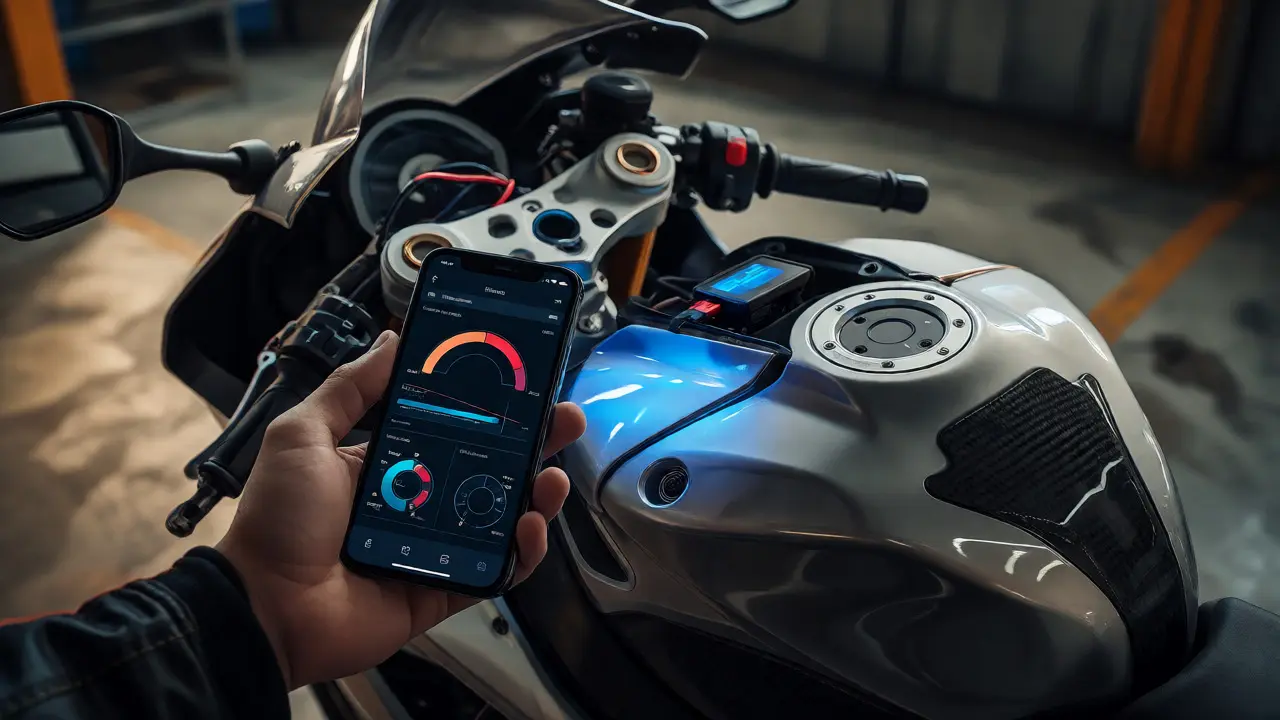
You’ve just parked your bike after a long weekend ride. You pull out your phone, open an app, and see exactly how hard you braked into that last corner, what your average lean angle was, and whether your tire pressure dropped over the journey. This isn't sci-fi anymore; it's standard connected motorcycle tech. For years, this level of data was reserved for MotoGP teams or high-end luxury cars. Now, it’s sitting in your pocket, waiting to tell you more about your machine than your own senses ever could.
If you’re wondering whether adding telematics to your bike is worth the hassle or cost, you aren’t alone. Many riders worry about privacy, subscription fees, or simply don’t know where to start. The truth is, modern Motorcycle Telematics is the collection and transmission of vehicle data via wireless networks to provide real-time insights on performance, location, and diagnostics has matured significantly. It’s no longer just about tracking stolen bikes. It’s about becoming a better rider, saving money on insurance, and keeping your machine healthy without guessing.
What Actually Happens When Your Bike Connects?
At its core, Telematics combines two things: telecommunications and informatics. In plain English, it means your bike talks to the internet. A small unit, often called a TCU (Telematics Control Unit), sits inside your fairing or under the seat. It connects to your bike’s CAN bus-the internal network that lets all the electronic components talk to each other.
This unit grabs raw data: engine RPM, throttle position, gear selection, speed, and even ambient temperature. Then, using cellular networks (like 4G LTE or emerging 5G) or Bluetooth to your smartphone, it sends this info to a cloud server. That server crunches the numbers and pushes clean, readable stats back to your Mobile App within seconds.
Think of it like a black box for your daily commute, but one that actually helps you instead of just recording accidents. Unlike older GPS trackers that only pinged once every few minutes, modern systems sample data at high frequencies-sometimes up to 100 times per second. This allows for detailed analysis of riding style, not just location.
The Hardware Landscape: Built-in vs. Aftermarket
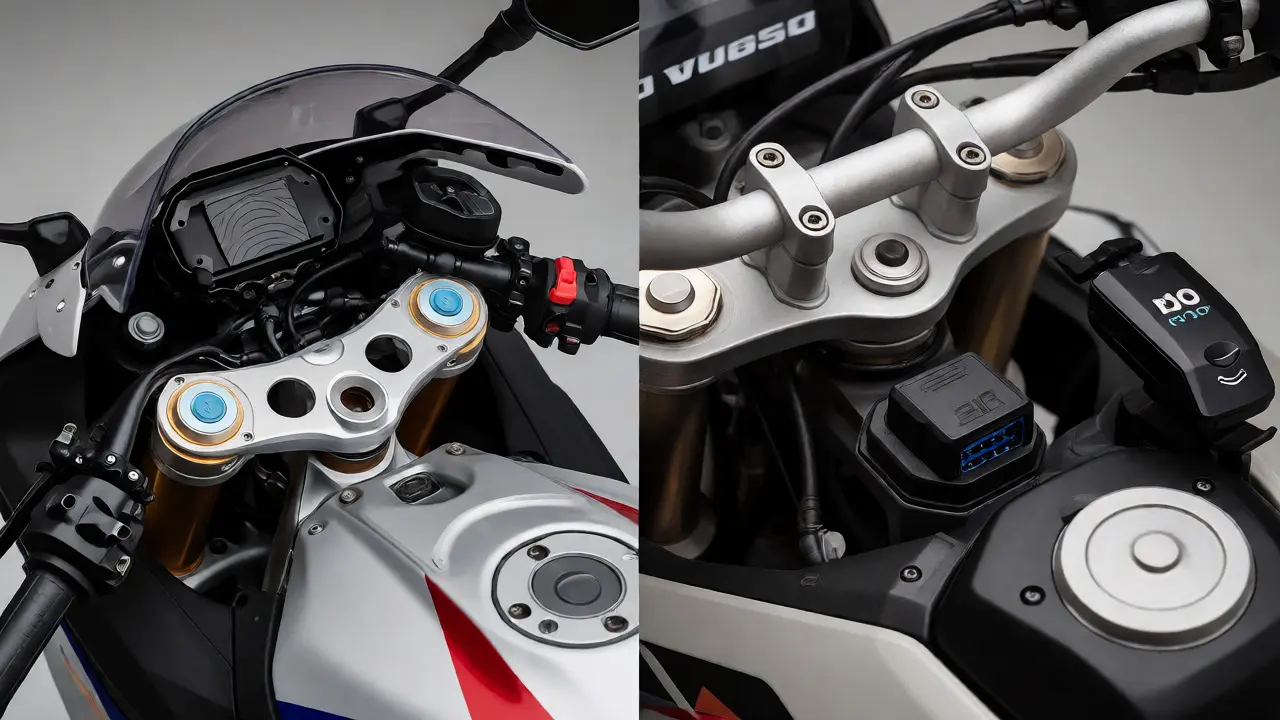
Not all connected bikes are created equal. If you bought a new Ducati Panigale V4 or a BMW S1000RR recently, you likely have factory-installed connectivity. These systems are deeply integrated, meaning they can read complex diagnostic codes and control certain functions remotely, like locking the ignition or pre-heating grips.
| Feature | Factory Integrated (OEM) | Aftermarket Devices |
|---|---|---|
| Installation | Pre-fitted at factory | Plug-and-play OBD-II or hardwired |
| Data Depth | High (full ECU access) | Moderate (standard OBD data) |
| Cost Model | Often subscription-based ($5-$15/mo) | One-time buy + optional SIM plan |
| Compatibility | Brand-specific ecosystem | Works across multiple bike brands |
| Examples | BMW Motorrad Connected, Ducati Link | Reviver, Cardo Packtalk Edge, Geotab |
For older bikes, aftermarket solutions are the way to go. Companies like Cardo Systems offer headsets with built-in sensors that track lean angle and braking force without needing a direct connection to the bike’s computer. Others, like Geotab, use plug-in dongles that fit into the OBD-II port, similar to those used in cars. While these won’t give you every single diagnostic code, they provide plenty of useful data for safety scoring and basic tracking.
Why Riders Are Obsessed With Data
So, why bother? Why do thousands of riders pay monthly subscriptions for data they can barely look at while moving? The answer lies in three main benefits: safety feedback, theft recovery, and predictive maintenance.
Safety Feedback: Most apps gamify your riding. They assign scores based on acceleration, braking smoothness, and cornering entry speed. I remember seeing my "hard braking" events spike after switching to a heavier adventure bike. The app didn’t just tell me I was braking late; it showed me exactly which corners caused the panic stops. Adjusting my approach reduced my braking distance by nearly 15% on my next ride. It’s objective coaching from your phone.
Theft Recovery: This is the big one for expensive machines. If someone steals your bike, GPS tracking gives police a live location. But advanced telematics goes further. Some systems detect if the bike is moved without the key fob present and send an instant alert. In urban areas like London or Bristol, where chop-shop thefts happen fast, knowing the bike is being towed away versus ridden away can change the recovery strategy entirely.
Predictive Maintenance: Instead of relying solely on mileage intervals, telematics monitors actual usage. It tracks engine hours, cold starts, and overheating events. If your coolant temp spikes repeatedly during city traffic, the app flags it before a gasket blows. This shifts maintenance from reactive (fixing it when it breaks) to proactive (servicing it because the data says so).
App Integration: Turning Data Into Action
The hardware is useless without a good interface. The best Bike Apps act as a digital garage, logbook, and coach combined. Look for apps that offer trip logging automatically. You shouldn’t have to press a button to start recording; the system should wake up when the engine does.
Integration with navigation is another key feature. Modern setups allow you to plan routes on your desktop and push them directly to your handlebar display or helmet audio system. No more stopping to scribble down addresses. Furthermore, some apps integrate with social platforms, letting you share rides with friends or compare stats against local leaderboards. It adds a community aspect that keeps you engaged with the tech rather than ignoring it.
Be wary of apps that require constant Bluetooth pairing. Nothing kills the vibe faster than fighting with a connection error at a petrol station. Look for systems that use cellular data for background syncing and Bluetooth only for immediate audio or control interactions. This ensures your phone battery doesn’t drain dead within an hour of leaving home.
Privacy and Cost: The Hidden Trade-offs
Let’s address the elephant in the room: privacy. When your bike streams data, who owns it? Generally, manufacturers own the raw data generated by their vehicles, but you usually retain rights to personal usage data. Read the terms carefully. Some insurers now offer discounts for sharing telematics data (pay-how-you-drive policies). This can save significant money, especially for younger riders or those with modified bikes.
However, there are costs. Factory systems often lock you into annual subscriptions. If you cancel, you might lose access to historical data or remote features. Aftermarket devices avoid subscription traps but may lack deep diagnostic capabilities. Weigh the convenience of OEM integration against the flexibility of third-party tools.
Also, consider battery health. Older bikes with smaller batteries might struggle with always-on telematics units drawing power. Ensure your charging system can handle the extra load, or opt for devices that sleep aggressively when the bike is off.
Getting Started: A Quick Checklist
If you’re ready to connect your bike, here’s a practical roadmap:
- Audit Your Bike: Check if your model year supports factory connectivity. Newer European and Japanese bikes (2020+) are increasingly standardizing this.
- Choose Your Path: Decide between OEM (seamless, expensive) or Aftermarket (flexible, DIY).
- Check Coverage: Ensure cellular coverage exists in your regular riding areas. Remote trails might need offline-capable devices.
- Install Properly: If aftermarket, hide the unit away from heat sources and water ingress points. Secure cables to prevent vibration damage.
- Calibrate Expectations: Spend the first month reviewing data without changing your riding. Understand your baseline before trying to optimize.
The future of motorcycling is undeniably digital. As 5G expands and AI algorithms improve, your bike will soon predict mechanical failures weeks in advance and adjust suspension settings in real-time based on road surface analysis. Embracing connected motorcycle tech today puts you ahead of the curve, turning every ride into a learning opportunity.
Do I need a separate SIM card for motorcycle telematics?
It depends on the system. Factory-integrated units usually come with an embedded eSIM tied to the manufacturer’s service provider, requiring a subscription but no physical SIM management. Aftermarket devices often require you to insert a prepaid micro-SIM or nano-SIM, giving you more control over costs but requiring manual top-ups.
Will telematics drain my motorcycle battery?
Modern telematics units are designed to be energy-efficient, entering a low-power sleep mode when the ignition is off. However, on older motorcycles with small batteries (under 12Ah) or aging alternators, an always-on GPS tracker can contribute to parasitic drain. If your bike sits for weeks without riding, consider disconnecting the device or using a trickle charger.
Can aftermarket telematics void my warranty?
Generally, no, provided the installation is done correctly and does not modify the ECU mapping. Plug-and-play OBD-II dongles are rarely an issue. Hardwiring requires care; if improper wiring causes an electrical short, the dealer might dispute related claims. Always keep receipts and ensure professional installation if you are unsure.
Is my data safe from hackers?
Reputable manufacturers use encrypted connections (TLS/SSL) to transmit data. While no system is 100% immune, hacking a motorcycle’s telemetry to steal the bike is far less common than hacking a car’s infotainment system. The primary risk is data privacy breaches rather than remote control hijacking, though newer models are tightening cybersecurity protocols.
How accurate is the GPS tracking?
Standard GPS accuracy is typically within 3-5 meters. In dense urban canyons or heavy forest, this can degrade to 10-15 meters. High-end systems with GLONASS or Galileo satellite support improve accuracy. For theft recovery, this precision is usually sufficient to locate a parked bike, but may require visual confirmation in tight spaces.