
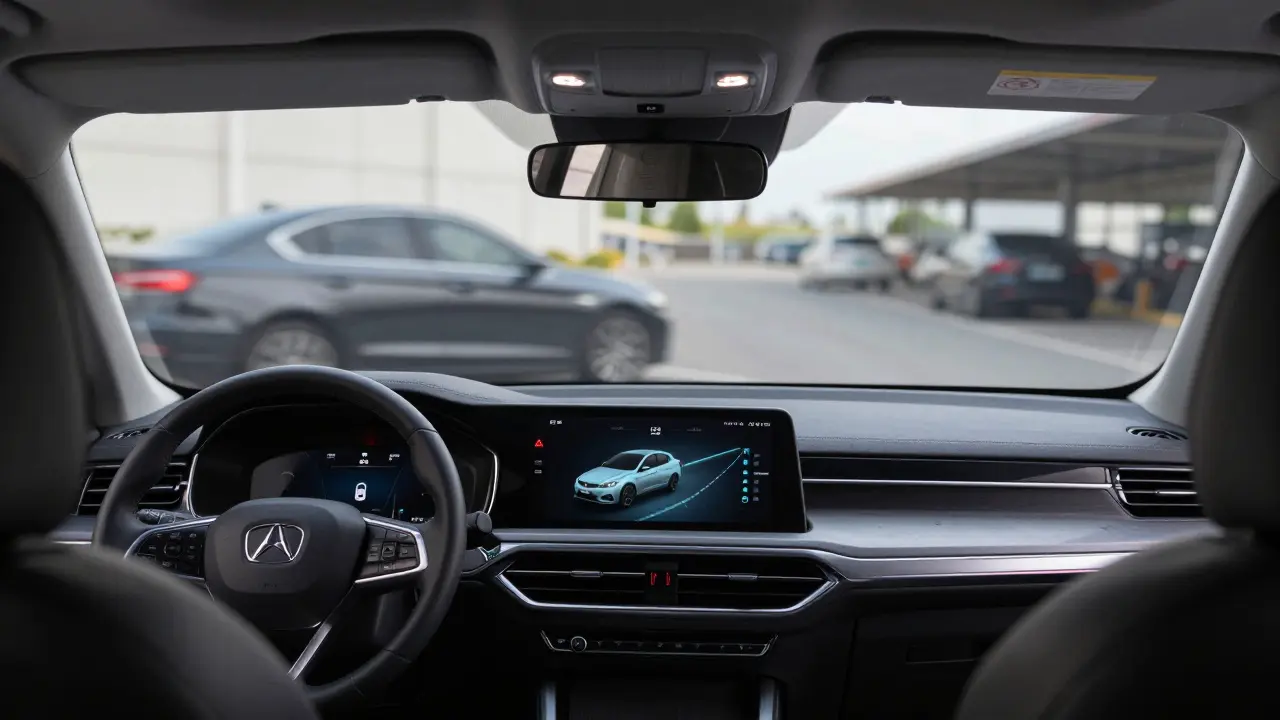
You know that split-second panic when you’re reversing out of a parking spot and realize too late that a car is speeding down the aisle? It’s one of the most stressful moments in driving. For years, we relied on tiny mirrors and our own necks to catch these threats. But now, Cross-Traffic Alert Systems are advanced driver-assistance technologies designed to detect vehicles approaching from the sides while reversing. These systems have moved from luxury add-ons to standard safety features in many modern cars.
This guide breaks down exactly how these systems work, why they matter more than ever in 2026, and what you need to know to use them effectively without over-relying on them.
The Quick Takeaways
- Cross-Traffic Alert (CTA) uses radar or cameras to see vehicles moving behind you while you reverse.
- It works best at low speeds (under 15 mph) and can automatically brake if you miss a threat.
- It is not a replacement for looking around; weather and blind spots can still fool sensors.
- Newer systems combine with Rear Cross-Traffic Braking for active intervention.
- Always check your mirrors and shoulder even if the system is active.
What Exactly Is Cross-Traffic Alert?
Imagine you are pulling out of a perpendicular parking spot. Your view is blocked by the cars parked next to you. You can’t see left or right until you’ve already started moving. This is where Rear Cross-Traffic Alert comes in. Unlike traditional backup cameras that only show what’s directly behind you, CTA monitors the lanes to your left and right.
The system acts like a pair of extra eyes. It scans the area behind your vehicle for moving objects-cars, trucks, cyclists, or even pedestrians. If it detects something coming toward your path, it warns you immediately. Most systems use visual cues on your dashboard or heads-up display, along with audible beeps that get faster as the threat gets closer.
In 2026, this isn't just about warnings anymore. Many new models include automatic braking capabilities, meaning the car will stop itself if you don’t react fast enough. This evolution turns a passive warning into an active safety net.
How The Technology Detects Danger
Under the hood, Cross-Traffic Alert relies on two main types of sensors: Radar Sensors and Cameras. Understanding which one your car uses helps you understand its limitations.
| Sensor Type | How It Works | Pros | Cons |
|---|---|---|---|
| Radar | Emits radio waves that bounce off objects | Works well in rain, fog, and darkness | Can struggle with very small objects like thin poles |
| Camera | Uses computer vision to identify shapes and motion | Provides visual context; good at identifying pedestrians | Blinded by direct sunlight, heavy rain, or dirt |
| Fusion (Both) | Combines data from both sources | Highest accuracy and reliability | More expensive to manufacture |
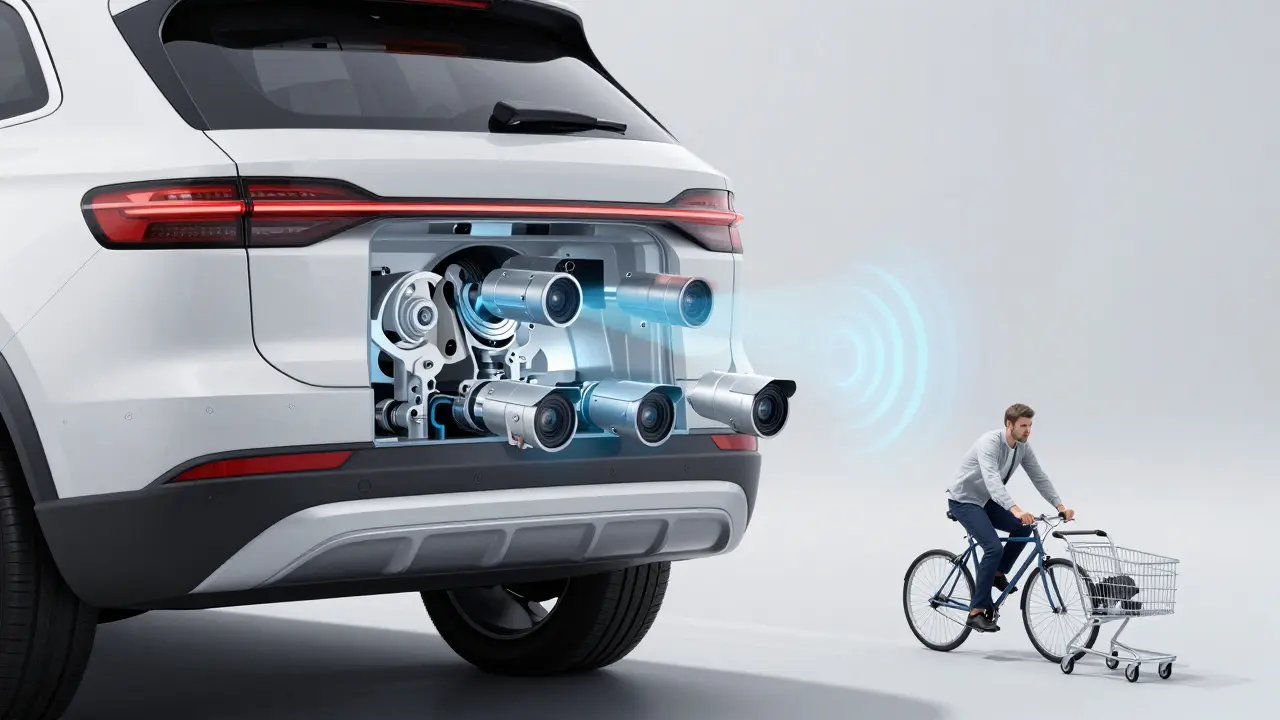
Radar is the workhorse here. It sits in your rear bumper and sends out pulses. If a car is approaching from the side, the radar calculates its speed and distance. Because radar penetrates weather better than light, it’s often more reliable in bad conditions. However, pure camera-based systems are improving rapidly thanks to better AI processing, allowing them to distinguish between a shopping cart rolling away and a child running into the street.
Active Braking: The Game Changer
Early versions of Cross-Traffic Alert were purely informational. They beeped, but they didn’t act. Today, the industry standard is shifting toward Automatic Emergency Braking (AEB) specifically for rear cross-traffic scenarios.
Here’s how it plays out in real life: You back out slowly. A sedan zooms past the adjacent spot. You look forward, distracted by a pedestrian crossing the lane ahead. You don’t see the sedan. The system does. It first flashes a red warning. When you don’t respond, it applies the brakes firmly, bringing the car to a halt before impact.
This feature has been credited with reducing low-speed collision claims significantly. Insurance Institute for Highway Safety (IIHS) data shows that vehicles with rear automatic braking perform far better in crash tests than those with warnings alone. In 2026, expect most mid-range vehicles to include this active braking as standard equipment, not just a premium option.
Limitations: What The System Can’t See
Despite their sophistication, these systems are not magic. They have specific blind spots and failure modes that every driver needs to respect. Over-trusting technology is a leading cause of accidents involving ADAS (Advanced Driver-Assistance Systems).
- Speed Limits: Most systems only engage when you are moving below 10-15 mph. If you reverse too quickly, the system may disengage because it assumes you have full control.
- Stationary Objects: Some older radar systems ignore stationary objects to avoid false alarms from curbs or signs. Newer fusion systems handle this better, but it’s still a risk.
- Weather Interference: Heavy snow covering the sensors in your bumper can render the system useless. Always clean your sensors after winter storms.
- Narrow Vehicles: Thin motorcycles or bicycles might slip through the detection grid if they are positioned at certain angles relative to your bumper.
If your car’s sensor is dirty, covered in mud, or damaged from a prior minor bump, the system may give you a "System Unavailable" message on the dashboard. Never ignore this warning. It means your electronic safety net is down.
Best Practices for Using Cross-Traffic Alert
To get the most out of your Cross-Traffic Alert system, you need to integrate it into your driving habits correctly. It should be a confirmation tool, not your primary method of observation.
- Look First, Then Trust the Tech: Always do a physical shoulder check. Turn your head. Look left, look right, then look at your screen. Use the system to confirm what you saw, not to replace the act of seeing.
- Keep Sensors Clean: Make it part of your car wash routine to wipe down the rear bumper corners where radar units are usually housed.
- Understand Your Alerts: Learn the difference between a cautionary beep (object detected but safe distance) and a critical alarm (immediate danger). React appropriately to each.
- Don’t Disable It: While you can turn off these systems in settings, leaving them on provides a layer of protection against human error. Keep them enabled unless there is a specific reason to disable them (like being towed).
Remember, the goal of these systems is to reduce cognitive load, not eliminate responsibility. When you park in tight urban spaces, the system handles the peripheral scanning so you can focus on steering precision and avoiding curb damage.
Future Trends: What’s Next?
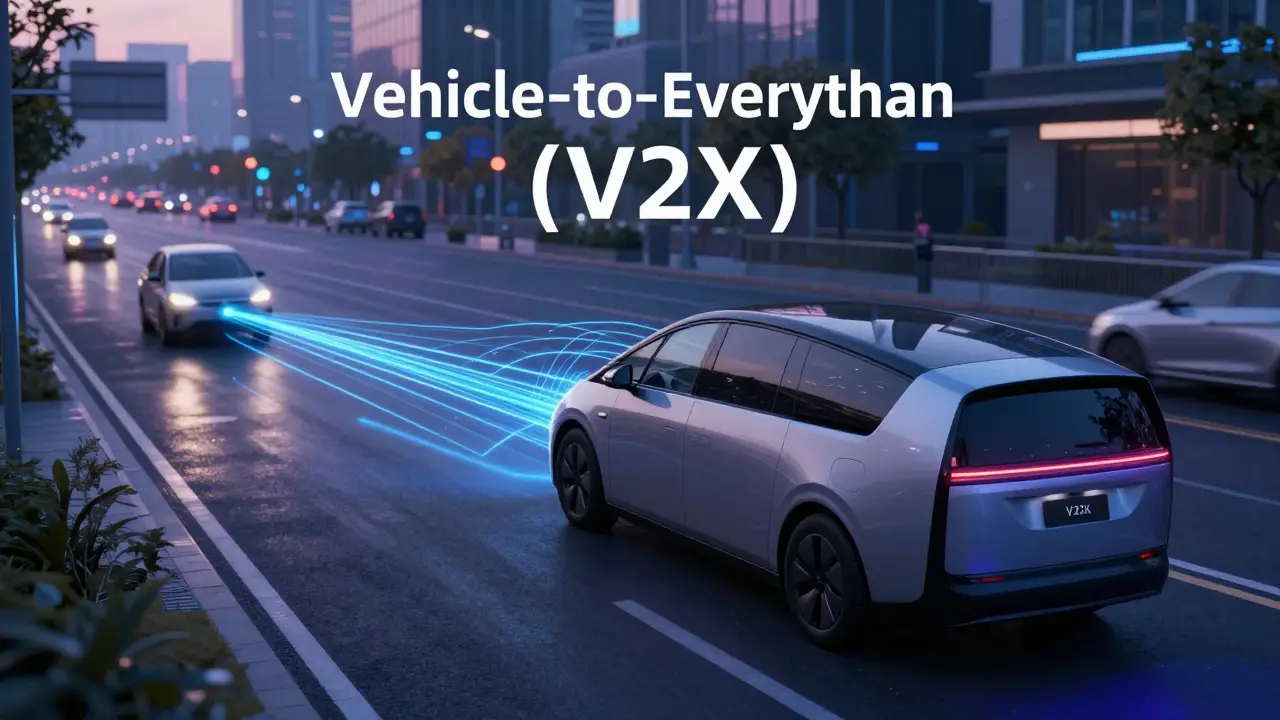
As we move through 2026, Cross-Traffic Alert is becoming part of a larger ecosystem called Vehicle-to-Everything (V2X) communication. Imagine your car talking to other cars nearby. Instead of relying solely on radar to guess if a car is coming, your vehicle receives a direct signal from that car saying, “I am approaching at 20 mph.”
This technology eliminates reaction time delays entirely. While V2X infrastructure is still rolling out in major cities, early adopters are already seeing benefits in traffic flow and safety. Additionally, integration with 360-Degree Cameras allows for seamless switching between wide-angle views and close-up details, giving drivers a virtual bird’s-eye view of their surroundings.
The future isn't just about detecting threats; it's about predicting them. Machine learning algorithms are beginning to analyze driving patterns in specific parking lots to anticipate common blind-spot hazards based on historical data.
Does Cross-Traffic Alert work in all weather conditions?
Radar-based systems work well in rain, fog, and darkness. However, heavy snow or mud covering the sensors can block detection. Camera-based systems may struggle in bright glare or heavy precipitation. Fusion systems offer the best all-weather performance.
Will Cross-Traffic Alert stop my car automatically?
Many modern vehicles equipped with Rear Cross-Traffic Braking will apply the brakes automatically if you fail to respond to warnings. Check your owner’s manual to see if your specific model includes this active braking feature.
Why is my Cross-Traffic Alert system giving false alarms?
False alarms can occur due to dirty sensors, metal objects near the bumper, or steep inclines. Ensure your rear bumper is clean and free of attachments like bike racks that might interfere with radar signals.
Can I rely on Cross-Traffic Alert instead of looking around?
No. You should never rely solely on the system. It has limitations regarding speed, object size, and sensor visibility. Always perform a physical visual check of your surroundings before reversing.
At what speed does Cross-Traffic Alert deactivate?
Most systems deactivate when the vehicle exceeds 10 to 15 mph (16-24 km/h) while reversing. If you accelerate too quickly, the system assumes you have taken full control and disables the alerts.