
Ever walk past a 1955 Chevy and feel like the paint is actually vibrating? Or maybe you've seen a hot rod with flames so sharp they look like they're cutting through the air? That's not just a color choice; it's high-level artistry. For classic car owners, a standard factory respray is often too boring. You want something that tells a story or screams personality. Whether you're aiming for a nostalgic Kustom Kulture look or a modern show-stopper, getting the finish right requires a mix of chemistry, patience, and a very steady hand.
The Quick Guide to Custom Finishes
- Flames: Range from traditional "traditional" shapes to modern, realistic fire.
- Murals: Full-scale art pieces integrated into the body lines.
- Specialty Finishes: Candy, Pearl, and Metal Flake for depth and shimmer.
- Pinstriping: Ultra-fine lines used for accents and detailing.
Mastering the Art of Custom Flames
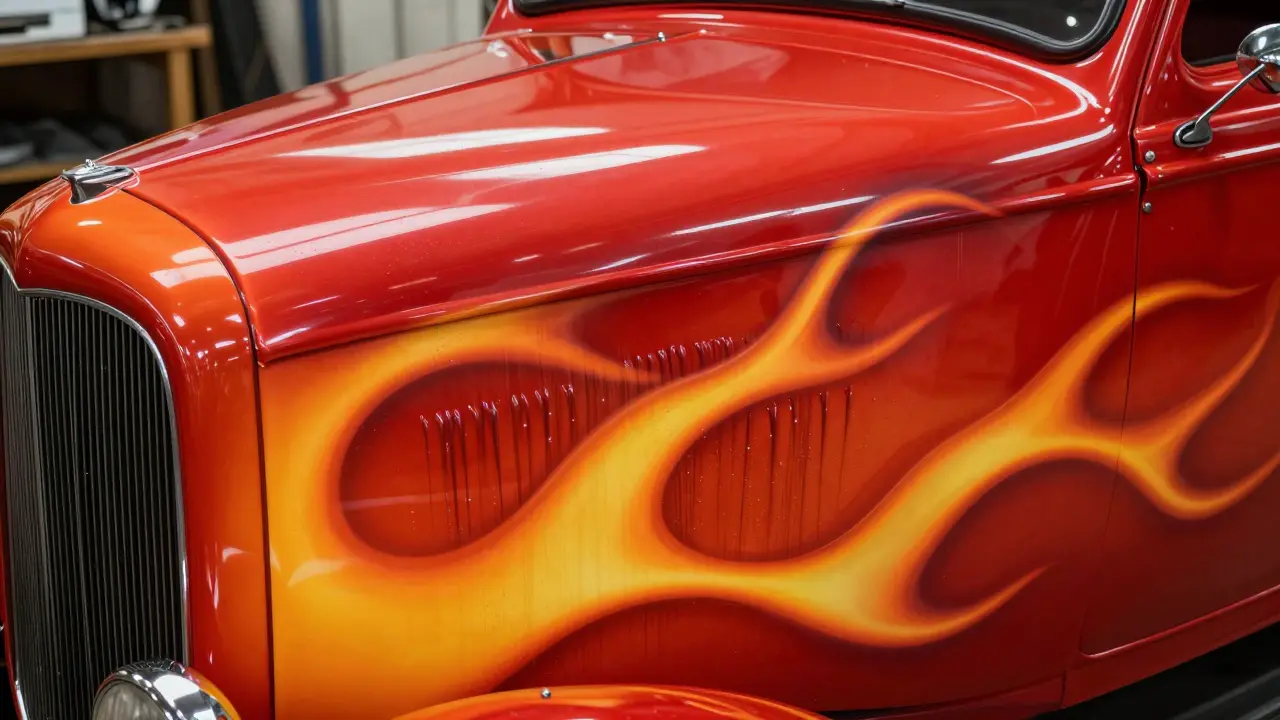
Flames are the ultimate symbol of speed and rebellion in the classic car world. But not all flames are created equal. If you're going for a vintage vibe, you want Traditional Flames is a stylized, flowing paint design characterized by bold, sweeping curves and high contrast, usually red, orange, and yellow on a darker base. These aren't meant to look like a real campfire; they are graphic shapes that follow the contours of the fender and hood.
Then there are "Realistic Flames." These require a technique called airbrushing and a deep understanding of color blending. You start with a deep red, layer in oranges, and finish with bright yellow or white highlights to create a 3D effect. The trick here is the transition. If the colors jump too abruptly, it looks like a sticker. If they blend too much, it looks like a smudge. Professional painters often use a 0.2mm nozzle on their airbrush to get those crisp, licking edges that make the car look like it's moving while parked.
To get the look right, the masking process is where the battle is won. Using a high-quality fine-line tape allows you to create those sweeping arcs without the paint bleeding under the edge. A pro tip: always clear-coat the entire piece after the flames are set to lock in the design and give it that wet, glass-like look.
Turning Steel into a Canvas with Murals
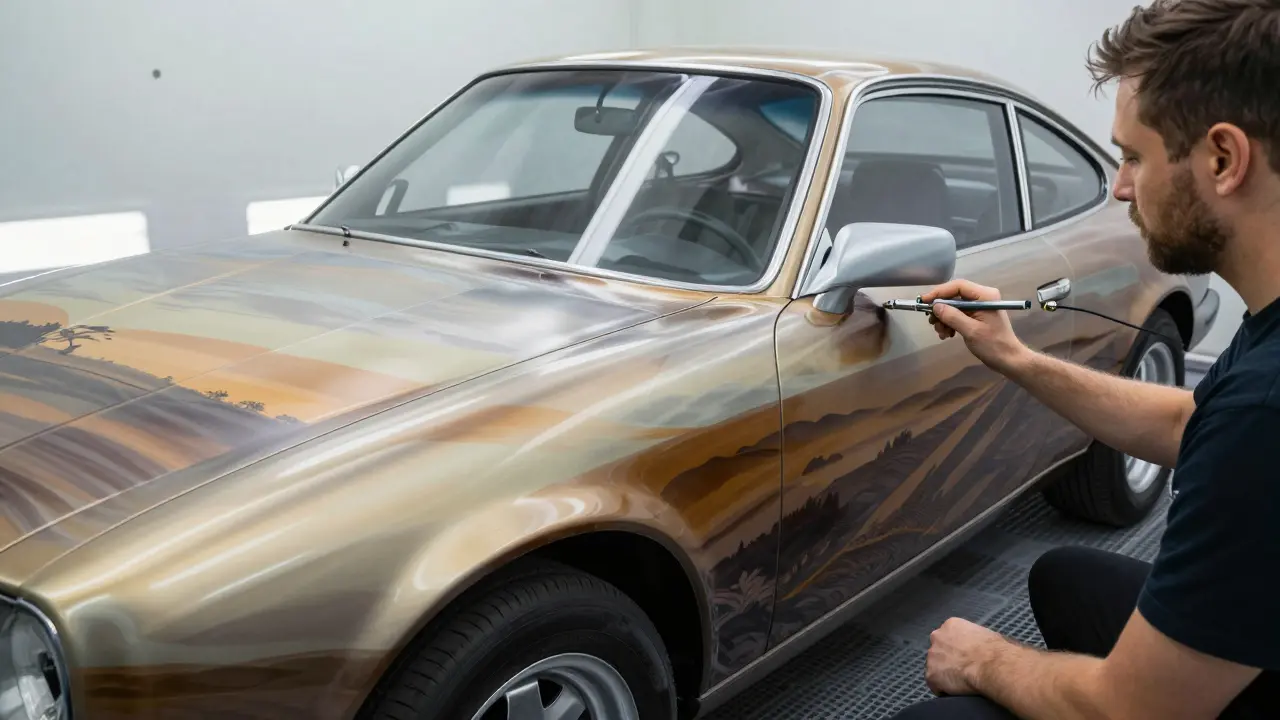
When a simple color isn't enough, Automotive Murals is large-scale custom paintings applied directly to vehicle body panels, often depicting scenes, characters, or abstract art take center stage. Unlike a vinyl wrap, a painted mural is an investment in the car's value and soul. The most common styles range from pinstripe-heavy abstract designs to hyper-realistic portraits or landscape scenes.
The biggest challenge with murals is the "canvas." Car panels are curved, meaning a straight line on a flat piece of paper will look warped on a fender. Artists have to use a technique called anamorphic projection, where they sketch the design to account for the curve of the metal. If you're painting a scene across the hood and side panels, you have to ensure the focal point doesn't end up on a door seam or a body line, which would break the illusion.
For the paint, most muralists use acrylics or specialized automotive enamels. The layering process is grueling: sketch, base coat, mid-tones, highlights, and finally, a heavy-duty clear coat. Because murals often use a variety of paint types, the clear coat must be chemically compatible with everything underneath, or you'll end up with "fish eyes"-tiny bubbles that ruin the finish.
Deep Dives into Specialty Finishes
If you want a car that changes color as you walk around it, you need to move beyond basic pigments. This is where custom paint techniques really shine. Let's look at the heavy hitters in the specialty world.
Candy Paint is a transparent, colored lacquer that is applied over a metallic or pearl base to create a deep, lustrous, and translucent effect. It's called "candy" because it looks like a hard candy shell. Unlike standard paint, which is opaque, candy is a filter. The light passes through the transparent color, hits the metallic base, and bounces back. This creates an incredible sense of depth. However, candy is notoriously difficult to spray. If you apply it too thick in one spot, you get a "dark spot," and because it's translucent, you can't just spray over it-you usually have to sand the whole panel back to the base.
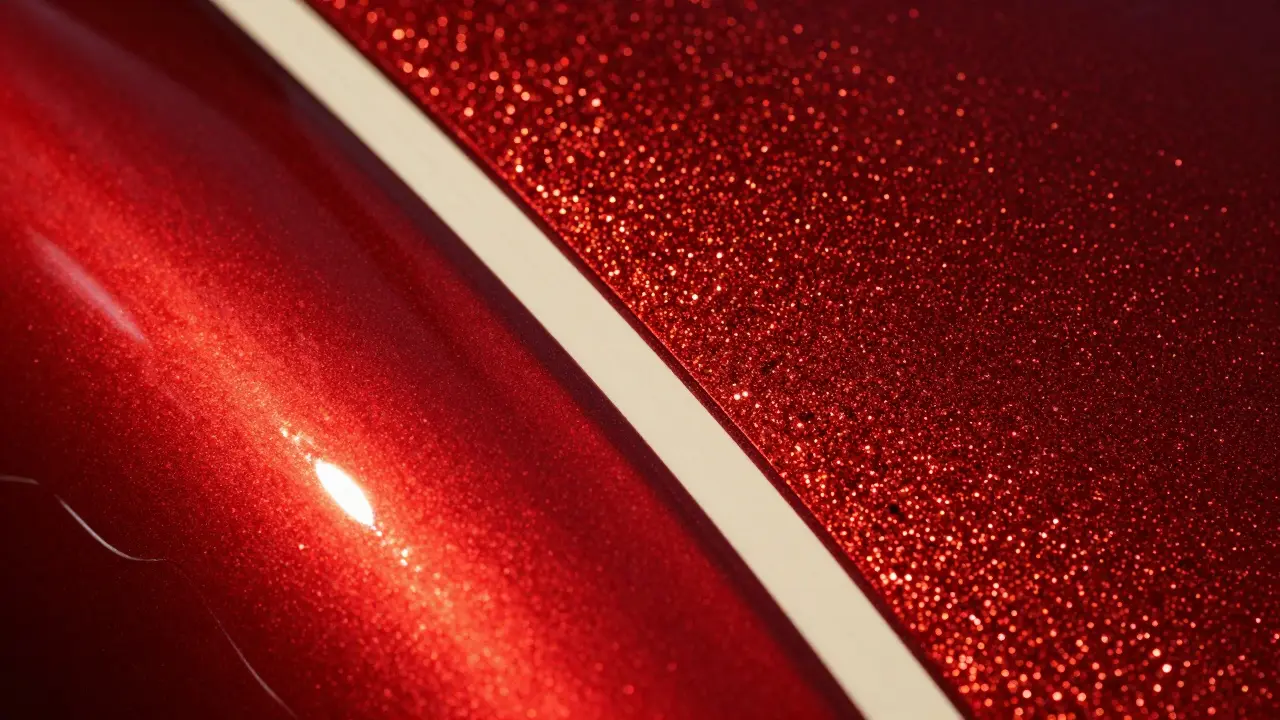
Then there's Metal Flake is large aluminum or polyester particles mixed into paint to create a high-sparkle, glittery finish common in 1960s custom cars. We're talking about particles much larger than what you find in a modern factory metallic paint. In the 60s, guys were mixing flake so thick that the paint looked like sandpaper before it was cleared. To get that look today, you use a dedicated flake base, then bury it under multiple layers of clear coat, sanding between each layer to flatten the surface.
| Finish Type | Visual Effect | Difficulty Level | Main Risk |
|---|---|---|---|
| Candy | Deep, translucent glow | Very High | Uneven color (Tiger stripes) |
| Metal Flake | High sparkle/glitter | Medium | Surface pitting (Sandpaper feel) |
| Pearlescent | Color shift/shimmer | Medium | Poor coverage |
| Matte/Satin | Non-reflective, muted | Low | Hard to touch up/scratch-prone |
The Secret Sauce: Pinstriping and Detailing
You can have the most expensive candy paint in the world, but without detailing, it's just a shiny blob. Pinstriping is the art of painting extremely thin, decorative lines on a vehicle to accentuate its lines or add artistic flair. This is often the final touch. A master pinstriper doesn't use a brush from a craft store; they use a "sword brush," which is a long-haired brush that holds a significant amount of paint, allowing them to pull a long, continuous line without stopping.
Pinstriping is usually done with a high-pigment enamel that sits on top of the clear coat. This means if you scratch a pinstripe, you can often just wipe it off with a solvent and redraw it. It's a high-pressure job-one shake of the hand and you've just ruined a $10,000 paint job. It's the automotive equivalent of a signature on a painting.
Common Pitfalls and How to Avoid Them
Custom painting isn't without its dangers. The most common mistake is rushing the prep work. Paint doesn't hide mistakes; it magnifies them. If there's a tiny dent or a speck of dust in your primer, that candy paint will highlight it like a neon sign. Spend 80% of your time on the bodywork and sanding, and only 20% on the actual spraying.
Another trap is the "clear coat disaster." Using a cheap clear coat over expensive specialty paints can lead to yellowing over time or, worse, delamination where the clear layer simply peels off in sheets. Always use a high-solids, UV-resistant clear coat, especially on cars that will spend time in the sun. If you're doing a heavy metal flake job, remember that you need way more clear coat than usual to "level out" the flakes and get a smooth finish.
Can I do custom flames myself with a spray can?
It is possible, but very difficult. Spray cans lack the precision of an airbrush. To get a decent result, you'll need to be incredibly precise with your masking tape and use a very light hand to avoid "runs." For a professional look, renting or buying a basic airbrush setup is highly recommended.
Does candy paint fade in the sun?
Candy paints are more susceptible to UV damage than standard opaque paints because they are translucent. The key to preventing fade is a high-quality UV-blocking clear coat. Without it, the vibrant colors can dull or shift over a few years of sun exposure.
How long does a full custom mural paint job take?
Depending on the complexity, a professional mural can take anywhere from two weeks to several months. This includes the design phase, surface preparation, multiple layers of painting, and the extensive sanding and clearing process required to make the art permanent.
What is the difference between metallic and pearl paint?
Metallic paint uses small aluminum flakes that reflect light directly, creating a sparkly, "metallic" look. Pearl paint uses ceramic crystals (mica) that refract light, meaning the light bends. This creates a softer glow and often causes the color to shift as you move around the car.
Is it expensive to get a custom flake finish?
Yes, typically more than a standard paint job. The cost comes from the specialized materials and the massive amount of labor involved in sanding down the coarse flake to a smooth, glossy finish. You're paying for the time and the risk involved in applying such a thick, heavy material.
Next Steps for Your Build
If you're just starting out, don't jump straight into a full-body candy spray. Start by practicing your masking on a scrap piece of sheet metal. If you're interested in flames, try the "mask and spray" method first before moving to freehand airbrushing. For those wanting a mural, find an artist who specifically has experience with automotive surfaces, as the chemistry of car paint is very different from canvas paint. Once you've picked your style, prioritize a high-quality primer-your custom finish will only be as good as what's underneath it.
Comments
Rob D
Listen up you amateurs, if you want real American steel to look right you gotta do it the old school way. None of this fancy-schmancy modern nonsense, just raw grit and a steady hand. If you ain't using a proper compressor you're basically just playing with crayons on a toy car. Get your act together and stop treating these legendary machines like they're some sort of art project for a city kid. Real custom paint is about power and pride, not some delicate little airbrushing session where you're scared to get a drop of paint on your overpriced shoes. I've seen some absolute train wrecks of "custom" jobs lately and it makes me want to vomit. Do it right or don't do it at all. We're talking about the backbone of US automotive culture here, not some watered-down hobby. If you can't handle the fumes you shouldn't be in the garage in the first place. Just a bunch of softies these days trying to shortcut the process with "fine-line tape" when you should be trusting your gut and your wrist. It's a damn shame what's happened to real craftsmanship in this country. Get out there and actually sweat for your finish for once.
April 14, 2026 at 07:44
Franklin Hooper
The lack of precision in some of these descriptions is simply exhausting. One would imagine a basic understanding of chemical bonding would be prerequisite knowledge before attempting a candy coat. It is truly a pity how the standards of automotive refinement have plummeted into a pit of mediocrity
April 15, 2026 at 22:38
Kate Tran
Love the look of candy paint but its so expensiv to fix if it goes wrong
April 16, 2026 at 00:01
amber hopman
Actually the masking part is what always trips me up. I've tried the fine-line tape but it still manages to bleed if the humidity is too high in the shop. I wonder if there's a better way to seal the edges before the first pass of color.
April 17, 2026 at 03:53
Mark Brantner
Omg a spray can flame job!! That sounds like a totaly great way to ruin a classic car haha! But seriously, just go for it, the worst that happens is you end up with a very expensive sandpaper car right??
April 18, 2026 at 00:50
Jess Ciro
Nobody is talking about how the paint industry is probably lying about the UV protection levels just to sell more clear coat. It's a total racket. They want your car to fade so you have to come back and pay them thousands more to do it again. It is all a giant cycle of greed designed to keep us in debt to the chemical companies
April 19, 2026 at 14:34
saravana kumar
It is quite evident that the author has provided a rudimentary overview. While the information is acceptable, it lacks the technical depth required for a true master. One finds the comparison table to be somewhat simplistic in its delivery
April 21, 2026 at 00:23
Tamil selvan
Please do not be discouraged by the difficulty of these techniques!!! Every expert was once a beginner, and with enough patience, you will achieve a finish that you are truly proud of!!! Just remember to breathe and take your time with the sanding process!!!
April 21, 2026 at 08:19
Jim Sonntag
imagine thinking a $10k paint job is too much when you can just buy a wrap and call it a day lol. but hey to each their own i guess
April 22, 2026 at 17:13
Deepak Sungra
Man, I tried doing a flake job once and it was such a nightmare. I spent like three weeks sanding and I still ended up with these tiny little pits that looked like a lunar landscape. I was absolutely devastated and almost gave up on the whole project because it felt like the paint was fighting me the entire time. It's just so draining to put in all that effort and still not get it perfect.
April 24, 2026 at 00:30