
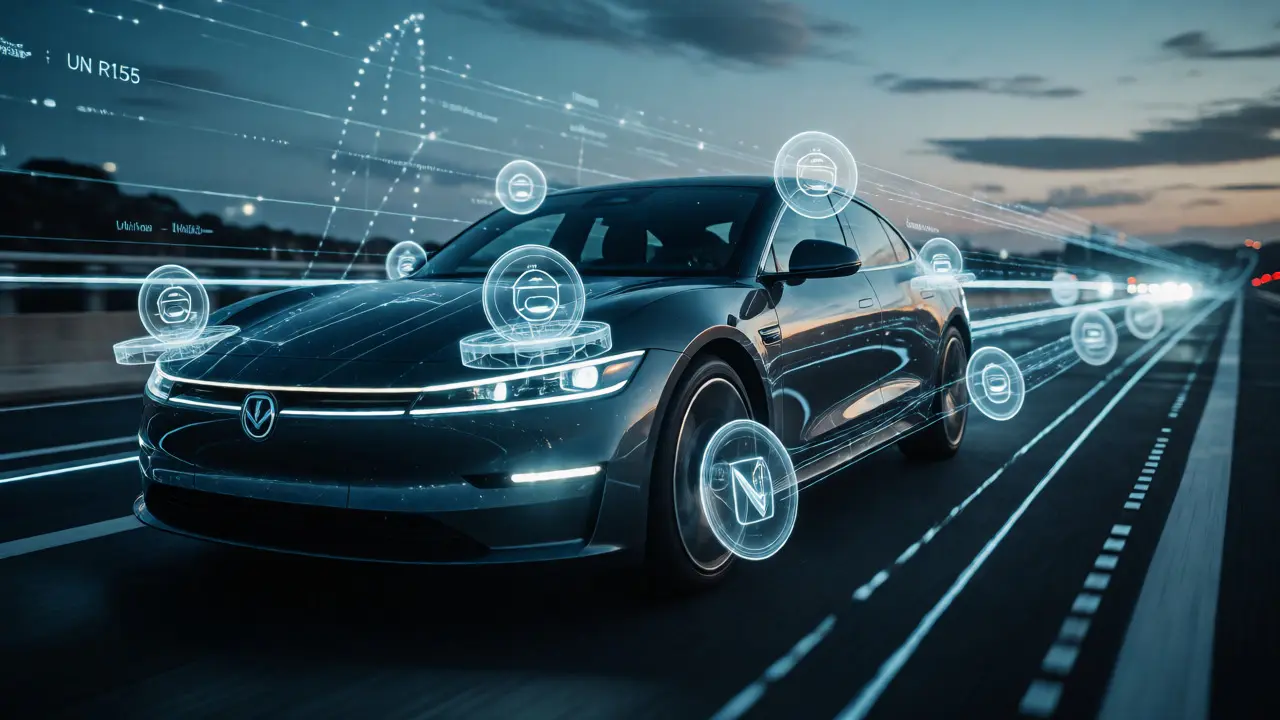
You bought a car that talks to your phone, updates its software over the air, and maybe even drives itself on the highway. It feels like magic, but it’s also a massive attack surface. If you’re in the automotive industry-whether you design these systems, manage fleets, or just worry about who sees your driving data-you need to understand cybersecurity regulations for connected vehicles. These aren’t just bureaucratic hurdles; they are the rules keeping your digital life from being hijacked by someone with a laptop and too much free time.
The landscape changed dramatically when the United Nations Economic Commission for Europe (UNECE) introduced mandatory standards. Before this, manufacturers could treat security as an afterthought. Now, if your vehicle doesn’t meet specific regulatory benchmarks, it literally cannot be sold in major markets like the EU, Japan, South Korea, and soon, potentially others. This guide breaks down what those rules are, why they exist, and how to navigate them without losing your mind.
The Global Shift to Mandatory Standards
For years, cybersecurity in cars was voluntary. Some companies did great work; others treated it like optional garnish on a burger. That ended with the adoption of UN Regulation No. 155 (UN R155). This isn't just another guideline; it is a legal requirement for type approval. If a manufacturer wants to sell a new vehicle model in the European Union, they must prove they have a certified Cyber Security Management System (CSMS).
This shift happened because cars became computers on wheels. A modern luxury sedan can have over 100 million lines of code. That’s more than a Boeing 787 Dreamliner. With that complexity comes vulnerability. Hackers don’t just want to unlock your door anymore; they want to manipulate braking systems, steal personal data, or create gridlock by disrupting traffic flow. Regulators realized that self-regulation wasn’t cutting it. The result is a strict framework where safety and security are legally intertwined.
It’s worth noting that while UN R155 is the global benchmark, regional variations exist. China has its own stringent GB standards, and the US relies more heavily on NHTSA guidelines combined with state-level privacy laws. However, most global manufacturers align with UNECE standards because it’s easier to build one compliant platform than five different ones.
Understanding UN R155 and CSMS
UN Regulation No. 155 is a global regulation requiring vehicle manufacturers to implement a certified Cyber Security Management System (CSMS) and ensure each vehicle type meets specific cybersecurity requirements. Think of a CSMS not as a piece of software, but as a process. It covers the entire lifecycle of the vehicle, from the initial design sketch to the final scrapyard disposal.
To get certified, a manufacturer must show auditors that they:
- Identify risks across all electronic control units (ECUs).
- Implement measures to mitigate those risks.
- Monitor threats continuously after the car leaves the factory.
- Respond to incidents with a clear plan.
The certification process is rigorous. Independent technical services audit the company’s processes. They check if you actually follow your own policies. Did you update the threat assessment when a new zero-day exploit emerged? Do you have a rollback mechanism if an over-the-air update fails? If you fail the audit, you don’t get the Certificate of Approval. Without that certificate, no new models can be registered in member countries.
For fleet managers, this matters because it affects resale value and insurance. A vehicle with a robust, proven CSMS is less likely to suffer a catastrophic recall due to security flaws. It signals to buyers that the manufacturer takes digital hygiene seriously.
The Technical Backbone: ISO/SAE 21434
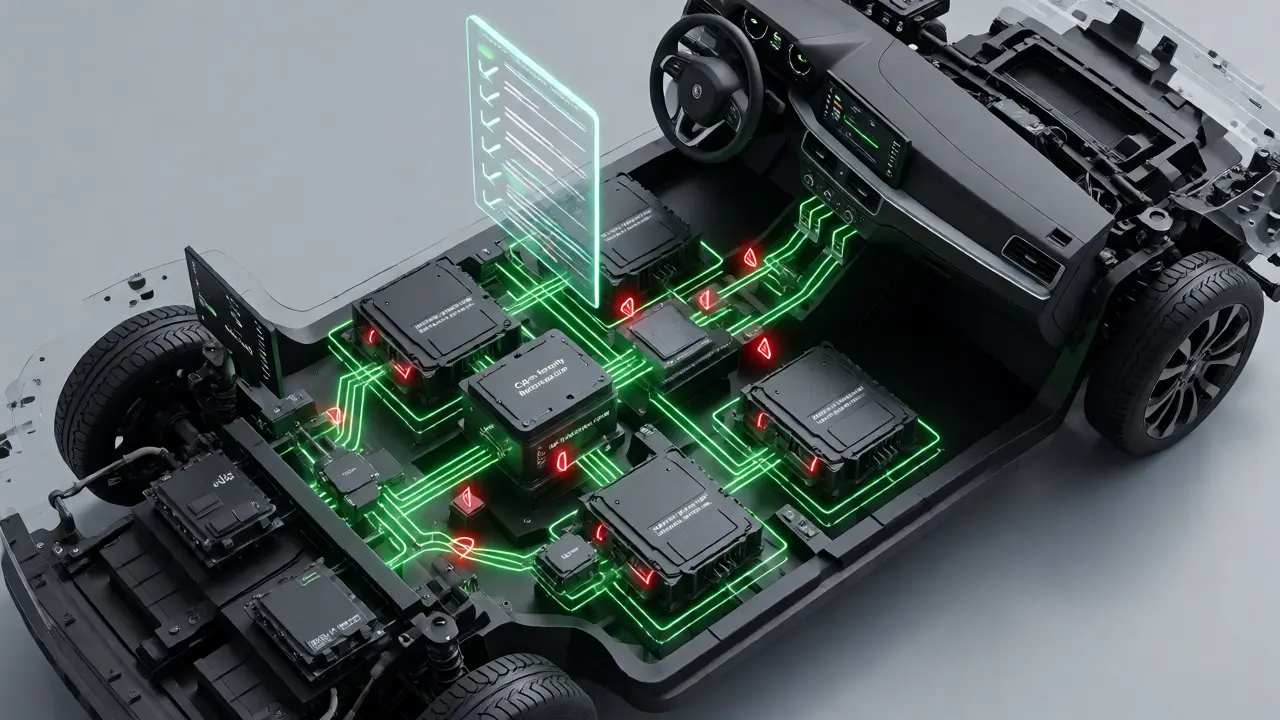
While UN R155 sets the "what," ISO/SAE 21434 is an engineering standard that provides the methodology for implementing cybersecurity risk management throughout the automotive product lifecycle. You can think of ISO/SAE 21434 as the recipe book for the CSMS meal. It tells engineers exactly how to conduct Threat Analysis and Risk Assessment (TARA).
TARA is the heart of this standard. It involves breaking down the vehicle system into assets (like the steering controller or infotainment screen), identifying potential threats (can a hacker inject fake speed data?), and assessing the impact and feasibility of those threats. Based on this, you assign a cybersecurity goal and define required safeguards.
Here is a simplified look at how TARA works in practice:
| Asset | Threat Scenario | Impact | Feasibility | Required Safeguard |
|---|---|---|---|---|
| Brake Control ECU | Spoofed CAN bus message causing unintended braking | Catastrophic (Accident) | Medium (Requires physical access or compromised telematics) | Message Authentication Code (MAC) |
| Infotainment Unit | Malware infection via USB port | Negligible (Annoyance) | High (Easy user error) | Input sanitization & sandboxing |
| Telematics Module | Data exfiltration of location history | Major (Privacy violation) | Low (Requires sophisticated attack) | End-to-end encryption |
If you’re developing components, you need to speak ISO/SAE 21434 fluently. Suppliers often have to provide "Safety Cases" proving their part complies with the OEM’s overall security architecture. If your component lacks secure boot capabilities, you might lose the contract before you even start prototyping.
Data Privacy and the GDPR Intersection
Cybersecurity and data privacy are cousins, not twins. While cybersecurity protects against malicious attacks, privacy regulations like the General Data Protection Regulation (GDPR) protect against misuse of personal information. In connected vehicles, these two areas overlap heavily.
Your car collects an insane amount of data: GPS coordinates, audio recordings from voice assistants, biometric data from driver monitoring cameras, and driving behavior patterns. Under GDPR, this data belongs to the user, not the manufacturer. Manufacturers must obtain explicit consent to collect and process this data. They also need to provide mechanisms for users to delete their data.
A common pitfall is assuming that anonymizing data makes it safe. Research shows that driving patterns can be unique enough to re-identify individuals even in large datasets. For example, knowing someone drives from Bristol to London every Tuesday morning at 8 AM narrows the field significantly. Therefore, cybersecurity measures like encryption are essential for privacy compliance. If hackers breach your database, you’re facing both a security incident and a privacy violation, doubling the fines and reputation damage.
Manufacturers must also consider "privacy by design." This means building features that default to collecting the least amount of data necessary. If the navigation system only needs the destination, it shouldn’t log every turn unless the user opts in for traffic analysis.
Regional Variations: EU vs. US vs. China
Global compliance is tricky because regulations aren’t uniform. Here’s how the major players differ:
- European Union: Leads with UN R155 and R156 (software updates). Compliance is mandatory for type approval. The focus is on systemic risk management.
- United States: No single federal law mandates cybersecurity for vehicles yet. Instead, the National Highway Traffic Safety Administration (NHTSA) issues guidelines and can force recalls under general safety clauses. State laws, like California’s CCPA, add layers of privacy complexity. The US approach is reactive rather than proactive.
- China: Has implemented strict data localization laws. Vehicle data generated within China must stay in China. Additionally, the Ministry of Industry and Information Technology (MIIT) enforces its own cybersecurity standards, which are similar to UNECE but with stricter oversight on foreign software providers.
If you operate globally, you need a modular compliance strategy. Your core architecture should meet the highest standard (usually UNECE), then adapt for local nuances. For instance, ensuring your cloud servers have regions in Shanghai for Chinese customers, while maintaining separate data pipelines for EU citizens to satisfy GDPR.
Practical Steps for Compliance Readiness
So, how do you actually prepare? Whether you’re a startup EV maker or a legacy automaker retrofitting old platforms, here are concrete actions to take now.
- Audit Your Supply Chain: You are responsible for the security of every chip and sensor in your car. Map out all suppliers and assess their maturity. Do they use secure development practices? Can they support long-term patching?
- Implement Secure Over-The-Air (OTA) Updates: UN R156 specifically addresses software update management. You need a system that verifies the integrity of updates. If an update is corrupted or tampered with, the car should reject it automatically.
- Establish a Security Operations Center (SOC): Post-production monitoring is critical. You need real-time visibility into your fleet. Are there unusual login attempts? Is a specific ECU behaving oddly? A SOC allows you to detect anomalies before they become accidents.
- Train Your Engineers: Move beyond basic coding skills. Developers need training in secure coding practices specific to embedded systems. Understand buffer overflows, injection attacks, and cryptographic protocols.
- Prepare for Incident Response: What happens when you discover a flaw? Have a communication plan ready. How will you notify owners? How fast can you deploy a fix? Speed is crucial. A delay of weeks can mean thousands of vulnerable cars on the road.
Remember, compliance isn’t a one-time checkbox. It’s a continuous cycle of assessment, implementation, and monitoring. As new threats emerge, your defenses must evolve.
The Future: AI and Autonomous Driving Risks
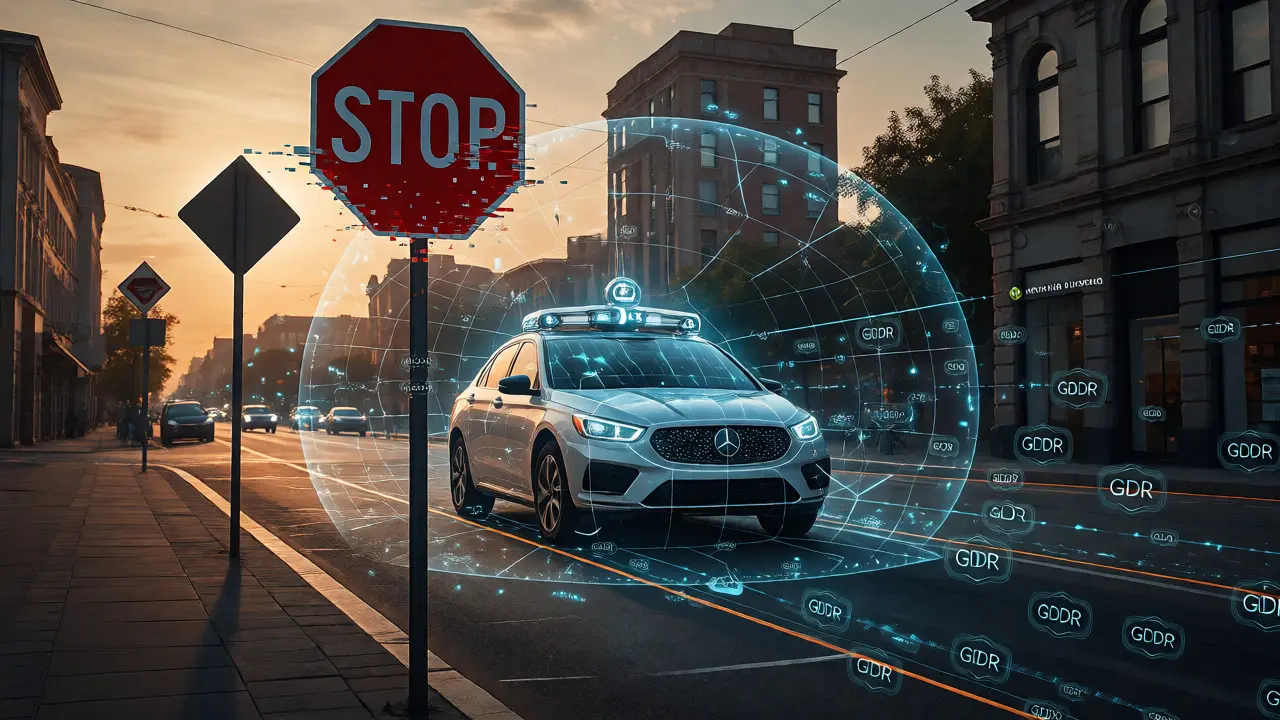
As we move toward Level 4 and Level 5 autonomous driving, the stakes rise exponentially. An AI system making split-second decisions can be tricked by adversarial examples-images designed to fool neural networks. Imagine a stop sign with subtle pixel changes that makes the car think it’s a speed limit sign. Current regulations are still catching up to these AI-specific vulnerabilities.
Regulators are beginning to discuss AI safety frameworks alongside traditional cybersecurity. Expect future amendments to UN R155 to include specific requirements for machine learning model validation. If you’re working on autonomous tech, keep an eye on the ISO/IEC JTC 1/SC 42 committee, which handles AI standardization.
For consumers, this means your next car will likely be safer digitally, but you’ll also face more prompts asking for permission to share data. Embrace it. Those permissions are your shield.
Is UN R155 applicable to used cars?
No, UN R155 applies to new vehicle types seeking type approval. Used cars already on the road are generally exempt from retroactive compliance, though manufacturers may issue voluntary security patches for older models to maintain brand reputation and reduce liability risks.
What is the difference between UN R155 and UN R156?
UN R155 focuses on the Cyber Security Management System (CSMS) and overall cybersecurity risk management. UN R156 focuses specifically on the Software Update Management System (SUMS), ensuring that software updates can be performed safely and reliably over the air or at service centers.
Do I need to hire a specialized auditor for CSMS certification?
Yes, you must engage an accredited Technical Service (TS) approved by your national authority. These TSs perform the audit of your CSMS. You cannot self-certify; independent verification is mandatory for type approval.
How does GDPR affect my car's telemetry data?
If telemetry data can identify you (directly or indirectly), it is personal data under GDPR. You must provide clear consent options, allow data deletion, and ensure data minimization. Even if data is aggregated, if it can be linked back to a specific VIN and owner, privacy rules apply.
Can a hacker remotely shut down my car?
In theory, yes, if the telematics unit is compromised and lacks proper isolation from critical drive-by-wire systems. Modern architectures use gateways to prevent non-critical ECUs (like infotainment) from directly controlling brakes or steering, mitigating this risk significantly.
Are electric vehicles more vulnerable to cyberattacks?
Not necessarily more vulnerable, but they have different attack surfaces. EVs rely heavily on battery management systems (BMS) and charging infrastructure connectivity. A compromise in the BMS could lead to thermal runaway or reduced range, whereas ICE vehicles might face engine management exploits.
Comments
Ian Mason-Laurence
It is worth noting that the article conflates regulatory frameworks with engineering standards in a manner that may confuse lay readers. UN R155 is indeed a legal requirement for type approval, whereas ISO/SAE 21434 is merely a methodology. One cannot be "compliant" with an ISO standard in the same legal sense as a UNECE regulation; one can only claim conformance. Furthermore, the assertion that manufacturers align with UNECE standards because it is easier to build one platform ignores the significant economic pressure from the US market, which often dictates global feature sets regardless of EU regulations.
October 27, 2026 at 07:43
Ejike Ugwu
They are hiding the real reason why they want us to accept these updates.
Think about it. If my car talks to my phone and updates itself over the air, who is actually listening? It isn't just about safety. It is about control. They know exactly where I go, when I sleep, and who I talk to in the cabin. The GDPR stuff is just a smokescreen to make us feel like we own our data while they sell it to insurance companies and advertisers behind closed doors.
I read somewhere that Tesla already has access to all this telemetry without asking permission properly. Now they are making it law so everyone else does the same thing. We are becoming lab rats on wheels. Every time you update your software, you are giving them another key to your life. Don't believe the hype about security. This is surveillance capitalism wrapped in a shiny new dashboard interface.
October 28, 2026 at 07:00
Tommy Cahyadi
Great summary. Really helpful for understanding the basics without getting bogged down in too much jargon. Thanks for sharing.
October 29, 2026 at 00:42
Kathleen Johnson
The comparison between a Boeing 787 and a modern sedan is technically flawed and demonstrates a lack of understanding regarding embedded systems versus avionics architecture. A car's codebase is distributed across dozens of microcontrollers with vastly different processing capabilities, not a monolithic system like an aircraft. Additionally, the section on China oversimplifies the situation by ignoring the recent geopolitical tensions affecting foreign OEMs there. It feels like this was written by someone who read press releases rather than actual technical documentation.
October 30, 2026 at 01:15
Kathy Mccoy
This is such a vital topic for anyone involved in the industry right now! I love how you broke down the practical steps for compliance readiness. For those just starting out, don't get discouraged by the complexity. Start small by auditing your supply chain first. It’s manageable if you take it one step at a time. You’ve got this!
October 30, 2026 at 11:50
jyotshna Senapati
I find it quite amusing that people still think privacy matters in today's world. You buy a connected car knowing full well what you are signing up for. Why do we need all these regulations? Just let the market decide. If you don't like the data collection, don't buy the car. Simple as that. But no, we have to have committees and auditors telling us how to drive. It feels like nanny state nonsense to me. Honestly, if your driving habits are so sensitive that they reveal your identity, maybe you shouldn't be driving around town anyway.
November 1, 2026 at 03:47
Marisa Marroquin
The intersection of cybersecurity and personal liberty presents a fascinating paradox in the modern automotive landscape. While the intent of these regulations is ostensibly protective, one must consider the chilling effect on innovation and user autonomy. Are we truly safer, or are we merely more surveilled under the guise of digital hygiene? The narrative suggests empowerment through knowledge, yet the reality involves surrendering granular control over one's own vehicular existence to bureaucratic oversight. It is a delicate dance between convenience and consent.
November 2, 2026 at 11:46
Sundaraiah Kollipara
this is really interesting but i wonder about the philosophical implications of trusting machines with our lives
if the car decides to brake because of a sensor glitch is that the cars fault or the programmers fault or the regulators fault
we are creating systems that operate in gray areas where liability is unclear
i think we need to ask ourselves if we are ready to cede decision making power to algorithms
the idea of adversarial examples fooling neural networks is scary because it means reality itself can be hacked
what happens when two self driving cars disagree on who has the right of way
do they negotiate or do they crash
it raises questions about trust and transparency that go beyond just coding standards
November 2, 2026 at 19:51