
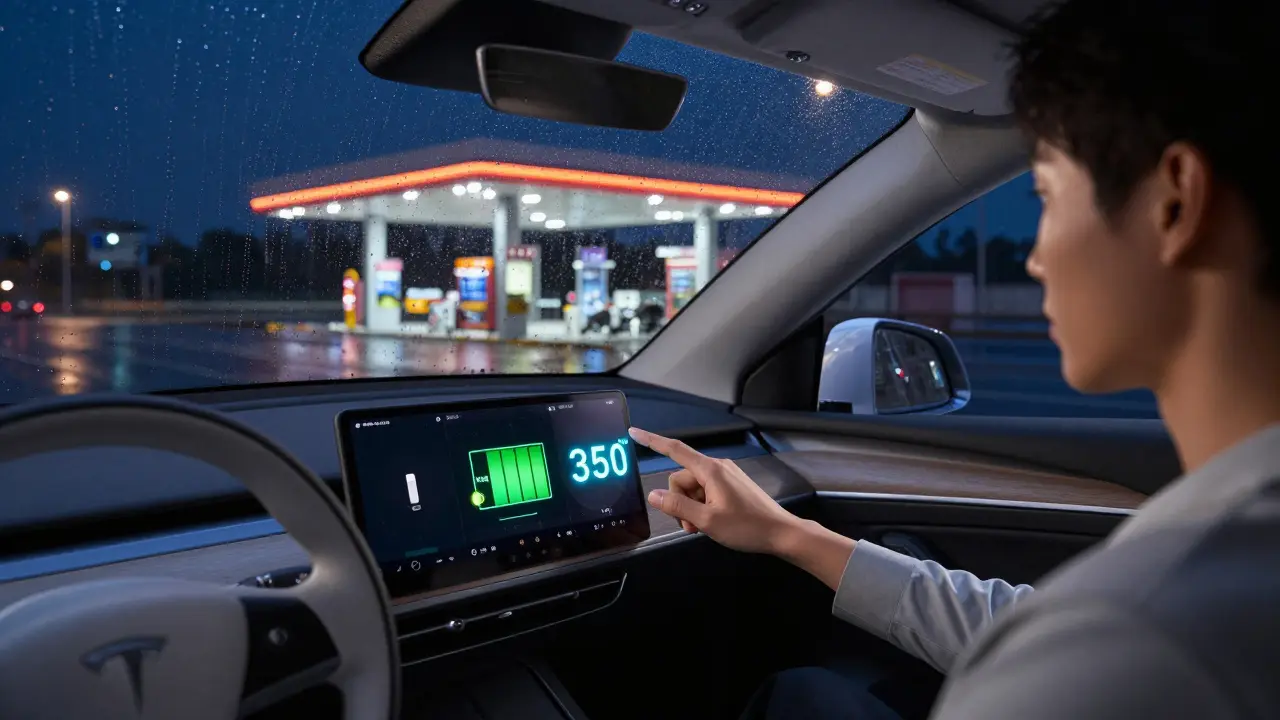
Picture this: you’re on a long road trip in your electric vehicle. You pull into a DC fast charger with just 10% battery left. The screen lights up promising 350 kW. For the first few minutes, the numbers jump wildly-your range climbs by miles every second. It feels like magic. But then, halfway through, something strange happens. The power drops to 150 kW. Then 80 kW. By the time you hit 90%, it’s crawling at 20 kW. You’re stuck there for what feels like an eternity, watching the percentage tick up one by one.
You aren’t doing anything wrong. The charger isn’t broken. Your car isn’t failing. This is the DC fast charging curve in action, and it’s the single most misunderstood aspect of owning an electric vehicle. Understanding why speed slows at higher State of Charge (SOC) isn’t just about patience; it’s about preserving your battery’s health and planning smarter trips.
The Physics Behind the Slowdown
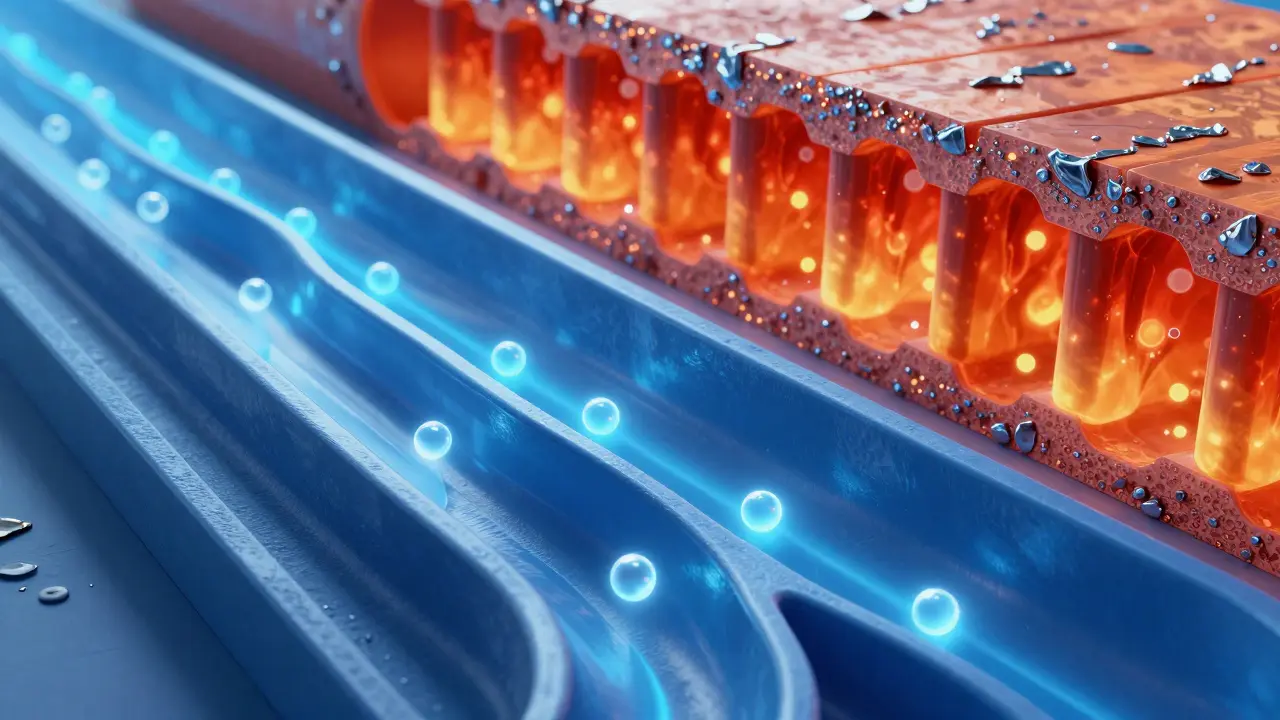
To understand why your car refuses to gulp down electricity when it’s nearly full, we need to look inside the lithium-ion battery. Think of these batteries as thousands of tiny tunnels. When you charge them, lithium ions move from one side (the cathode) to the other (the anode). At low levels of charge, those tunnels are wide open. There’s plenty of room, so you can push ions through quickly without causing damage.
As the battery fills up, those tunnels get crowded. If you keep pushing energy in at the same high rate, two bad things happen. First, the heat builds up rapidly. Lithium-ion cells hate extreme temperatures, especially during high-current charging. Second, and more critically, metal lithium can start plating onto the surface of the anode instead of intercalating into it. This process, called lithium plating, permanently reduces the battery’s capacity and can even cause internal shorts that lead to thermal runaway.
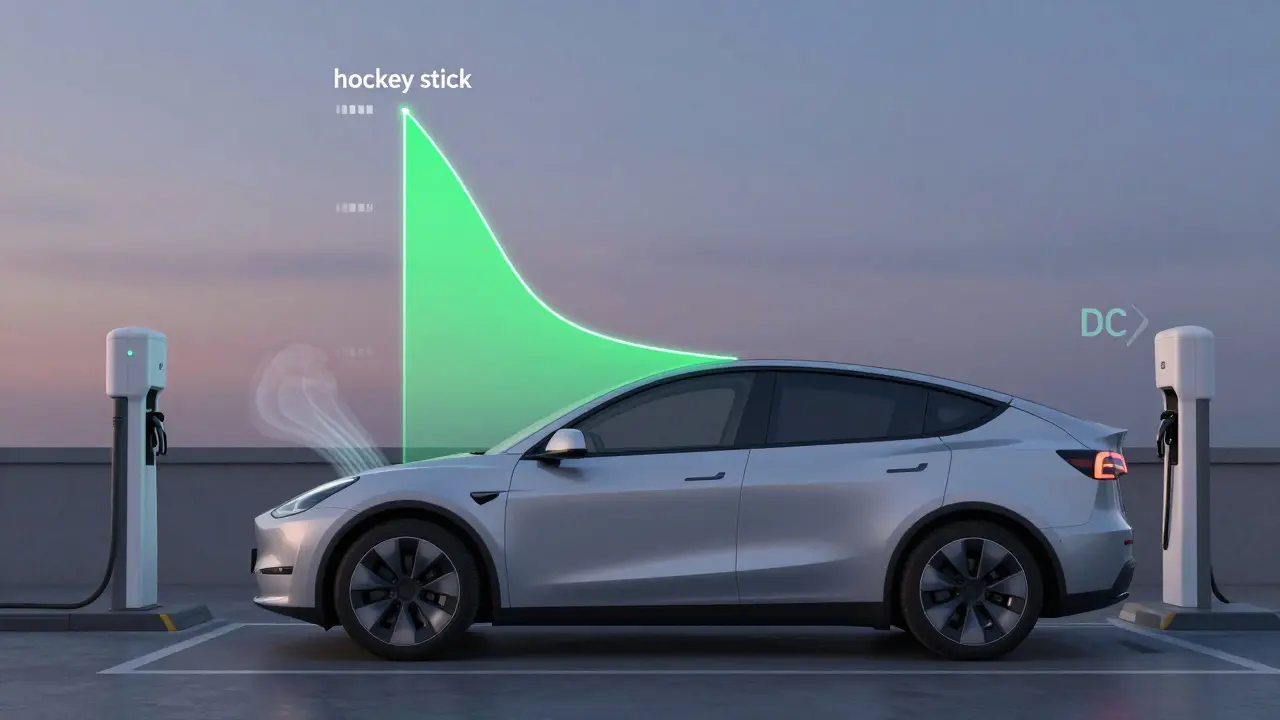
This is why the charging curve looks like a hockey stick. The flat blade is the rapid, constant-current phase where speed is king. The curved shaft is the tapering phase where safety takes over. Your car’s computer is actively throttling the power to prevent physical damage to the cells.
The Role of the Battery Management System
Your electric vehicle doesn’t just plug in and hope for the best. It relies on a sophisticated Battery Management System (BMS). This piece of software acts as the gatekeeper between the grid and your battery pack. Its primary job is protection, not speed.
When you connect to a DC fast charger, the BMS communicates directly with the station using the ISO 15118 protocol. It tells the charger exactly how much current the battery can accept based on its current temperature, voltage, and age. If the battery is cold, the BMS might limit charging to 50 kW until the pack warms up. If it’s hot from driving, it will restrict power to cool it down.
The BMS also manages cell balancing. Over time, individual cells within a pack degrade at different rates. As the pack approaches 100%, the weakest cells reach their voltage limit first. The BMS must slow down the entire pack to ensure no single cell is overcharged. This is often why older vehicles seem to charge slower than newer ones-their BMS is being more conservative due to increased variance between cells.
| SOC Range | Charging Phase | Power Behavior | Primary Constraint |
|---|---|---|---|
| 10% - 20% | Pre-conditioning / Warm-up | Low to Moderate | Battery Temperature |
| 20% - 50% | Constant Current (CC) | Maximum Power | Charger Capacity & Cable Limit |
| 50% - 80% | Tapering / Transition | Gradual Decrease | Voltage Limits & Heat |
| 80% - 100% | Constant Voltage (CV) | Sharp Decline | Lithium Plating Risk & Cell Balance |
Why 80% Is the Magic Number
If you’ve ever used a public fast charger, you’ve probably noticed that many apps and maps suggest stopping at 80%. This isn’t arbitrary. It’s the point where the law of diminishing returns kicks in hard.
In the first half of the charge (say, 10% to 50%), you might add 150 miles of range in 15 minutes. That’s 10 miles per minute. In the second half (50% to 80%), you might add another 150 miles, but it takes 25 minutes. That’s only 6 miles per minute. To go from 80% to 100%, you might add just 50 miles, but it could take another 20-30 minutes. That’s less than 2 miles per minute.
For someone waiting at a coffee shop or bathroom break, the last 20% of charge is frustratingly slow. Most people don’t need 100% state of charge for daily driving or even most road trips. They need *enough* range to reach the next stop safely. Stopping at 80% allows you to use the charger efficiently, freeing it up for the next driver who desperately needs that quick boost.
Factors That Flatten the Curve
Not all charging curves are created equal. Several factors determine how steep or flat your specific experience will be.
- Battery Chemistry: Lithium Iron Phosphate (LFP) batteries, common in standard-range Teslas and many Chinese EVs, have a flatter discharge curve and can often accept high currents up to 90% or even 95% SOC. Nickel Manganese Cobalt (NMC) batteries, found in most premium EVs, tend to taper earlier, often around 80%.
- Thermal Management: Vehicles with advanced liquid cooling systems can sustain peak power longer because they dissipate heat more effectively. Air-cooled systems struggle under high loads, forcing the BMS to reduce power sooner.
- Battery Age: As a battery ages, its internal resistance increases. Higher resistance means more heat generation for the same amount of current. Older cars will see their peak power window shrink significantly compared to when they were new.
- Ambient Temperature: Charging in freezing weather is brutal for speed. The BMS may divert significant power from the charger to heat the battery before allowing any real charging to occur. Conversely, extreme heat forces early tapering to protect cell integrity.
How to Optimize Your Charging Stops
Knowing the science helps you hack the system. Here is how you can make the most of DC fast charging.
Plan for 10-80%: Try to arrive at chargers with around 10-15% battery left. This ensures you spend the majority of your time in the fastest charging window. Leaving at 80% means you’ve captured the bulk of the available speed.
Use Pre-conditioning: Modern EVs allow you to set a destination and pre-condition the battery while plugged in at home or en route. This heats or cools the pack to its optimal operating temperature before you even plug into the DC charger. A warm battery charges faster than a cold one.
Avoid 100% Unless Necessary: Unless you are going on a very long trip with sparse charging infrastructure, avoid charging to 100% on DC fast chargers. The stress placed on the battery during the final trickle phase accelerates degradation. Use AC home charging for top-offs if you need that extra range.
Check Charger Health: Not all chargers deliver their rated power. Some older stations suffer from "power sharing" issues where multiple cars split the available output. Apps like PlugShare show real-time data on charger performance. Avoid stations known for poor maintenance or frequent outages.
The Future of Charging Curves
Manufacturers are constantly working to flatten the curve. Newer generations of NMC batteries and solid-state prototypes aim to reduce lithium plating risks, allowing higher currents for longer periods. We are also seeing the rise of ultra-fast charging standards that support higher voltages, such as 800V architectures used by Porsche Taycan, Hyundai Ioniq 5, and Kia EV6. These systems can maintain higher power levels deeper into the charge cycle because they achieve the same energy transfer with lower current, reducing heat buildup.
However, the fundamental physics remains. You cannot defy thermodynamics. The goal is not to eliminate the slowdown, but to manage it intelligently. By understanding the DC fast charging curve, you stop fighting your car and start working with it. You’ll save time, extend your battery life, and enjoy a smoother, less stressful journey.
Why does my EV charge slower at 90% than at 20%?
At 90% State of Charge, the lithium-ion battery cells are nearly full. Pushing more energy in quickly risks lithium plating, which damages the battery permanently. To prevent this, the Battery Management System (BMS) reduces the current, shifting from constant-current mode to constant-voltage mode. This protective measure causes the charging speed to drop significantly.
Is it bad for my battery to always charge to 100% on DC fast chargers?
Yes, regularly charging to 100% via DC fast charging accelerates battery degradation. The high heat and electrical stress during the final stages of charging strain the cells. It is better to use DC fast charging for 10-80% boosts and reserve AC home charging for topping off to 100% if needed.
What is the difference between LFP and NMC batteries regarding charging speed?
Lithium Iron Phosphate (LFP) batteries generally tolerate higher states of charge better than Nickel Manganese Cobalt (NMC) batteries. LFP packs can often maintain high charging speeds up to 90-95% SOC, whereas NMC packs typically begin tapering sharply around 80% SOC to prevent cell damage.
How does temperature affect the DC fast charging curve?
Temperature is critical. Cold batteries have high internal resistance, so the BMS limits power to prevent damage and may use charger energy to heat the pack first. Hot batteries risk overheating, so the BMS reduces power to cool them down. Optimal charging occurs when the battery is pre-conditioned to a moderate temperature, usually around 25°C (77°F).
Can I force my car to charge faster at high SOC?
No. The charging limits are hardcoded into the vehicle's Battery Management System (BMS) for safety reasons. Attempting to bypass these limits would risk catastrophic battery failure. The BMS dynamically adjusts based on real-time cell conditions, and user overrides are not permitted for DC fast charging profiles.