
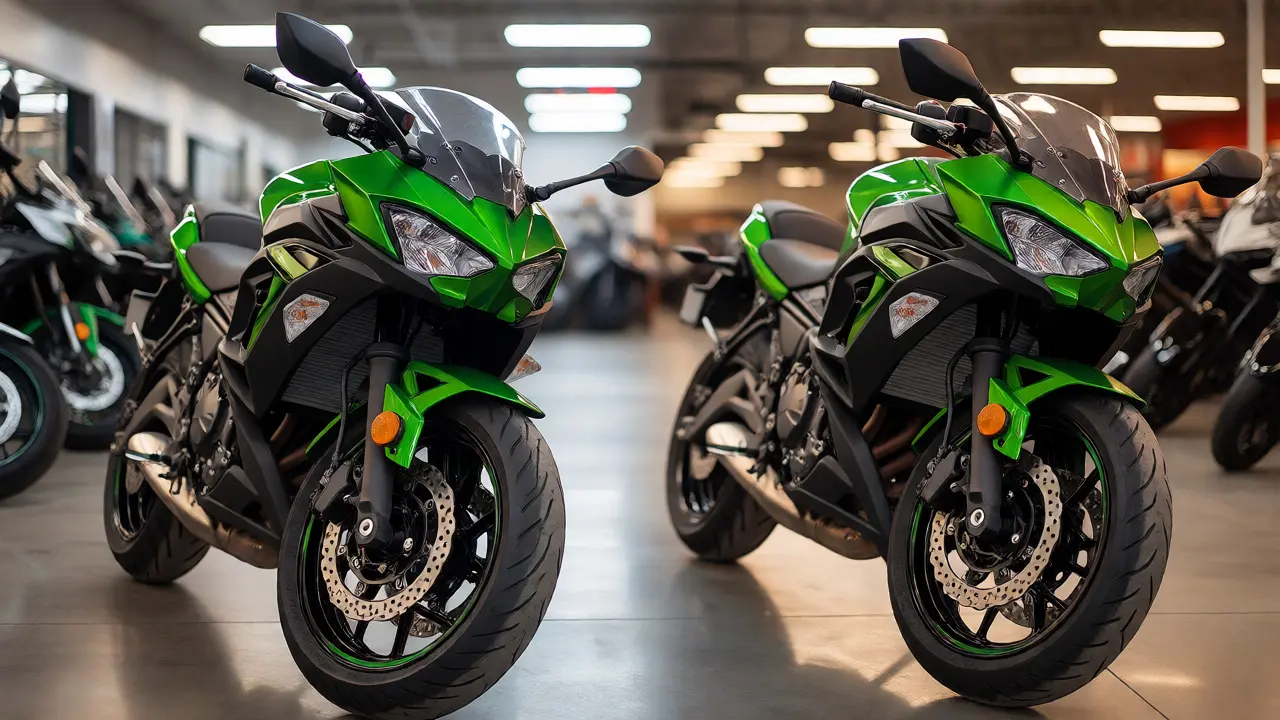
You walk into a dealership and see two identical Kawasaki Ninja 650. One has 12 miles on the clock; the other has 4,500. The price tag on the low-mileage bike is nearly new-money high, while the higher-mileage one offers a significant discount. Which do you buy? This isn't just about mileage-it's about understanding what "demo" actually means versus standard dealer used inventory, and how to squeeze value out of either without getting burned.
Buying a pre-owned motorcycle can feel like navigating a minefield. You want savings, but you also want reliability. Demo bikes (often called loaners or test riders) sit in a grey area between new and used. They offer some perks of a new bike with the price drop of a used one, but they come with hidden wear that isn't always obvious. Standard dealer used bikes are cheaper but might have been ridden hard by someone who didn't check their oil. Knowing the difference changes your entire strategy.
What Exactly Is a Demo Motorcycle?
A Demo Bike is a brand-new unit that a dealership registers and uses for short periods-typically less than 30 days-to let customers test ride it or as a shop loaner. It’s not sold as "new" anymore because it’s been titled, but it hasn’t seen real-world abuse like a daily commuter. Think of it as a car from a rental fleet that only did airport runs.
Dealerships use demos for marketing. If you’re hesitant about dropping £8,000 on a new Triumph Street Triple, they’ll let you take it for a spin. That bike then becomes a demo. It accumulates maybe 50-200 miles. The key here is that these bikes are usually maintained strictly according to manufacturer schedules, often more frequently than a private owner would bother with. They’ve had professional eyes on them every week.
However, don’t confuse a demo with a "service loaner." A service loaner is an older bike given to a customer while theirs is in the shop. These have higher mileage and more wear. Demos are newer, cleaner, and generally lower risk, but they still carry the stigma of being "used" which affects resale value slightly faster than a true new bike.
The Reality of Dealer Used Inventory
Dealer Used Bikes are trade-ins or repossessions taken in by the dealership. These bikes have lived real lives. They’ve been rained on, dropped at stops, skipped oil changes, and ridden by people who thought "brake lights" were optional. The mileage is often higher, ranging from 2,000 to 15,000+ miles.
The advantage? Price. A two-year-old Honda CBR500R with 6,000 miles might cost 25% less than its new counterpart. That’s thousands saved upfront. But you’re inheriting someone else’s maintenance history-or lack thereof. Dealerships typically perform a basic safety inspection before putting these bikes on the floor, but this isn’t a comprehensive mechanical overhaul. They check brakes, tires, fluids, and lights. They rarely strip down engines or replace worn chains unless visibly broken.
One major pitfall: cosmetic damage. Many dealer used bikes have scratches, cracked mirrors, or faded plastics. Dealers often ignore these because fixing them costs money and doesn’t affect performance. If you care about looks, factor in £200-£500 for detailing or minor repairs. Also, check for aftermarket modifications. Did the previous owner install cheap exhaust pipes or LED lights that drain the battery? These can be red flags for poor electrical health.
Pros and Cons: Demo vs. Dealer Used
Let’s break this down concretely. Neither option is universally better-it depends on your budget and risk tolerance.
| Feature | Demo Motorcycle | Dealer Used Motorcycle |
|---|---|---|
| Mileage | Low (under 300 miles) | Variable (1,000-20,000+ miles) |
| Price Discount | 5-15% off MSRP | 20-40% off original price |
| Warranty | Often includes remaining factory warranty | Limited dealer warranty (90-180 days) |
| Condition | Near-new, minimal wear | Cosmetic flaws common, unknown history |
| Resale Value | Holds value well | Depreciates faster after purchase |
| Risk Factor | Low (professional handling) | Medium-High (unknown rider behavior) |
Demos shine if you want peace of mind. You get a bike that’s essentially new but priced slightly lower. The factory warranty often transfers, meaning if the engine seizes in six months, you’re covered. For expensive bikes like BMW R1250GSs, this protection is worth every penny.
Dealer used wins if you’re budget-conscious. If you’re a beginner looking for your first bike, why pay premium prices? A Yamaha MT-07 with 5,000 miles is forgiving and cheap. You save money to spend on gear or insurance. Just be prepared to spend extra time inspecting it.
Negotiation Tips That Actually Work
Most buyers accept the sticker price. Don’t. Dealerships have margins, especially on used inventory where they bought the bike via auction or trade-in. Here’s how to negotiate effectively:
- Do Your Homework: Check online listings for similar models in your region. If a Suzuki SV650 is listed elsewhere for £3,500, use that as leverage. Screenshot it. Show the salesperson. Data beats haggling.
- Ask About the "Reconditioning Fee": Many dealers add a £200-£400 prep fee. Ask what it covers. If they didn’t change the tires or fluid, challenge it. Often, this fee is negotiable or waivable if you bundle accessories.
- Target End-of-Month or Quarter: Salespeople have quotas. On the last day of the month, they’re more likely to drop the price to hit targets. Walk in hungry, not desperate.
- Bundle Accessories: Instead of asking for £500 off, ask for £500 worth of gear (helmet, gloves, tank bag). Dealers mark up accessories heavily, so giving them away costs them little but feels like a win for you.
- Point Out Flaws: Found a scratch? Mention it calmly. "I’d love this bike, but the scuff on the fairing bothers me. Can we knock £100 off to cover repair?" Specificity works.
Remember, the salesperson isn’t your enemy. They want to sell. Be polite but firm. Silence is powerful-after making an offer, stop talking. Let them fill the silence.
Inspection Checklist Before You Buy
Never skip the inspection. Even demos need checking. Bring a friend if possible; two sets of eyes catch more.
- Tires: Check tread depth and date codes. Tires over five years old should be replaced regardless of tread. Cracking sidewalls mean dry rot-walk away or demand new tires.
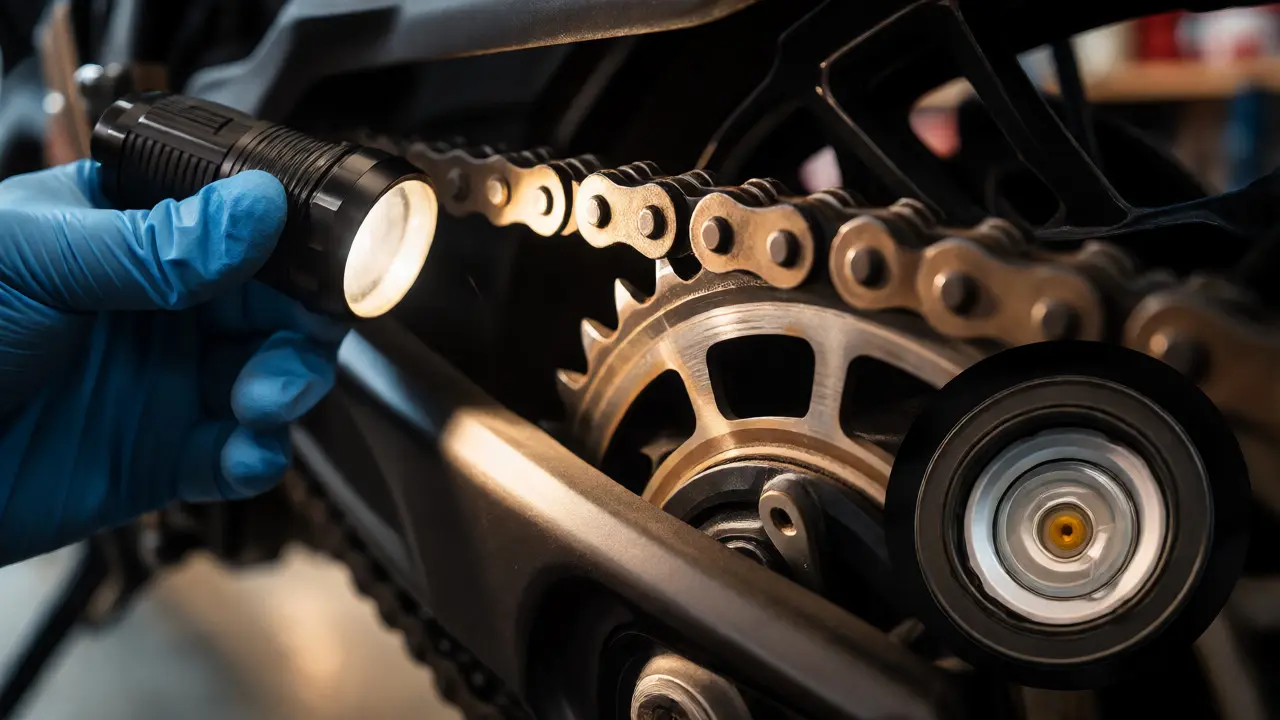
- Chain and Sprockets: Look for rust or stiff links. Worn sprockets have pointed teeth. Replacing both chain and sprockets costs £100-£200. Factor this in.
- Fluids: Open the oil cap. Milky residue indicates coolant leak-major issue. Check brake fluid color; dark brown means overdue change.
- Frame and Fairings: Look for weld marks or paint overspray near joints. This suggests crash repairs. Run your hand along the frame tubes for dents.
- Electronics: Test all lights, indicators, horn, and dash functions. On modern bikes, check for error codes. A flickering display could mean wiring issues.
- Test Ride: Listen for unusual noises. Does it pull to one side? Do brakes feel spongy? Ride it on different road surfaces to hear suspension knocks.
If the dealer refuses a test ride, walk away. No exceptions.

Financing and Hidden Costs
Dealers love financing deals. "0% APR for 24 months!" sounds great, but read the fine print. Sometimes, taking cash gives you a bigger discount than financing. Calculate the total cost. If paying cash saves you £800 but financing costs you £400 in interest, cash wins.
Also, budget for registration, tax, and insurance immediately. In the UK, VED (Vehicle Excise Duty) and MOT fees apply to used bikes. Insurance premiums vary wildly based on your age, location, and bike model. Get quotes before you buy. Don’t fall in love with a bike you can’t afford to insure.
Frequently Asked Questions
Are demo motorcycles worth the extra cost compared to dealer used?
Yes, if you plan to keep the bike long-term. Demos retain value better and come with fewer immediate maintenance needs. The small price premium pays off in reduced hassle and stronger resale value later.
Can I return a dealer used motorcycle if something breaks?
Usually no, unless it’s within a specific return window (rare) or covered by a statutory warranty. Most sales are "as is" or with limited dealer warranties. Always clarify the return policy before signing.
How many miles is too many for a used motorcycle?
It depends on the model. Small-displacement bikes (under 500cc) may struggle past 20,000 miles. Large-touring bikes (like Harley-Davidsons or BMWs) can easily exceed 50,000 miles with proper care. Maintenance history matters more than raw mileage.
Should I buy a demo bike with aftermarket parts installed?
Be cautious. Aftermarket parts might void remaining warranty coverage. Ask if the dealer will remove them and revert to stock parts before sale, or ensure the modifications are OEM-approved.
Is it safe to buy a used bike from a dealership vs. a private seller?
Dealerships offer consumer protection laws and sometimes warranties, which private sellers don’t. However, private sellers might offer lower prices. Weigh the security of a dealer against the potential savings of a private deal.
Comments
Jacob Baby Official
This entire article is a masterclass in misdirection. You are not buying a motorcycle, you are buying a liability wrapped in fiberglass and chrome. The author tries to paint demo bikes as this pristine, low-mileage utopia, but let’s be real: that bike was abused by every amateur with a learner's permit who wanted to feel like Valentino Rossi for ten minutes. They slammed the brakes into corners because they didn't know how to trail brake properly, they dumped the clutch at traffic lights until it smoked, and they likely dragged the pegs on a wet roundabout just to see if they could. And what does the dealer do? They polish the fairings, change the oil, and slap a 'demo' sticker on it to trick you into paying new-bike money for used-goods wear. It’s predatory marketing disguised as helpful advice. You’re inheriting someone else’s incompetence.
And don’t even get me started on the so-called 'dealer used' section. The idea that a dealership performs a 'basic safety inspection' is laughable. A basic safety inspection means they checked if the tires have air and if the headlight turns on. That’s it. They aren't opening the cases. They aren't checking valve clearances. They aren't looking for hairline cracks in the frame from that one time the previous owner dropped it at a gas station. You are gambling with your life and your wallet. The savings of 20-40% are illusory when you factor in the inevitable repair bill for a chain that’s been stretched to the limit or a battery that’s been slowly sulfating away because the previous owner left the key on overnight. This guide doesn't help you buy smart; it helps you buy blind.
September 22, 2026 at 19:37
Anthony Miller
I find the aggressive tone of the previous commenter somewhat misplaced, yet their core argument regarding mechanical opacity holds water. One must consider the psychological impact of ownership. When you acquire a demo unit, you are essentially purchasing a vehicle that has already experienced the 'honeymoon phase' abuse of test riders. These individuals often lack the finesse required for proper mechanical preservation. Consequently, the transmission and clutch assemblies suffer micro-trauma that is invisible to the naked eye but palpable under load. Furthermore, the financial logic presented here is flawed. Why pay a premium for a bike that has already depreciated its most significant value drop? The smart buyer waits. The smart buyer observes. The smart buyer understands that a motorcycle is not merely a mode of transport, but an extension of one's ego and social standing. To buy used without comprehensive history is to invite chaos into one's life. I personally insist on full service records, notarized, preferably by a third party, before I even consider sitting on a seat. Anything less is negligence.
September 23, 2026 at 08:48
Chris Neal
Actually, both of you are missing the technical nuance. Demo bikes are typically maintained under manufacturer contract, which means they receive scheduled services more frequently than private owners. A private owner might skip a 6k mile service, but a demo fleet manager cannot risk warranty claims. So while the abuse might be higher during test rides, the maintenance baseline is significantly higher. Dealer used bikes, conversely, rely entirely on the previous owner's integrity, which is statistically lower. Also, the resale value point is critical. A demo bike retains near-new value curves for the first two years. A heavily ridden used bike enters the steep depreciation cliff immediately. If you plan to flip it in 18 months, the demo is mathematically superior despite the higher entry cost. If you keep it forever, mileage matters less than condition. But condition is hard to assess. Hence, the factory-backed history of a demo reduces information asymmetry. It’s basic economics. Information asymmetry kills deals. Demos reduce it. Used bikes increase it. Simple.
September 23, 2026 at 20:17
john randall
honestly i think everyone is overthinking it. if it runs good and looks clean, ride it. dont stress about the micro-trauma stuff. just check the tires and fluids yourself. peace of mind comes from knowing your own limits, not the bike's history.
September 25, 2026 at 16:15
michelle veluz
THEY ARE HIDING THE TRUTH!!! Did you notice the currency symbols in the article? Pounds (£) in a US-centric discussion?? Who is really writing this? Is it a British spy operation trying to devalue our dollar by confusing us with foreign markets? Or maybe it’s just lazy editing, which is worse! It implies we don’t care enough to fix it!!
And don’t get me started on the 'test rider abuse' narrative. What if the test rider was a government agent testing durability for military contracts? We never know who sat on that seat! It could have been anyone! The paranoia is justified because the dealerships are part of the same system that sells us overpriced insurance and hidden fees. They want you distracted by 'mileage' while they ignore the structural fatigue caused by vibration frequencies that match specific urban road patterns. It’s all connected. Buy nothing until you’ve researched the background of the salesperson themselves!
September 26, 2026 at 05:18
Jeff Falcon
Well, I mean, look, I’m definitely not saying Michelle is wrong about the vibe, but I also think that maybe, just maybe, the currency thing is just because the source material was adapted from a UK blog post, which happens a lot these days with content mills, right? And honestly, while I agree that checking the tires is super important, I feel like John’s advice is a bit too chill for some people who might actually need that extra layer of security that a dealer warranty provides, especially if they’re new to riding and don’t know what a spongy brake feels like yet.
Also, regarding the demo vs used debate, I’ve found that negotiating the reconditioning fee is literally the easiest win you can get because dealers hate losing that small margin but will throw in a helmet or gloves to make you feel like you won, which is great for everyone involved, really, since accessories have huge markups anyway. So yeah, don’t be afraid to ask, silence is golden, but being polite and persistent gets you further than being aggressive, usually, unless you’re dealing with a really stubborn guy named Dave, but then again, Dave is always stubborn, isn’t he?
September 27, 2026 at 10:11
Savara Gunn
Hey everyone, just wanted to add a supportive perspective here. If you're feeling overwhelmed by all the technical jargon and fear-mongering, remember that motorcycles are meant to be fun!
If you're a beginner, don't let the fear of 'hidden damage' stop you from getting out there. Start with something forgiving like the MT-07 mentioned in the post. It's reliable, parts are cheap, and if you drop it, it's not a disaster. Focus on building your skills first. The perfect bike doesn't exist, but the right bike for *you* right now does. Trust your gut during the test ride. If it feels good, and the basics check out (tires, oil, no weird noises), go for it. You learn more from riding than from reading forums. Keep it simple and enjoy the process.
September 28, 2026 at 19:44
Tamara Miller
It is truly disappointing to see such shallow engagement with complex topics. Everyone wants to be a mechanic overnight, but nobody wants to do the actual work of verifying service records.
The fact that people are casually suggesting 'just ride it' shows a complete lack of responsibility. A motorcycle is a dangerous machine. Ignoring potential mechanical issues is not 'chill', it is reckless. And the conspiracy theorist comment? Please. We live in a society where facts matter. Currency symbols are trivialities compared to the moral failing of ignoring maintenance schedules. We should be ashamed of our collective laziness in researching before spending thousands. Do better. Read the manual. Check the VIN. Stop treating safety like a suggestion.
September 30, 2026 at 15:01
Alyson Karson
OMG YES!!! 😍🏍️💨
Just got my Ninja 650 demo last week and I am OBSESSED!! The mileage was only 80 miles and it felt brand new!! I saved like $1200 off MSRP which is HUGE!! 🤑
Ignore the haters who say demos are abused. My bike was perfectly tuned and the dealer gave me a fresh set of tires for free because I asked nicely!! Negotiation works best when you smile and bring donuts!! 🍩😂
Also, Chris Neal, you sound like a robot. Chill out. Life is short, ride fast. Don't overthink the 'micro-trauma' stuff. If it sounds smooth, it IS smooth. Go buy a bike today!! You deserve it!! 🙌🔥
October 1, 2026 at 12:50
Vishnu Vardhan Reddy M S
Haha, love the energy Alyson! But let me play devil's advocate here with a sarcastic twist. You saved $1200, but did you calculate the cost of your happiness per mile? Because if you crashed it next week due to overconfidence, that $1200 saving would look pretty silly against a $5000 repair bill. Just kidding (mostly).
But seriously, Vishnu here. From my experience, the 'demo' label is often just marketing fluff. In India, we call these 'first-hand' bikes, and they are often ridden harder than daily commuters because staff use them for errands too. Always inspect the footpegs for scratches and the exhaust tips for heat discoloration. Those tell the truth about how hard the bike was pushed. If the pegs are shiny, it wasn't ridden much. If they are scarred, run away. Good luck with the Ninja, hope it treats you well!
October 2, 2026 at 19:53
Susan Cole
I appreciate the diverse viewpoints shared here. It seems we have a spectrum ranging from deep skepticism to enthusiastic acceptance. Perhaps the middle ground lies in transparency. Dealers should provide detailed logs of who rode the demo units and for what purpose. Without that data, we are indeed guessing. For those comfortable with risk, used inventory offers great value. For those prioritizing certainty, demos are safer. Both paths are valid depending on individual circumstances. Let's respect each other's choices without judgment.
October 3, 2026 at 00:10