
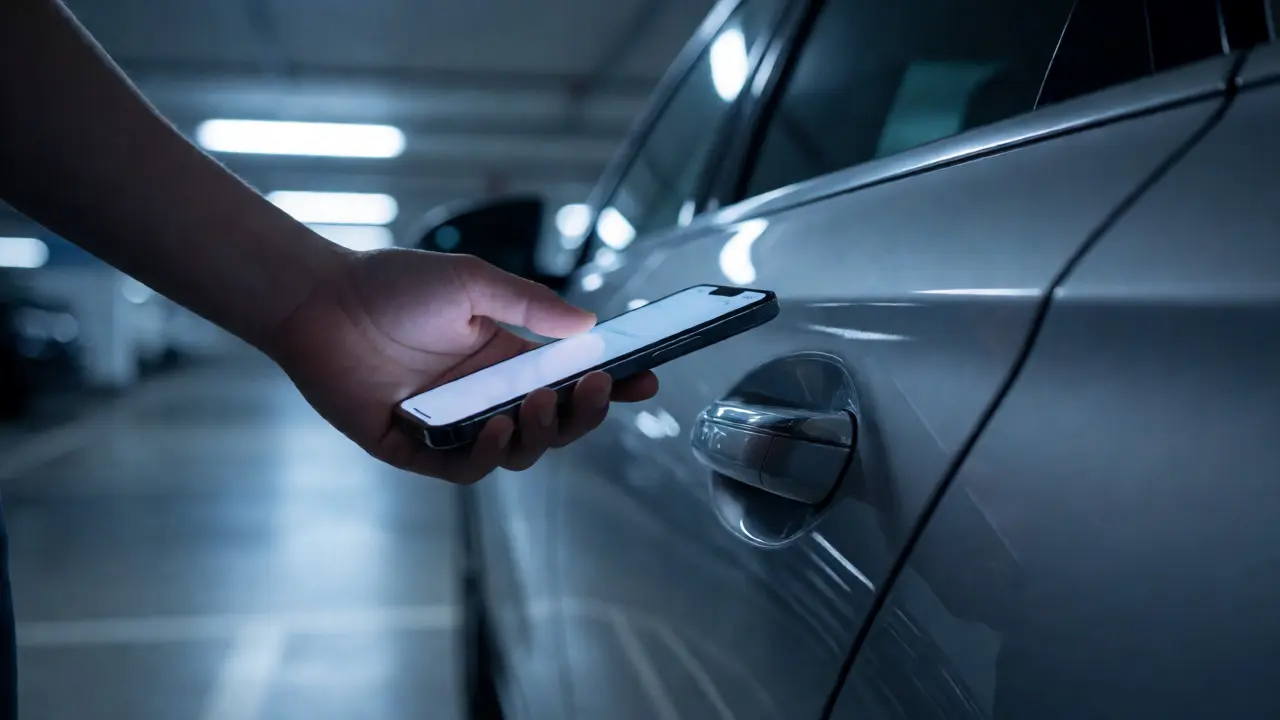
You walk up to your car, pocket full of groceries, hands sticky from a shopping bag. You don't fumble for a metal fob. You just touch the door handle, or maybe just stand near it, and the car unlocks. It feels like magic, but it's actually digital car keys, a technology that replaces traditional metal keys with smartphone-based access systems. This shift isn't just about convenience; it's a fundamental change in how we interact with our vehicles. But is trading a physical key for a piece of glass and silicon worth the potential security trade-offs? Let's break down exactly how this works, where the risks lie, and whether you should embrace the digital era of driving.
How Digital Car Keys Actually Work
At its core, a digital car key is a software application on your smartphone that communicates with your vehicle using wireless protocols. Unlike old-school radio frequency (RF) remotes that send a simple code, modern digital keys use more sophisticated methods. The two main technologies powering this are Near Field Communication (NFC) and Ultra-Wideband (UWB).
NFC requires close proximity-usually within a few centimeters. You tap your phone against a specific spot on the door handle or a reader inside the car. It's secure because the signal doesn't travel far, making it hard for someone standing ten feet away to intercept it. However, it's not seamless. You have to actively present your phone.
Ultra-Wideband (UWB) is the game-changer. It uses time-of-flight measurements to determine the exact distance between your phone and the car. This enables "passive entry," where the car unlocks automatically when you approach, without you even taking your phone out of your pocket. UWB also prevents relay attacks, a common vulnerability in older RF systems, by verifying that the phone is physically next to the car, not being extended by an antenna across a driveway.
The Convenience Factor: Why Drivers Love It
Let's be honest: losing your keys is annoying. Replacing them is expensive. With a digital key, those problems largely vanish. Your phone is something you already carry everywhere. If you forget your wallet, you're fine. If you lose your physical key fob, you can still drive.
- No More Fumbling: Hands full of bags? No problem. Walk up and open the door.
- Easy Sharing: Need to let a family member use your car? Send them a temporary digital key via an app. No need to meet up and hand over a physical object.
- Integration with Smart Homes: Some systems link your car unlock status to home lighting or heating, creating a seamless transition from house to car.
- Battery Backup: Most manufacturers include NFC backup modes. Even if your phone battery dies, you can often still unlock the car by tapping the phone against the door handle, powered by the small residual charge in the NFC chip.
This level of integration turns your car into an extension of your personal tech ecosystem. For many users, especially younger demographics who live on their phones, this is a non-negotiable feature. It reduces cognitive load. You don't have to remember to grab the keys; you just grab your phone.
Security Concerns: Is Your Phone a Vulnerable Key?
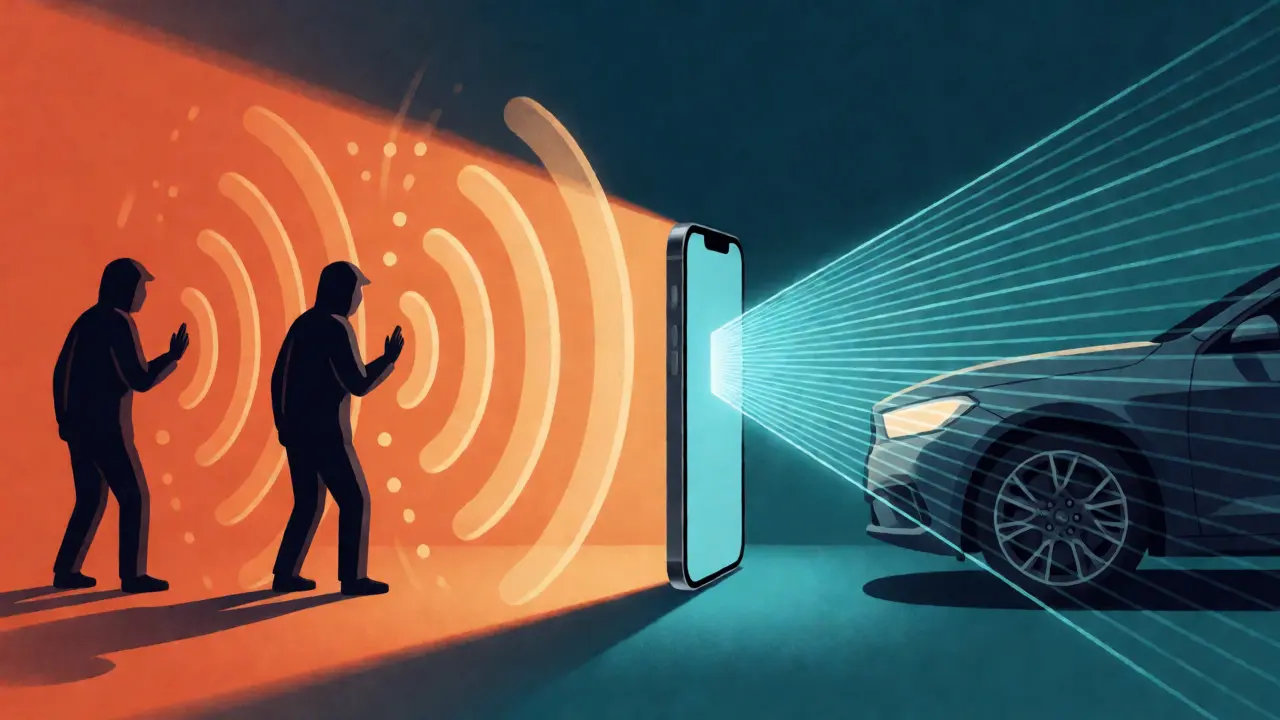
Convenience often comes at the cost of security. When your key is a physical object, theft requires stealing the object itself. When your key is data on a phone, the attack surface expands. Hackers can potentially exploit software vulnerabilities, Bluetooth flaws, or weak authentication protocols.
The most cited threat is the relay attack. Thieves use two devices: one near the car and one near the victim's phone (often inside their house). They amplify the signal, tricking the car into thinking the key is nearby. While UWB mitigates this significantly by measuring precise distance, not all cars use UWB yet. Many still rely on Bluetooth Low Energy (BLE), which is susceptible to these amplification tricks.
Another risk is device loss or theft. If someone steals your unlocked iPhone, they might have access to your car. However, manufacturers are countering this with multi-factor authentication. Apple's Digital Key, for example, requires Face ID or Touch ID to authorize the transaction. Android devices use similar biometric checks. This means a thief needs both your phone and your fingerprint or face to drive away.
| Feature | Traditional Metal Key | NFC Digital Key | UWB/BLE Digital Key |
|---|---|---|---|
| Convenience Level | Low (Manual) | Medium (Tap Required) | High (Passive Entry) |
| Security Risk | Physical Theft/Lock Picking | Low (Short Range) | Medium (Software/Relay Attacks) |
| Sharing Ease | Hard (Must Hand Over) | Easy (App Transfer) | Very Easy (App Transfer) |
| Battery Dependency | None | Phone Battery + NFC Chip | Phone Battery |
Manufacturer Implementations: Who Does It Best?
Not all digital key experiences are created equal. The implementation depends heavily on the manufacturer and the operating system of your phone.
Apple CarKey is currently the gold standard for iOS users. Launched initially with BMW and later expanded to Hyundai, Kia, Genesis, and Volvo, it integrates deeply with the Apple Wallet. You add the key like a credit card. When you approach a compatible car, the screen lights up, and you authenticate with Face ID. It works offline, meaning no internet connection is needed to unlock the car. This reliability is crucial.
Android Auto and manufacturer-specific apps vary more widely. Tesla has long used its own app-based key system, which relies heavily on Bluetooth. While convenient, some users report occasional delays or connectivity issues. Newer implementations from brands like Mercedes-Benz and Audi are adopting UWB standards to match Apple's reliability. The fragmentation here is real. An Android user with a Samsung Galaxy might have a different experience than one with a Pixel, depending on the car's compatibility list.
What Happens When Tech Fails?
Tech fails. Phones crash. Batteries die. Servers go down. What do you do then?
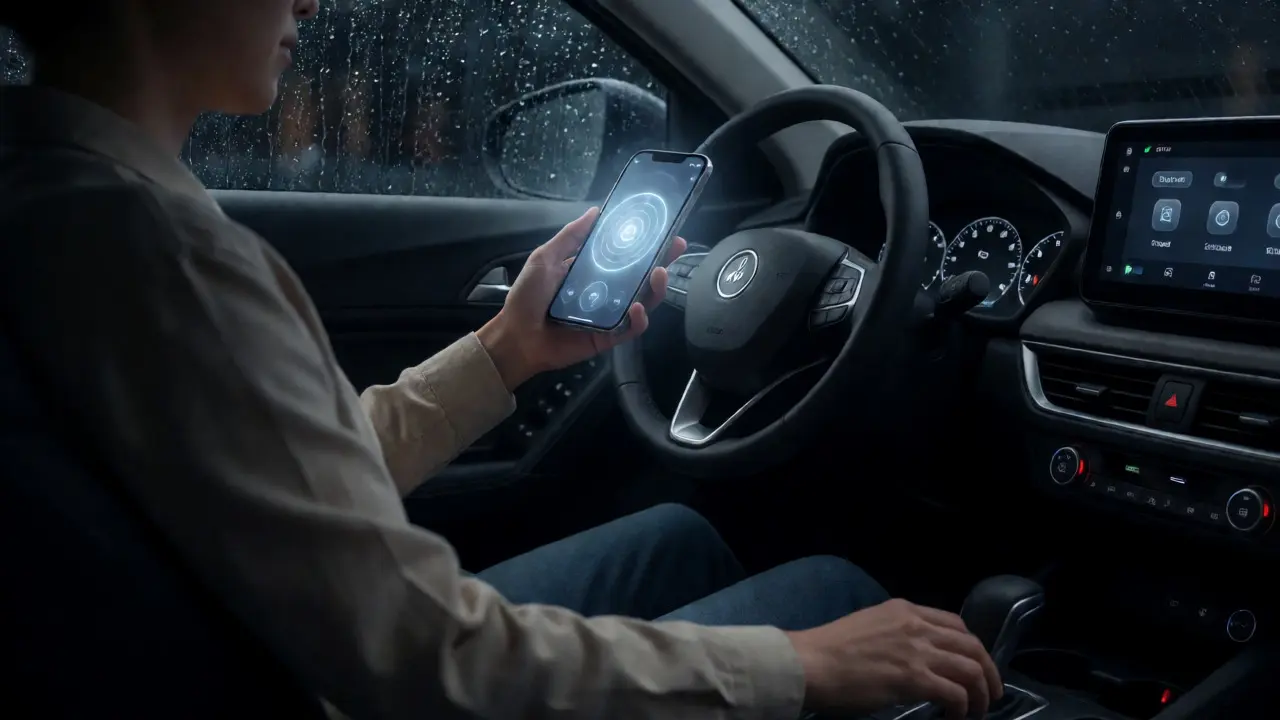
Most digital key systems include a fallback mechanism. Usually, this is an NFC backup. As mentioned earlier, even if your phone is dead, the NFC chip often retains enough power to transmit a passive signal. You tap the phone against the door handle, and the car wakes up. This is a critical safety net.
However, if the phone is completely broken or lost, you might need a physical backup key. Some manufacturers still provide a slim, emergency metal key hidden inside the fob or sold separately. Always check if your car supports this. Don't assume your phone is the only way in. Test the backup method before you find yourself locked out in the rain.
Future-Proofing Your Car Purchase
If you're buying a new car in 2026, digital keys are becoming a baseline expectation, not a luxury feature. But you should ask specific questions. Does the car support UWB? Does it work with both iOS and Android natively, or does it require a third-party app? Can you share keys easily?
Consider your lifestyle. If you frequently lend your car to others, the ability to send a temporary key via text message is invaluable. If you live in an area with high theft rates, prioritize cars with UWB technology to reduce relay attack risks. Check recent consumer reports for reliability ratings on specific models' keyless entry systems. Some early adopters reported glitches that required software updates to fix.
Digital keys represent a shift towards a more connected, less cluttered life. They remove friction from daily routines. But they also tie your mobility to your mobile device. Ensure you understand the dependencies before fully committing to a phone-only existence for your car.
Can I drive my car if my phone battery dies?
Yes, in most cases. Modern digital key systems typically include an NFC backup feature. Even if your phone screen is black and the battery appears dead, the NFC chip often retains a small amount of residual charge. By tapping your phone against the designated reader on the door handle or inside the cabin, you can usually unlock and start the car. However, this varies by manufacturer, so always test this feature while your phone is still working.
Are digital car keys safe from hackers?
They are generally very secure, but not invulnerable. Systems using Ultra-Wideband (UWB) are highly resistant to relay attacks because they measure precise timing and distance. Older Bluetooth-based systems are more susceptible to signal amplification hacks. Additionally, biometric authentication (Face ID, fingerprint) adds a layer of security, ensuring that a stolen phone cannot simply be used to drive the car without the owner's verification.
Can I share my digital car key with friends?
Yes, this is one of the biggest advantages. Most manufacturers allow you to share digital keys via their companion apps or through platforms like Apple Wallet or Android Wallet. You can set restrictions, such as limiting the speed or restricting access to certain times. This eliminates the need to physically hand over a key fob.
Do I still need a physical key fob?
It depends on the car model. Many newer vehicles still come with a physical emergency key, often hidden inside the digital key fob or stored separately. Some manufacturers are moving toward fully digital setups, but regulations and practicality often dictate keeping a mechanical backup. Check your owner's manual to see if your specific model includes a physical override.
What happens if I lose my phone?
If you lose your phone, you lose your primary key. You will need to use your physical backup key if available. If not, you may need to contact roadside assistance or the dealership to reset the digital key permissions remotely. Most apps allow you to revoke access from a lost device immediately, preventing unauthorized use.
Comments
Jacob Baby Official
Oh, look at us, trading our god-given right to hold a solid chunk of metal for the privilege of praying that our $1,200 glass rectangle doesn't decide to have an existential crisis in the middle of a Walmart parking lot. You think this is convenience? It's just another way for corporations to make you dependent on their servers and their software updates. I remember when a key was a key. It didn't need Wi-Fi. It didn't need a firmware patch. It just worked. Now you're standing there, holding your phone up like a sacrificial offering to the digital gods, hoping the Bluetooth handshake completes before your groceries melt or your patience evaporates. And don't even get me started on the 'security' aspect. Sure, UWB stops relay attacks, but what happens when some hacker in a basement figures out how to spoof the biometric data? Or better yet, what happens when Apple decides to change the API structure and breaks compatibility with your three-year-old Hyundai? We are willingly shackling ourselves to devices that break every two years. This isn't progress; it's planned obsolescence wrapped in a sleek user interface. You aren't safer. You're just more anxious. You're checking your battery percentage instead of your surroundings. You're worrying about server downtime instead of lock-picking. The irony is palpable. We spent decades trying to get away from wires and now we've replaced a simple mechanical link with a complex, fragile, cloud-dependent chain of dependencies that can snap at any moment. Enjoy your 'magic,' folks. Just don't cry when the magic runs out of juice.
August 31, 2026 at 08:51
john randall
It’s actually pretty handy once you get used to it.
I’ve been using the BMW implementation for about six months now and honestly haven’t had a single issue where I couldn’t get in. The sharing feature saved my marriage last month when I forgot my wife’s birthday present in the car and she needed to pick it up while I was at work. Sent her a temporary key via the app and she was in within seconds. No meeting up, no fob swapping. The dead battery thing works too, tapped my phone against the handle when it was at 1% and it opened fine. Maybe I’m just lucky but it seems reliable enough for daily driving.
September 1, 2026 at 21:03
Jeff Falcon
I completely agree with the point about the convenience factor being overstated by tech enthusiasts because, let's be real here, if you drop your phone in a puddle, you are literally stranded, whereas if you drop your keys, you might lose them but they don't short circuit instantly!!!
Also, the article glosses over the fact that not everyone has a smartphone, or at least not a smartphone with the specific hardware required for UWB, which creates a weird class divide in who gets to experience this 'seamless' entry...
And don't forget about the elderly drivers who might find the touch-to-open mechanism confusing compared to the tactile feedback of turning a physical key, which provides a certain level of sensory confirmation that something has actually happened...
September 3, 2026 at 13:01
Alyson Karson
Dude stop being so dramatic lol!! My phone never dies and if it does i have a power bank duh!!
The security stuff is legit though esp the relay attack part cause my neighbor got his car stolen last year and he only had bluetooth key so yeah uwb is def worth the extra cash dont skimp on it!!
September 3, 2026 at 14:33
Chris Neal
You're missing the technical nuance regarding NFC passive mode. Most modern phones utilize a secure element that retains charge for hours after the main battery fails, allowing for a tap-to-unlock function without powering the screen or OS. Furthermore, UWB uses time-of-flight ranging which makes signal amplification attacks physically impossible unless the attacker is within centimeters of the device, effectively neutralizing the relay attack vector described in the older BLE systems. The fragmentation mentioned is also decreasing as the Car Connectivity Consortium aligns standards across OEMs.
September 4, 2026 at 05:13
Vishnu Vardhan Reddy M S
Ahh yes, nothing says 'I am safe' quite like trusting a company that sells you ads based on your location history to keep your car locked. But hey, at least you can send a digital high-five to your friend when they borrow your car. How convenient that you don't have to actually see them. Truly the pinnacle of human connection.
September 4, 2026 at 20:55
Kyle Ware
Great overview
One thing to add is that many insurers are starting to offer discounts for vehicles with digital keys and telematics integration since they can verify driver behavior more accurately than traditional black boxes
Also check if your specific model supports emergency access via smartwatch as some newer implementations allow watch-based unlocking as a secondary backup which adds another layer of redundancy beyond just the phone
September 5, 2026 at 20:35
Iva Grekova
This is such a balanced take! I love the breakdown of the tech specs. It really helps to understand why UWB is superior to BLE for security reasons. I was worried about losing my phone but knowing that the biometric authentication adds a layer of protection makes me feel much more comfortable switching over. Thanks for writing this!
September 7, 2026 at 08:24