

You walk into the dealership with a price tag in mind. The salesperson slides a sheet across the desk showing a monthly payment that looks manageable. But what if I told you that the amount of cash you hand over right now-the down payment-is actually the single most powerful lever you have to control your interest rate and loan length? It’s not just about lowering that first month’s bill. It’s about rewriting the entire financial structure of the deal.
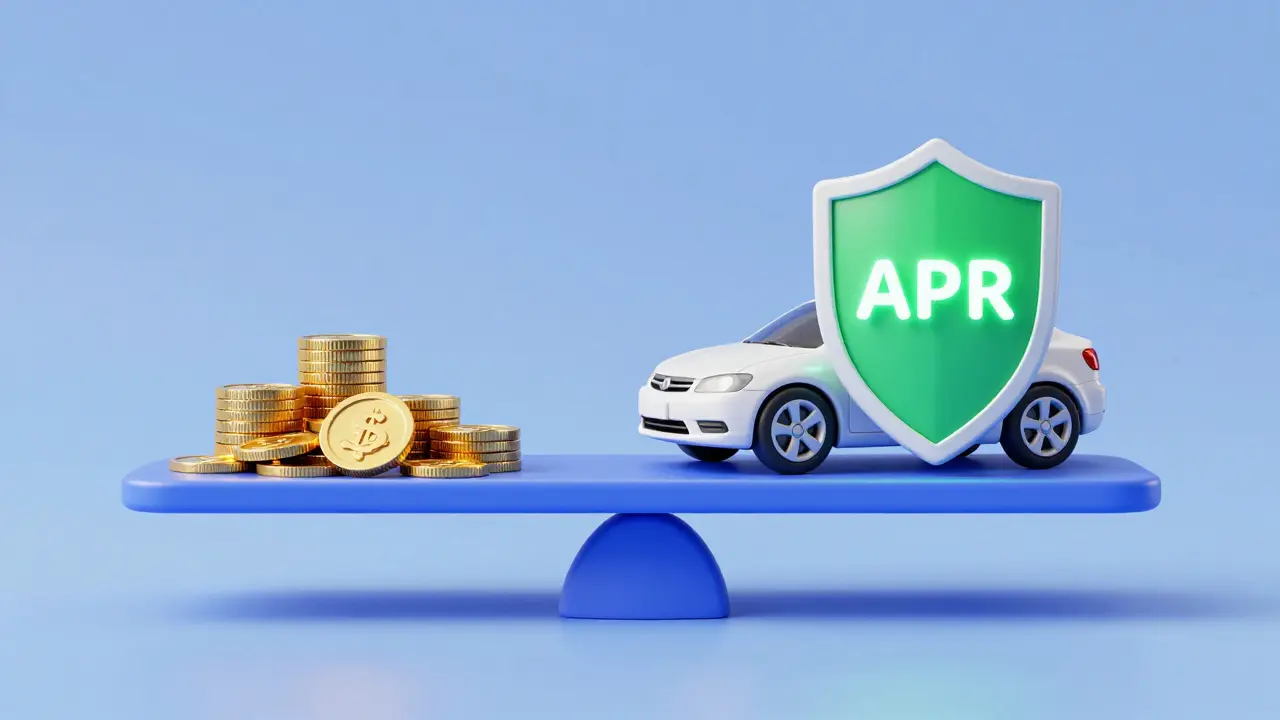
Most buyers treat the down payment as a hurdle to clear so they can get on the road. They think it’s just money out of pocket. In reality, it’s a signal to the lender. A larger down payment tells the bank you are less risky. That trust translates directly into lower Annual Percentage Rates (APR) and shorter, cheaper loan terms. Let’s break down exactly how your cash upfront changes the math, and why saving an extra thousand dollars might save you thousands in the long run.
The Math Behind the Magic: Loan-to-Value Ratio
To understand why lenders care so much about your down payment, you need to look at one specific metric: the Loan-to-Value (LTV) ratio. This is the percentage of the car’s value that you are borrowing. If you buy a $30,000 car and put $6,000 down, you are borrowing $24,000. Your LTV is 80% ($24,000 divided by $30,000).
Lenders love low LTV ratios. Why? Because if you decide to walk away from the loan or if the car gets totaled in an accident, the lender loses less money. When your LTV drops below certain thresholds-usually 100% or even 90%-you often qualify for "prime" or "super prime" interest rates. These are the best deals available. Conversely, if you finance 100% or more of the car’s value (which happens when you roll taxes and fees into the loan), your LTV spikes. The lender sees higher risk and charges you a higher APR to compensate.
Think of it like insurance for the bank. Your down payment is their safety net. The thicker the net, the cheaper they make the loan for you.
How Down Payments Directly Impact APR
The relationship between down payment size and APR isn’t always linear, but it is significant. Here is what typically happens in the current market:
- Less than 10% down: You are likely paying the highest tier of interest rates. You are also at high risk of being "upside down," meaning you owe more than the car is worth. This negative equity makes refinancing nearly impossible later.
- 10% to 20% down: This is the sweet spot for many buyers. You’ve reduced the principal enough to drop into a better interest rate bracket. You also build immediate positive equity, giving you leverage if you ever need to sell or trade in.
- More than 20% down: You may see diminishing returns on the APR reduction, but you drastically reduce the total interest paid over the life of the loan because the principal balance is smaller. You are also eligible for the shortest loan terms, which further cuts costs.
In 2026, with interest rates fluctuating based on Federal Reserve policies, locking in a lower APR through a substantial down payment is one of the few ways borrowers can hedge against rising costs. A difference of just 1.5% in APR on a $25,000 loan can save you hundreds of dollars in interest alone.
Shortening the Loan Term: The Hidden Benefit
We talk a lot about interest rates, but the loan term-the number of months you pay-is equally critical. Many dealers push 72-month or even 84-month loans to keep monthly payments low. This is dangerous. The longer the term, the more interest you pay, and the faster your car depreciates relative to your loan balance.
A larger down payment allows you to choose a shorter term without blowing up your monthly budget. For example, if you buy a $30,000 car:
- With $0 down, a 60-month loan might require a payment of $650/month.
- With $5,000 down, that same 60-month loan drops to roughly $540/month.
- Or, you could take that $5,000 down and shorten the term to 48 months, keeping the payment similar but owning the car outright two years sooner.
Shorter terms mean less time for things to go wrong. Mechanical failures, job loss, or changes in family status hit harder when you’re locked into a five-year contract. By using a down payment to secure a three- or four-year loan, you gain flexibility and freedom.
Avoiding the Upside-Down Trap
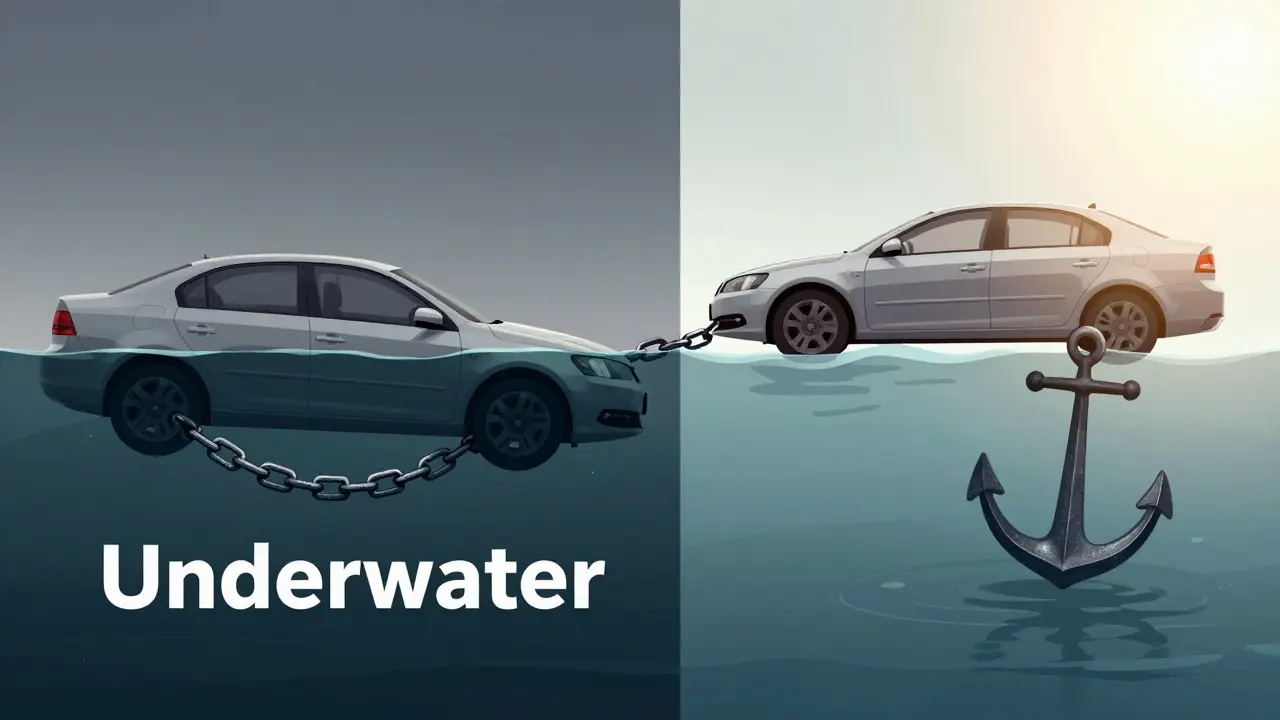
Cars depreciate fast. The moment you drive off the lot, a new car loses about 10% of its value. Used cars lose value too, just slightly slower. If you have a small down payment, you are underwater immediately. This is called negative equity.
Why does this matter? If you need to sell the car or if it’s stolen, your insurance payout will only cover the actual cash value of the vehicle. If you owe more than that value, you still owe the difference to the bank. This gap can be thousands of dollars. A down payment of at least 20% creates a buffer against this initial depreciation cliff, ensuring you stay in the black from day one.
| Down Payment | Loan Amount | Estimated APR* | Monthly Payment (60 mo) | Total Interest Paid |
|---|---|---|---|---|
| $0 (0%) | $30,000 | 7.5% | $596 | $5,760 |
| $3,000 (10%) | $27,000 | 6.5% | $526 | $4,560 |
| $6,000 (20%) | $24,000 | 5.5% | $459 | $3,540 |
| $9,000 (30%) | $21,000 | 4.5% | $391 | $2,460 |
Credit Score Synergy
Your down payment doesn’t work in isolation. It interacts heavily with your credit score. If you have excellent credit (750+), you might already qualify for low rates even with a smaller down payment. However, if your credit is fair (600-650), a large down payment becomes your best tool to bridge the gap. Lenders are more willing to offer competitive terms to someone with average credit if that person puts a significant chunk of cash down. It shows commitment and reduces the lender’s exposure.
Don’t underestimate the power of combining a solid credit profile with a strategic down payment. It’s the combination that unlocks the best "super prime" rates, often reserved for the top 10% of borrowers.
Practical Tips for Maximizing Your Down Payment
If you don’t have a pile of cash ready, here is how to position yourself for a better deal:
- Sell your old car privately: Dealerships offer less for trade-ins because they need to resell the car at a profit. Selling privately nets you more cash to put toward the new purchase, effectively increasing your down payment.
- Roll back extras: Dealers try to add extended warranties, paint protection, and gap insurance to the loan. These increase the financed amount and hurt your LTV. Pay for these separately or skip them entirely to keep your loan principal low.
- Use a gift strategically: Some family members may be willing to gift you money for a down payment. Ensure the lender accepts gifted funds and get the paperwork right to avoid any hiccups.
- Target used vehicles: Buying a certified pre-owned (CPO) car means the steepest depreciation has already happened. You can put down less in absolute dollars but achieve a healthier LTV ratio compared to buying new.
When a Small Down Payment Makes Sense
Is there ever a reason to put down less than 10%? Yes, but only under specific circumstances. If you have a high-yield savings account earning 5% and you can only find auto loans above 8%, it might make mathematical sense to keep your cash invested and pay the higher interest. However, this is a narrow window and requires discipline. Most people do not have access to such favorable investment returns, nor do they have the discipline to resist spending the cash. For the vast majority, putting cash down is the smarter move.
Another scenario is if you plan to sell the car within a year. In that case, you aren’t worried about long-term interest accumulation. But remember, selling quickly usually means accepting a lower resale price, which might eat into any interest savings you thought you gained.
What is the ideal down payment for a car loan?
The ideal down payment is generally 20% for a new car and 10% for a used car. This helps you avoid being upside down on the loan and qualifies you for better interest rates.
Does a larger down payment lower my monthly payment?
Yes. A larger down payment reduces the principal amount you borrow, which directly lowers your monthly payment. It can also lower your interest rate, further reducing the payment.
Can I roll my trade-in into the down payment?
Yes, the value of your trade-in is typically applied as a down payment. However, if you owe more on the trade-in than it’s worth, that negative equity is added to the new loan, which increases your LTV and hurts your rate.
How does a down payment affect my APR?
A larger down payment lowers your Loan-to-Value (LTV) ratio, signaling lower risk to the lender. This often results in a lower Annual Percentage Rate (APR), saving you money over the life of the loan.
Is it better to put more money down or choose a shorter loan term?
Ideally, you should do both. Putting more money down reduces the principal, while choosing a shorter term reduces the time interest accrues. Together, they minimize total cost and help you own the car faster.