
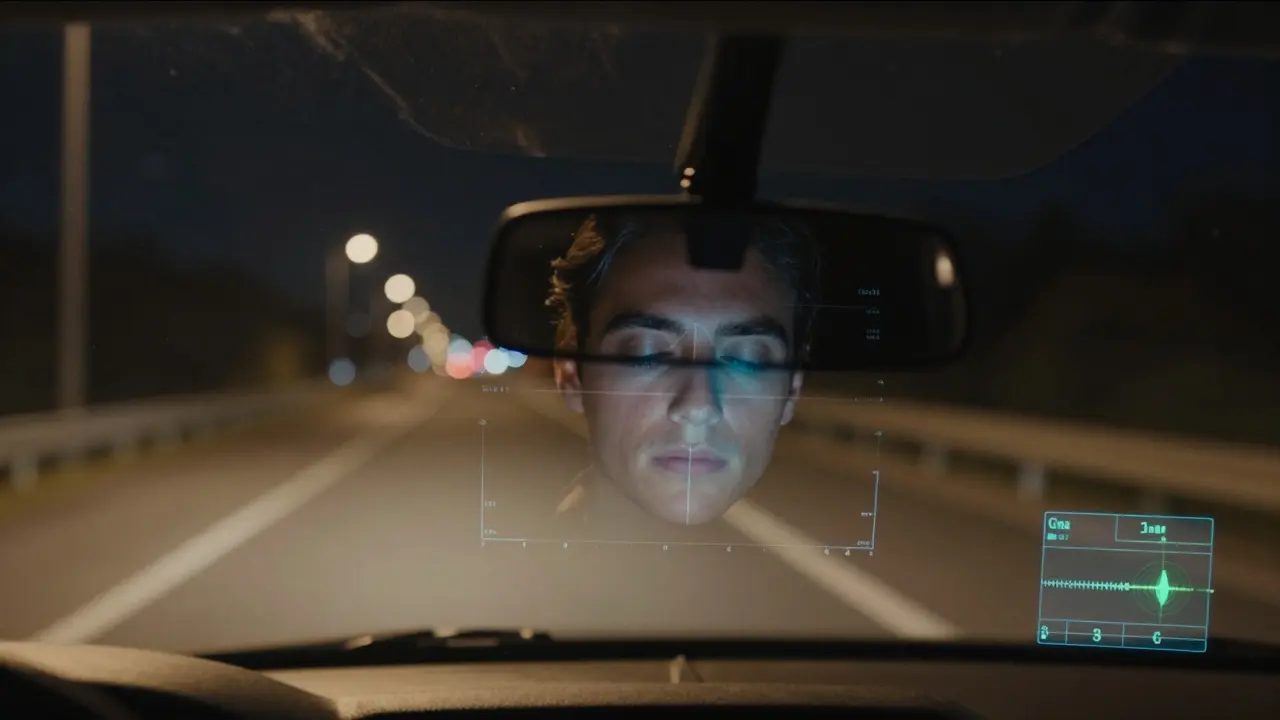
Every year, over 100,000 crashes in the U.S. alone are caused by drivers falling asleep at the wheel. Many of these happen on quiet highways, late at night, or after long shifts-moments when you think you’re fine, but your body is begging for rest. That’s where modern driver monitoring systems come in. They don’t just watch the road-they watch you.
How Drowsiness Detection Works
Driver monitoring systems use a mix of cameras, sensors, and software to spot signs of fatigue before you even realize you’re struggling. Most systems have a small infrared camera mounted near the steering wheel or dashboard. It tracks your face: where your eyes are looking, how often you blink, how long your eyelids stay closed, and even the tilt of your head.
It’s not just about closed eyes. If you’re drowsy, your gaze drifts. You might stare blankly ahead, or your head starts nodding forward. Some systems also track steering input-sudden corrections, weaving between lanes, or inconsistent speed changes. These aren’t random mistakes. They’re signals your brain is shutting down.
Companies like Tesla, Mercedes-Benz, and Ford have been using this tech for years. In 2024, the U.S. National Highway Traffic Safety Administration (NHTSA) made driver monitoring systems mandatory in all new passenger vehicles sold in the U.S. starting in 2026. That means every new car you buy next year will come with some version of this safety net built in.
What Happens When You’re Detected as Tired?
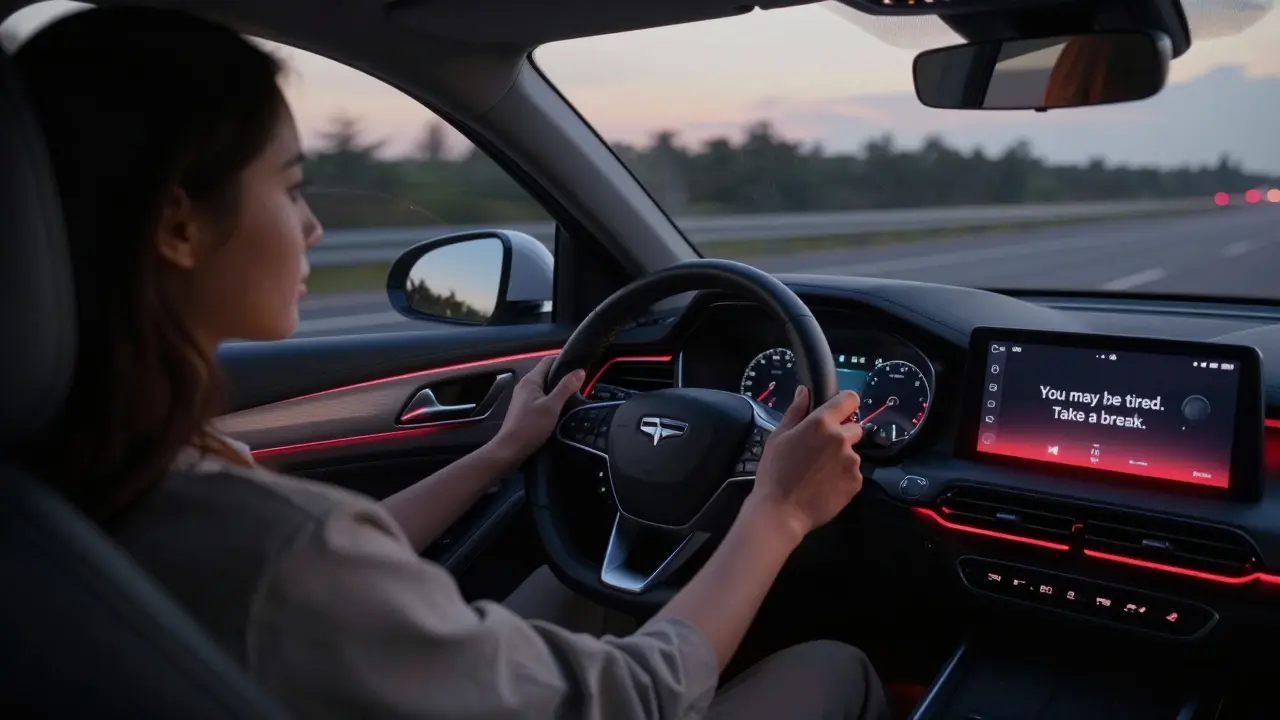
It’s not just a beep and a warning light. Modern systems respond in stages. First, a gentle chime or vibration in the seat. Then, a message pops up on the dashboard: “You may be tired. Take a break.” If you keep driving, the system gets louder-flashing lights, more urgent tones, even voice prompts like, “Please pull over now.”
Some systems go further. In high-end models like the BMW 7 Series or Volvo XC90, the car will slow down gradually, activate hazard lights, and even steer gently to the side of the road if you don’t respond. It doesn’t stop the car completely-because that could be dangerous-but it does everything possible to get you to safety.
These systems don’t just react. They learn. Over time, they adapt to your normal behavior. If you normally blink once every 4 seconds and suddenly it’s once every 8 seconds, the system notices. If you’re usually steady on the wheel but start making small, erratic movements, it flags it. That’s why false alarms are dropping-these aren’t just motion detectors. They’re pattern recognizers.
Real-World Impact: Numbers Don’t Lie
A 2023 study by the AAA Foundation for Traffic Safety tracked over 1,200 drivers using in-car monitoring systems. The results were clear: drivers with active drowsiness detection were 50% less likely to experience a near-miss due to fatigue. In one group, drivers who ignored the alerts had a 3.7 times higher chance of drifting out of their lane than those who responded.
It’s not just about avoiding accidents. It’s about reducing the silent killer that doesn’t show up on police reports. Many drowsy driving crashes aren’t caused by drunk drivers or speeding. They’re caused by people who thought they were “just tired,” not “too tired to drive.” That’s the gap these systems fill.
Limitations and What They Can’t Do
These systems aren’t perfect. They can’t detect fatigue caused by medication, illness, or sleep apnea unless it changes your physical behavior. If you’re wearing sunglasses, a hat, or a scarf that covers your face, the camera might lose track. Some older systems struggle in bright sunlight or at night with poor lighting.
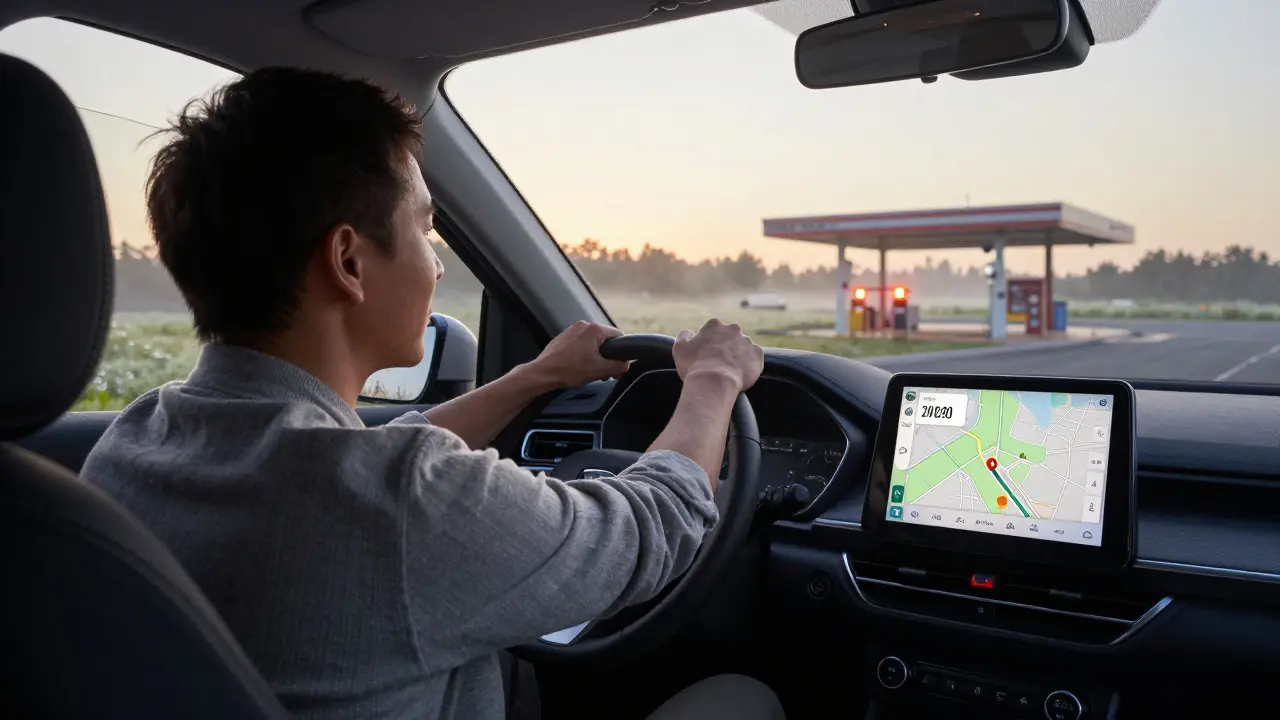
And here’s the big one: they can’t force you to stop. A system can scream at you, but if you’re stubborn-or just too exhausted to care-it won’t save you. That’s why the best systems pair drowsiness detection with other features. For example, if your car detects you’re tired, it might suggest the nearest rest stop using GPS, or even call your emergency contact if you’re in a remote area.
Also, these systems don’t replace good sleep. If you pulled an all-nighter and then drove 400 miles, no camera is going to fix that. The tech is a backup. Not a replacement.
How to Know If Your Car Has It
If you bought a car in 2023 or later, it likely has some form of driver monitoring. Look for these names in your owner’s manual or settings menu:
- Driver Attention Alert (Mercedes-Benz)
- Driver Alert System (Volvo)
- Driver Monitoring System (BMW)
- Forward Collision Warning with Drowsy Driver Detection (Honda)
- Driver Monitoring (Tesla, Ford, Hyundai)
It’s usually turned on by default. But check your infotainment screen-some systems let you turn off alerts or adjust sensitivity. Don’t. Keep it on. Even if you think you’re a good driver, fatigue doesn’t care about your confidence.
What to Do When the Alert Goes Off
When the system warns you, treat it like a smoke alarm. Don’t ignore it. Don’t crank up the music. Don’t sip another energy drink. Here’s what actually works:
- Find a safe place to pull over-rest areas, gas stations, parking lots. Avoid stopping on the shoulder unless it’s an emergency.
- Get out of the car. Walk for 5-10 minutes. Move your body. Get blood flowing.
- Drink water. Dehydration makes fatigue worse.
- Have a small snack with protein-nuts, yogurt, or a turkey sandwich. Sugar gives you a quick spike and then a crash.
- If you can, take a 20-minute nap. Set an alarm. That’s enough to reset your brain without falling into deep sleep.
That’s it. No magic pills. No caffeine overload. Just a short pause and your body will thank you.
The Bigger Picture: Safety Is a Team Effort
Driver monitoring isn’t just about the car watching you. It’s part of a larger shift in automotive safety. Systems like automatic emergency braking, lane-keeping assist, and blind-spot monitoring all work together. Drowsiness detection is the final piece-the one that looks inward instead of outward.
And it’s not just for long-haul truckers or night drivers. Parents driving kids to school after a sleepless night. Nurses heading home after a 12-hour shift. Students driving back from college. These are the people who don’t think they’re at risk. That’s exactly who these systems are built for.
The goal isn’t to scare you. It’s to give you a second chance. A quiet nudge when you’re too tired to notice you’re falling asleep. And if you’re reading this, you’re already thinking ahead. That’s half the battle won.
Can driver monitoring systems work if I wear glasses or sunglasses?
Yes, most modern systems are designed to work with glasses. Sunglasses can reduce accuracy in bright light, but infrared cameras can still detect eye movement and blink patterns through most lenses. If your system keeps giving false alerts while wearing sunglasses, try adjusting the sensitivity in your car’s settings or consider removing them if it’s safe to do so.
Do these systems drain the car’s battery?
No. Driver monitoring systems use very little power. The camera and sensors are low-energy and only activate when the car is running. Even if left on during parking mode (in some models), they draw less than 0.1 amps-far less than your phone charger. Battery drain isn’t a concern.
Can I disable the drowsiness alert?
Yes, most systems let you turn off alerts in the vehicle settings. But doing so removes a critical safety layer. If you disable it, you’re relying only on your own judgment-which is exactly what gets people into trouble. Only disable it if you have a medical reason and understand the risks.
Are these systems reliable for people with medical conditions like sleep apnea?
They can help, but they’re not a substitute for treatment. If you have sleep apnea or another condition that causes daytime fatigue, the system may detect signs of drowsiness more often. That’s a signal to consult your doctor. Use the alert as a reminder to manage your health-not as a fix.
Will these systems work in cold weather or snow?
Yes. The cameras are housed inside the car and protected from weather. Snow or ice on the windshield won’t affect them as long as your defroster is working. If your windshield is heavily fogged or covered, the system may temporarily disable itself and display a warning. Clean your windshield regularly in winter.
Next Steps: What to Do Now
If you drive regularly, check if your car has a driver monitoring system. If it does, make sure it’s turned on. If it doesn’t, consider adding an aftermarket device-some plug into the OBD-II port and use a small camera to monitor your face. They’re affordable, under $100, and can be installed in minutes.
And if you’ve ever nodded off behind the wheel-even once-don’t wait for a system to warn you. Talk to your doctor. Track your sleep. Don’t treat fatigue like a minor inconvenience. It’s a silent hazard. And with the right tools, you don’t have to risk it.
Comments
Nathaniel Petrovick
Man, I never thought about how much my car is watching me. I had no idea it could tell when I'm tired just by how I blink. Last week I was driving home from work and the seat vibrated outta nowhere. Thought it was a glitch. Turned out I'd been zoning out for like 20 seconds. Scared the hell outta me. Now I actually listen when it talks.
February 1, 2026 at 02:24
Honey Jonson
soooo i got one of those aftermarket things for my 2018 corolla and it changed my life?? like i used to think i was fine after 2 hours but nope. it beeped and i pulled over and took a 15 min nap and felt like a new person. also i stopped drinking coffee after 3pm. its wild how much your body tells you if you just listen.
February 1, 2026 at 07:35
Sally McElroy
Let me be clear: this isn't innovation. It's desperation. We've allowed ourselves to become so chronically sleep-deprived, so addicted to productivity, so disconnected from our biological limits that we need a machine to tell us when we're about to kill ourselves. And now, the government mandates it? That's not safety. That's societal collapse dressed up as a feature.
February 2, 2026 at 17:14
Destiny Brumbaugh
Finally! Took long enough. America's been letting lazy drivers kill people for decades. You think you're tough driving 14 hours on 3 hours sleep? Nah. You're a liability. This tech is long overdue. If you don't like it, maybe stop pretending you're above the rules. This ain't Europe where everyone naps in the backseat. We need enforcement. Not excuses.
February 2, 2026 at 20:01
Aimee Quenneville
So... we're now trusting a $300 camera to keep us alive instead of, I dunno, maybe getting actual sleep? Cute. I'll believe it when my car pulls over for me after I've been awake for 36 hours. Until then, I'll take my chances with caffeine and questionable life choices. Also, I hate when systems assume I'm tired because I'm looking at my phone. I'm just checking the time, not dying.
February 4, 2026 at 02:45
Cynthia Lamont
Ugh. Another one of these "tech saves you" fairy tales. Let's be real - the system can't detect if you're on Adderall, or if you're just an idiot who thinks "I'm fine" means "I'm not dead yet." And don't get me started on the false positives. My car flagged me for being tired because I yawned once. I was laughing. Not sleeping. This is why we can't have nice things.
February 4, 2026 at 06:56
Kirk Doherty
My truck has it. Turns on by default. Never turned it off. Haven't gotten a single alert. Probably because I nap before long drives. Still, good to know it's there if I ever slip up.
February 5, 2026 at 03:25
Dmitriy Fedoseff
As someone who drives across Canada every winter, I’ve seen too many accidents caused by people thinking they’re invincible. This tech doesn’t replace responsibility - it reminds us we’re human. But I’ve also seen drivers ignore the alerts and then blame the car. The system isn’t the problem. The mindset is.
February 6, 2026 at 19:16
Meghan O'Connor
Did you know that 70% of drowsy driving incidents occur between 2am and 6am? And yet, the system only works when the car is moving. So if you're parked at a rest stop, asleep, it doesn't care. Brilliant. Just brilliant. We're automating safety while ignoring the root cause: society's complete disregard for rest.
February 7, 2026 at 04:13
Morgan ODonnell
I used to think these systems were overkill. Then I drove home after my daughter's birth and the car warned me. I didn't even realize I'd been nodding. Pulled over. Slept 20 minutes. Got home safe. Still don't like being monitored, but... thanks, car.
February 8, 2026 at 08:39
Liam Hesmondhalgh
So now my car is my mom? I pay 30k for a vehicle and it tells me when to nap? Next thing you know it's gonna check my blood sugar and remind me to call my therapist. This isn't progress. This is infantilization. Just let me die in peace.
February 9, 2026 at 08:03
Patrick Tiernan
Just turned off the alert. My car's not my babysitter. If I'm tired I know it. No need for some fancy camera judging my eyelids. Plus, I've got a whole playlist of 90s rock to keep me awake. You think a chime's gonna beat "Smells Like Teen Spirit"? Please.
February 10, 2026 at 06:30
Patrick Bass
Just checked my 2023 Honda. It’s on. Didn’t even know I had it. Will keep it on. Better safe than sorry. Also, the part about protein snacks? Spot on. Sugar crash is real.
February 11, 2026 at 18:21