
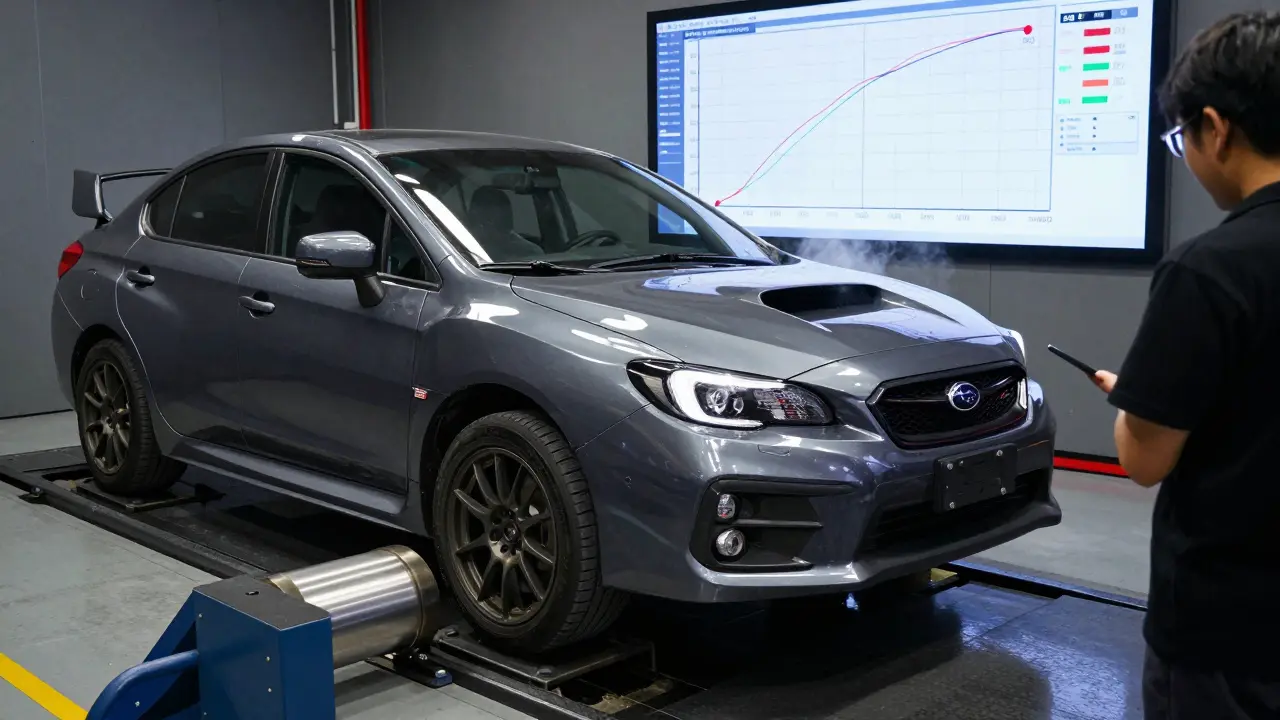
When you tweak your engine-swap the exhaust, upgrade the intake, or flash a new tune-you want to know if it actually made a difference. Guessing won’t cut it. That’s where dyno testing comes in. A dynamometer, or dyno, measures exactly how much power your engine produces at the wheels. It’s the only way to prove whether that $500 upgrade actually added horsepower-or just made your car louder.
What Dyno Testing Really Measures
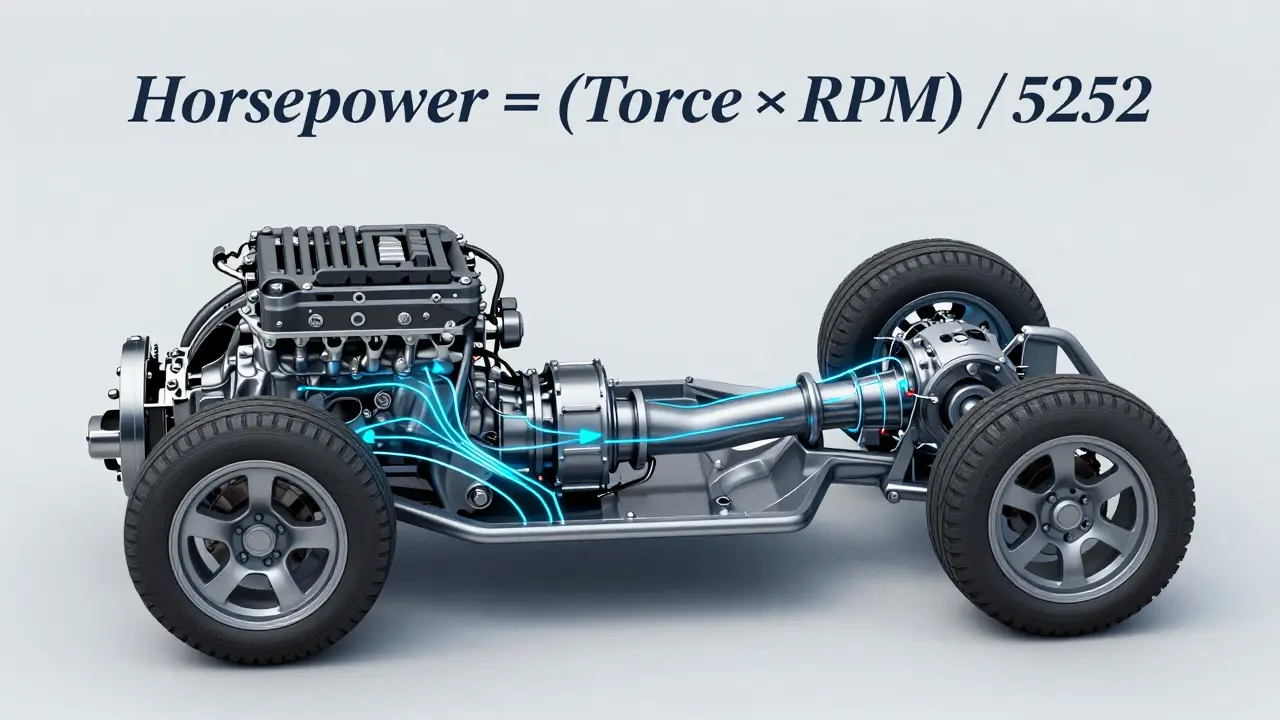
Dyno testing doesn’t measure engine output directly. It measures torque and RPM at the wheels, then calculates horsepower using a simple formula: Horsepower = (Torque × RPM) / 5252. This gives you real-world numbers that include drivetrain losses. A car making 300 horsepower at the crank might only put down 260 at the wheels, depending on the transmission, differential, and even tire grip.
There are two main types of dynos: chassis dynos and engine dynos. Most tuners and shops use chassis dynos because they test the whole car as it sits-tires, transmission, and all. Engine dynos, which require removing the engine, are rare outside of factory labs and high-end race shops. For street cars and modified vehicles, chassis dynos are the standard.
Why Your Dyno Results Might Be Wrong
Not all dyno numbers are created equal. A result from a poorly calibrated machine, run in the wrong gear, or with incorrect tire pressure can be misleading. Here’s what actually affects accuracy:
- Temperature and humidity: Air density changes how much oxygen the engine can burn. Dyno software compensates for this using standard corrections (SAE J1349 or ISO 16680), but only if the settings are right.
- Tire pressure: Low pressure increases rolling resistance, killing your numbers. Always set tires to the manufacturer’s recommended pressure before testing.
- Gear selection: You should test in the gear that gives the highest torque multiplication-usually 3rd or 4th gear for most cars. Testing in 1st gear can cause wheel spin and inaccurate readings.
- Rolling resistance: If the dyno rollers are dirty or the tires are worn, friction increases and lowers your numbers.
Reputable shops will show you the correction factor applied. If they don’t, ask for it. A result without correction is just a number-it’s not comparable to anything else.
How to Spot Real Performance Gains
Let’s say you install a cold air intake and get a dyno run. You see 270 hp before and 278 hp after. That’s an 8-hp gain. Sounds good? Maybe. But here’s the catch: dyno results vary by ±3-5 hp even on the same machine, same day, same car. That means your 8-hp gain could be noise.
To know you’re seeing real gains, you need:
- Consistent conditions: Same day, same temperature, same tire pressure, same dyno.
- Multiple runs: Do at least three runs before and after the mod. Take the average of the best two.
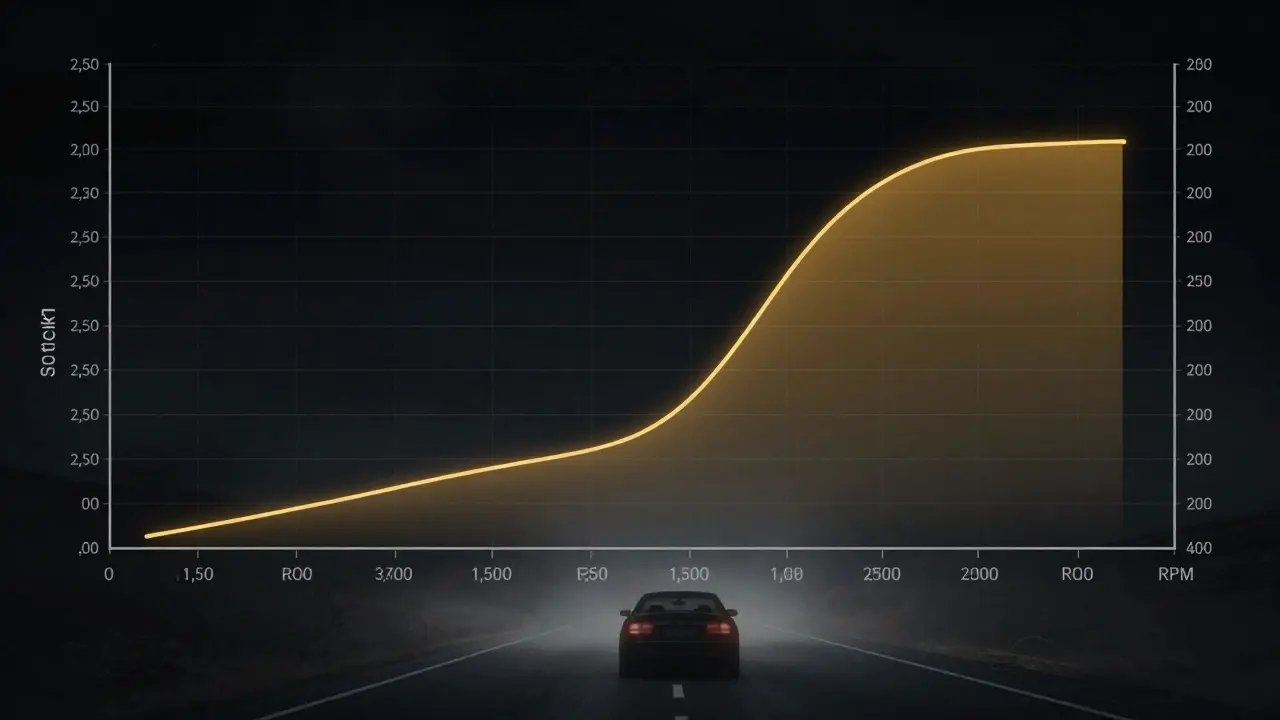
- Compare torque curves, not just peak numbers: A tweak might not raise peak horsepower but could smooth out the curve between 3,000 and 5,000 RPM-where you actually drive most of the time.
For example, a stage 1 tune might only add 10 hp at the top end but add 25 lb-ft of torque between 2,500 and 4,500 RPM. That’s where you feel the difference-faster overtakes, less gear shifting, better throttle response.
What Gains Are Realistic?
Don’t believe the hype. Online forums claim a $200 air filter adds 50 hp. That’s fantasy. Realistic gains from common mods:
- Cold air intake: 5-12 hp, mostly in the mid-range
- Performance exhaust (cat-back): 8-15 hp, more noticeable in turbocharged engines
- Performance chip/tune: 15-40 hp, depending on the engine and factory tune
- Upgraded turbocharger: 50-150+ hp, but requires supporting mods
- High-flow catalytic converter: 5-10 hp on turbo cars, often less on naturally aspirated
These numbers assume the car was stock and running properly. If your engine was already running poorly-clogged injectors, bad spark plugs, low compression-then fixing those issues will give you bigger gains than any aftermarket part.
When Dyno Testing Isn’t Worth It
Dyno testing isn’t magic. It’s not needed for every mod. Skip it if:
- You’re just replacing worn parts (spark plugs, air filter, oxygen sensors) and your car runs fine.
- You’re doing a cosmetic upgrade (wheels, suspension lowering, decals).
- You’re on a tight budget and the mod is purely for sound (loud exhaust).
But if you’re tuning for performance-especially with a custom ECU flash, forced induction, or engine internals-you need dyno data. Without it, you’re tuning blind. You might be making more power, or you might be running dangerously lean and risking engine damage.
What to Ask Before Booking a Dyno Run
Not all dyno shops are equal. Here’s what to ask before you pay:
- What type of dyno do you use? Dynojet, Dyno Dynamics, or Superflow? Each has different calibration standards.
- Do you apply SAE J1349 correction? If not, the numbers aren’t reliable.
- Can I see the raw data? A good shop will show you torque, horsepower, and air/fuel ratio graphs.
- Do you offer multiple runs? You need at least two runs to confirm consistency.
- Can you tune on the dyno? If you’re getting a custom tune, make sure the shop can make live adjustments while the car is on the dyno.
A reputable shop will charge £100-£180 for a full tune-up with dyno testing. Anything under £70 is usually a quick pull with no tuning or analysis.
Real-World Example: A 2020 Subaru WRX
Let’s say you have a 2020 Subaru WRX with a stock 271 hp at the wheels. You install a cat-back exhaust, a high-flow air filter, and get a custom tune. Here’s what you might see:
| Modification | Stock | After Mods | Gain |
|---|---|---|---|
| Peak Horsepower | 271 hp | 312 hp | +41 hp |
| Peak Torque | 258 lb-ft | 305 lb-ft | +47 lb-ft |
| Mid-Range Torque (3,500 RPM) | 245 lb-ft | 290 lb-ft | +45 lb-ft |
The peak gain is impressive, but the real win is the mid-range torque. That’s what makes the car feel quicker in daily driving. You’re not just faster-you’re more responsive. That’s the goal.
What to Do After Your Dyno Run
Don’t just walk away with a printout. Use the data:
- Check your air/fuel ratio: If it’s below 11.5:1 under load, your engine is running lean. That’s dangerous.
- Look for flat spots: If torque drops suddenly in a certain RPM range, your tune might be off.
- Save the graph: Keep a copy of your baseline and modified runs. If you change something else later, you’ll know what worked.
Some tuners will even email you the data file. That’s gold. You can share it with other tuners or revisit it years later if you upgrade again.
Final Thought: Power Is Only Part of the Story
Dyno testing tells you how much power you have. But it doesn’t tell you how reliable it is, how long it’ll last, or whether your engine is under stress. A car making 400 hp on a dyno might be fine one day and blowing head gaskets the next if the tune is aggressive and cooling is inadequate.
Always pair dyno results with real-world driving. If the car feels sluggish, overheats, or throws codes, more power isn’t better-it’s risky. Dyno testing isn’t about chasing numbers. It’s about tuning smart, safely, and knowing exactly what your car can do.
Is dyno testing bad for my car?
No, dyno testing isn’t harmful if done correctly. The car is held in place, and the engine is under controlled load. Reputable shops monitor temperatures and limits. The only risk comes from pushing a car beyond its limits during the test-like running it too lean or overheating the engine. A good tuner will avoid that.
Can I dyno test my car at home?
Technically yes, but not practically. Home dynos exist but cost over £10,000 and require serious calibration skills. Most DIYers use smartphone apps or OBD2 tools that estimate power-but these are not accurate. For reliable results, you need a professional chassis dyno with calibrated rollers and proper correction algorithms.
Why does my dyno result change between shops?
Different dynos use different rollers, calibration methods, and software. Even the same dyno can give different results if the ambient temperature or tire pressure changes. Always compare results from the same shop under the same conditions. Don’t compare a dyno run from Bristol to one from Manchester unless you know the exact settings.
Do I need dyno testing if I only drive on the street?
You don’t need it for basic maintenance, but if you’ve modified your car-even with a simple tune-you should. Street driving doesn’t show you if your engine is running safely or efficiently. A dyno test can reveal lean conditions, timing issues, or poor fuel delivery that could lead to damage over time.
How often should I dyno test my car?
Test it before and after any major modification. After that, once a year is enough if you’re not changing anything. If you drive hard or race occasionally, test every 6 months. Engines and tunes degrade over time-especially with high boost or aggressive tuning. Regular dyno checks help catch problems early.
Comments
Victoria Kingsbury
Dyno testing is such a game-changer for anyone serious about tuning. I used to think a cold air intake would give me 20 extra HP, but after my first dyno run, I realized it was barely 7. Still, seeing the torque curve smooth out between 3k-5k RPM made all the difference in daily driving. It’s not about the peak number-it’s about where the power lives.
Also, always check the correction factor. I once got a run from a shop that didn’t apply SAE J1349, and my numbers were 15 hp higher than my next test. Total fake news.
Pro tip: Save your graphs. I’ve gone back to mine three times now when upgrading parts. It’s like a performance diary.
January 4, 2026 at 12:56
Tonya Trottman
Ugh. Another post pretending dyno numbers are gospel. You know what’s *actually* real? The guy who thinks a $200 filter gives him 50 hp and then blames the dyno when his car blows up.
Also, ‘chassis dyno’ isn’t a brand, it’s a type. And no, you don’t ‘flash a tune’-you reprogram the ECU. And don’t even get me started on people who say ‘my car makes 400 whp’ but their tire pressure was 22 psi.
Grammar check: ‘it’s’ not ‘its’ when you mean ‘it is.’ Fix your post, OP. I’m not even mad, I’m just disappointed.
January 5, 2026 at 23:40
Rocky Wyatt
I’ve been there. Bought a cat-back exhaust, got excited, hit the dyno… 8 hp. That’s it. Felt like I’d been cheated. But then I looked at the torque curve and realized-holy shit-I’ve got 30 more lb-ft right where I need it. That’s the real win.
It’s not about power. It’s about feeling like your car finally listens to you. That’s what makes you smile when you’re stuck in traffic. That’s what makes you forget the money you spent.
Now I cry when I see people bragging about 500 hp on a stock block. You’re not fast. You’re just a liability with a sound system.
January 7, 2026 at 13:54
Santhosh Santhosh
I come from a place where dyno testing is still a luxury few can afford, but I’ve followed this topic for years. The real insight here isn’t the numbers-it’s the discipline behind them. So many people chase peak numbers like trophies, but the soul of performance lies in consistency, in the curve, in the quiet moments between RPM spikes.
When you treat the dyno as a conversation with your engine-not a competition-you start to understand what your car truly needs. Not more power, but better balance. Not louder exhaust, but smoother delivery.
And yes, tire pressure matters. So does humidity. So does the fact that your engine isn’t a machine in a vacuum. It’s part of a living system, and so are you.
Thank you for writing this with such care. It’s rare to see technical content that doesn’t feel like a sales pitch.
January 8, 2026 at 04:20
Veera Mavalwala
Oh honey, let me tell you about the time I took my 2015 Civic Type R to some sketchy ‘dyno shop’ in the middle of nowhere. They had a Dynojet that looked like it was salvaged from a 1998 Hot Wheels commercial. I asked for SAE correction. They blinked. Twice.
Got back a printout that said ‘327 whp.’ I laughed so hard I cried. My neighbor, who’s a retired mechanic, looked at it and said, ‘Girl, that’s not horsepower, that’s wishful thinking.’
Turns out my tires were bald, the rollers were greasy, and the shop owner thought ‘turbo’ meant ‘loud.’
Now I drive to a shop in Atlanta that charges $150 but gives me the raw data file. Worth every penny. And yes, I still have the printout from the sketchy place. I use it as a coaster. For my coffee. That I bought with the money I didn’t waste on fake upgrades.
January 9, 2026 at 15:54
Ray Htoo
Biggest ‘aha’ moment for me? Realizing that peak horsepower is basically the car’s Instagram profile. Flashy, attention-grabbing, but doesn’t tell you how it feels when you’re actually driving.
I used to obsess over the number. Now I stare at the torque curve like it’s a heartbeat. If it’s flat in the mid-range? That’s your car gasping for air. If it’s smooth and climbs steadily? That’s your car breathing deep and smiling.
Also, never underestimate the value of three runs. I once thought I gained 12 hp after a tune. Turned out my first run was with a half-full gas tank and the AC on. The second run? Pure magic. Third run? Consistent. That’s the real data.
TL;DR: Power is poetry. But torque? Torque is the rhythm.
January 11, 2026 at 03:10
Natasha Madison
Who’s funding these dyno shops? Are they secretly part of the government’s ‘car modification control program’? Why do they always ask for your VIN? Why do they need your air/fuel ratio data? Why do they ‘recommend’ a ‘safety tune’ after you test?
I’ve seen this before. First they want your numbers. Then they want your money. Then they ‘discover’ your engine is ‘unsafe.’ Next thing you know, you’re paying $2,000 for a ‘performance upgrade’ that just makes your car louder.
They’re not helping you. They’re harvesting data. And they’re selling it.
Don’t trust the dyno. Trust your ears. If your car sounds good, it’s good.
January 12, 2026 at 03:03
Sheila Alston
I can’t believe people still waste money on this. You’re telling me you spent $150 to find out your cold air intake gave you 8 hp? That’s like paying someone to tell you the sky is blue.
And you think you’re ‘tuning smart’? You’re just feeding the automotive-industrial complex. They want you to believe you need this. They want you to think your car isn’t good enough.
My 1998 Camry makes 120 hp. It runs like a dream. I don’t need a dyno to tell me that. I need a conscience.
Why are we so obsessed with measuring something that should be felt? Why can’t we just enjoy the ride without turning it into a spreadsheet?
January 13, 2026 at 07:27
Bharat Patel
There’s a quiet wisdom in this post. It’s not about chasing numbers-it’s about listening. The dyno doesn’t lie, but people lie to themselves about what the numbers mean.
I think of it like meditation. You sit with your car, you let it speak through the graphs, and you learn its rhythm. The peak horsepower is the shout. The torque curve is the whisper. And the whisper? That’s where the soul lives.
Also, the fact that you mentioned saving the baseline graph? That’s the mark of someone who understands this isn’t a one-time event. It’s a relationship.
Thank you for writing this. It’s rare to find technical advice that feels human.
January 14, 2026 at 01:38
Bhagyashri Zokarkar
so i got my car on the dyno and the guy said i gained 15 hp after a tune and i was like yasss but then i looked at the graph and it was just a bump at 6k rpm and everywhere else it was flat and i realized i just made my car sound like a jet engine but it still felt slow in 2nd gear
now i just drive it like its supposed to be driven and dont care about numbers anymore
also tire pressure matters dont be a dummy like me
January 14, 2026 at 07:01
Rakesh Dorwal
Let me tell you something about dyno testing in India. Most shops use old rollers, no correction, and charge 2000 rupees for a one-time pull. Then they say ‘your car is 280 hp!’ and you believe it.
But here’s the truth: our roads are hot, our fuel is dirty, and our engines are already struggling. Adding mods without proper tuning is like giving a diabetic candy.
I once saw a guy put a turbo on his Maruti 800 because he saw a YouTube video. He blew the head gasket in two weeks. The shop laughed and said ‘you need better fuel.’
Real power isn’t about what you add. It’s about what you protect.
January 16, 2026 at 05:11
Vishal Gaur
so i did a dyno run and the shop said i gained 10 hp after a new exhaust but i swear my car felt slower after. turned out they didn’t reset the ecu properly and the fuel map was all messed up. i had to go back and they were like ‘oh we forgot to recalibrate’
also the guy was on his phone the whole time and i think he used the wrong gear. i’m just glad i didn’t pay for a tune with them.
side note: my tire pressure was 32 psi but the dyno said it was 28. i think they were lying. or maybe i’m just bad at math.
January 16, 2026 at 18:36
Nikhil Gavhane
This is one of the clearest, most thoughtful guides I’ve read on dyno testing. No hype. No fluff. Just facts wrapped in real experience.
I’ve been restoring a 1991 Miata, and I didn’t think I’d ever need a dyno. But after replacing the fuel pump and cleaning the injectors, I wanted to know if it was running right. The dyno showed me it was running lean at high RPM-something I’d never have noticed driving on the street.
That’s the real value. It’s not about making more power. It’s about making sure your car doesn’t kill itself trying.
Thank you for writing this. I’ll be sharing it with every car friend I know.
January 17, 2026 at 23:53