

Imagine this: you’re driving home on a rainy Tuesday night. The road is slick, your tires lose grip for a split second, and before you can even brace yourself, your car spins off the highway and hits a guardrail. You’re shaken, maybe unconscious, or too disoriented to dial 911. In the old days, that silence could be deadly. Today, thanks to e-call an automated emergency call system that connects vehicles to public safety answering points (PSAPs) immediately after a crash, help is already on the way.
This isn’t science fiction. It’s standard equipment in most new cars sold in the UK and EU since April 2018. But what exactly happens when that little button triggers? Who picks up the line? And does it actually make a difference in survival rates? Let’s break down the tech behind emergency response systems and why they’ve become one of the most critical safety features in modern vehicles.
What Exactly Is E-Call?
E-call is an in-vehicle system designed to automatically place a call to emergency services when a severe accident occurs. It uses sensors in your car-like airbag deployment signals and impact accelerometers-to detect a collision. If those sensors trigger, the system opens a voice channel to the nearest Public Safety Answering Point (PSAP). Simultaneously, it sends a Minimum Data Set (MDS) containing your location, direction of travel, vehicle identification number (VIN), and fuel type.
You might confuse e-call with other telematics services like OnStar or BMW Assist. Here’s the key difference: traditional telematics are often subscription-based services owned by manufacturers. They offer extras like roadside assistance or concierge services. E-call, however, is a mandated, free-to-use regulatory requirement in many regions. It doesn’t require a monthly fee from you, the driver. The infrastructure costs are handled through mobile network agreements between carmakers and telecom providers.
In the UK, while not strictly mandated by law in the same way as the EU’s General Safety Regulation, most major manufacturers have adopted e-call voluntarily because it aligns with global standards. If you drive a post-2018 Volkswagen, Ford, or Toyota, chances are high you have this feature active right now.
How Does Automatic Crash Notification Work?
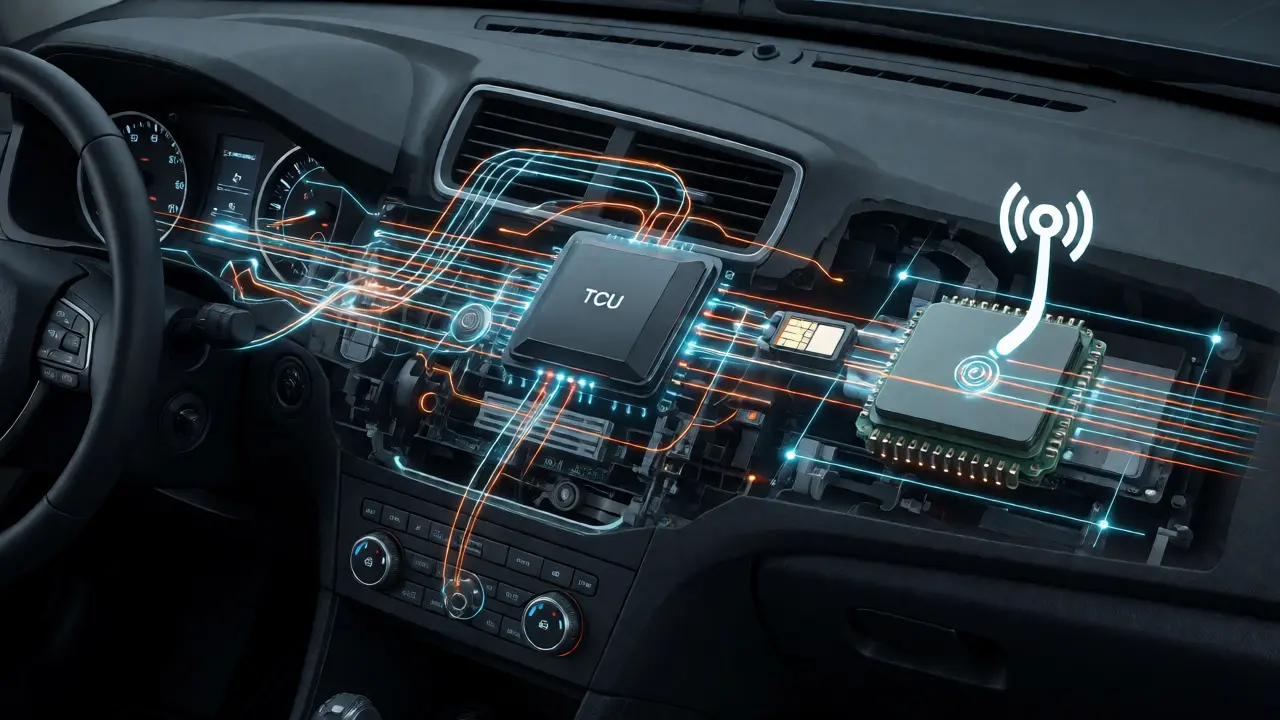
The magic lies in the sensor fusion. Your car’s Electronic Control Unit (ECU) constantly monitors data from various sources. When a significant deceleration event occurs-think hitting a wall at 30 mph-the airbag control module sends a signal to the telematics control unit (TCU).
Here is the step-by-step process:
- Detection: Sensors confirm a crash severity threshold has been met.
- Activation: The TCU wakes up its embedded SIM card (eSIM) and establishes a cellular connection.
- Data Transmission: The MDS packet is sent to the PSAP. This includes GPS coordinates, timestamp, and vehicle details.
- Voice Connection: A live audio link opens. If you are conscious, you can speak. If you are unconscious, the operator hears background noise and knows help is needed.
- Dispatch: The operator verifies the location and dispatches police, fire, and ambulance services.
This entire sequence takes seconds. In rural areas where cell coverage is spotty, some newer systems use satellite backup or multi-network roaming to ensure the call gets through. The goal is simple: reduce the "golden hour" delay between injury and medical treatment.
E-Call vs. Advanced Driver Assistance Systems (ADAS)
It’s easy to lump all car safety tech together, but e-call serves a different purpose than Advanced Driver Assistance Systems technologies like automatic emergency braking and lane keeping assist that prevent accidents from happening. ADAS tries to stop the crash. E-call handles the aftermath.
Think of it this way: ADAS is the shield; e-call is the medic. Both are vital, but they operate at different stages of an incident. While ADAS relies on cameras and radar to read the road ahead, e-call relies on physical impact sensors inside the cabin. This distinction matters because ADAS can fail if weather obscures sensors, whereas e-call works regardless of visibility conditions.
| Feature | E-Call | ADAS (e.g., AEB) |
|---|---|---|
| Primary Goal | Post-crash response | Accident prevention |
| Trigger Mechanism | Physical impact/Airbag deployment | Sensor data (Camera/Radar/Lidar) |
| User Action Required | None (Automatic) | None (Automatic intervention) |
| Cost to User | Free (included in vehicle price) | Included in trim level options |
| Regulatory Status | Mandatory in EU/UK (for new models) | Encouraged/Mandatory in future regs |
The Role of Private Telematics Providers
While e-call connects directly to public authorities, many drivers also subscribe to private telematics providers companies like OnStar or Mercedes me connect that offer enhanced monitoring and non-emergency support. These systems often layer additional features on top of basic e-call functionality.
For example, if you crash but aren’t seriously hurt, a private provider might offer to arrange a tow truck or notify your family. They can also provide "stolen vehicle tracking," which uses GPS to locate your car if it disappears. Some premium packages include health monitoring via smartwatch integration, alerting emergency contacts if your heart rate spikes unexpectedly during a drive.
However, relying solely on private providers can be risky. If your subscription lapses, does the e-call still work? In most modern cars, yes. The regulatory e-call function is usually hardwired into the hardware and independent of the subscription status. But always check your owner’s manual. Manufacturers sometimes disable certain advanced features if the service contract expires.
Privacy Concerns and Data Security
Let’s address the elephant in the room: who owns your driving data? With e-call, the data sent during a crash is minimal-just enough to get help to you. However, the broader telematics ecosystem collects much more. Your car might log speed, braking patterns, and location history.
In the UK, the General Data Protection Regulation (GDPR) applies here. Car manufacturers must obtain explicit consent before sharing detailed driving behavior data with third parties, such as insurance companies for usage-based policies. You generally have the right to request deletion of this data. If you’re concerned about privacy, look for vehicles that store data locally rather than uploading everything to the cloud immediately.
There’s also the issue of false positives. Early versions of these systems occasionally triggered calls for minor bumps, like hitting a pothole. Modern algorithms have improved significantly, requiring multiple sensor inputs (e.g., airbag deployment + high G-force) to activate. Still, if you experience frequent false alarms, visit your dealer. It might be a sensor calibration issue.
Future Trends: From E-Call to Connected Safety
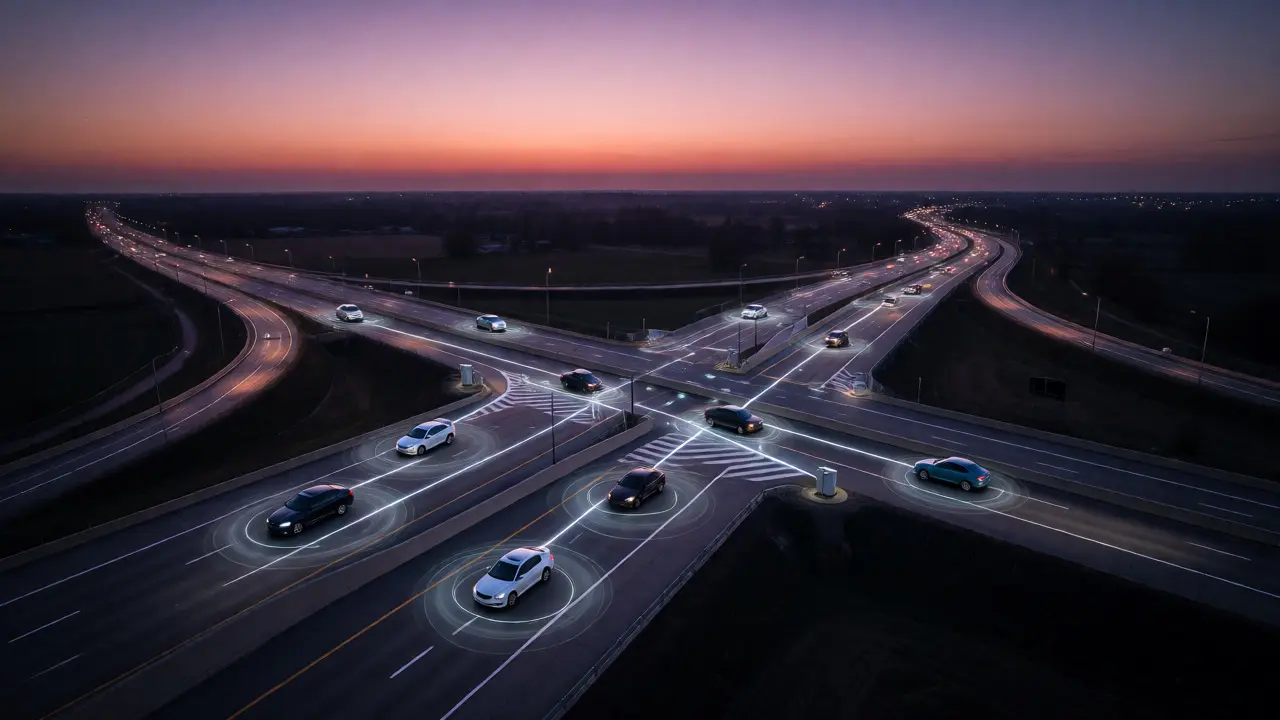
We are moving beyond simple crash notifications toward Vehicle-to-Everything (V2X) communication. Imagine your car detecting black ice and broadcasting a warning to every other vehicle within a mile radius. That’s the next evolution of connected safety systems that allow vehicles to communicate with each other and infrastructure to share real-time hazard information.
Current research suggests that widespread adoption of V2X could reduce traffic accidents by up to 80%. For now, though, e-call remains our primary digital lifeline. As autonomous vehicles hit the roads, the role of e-call will shift. Instead of calling for human drivers, these systems will need to coordinate with remote operators or autonomous fleet managers to handle incidents involving unmanned cars.
Practical Checklist for Drivers
Do you know if your car has e-call? Here’s how to verify and maintain it:
- Check the Dashboard: Look for a SOS button, usually red, located near the rearview mirror or overhead console.
- Review Your Manual: Search for terms like "Emergency Call," "SOS," or "Telematics."
- Test Safely: Many cars allow you to press the SOS button briefly to test connectivity without triggering a full emergency response. Check your specific model’s procedure.
- Keep Contacts Updated: If using a private app linked to your car, ensure your emergency contacts are current.
- Battery Health: Ensure your 12-volt battery is healthy. If the main battery dies completely, some e-call systems may fail unless they have a backup capacitor.
Living in Bristol, I’ve seen firsthand how quick response times matter on the M5 motorway. Knowing that my car can talk to the world if I can’t is peace of mind worth having.
Is e-call mandatory in the UK?
While the EU mandated e-call for all new cars from April 2018, the UK adopted similar regulations post-Brexit for new type approvals. Most major manufacturers install it as standard across their European lineup, so virtually all new cars sold in the UK today have it.
Does e-call cost money?
No, the basic e-call service is free for the life of the vehicle. There are no monthly fees for connecting to emergency services. However, advanced features provided by private telematics partners (like OnStar) may require a subscription.
What happens if I accidentally press the SOS button?
A voice connection will open to a call center. Simply tell the operator it was accidental. They will ask a few questions to confirm no emergency exists and then disconnect. Do not hang up abruptly, as they may try to call back to ensure you are safe.
Can e-call work if my phone is dead?
Yes. E-call uses the car’s own embedded SIM card and cellular antenna. It operates independently of your smartphone’s battery or Bluetooth connection.
How accurate is the location data sent by e-call?
Modern systems use GNSS (Global Navigation Satellite System) combined with map matching software. Accuracy is typically within 10-20 meters, which is sufficient for emergency responders to find you on a highway or in a city.