
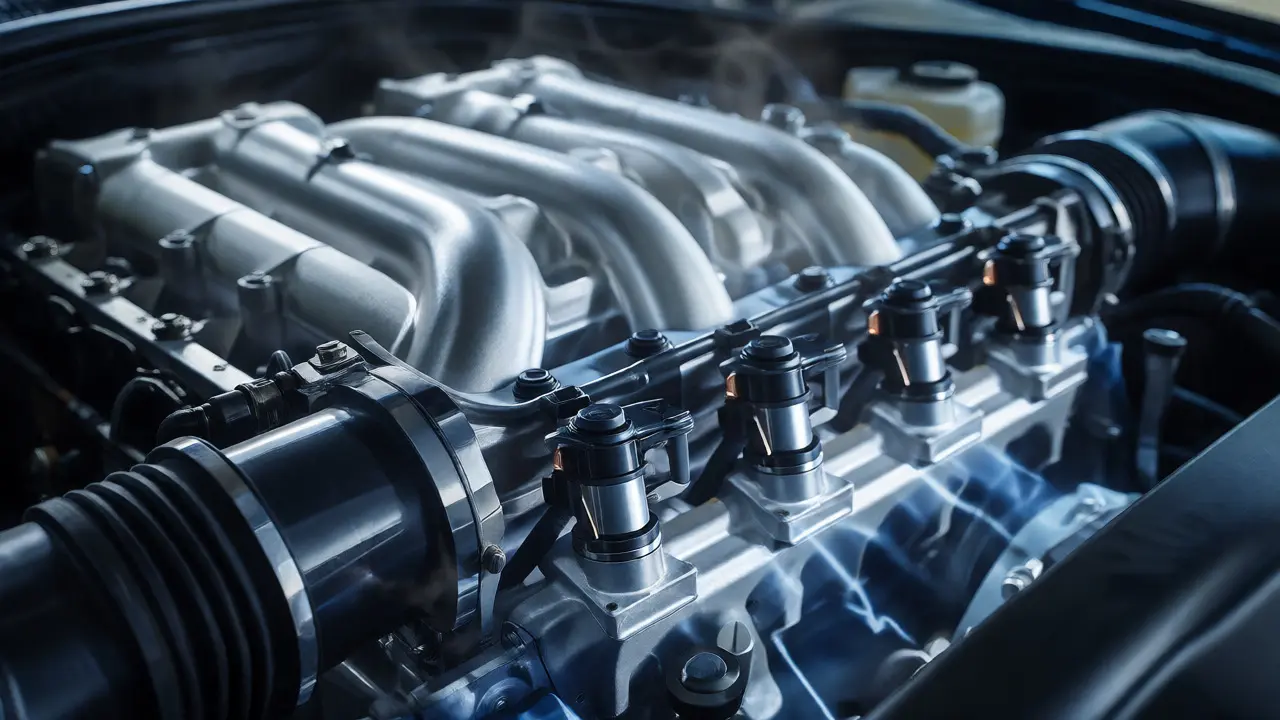
You’ve probably heard the hype. A friend with a turbocharged hatchback just got an extra 40 horsepower by switching to E85 a blend of 85% ethanol and 15% gasoline. It sounds like free power, right? But here’s the catch: if you pour E85 into a standard car without the right setup, you might not get more speed-you’ll get a tow truck bill.
Flex-fuel tuning isn’t magic; it’s chemistry and computer logic working together. If you’re thinking about running your daily driver on corn-based alcohol, you need to understand what happens under the hood. Let’s break down the real-world gains, the hidden risks, and exactly how to do it safely so you don’t blow up your engine.
The Chemistry Behind the Kick
Why does E85 make more power? It comes down to two things: octane rating and cooling properties. Standard premium petrol (98 RON) is great, but Ethanol has an octane rating of roughly 105-113. Higher octane means the fuel resists detonation (knock) much better. This allows tuners to advance ignition timing and increase boost pressure on turbocharged engines without risking engine damage.
Beyond octane, ethanol absorbs heat as it evaporates. When you spray E85 into the intake manifold, it cools the incoming air charge significantly. Cooler air is denser. Denser air holds more oxygen. More oxygen combined with more fuel equals a bigger explosion. In practical terms, this often translates to 10-20% more torque in forced-induction applications, provided the rest of the hardware can handle it.
| Property | Petrol (Gasoline) | Ethanol (E85 Component) | Impact on Engine |
|---|---|---|---|
| Octane Rating | 91-98 RON | ~108 RON | Allows higher compression/boost |
| Energy Content | High (~34 MJ/L) | Low (~24 MJ/L) | Requires ~30% more volume for same energy |
| Lambda Stoichiometric | 14.7:1 | 9.0:1 | Engine needs richer mixture |
| Water Affinity | Hydrophobic | Hygroscopic | Absorbs moisture from air |
Hardware Requirements: Not Just a Software Switch
Here is where most DIY enthusiasts get burned. You cannot simply flash a tune onto a stock car designed for petrol and expect it to run happily on E85. Why? Because ethanol carries less energy per liter than petrol. To maintain the correct air-fuel ratio, your injectors must deliver about 30% more fuel volume.
If your stock injectors are already at 80-90% duty cycle on petrol, they will hit their limit immediately on E85. The engine will go lean, temperatures will spike, and you risk melting pistons or cracking valves. Upgrading to larger injectors is almost always mandatory for anything above 300-350 wheel horsepower, depending on the engine size.
Fuel pumps face similar stress. An OEM pump designed for petrol may not sustain the flow rate needed for E85 at full throttle. Many tuners recommend upgrading to a dual-pump setup or a high-flow unit like those from Walbro or Bosch. Don’t skip this step. Starving the engine of fuel is the fastest way to destroy a high-performance build.
The Role of Flex-Fuel Sensors
How does the car know what’s in the tank? Enter the Flex-Fuel Sensor an electronic device that measures the dielectric constant of the fuel to determine ethanol content. These sensors read the electrical properties of the fuel. Pure petrol has a low dielectric constant; pure ethanol has a high one. By measuring this value, the sensor tells the Engine Control Unit (ECU) exactly what percentage of ethanol is present.
This data allows the ECU to adjust ignition timing and injector pulse width in real-time. Without a flex-fuel sensor, you have to choose one map: either petrol or E85. If you switch fuels mid-week, you’re stuck with suboptimal performance until you reflash the ECU. With a sensor, the car adapts instantly. It’s the difference between driving a fixed-gear bicycle and a modern automatic transmission-smooth, efficient, and safe.
Installation requires tapping into the fuel line and wiring the sensor to the ECU. While some plug-and-play modules exist for popular platforms like the Subaru WRX or Ford EcoBoost, universal setups require custom wiring. Ensure your tuner supports the specific sensor protocol you buy, such as those from Innovate Motorsports or Aeromotive.
Safety Concerns: Corrosion and Compatibility
Ethanol is aggressive. It’s a solvent, which means it cleans out gunk from old tanks-but it also eats rubber. Older seals, O-rings, and fuel lines made from nitrile rubber can swell, crack, or dissolve when exposed to high concentrations of ethanol. Modern cars built after the early 2000s usually use Viton or fluorocarbon materials that resist ethanol, but older classics or modified vehicles might need component replacements.
Another major issue is water absorption. Ethanol is hygroscopic-it pulls moisture from the atmosphere. If you leave E85 in your tank over winter, it can absorb enough water to separate into layers. The bottom layer becomes mostly water and ethanol, which can cause cold-start issues or even hydro-lock if severe. For daily drivers used year-round, this is rarely a problem. For weekend cars stored for months, consider adding a fuel stabilizer or draining the system.
Finally, check your catalytic converters and exhaust systems. Ethanol burns cooler, which can sometimes lead to condensation in the exhaust if the engine doesn’t reach optimal operating temperature quickly. However, the bigger threat is unburnt fuel washing oil off cylinder walls during rich conditions. Ensure your tune isn’t excessively rich, or you’ll dilute your engine oil faster than usual.
Tuning Strategy: Maps and Calibration
Running E85 isn’t a "set and forget" scenario. Professional tuning is non-negotiable. A good tune will create multiple maps: one for petrol, one for E85, and potentially a "mixed" map for intermediate blends. The E85 map should feature advanced timing, increased boost targets (if turbocharged), and adjusted lambda targets closer to 9.0:1 stoichiometry.
During calibration, the tuner monitors knock sensors closely. Even with high octane, excessive timing advance can still cause pre-detonation under heavy load. They will log data logs to ensure peak cylinder pressures stay within safe limits. Never trust a generic "E85 ready" file downloaded from a forum. Every engine wears differently, and every fuel batch varies slightly in purity.
Also, remember that E85 availability fluctuates. In some regions, stations label pumps as "E85," but the actual mix might be E70 or E60 due to seasonal blending. A flex-fuel sensor protects you from these inconsistencies. Without it, you might be running a petrol tune on E85 (too lean) or an E85 tune on petrol (too rich and sluggish).

Cost-Benefit Analysis: Is It Worth It?
Let’s talk money. E85 is often cheaper per liter than premium petrol, but because you burn 30% more of it, your cost-per-mile savings shrink. In many places, the price advantage disappears entirely once you account for consumption. So why do people do it? For track days and quarter-mile runs, the power gain is tangible and immediate. For daily commuting, the economic benefit is questionable unless E85 is significantly subsidized in your area.
Consider the upfront costs: flex-fuel sensor ($150-$300), upgraded injectors ($300-$600), potential fuel pump upgrade ($200-$500), and professional tuning ($300-$800). That’s easily $1,000-$2,000 before you add a drop of fuel. If you only drive 5,000 miles a year, you won’t recoup that investment through fuel savings alone. You’re paying for performance, not economy.
Final Verdict: Who Should Switch?
If you own a forced-induction car, plan to modify it further, and enjoy tinkering, E85 is a fantastic path to unlocked potential. It provides headroom for future upgrades and keeps cylinder temperatures lower. However, if you drive a naturally aspirated daily commuter with no plans to modify the engine, stick to quality petrol. The complexity and hardware requirements outweigh the marginal gains.
Start small. Install the sensor, upgrade the fuel delivery system, and get a proper tune. Monitor your air-fuel ratios and oil condition regularly. Treat E85 as a performance tool, not a replacement for maintenance. Done correctly, it transforms your car’s character. Done poorly, it turns your engine into a paperweight.
Can I put E85 in any car?
No. Only vehicles specifically designed as Flex-Fuel Vehicles (FFVs) or those modified with appropriate hardware (injectors, pumps, sensors) and tuned software can safely run E85. Putting E85 in a standard petrol car without modifications can cause lean running conditions, overheating, and engine failure.
Does E85 hurt my engine?
Not if the system is properly set up. Ethanol is corrosive to certain rubbers and plastics, so compatible materials are essential. It also absorbs water, so long-term storage requires care. Mechanically, if the air-fuel ratio is correct, E85 actually reduces combustion chamber temperatures, which can extend engine life under high loads.
Do I need a flex-fuel sensor?
It is highly recommended. Without a sensor, you must manually select a tune based on what you think is in the tank. Since E85 blends vary by season and station, a sensor ensures the ECU adjusts timing and fueling automatically, preventing dangerous lean conditions if you accidentally fill up with lower ethanol content.
Will E85 improve my fuel economy?
Generally, no. Ethanol contains about 30% less energy per gallon than petrol. Therefore, you will consume more gallons to travel the same distance. While the price per gallon is often lower, the total cost per mile is frequently similar to or higher than premium petrol, especially after accounting for the cost of conversion parts.
What happens if I mix E85 and petrol?
Mixing them creates intermediate blends like E50 or E70. A flex-fuel sensor handles this seamlessly by adjusting the map accordingly. If you are running a static E85 tune and add petrol, the mixture becomes too lean, risking engine damage. Always ensure your tune matches the fuel type or use a sensor.