
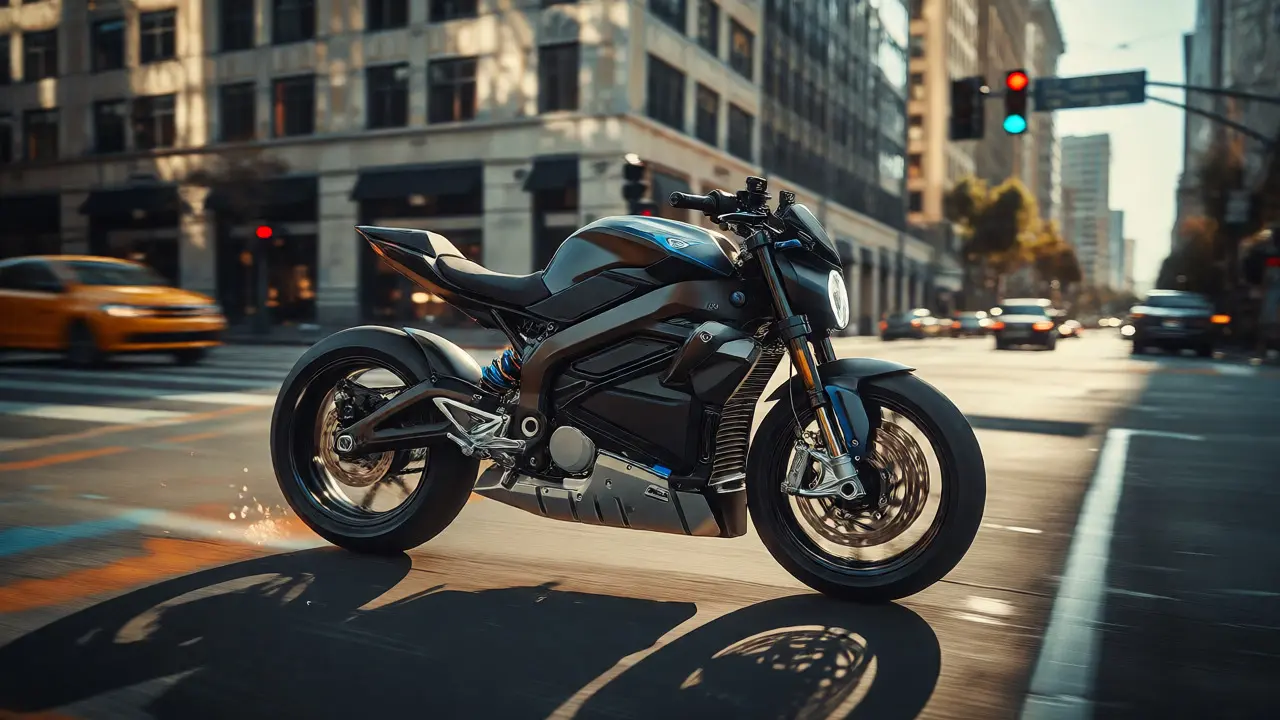
Imagine standing in a parking lot, waiting for the green light. The usual rumble of combustion engines is absent. Instead, there’s a quiet hum, a sudden torque surge, and you’re gone before the guy next to you has even found first gear. This isn’t science fiction; it’s the current state of electric motorcycle brands. For years, these machines were treated as novelty toys or slow commuter scooters. That era is over. Today, the market is split between established giants pivoting hard into electrification and scrappy startups trying to carve out niche dominance.
If you are considering making the switch, or just curious about what’s happening in this rapidly shifting landscape, you need to understand who is actually building these things. It’s not just about battery size anymore. It’s about software integration, charging infrastructure compatibility, and whether the brand will still exist in five years. Let’s break down the heavy hitters like Zero Motorcycles and Harley-Davidson LiveWire, and look at the emerging players shaking up the status quo.
The Pioneer: Zero Motorcycles
You can’t talk about electric two-wheelers without talking about Zero Motorcycles. Based in Santa Cruz, California, Zero has been doing this since 2006. They weren’t an internal combustion company trying to bolt a battery onto a gas frame; they built their platform from the ground up. This "born-electric" approach shows in their engineering. Their Z-Force power packs are integrated directly into the chassis, lowering the center of gravity significantly compared to retrofitted competitors.
Zero’s lineup covers almost every riding style. If you want a lightweight urban commuter, the Zero S is a staple. It’s nimble, fast enough to keep up with traffic, and surprisingly manageable for new riders. On the other end of the spectrum, the Zero SR/F is a sportbike that produces around 110 horsepower. That’s serious power for a bike that weighs roughly 578 pounds. Because electric motors deliver peak torque instantly, the acceleration feels violent in a way gas bikes never do until you hit the redline.
What makes Zero stand out is their software ecosystem. The Cypher III Plus system allows riders to customize throttle response, regenerative braking strength, and traction control via a smartphone app. You aren’t stuck with one ride mode. Want a docile city setting? Toggle it. Need aggressive track performance? Switch profiles in seconds. This level of customization is rare in traditional motorcycles, where changing characteristics usually requires mechanical adjustments or expensive aftermarket parts.
The Legacy Pivot: Harley-Davidson LiveWire
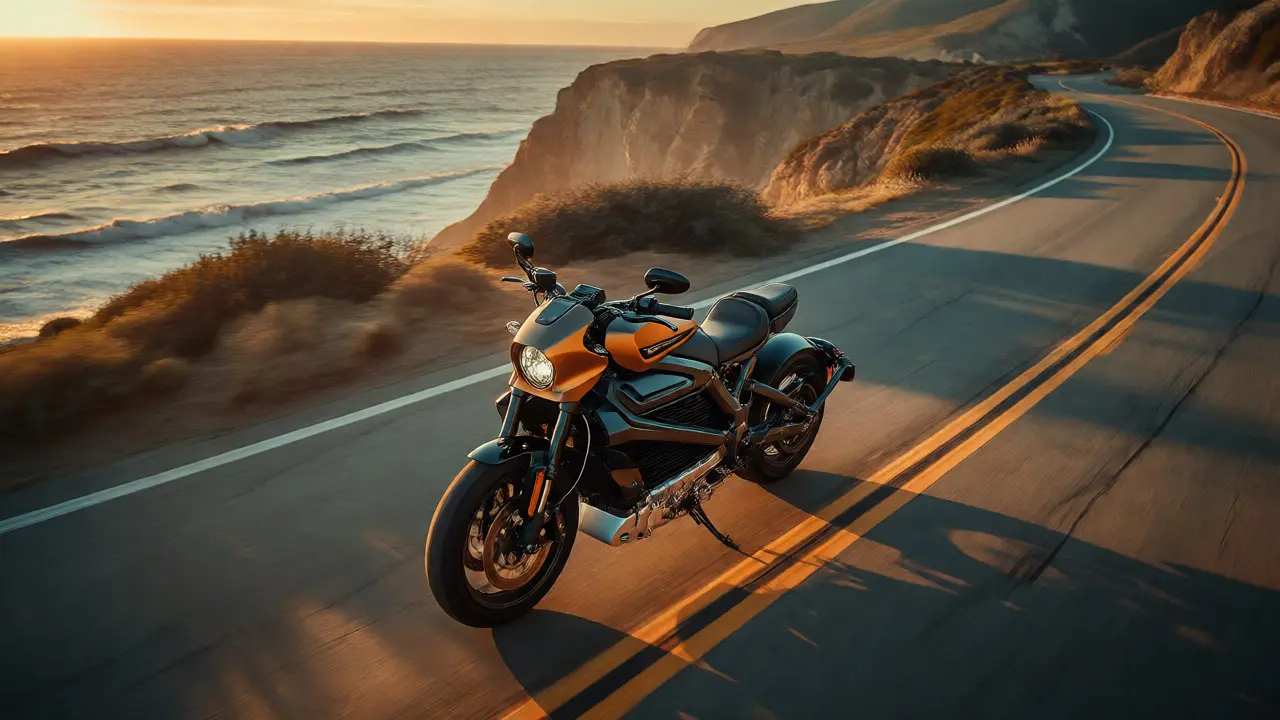
For decades, Harley-Davidson was synonymous with loud pipes and V-twin rumble. So, when they launched the LiveWire in 2019, skeptics laughed. They thought it was a gimmick. But Harley doubled down. In 2023, they spun off LiveWire as a separate subsidiary, giving it its own branding, dealerships, and product roadmap. This wasn’t a side project; it was a strategic bet on the future.
The original LiveWire One (formerly S2 Del Mar) faced criticism for its high price tag relative to its range. However, the newer models address some of these concerns while leaning into premium features. The bike features a liquid-cooled motor and a sophisticated thermal management system that prevents overheating during aggressive riding-a common issue with air-cooled early EVs. Harley leveraged its massive dealer network to offer service and support, something startups couldn’t match.
Critics often point to the weight. Electric bikes are heavy because batteries are dense. The LiveWire tips the scales near 640 pounds. While the low center of gravity helps handling, it doesn’t make the bike feel light when you’re trying to park it. Yet, for long-distance touring, the stability and smoothness of the LiveWire are undeniable. There’s no vibration, no gear hunting, and a linear power delivery that reduces rider fatigue on highway runs.
The Emerging Contenders: Niche Players Making Noise
While Zero and Harley dominate headlines, a wave of smaller companies is targeting specific gaps in the market. These brands often prioritize design, modularity, or specific use cases rather than trying to be everything to everyone.
Energica Motor Company is the Italian answer to high-performance electric racing. Born from MotoGP technology, Energica builds bikes that look like they belong on a racetrack. Their Ego+ model boasts a top speed of 150 mph and uses DC fast-charging standards compatible with CCS connectors. This means you can plug into many public EV car chargers, expanding your range flexibility. Energica targets enthusiasts who care about specs and prestige more than budget.
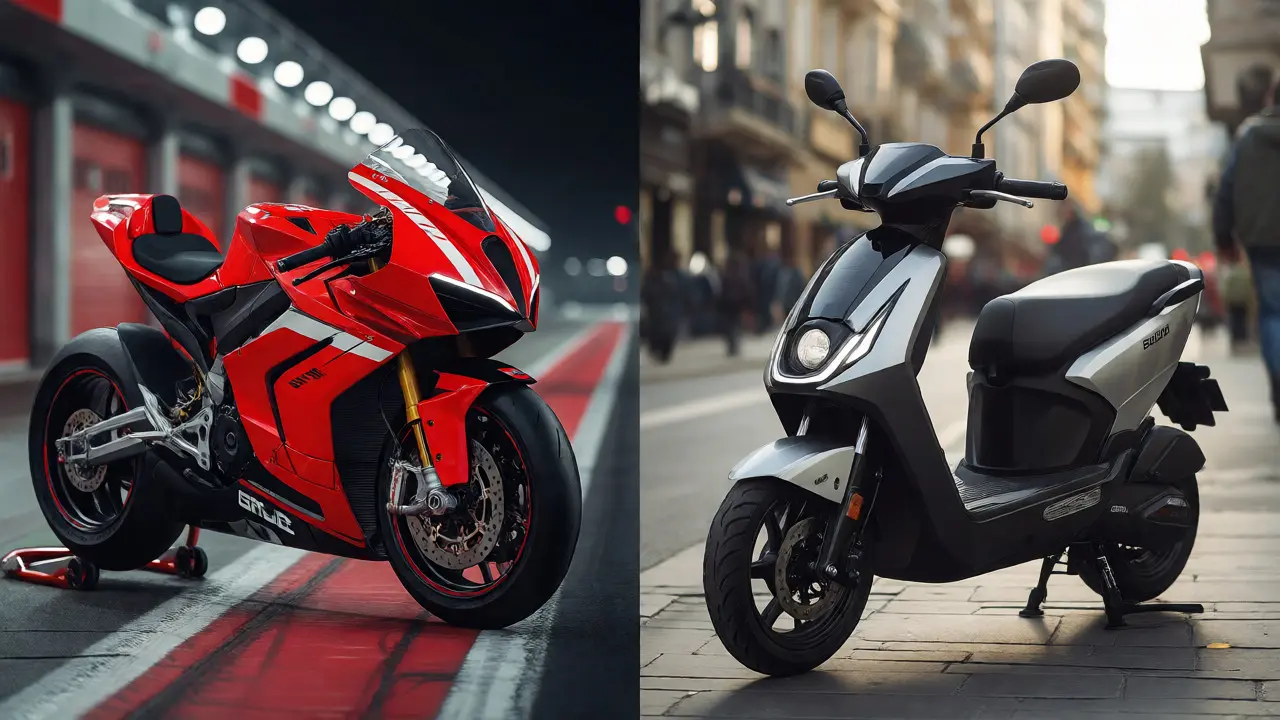
On the opposite end of the spectrum is Super Soco and NIU. These Chinese manufacturers focus on affordable, stylish urban commuters. They don’t try to compete with Zero’s horsepower figures. Instead, they offer lightweight e-mopeds and small motorcycles that are perfect for navigating tight city streets. With removable batteries, you can charge them indoors overnight, bypassing the need for expensive home charging installations. For students or city dwellers with limited space, these brands offer a practical entry point into electric mobility.
Another notable mention is Lightning Motorcycles. An American company with a cult following, Lightning focuses on raw performance and minimalist design. Their LS-218 held the Guinness World Record for the fastest production electric motorcycle for years. They produce limited numbers, creating exclusivity similar to boutique gasoline builders. If you want a conversation piece that accelerates faster than most supercars, Lightning is worth investigating.
Key Factors When Choosing an Electric Motorcycle Brand
Selecting an electric motorcycle isn’t like buying a gas bike. Range anxiety is real, but so is charging infrastructure availability. Here is how the major brands compare on critical metrics.
| Brand | Primary Focus | Typical Range (City) | Charging Standard | Best For |
|---|---|---|---|---|
| Zero Motorcycles | Versatile All-Rounder | 100-180 miles | J1772 / CHAdeMO (Adapter) | Commuters & Sport Riders |
| Harley-Davidson LiveWire | Premium Touring/Sport | 140-150 miles | CCS Combo | Long Distance & Brand Loyalty |
| Energica | High Performance Racing | 100-120 miles | CCS Combo | Track Days & Enthusiasts |
| Super Soco | Urban Commuting | 40-60 miles | Removable Battery | City Streets & Budget Buyers |
Notice the difference in charging standards. Zero historically used J1772 (the standard for cars in North America), which meant you could find chargers everywhere. Newer models are moving toward adapters for CCS, the dominant fast-charging protocol. Harley and Energica went straight to CCS, aligning with the broader EV automotive industry. If you plan to tour across states or countries, check which networks your local area supports. A bike with great range is useless if you can’t plug it in.
Battery warranty is another non-negotiable factor. Most reputable brands, including Zero and Harley, offer warranties ranging from 5 to 8 years or specific mileage limits (e.g., 100,000 miles). Check the fine print. Some warranties cover degradation below a certain percentage (usually 70-80% capacity retention). Replacing a battery pack can cost thousands of dollars, so this coverage protects your investment.
The Reality of Ownership Costs and Maintenance
Let’s talk money. Upfront costs for electric motorcycles are higher than comparable gas bikes. A mid-range Zero might cost $15,000-$20,000, whereas a similar displacement gas bike might be $10,000. However, operational costs tell a different story. You save on fuel, oil changes, spark plugs, clutch replacements, and transmission services. Electricity is cheaper per mile than gasoline in most regions. Over five years, the total cost of ownership often breaks even or favors the electric option, especially if you ride frequently.
Maintenance is simpler. There are no engine valves to adjust, no chains to lubricate (many use belt drives), and fewer moving parts overall. Brake pads last longer due to regenerative braking, which recovers energy when you slow down. Tires wear faster, though. The instant torque and heavier weight put extra stress on rubber compounds. Expect to replace tires more often than you would on a lighter gas bike.
Future Trends: What’s Next for Electric Bikes?
The technology is evolving rapidly. Solid-state batteries promise double the energy density with half the weight. Companies like Damon Motorcycles are experimenting with radar-based safety systems that detect blind spots and warn riders of incoming vehicles. Integration with smart helmets and vehicle-to-everything (V2X) communication is becoming feasible.
We are also seeing consolidation. Traditional manufacturers like BMW, Ducati, and KTM are entering the fray. BMW’s CE 04 is a polarizing design but represents big-brand resources behind electric development. As more automakers invest, prices should drop, and ranges should increase. The gap between electric and internal combustion performance is closing fast.
If you live in Bristol or elsewhere in the UK, note that government incentives have shifted. The UK Plug-in Motorcycle Grant ended in 2022, meaning you pay full VAT. However, London’s ULEZ (Ultra Low Emission Zone) charges exempt electric bikes, saving daily commuters significant fees. Always check local regulations regarding congestion charges and parking benefits, as these vary by city.
Frequently Asked Questions
How long does it take to charge an electric motorcycle?
Charging time depends on the battery size and charger type. Using a standard Level 1 outlet (110V), it can take 8-12 hours for a full charge. A Level 2 home charger reduces this to 3-5 hours. DC fast charging (available on Zero, LiveWire, and Energica models) can bring the battery to 80% capacity in 30-60 minutes. Always check your specific model’s specifications, as newer batteries charge faster than older ones.
Are electric motorcycles good for long-distance touring?
Yes, but it requires planning. Real-world highway range is typically lower than city range due to wind resistance and constant high-speed output. A bike rated for 150 miles in the city might only manage 90-110 miles on the highway. You must map out charging stations along your route. Apps like ChargePoint or PlugShare help locate compatible chargers. Stops for charging can serve as rest breaks, making touring feasible for those willing to plan ahead.
Do electric motorcycles have gears?
Most modern electric motorcycles use a single-speed direct drive transmission. The electric motor provides high torque across a wide RPM range, eliminating the need for multiple gears. This simplifies riding-there is no clutch lever or gear shifter to worry about. Some niche models may offer multi-speed transmissions for extreme top speeds, but single-speed is the industry standard for efficiency and reliability.
What happens if I run out of battery mid-ride?
You cannot push-start an electric motorcycle like a gas bike. If the battery dies completely, the bike stops immediately. You will need to tow it to the nearest charging station or use a portable charger if you have access to a power source. To avoid this, monitor your remaining range closely, especially in cold weather, which can reduce battery efficiency by 10-20%. Most bikes provide warnings when you enter reserve mode.
Is insurance cheaper for electric motorcycles?
Not necessarily. Insurance rates depend on risk factors like theft, accident history, and repair costs. Electric motorcycles are often more expensive to repair due to specialized components and battery replacement costs. Additionally, their rapid acceleration can lead to higher claim frequencies among inexperienced riders. Shop around, as some insurers offer discounts for eco-friendly vehicles or advanced safety features like regenerative braking.
Comments
Ejike Ugwu
They are hiding the real battery tech from us because they want to keep selling oil forever. I saw a leaked doc that says Zero's software is actually throttling output by 30% on purpose so you don't burn out the cells before they can sell you the next model. It's all a conspiracy to make electric look weak until they control the grid completely.
October 4, 2026 at 08:42
Lauren Martin
The fundamental misunderstanding here is the conflation of instantaneous torque with usable power delivery in real-world scenarios.
Zero's Cypher III Plus is merely a placebo for riders who lack the mechanical sympathy to understand traction limits. You cannot simply toggle ride modes and expect consistent handling dynamics when the unsprung mass distribution remains fundamentally flawed compared to internal combustion architectures. The regenerative braking integration is often poorly calibrated, leading to inconsistent rear-wheel lockup during corner entry which is a safety hazard that marketing departments conveniently ignore.
Furthermore, the thermal management systems in these early adopters are woefully inadequate for sustained high-load applications. We are seeing significant derating after just two hot laps, which renders the 'sportbike' classification misleading at best. Until we see proper liquid-cooled stator designs integrated directly into the chassis structure rather than bolted on as an afterthought, these machines remain expensive toys for suburban commuters who will never push them past 60 mph.
Harley's pivot is even more egregious because it lacks any genuine engineering heritage in electrification. They are essentially rebranding existing supply chain components with their logo slapped on top. The weight penalty is not mitigated by the low center of gravity; it is exacerbated by the sheer inertia of those massive lithium-ion packs. When you crash a LiveWire, you are not just replacing a fender; you are looking at thousands in battery module replacements because the impact protection standards are still lagging behind automotive EVs.
The emerging players like Energica are catering to a niche that does not exist outside of track days. Their charging infrastructure compatibility is a double-edged sword because public CCS chargers are designed for cars, not motorcycles, meaning the handshake protocols are often incompatible or inefficient for smaller battery capacities. This leads to excessive heat generation during charging cycles, degrading the cell chemistry over time.
We need to stop celebrating the novelty of silence and start demanding rigorous data on long-term reliability. The warranty terms on these bikes are often riddled with exclusions for 'abuse' that include normal riding conditions. If you do not have a dedicated garage with climate control, your battery degradation curve will be steep and unforgiving. This is not progress; this is premature commercialization of immature technology.
October 6, 2026 at 00:31
Mithilesh Singh
Indian engineers are building better EVs right now. We have the talent. We have the market. Why are we reading about American brands? India has Tata. India has Ola. These companies are aggressive. They are fast. They are cheap. America is slow. Europe is dying. We should support our own. Do not buy foreign junk. Buy Indian. Support local jobs. Keep money in country. Respect the engineer. Respect the worker. No more imports. Make in India. Jai Hind.
October 7, 2026 at 16:10
Ian Mason-Laurence
It is worth noting that the term 'born-electric' used regarding Zero Motorcycles is somewhat of a misnomer in strict engineering terms. While the platform was designed around an electric drivetrain, the initial prototypes utilized components sourced from existing industrial motor manufacturers before developing proprietary solutions. Furthermore, the assertion that Harley-Davidson spun off LiveWire solely for strategic reasons ignores the financial pressures from institutional investors pushing for higher ESG scores. The dealer network leverage mentioned is also overstated; many traditional H-D dealers were reluctant to stock LiveWires due to lower margins and different service requirements, leading to a fragmented retail experience initially. The comparison to Energica overlooks their acquisition by Polaris, which significantly altered their R&D trajectory and product roadmap priorities away from pure performance racing towards broader utility applications.
October 7, 2026 at 23:18
Marisa Marroquin
I find the quiet hum rather poetic, a gentle whisper against the cacophony of modern life. There is a certain elegance in the absence of combustion, a clean slate upon which we might write a new chapter of mobility. Yet, one must ponder the ecological cost of lithium extraction, the mining scars left upon the earth, and whether this technological leap truly liberates us or merely shifts the burden elsewhere. It is a beautiful machine, yes, but beauty without conscience is hollow.
October 9, 2026 at 05:14
Shaina Silver-Baird
The narrative surrounding these brands is carefully curated to distract from the underlying geopolitical tensions regarding rare earth mineral supplies. China controls the vast majority of processing capacity for cobalt and lithium, meaning that every 'American-made' electric motorcycle is indirectly tethered to Beijing's policy decisions. If trade relations deteriorate further, the price volatility we are currently witnessing is merely a precursor to potential supply chain collapses. Consumers are being sold a dream of independence while their vehicles remain dependent on foreign dominance.
October 10, 2026 at 20:30
Sabrina Silvani
we are asking the wrong question entirely
it is not about horsepower or range anymore it is about what happens when the bike dies in the middle of nowhere
the psychological weight of range anxiety changes how we experience freedom on two wheels
a gas bike gives you confidence because you know help is always within sight
an electric bike isolates you in a way that feels existential
you become aware of every mile in a way that ruins the spontaneity of the ride
is it worth trading the soul of the engine for the convenience of the plug
i think not
we are losing the romance of the open road to the tyranny of the battery percentage
the machine becomes a master and we become its servants
watching the gauge drop is a constant reminder of our limitations
freedom should not come with a countdown timer
October 12, 2026 at 01:11
Kathy Mccoy
This is such a great overview! I love how you highlighted the customization options on the Zero. For new riders, having that app control makes learning so much less intimidating. You can start super gentle and work your way up. It really builds confidence. And yeah, the LiveWire is heavy, but once you're moving, that stability is amazing for longer trips. Don't let the weight scare you off if you're thinking about touring. Just take it slow at first. You've got this!
October 13, 2026 at 15:44
evelyn starcher
Finally someone said it!!! 😤 The noise pollution from those old V-twins was ruining our neighborhoods anyway. 🇺🇸 We need to get rid of that garbage. My grandpa rode a Harley and it sounded like a lawnmower having a seizure. 🚜 Now my son rides a Zero and he doesn't wake up the whole street. 🏡 That is American innovation. 👍 Stop crying about tradition and start embracing the future. 🚀 We are leading the world. 🌎 Not Europe. Not Asia. Us. 🇺🇸
October 14, 2026 at 04:17