
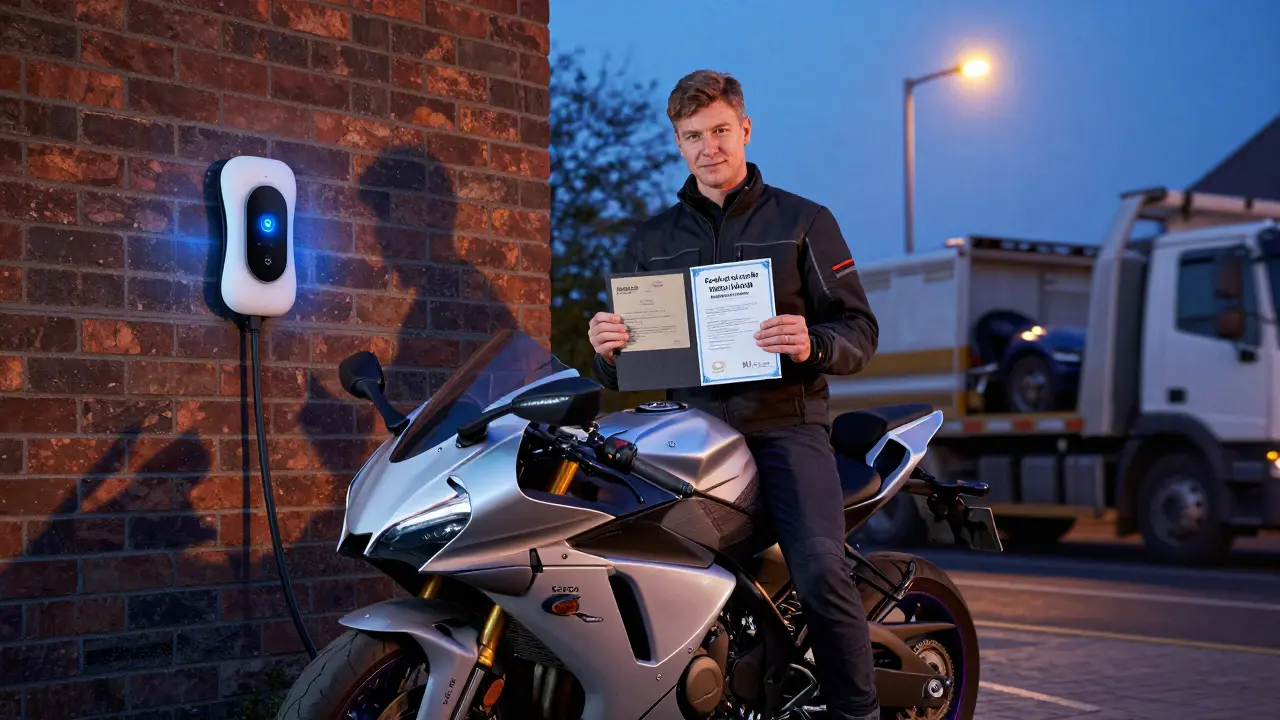
Electric motorcycle subsidies are changing fast - and if you’re thinking about buying one, you need to know what’s new.
In 2025, the UK government quietly rolled out its biggest update to electric two-wheeler support since 2020. The old £1,500 grant for electric motorcycles was replaced with a new, tiered system that rewards not just ownership, but how you use the vehicle. If you’re still waiting for a flat discount like the old days, you’re going to be surprised. The new rules don’t just hand out cash - they tie it to real behavior: charging at home, riding in low-emission zones, and even how often you replace an old petrol bike.
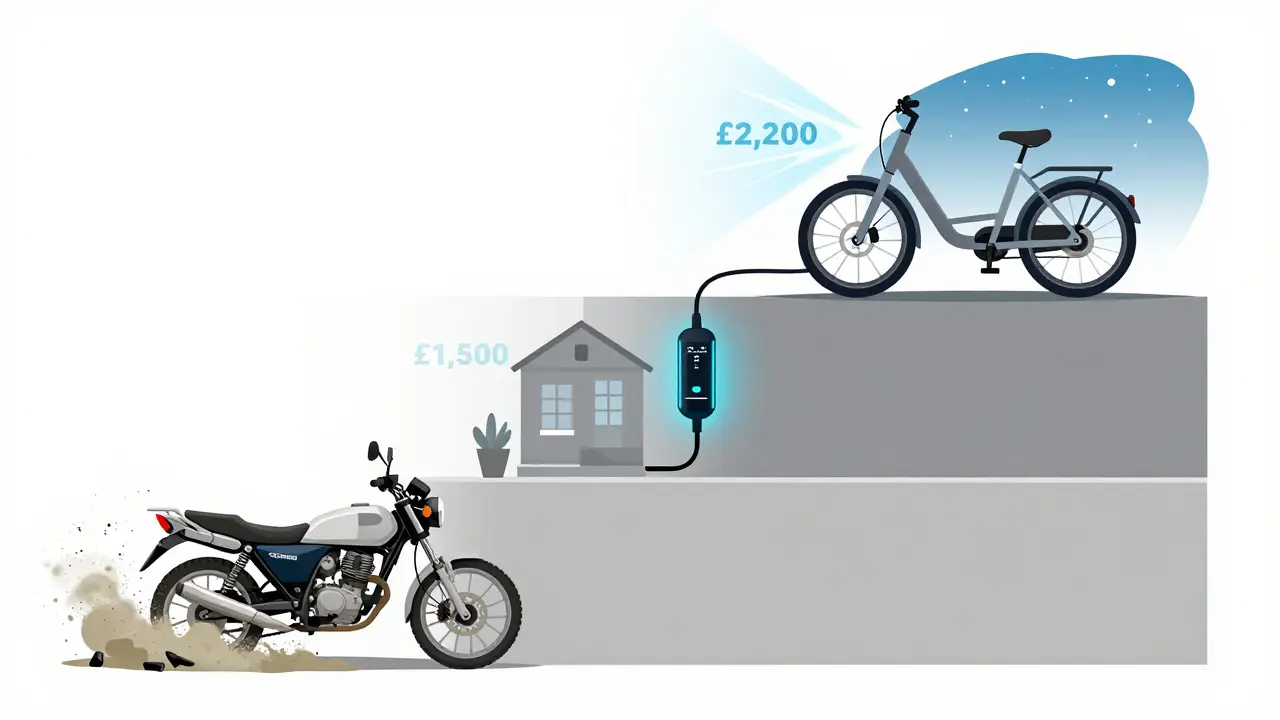
Back in 2023, buying an electric motorcycle meant you got a £1,500 grant off the sticker price. That was it. No strings. But by 2025, the Department for Transport realized most people were just using the grant to buy a more expensive model - not switching from a gas bike at all. So they rewrote the rules. Now, the grant only applies if you scrap a petrol or diesel motorcycle registered before 2015. If you’re trading in a 2018 Honda CBR600, you get nothing. But if you’re getting rid of a 2010 Yamaha R1, you’re eligible for up to £2,200.
How the new subsidy tiers work - and who qualifies
The current system has three levels of support, based on three clear criteria:
- Scrap value - You must surrender a pre-2015 internal combustion engine (ICE) motorcycle. Proof of destruction from a licensed scrapyard is required.
- Range and battery size - Only bikes with a real-world range of 100 miles or more qualify. That means most entry-level models under £5,000 are now excluded.
- Charging setup - You must install a home charger connected to a smart meter, and use it for at least 70% of your charging. A standard wall socket doesn’t count.
Here’s how the payout breaks down:
| Criteria Met | Subsidy Amount | Example Models |
|---|---|---|
| Scrap pre-2015 bike + 100+ mile range + home smart charger | £2,200 | Zero SR/F, Harley-Davidson LiveWire, Energica Eva Ribelle |
| Scrap pre-2015 bike + 70-99 mile range + home charger | £1,500 | NIU UQi+, Evoke Urban Classic |
| Scrap pre-2015 bike + 100+ mile range + no home charger | £800 | Lightning LS-218, Brammo Empulse RR |
The smart charger requirement is new. It’s not just about convenience - it’s about grid load management. The government wants to avoid peak-hour charging spikes. If your charger reports usage data to the energy provider, you get the full amount. If you’re plugging into a regular outlet at a friend’s house, you don’t qualify.
What’s not covered - and why you might be turned down
Many people assume the subsidy applies to scooters, mopeds, or e-bikes. It doesn’t. The rules only cover motorcycles with a minimum 50cc engine displacement equivalent - meaning anything under 4kW output is excluded. That knocks out most Class 1 e-scooters and low-speed commuter bikes.
Also, you can’t stack this with local council grants. If your city offers an extra £500 for EVs, you have to pick one. The national subsidy is the only one you can claim, and it’s processed through the DVLA when you register the new bike. You can’t apply for both.
Another common mistake: thinking the grant applies to used electric bikes. It doesn’t. The subsidy is only for brand-new vehicles registered for the first time in the UK. Even if you buy a 2024 model from a dealer’s floor, it has to be your first registration. No exceptions.
How to apply - and what documents you need
The process is entirely digital now. You can’t walk into a dealership and get cash on the spot. Here’s what you need to do:
- Scrap your old bike at a licensed facility. Get the End-of-Life Vehicle Certificate - this is non-negotiable.
- Buy your new electric motorcycle. Keep the original invoice and VAT receipt.
- Install a smart charger (like a Pod Point or Wallbox) and link it to your energy supplier’s app. Take a screenshot of your usage stats for the first 30 days.
- Go to the gov.uk electric motorcycle grant portal and upload: the scrap certificate, invoice, charger installation proof, and a photo of the new bike’s VIN plate.
- Wait 10-14 days. If approved, the grant hits your bank account directly - not the dealer.
Dealers don’t handle the grant anymore. That’s by design. The government wants to make sure the subsidy actually goes to the buyer, not inflated into the price tag.
Why the policy shifted - and what it means for the market
The old system was too easy to game. A 2022 study by the University of Leeds found that 68% of people who claimed the £1,500 grant were already planning to buy an electric bike - they weren’t switching from petrol. The subsidy wasn’t reducing emissions; it was just lowering the price for people who would’ve gone electric anyway.
The new rules force real change. In the first six months after the update, scrap numbers for pre-2015 bikes jumped 210%. That’s the real win. The government isn’t just trying to sell more electric bikes - it’s trying to remove older, dirtier ones from the road.
Manufacturers are responding. Zero Motorcycles and Evoke are now offering trade-in programs that match the subsidy. If you bring in a 2012 Kawasaki Ninja, they’ll handle the scrapping and give you £2,200 off the new bike - all in one step. That’s the kind of support that actually moves the needle.
What’s coming next - and how to stay ahead
The 2026 budget hints at even tighter rules. By 2027, the government may require all subsidized electric motorcycles to have V2G (vehicle-to-grid) capability - meaning your bike can feed power back into your home during peak hours. That’s already standard in some European models like the Energica Experia.
Also, look out for regional bonuses. Bristol, London, and Manchester are testing extra incentives for riders who use electric bikes for commuting. If you log 50+ rides per month on a government-approved app, you could get £100 cashback on your energy bill. It’s not national yet - but it’s coming.
If you’re waiting for the perfect deal, don’t. The subsidy window is closing fast. The £2,200 tier is only available until December 2026. After that, the grant drops to £1,500 across the board - and the scrap requirement may expand to include bikes up to 2018.
Is an electric motorcycle right for you?
Let’s be honest - this isn’t for everyone. If you ride 300 miles a week on the motorway, the range anxiety is real. Even the best models still take 45 minutes to charge to 80% on a fast charger. But if you’re commuting 20 miles a day, running errands, or living in a city with low-emission zones, this is the smartest move you can make.
And here’s the kicker: maintenance costs drop by 60%. No oil changes. No air filters. No clutch replacements. Over five years, that’s over £2,000 saved - not counting fuel. The subsidy isn’t just a discount. It’s the start of a cheaper, cleaner ride.
Can I get the electric motorcycle subsidy if I live outside the UK?
No. The subsidy is only available to UK residents who register the new motorcycle in Great Britain or Northern Ireland. Proof of address and a UK driving license are required during the application.
Do I have to buy from a specific dealer?
No. You can buy from any authorized UK dealer - online or in person. The key is that the bike must be brand new and registered in the UK for the first time. The subsidy is paid to you, not the dealer.
What if I don’t have a driveway? Can I still qualify?
Yes, but you need a smart charger installed at your property - even if it’s on a wall or pole. If you rent and can’t install one, you won’t qualify for the full £2,200. You may still get £800 if you have a 100+ mile range bike and scrap your old one.
Are electric scooters eligible for the subsidy?
No. The subsidy only applies to motorcycles with a minimum 4kW motor output. Most electric scooters and mopeds fall below this and are not covered. Some local councils offer separate grants for e-scooters - check with your city.
How long does the application process take?
It usually takes 10 to 14 working days from submission to payment. Make sure all documents are clear and complete - missing photos or unlinked charger data are the most common reasons for delays.
Comments
Patrick Sieber
This is actually one of the smarter subsidy designs I've seen in a while. Tying it to scrapping old bikes and smart charging? That’s real behavior change, not just a discount for people who were already going electric. The UK’s finally thinking like a system, not a store.
Also, the fact they pay the buyer directly instead of the dealer? Genius. Stops the price inflation games.
January 28, 2026 at 10:56
Kieran Danagher
You mean the same government that gave out £1.5k for a £20k electric bike while people were skipping meals? Now they want you to install a smart charger and prove you're not charging at 2am? Welcome to the new era of guilt-based subsidies.
January 29, 2026 at 00:16
Santhosh Santhosh
I live in Bangalore and I read this with a mix of envy and sadness. Here, we don’t even get a subsidy for e-scooters, let alone electric motorcycles, and yet we’re choking on smog. The UK’s rules are strict, sure, but at least they’re trying to fix the root problem - replacing old polluters, not just making new ones cheaper. I wish we had even half this level of policy thinking. I’ve been riding a 2009 Honda CB Shine for 12 years now. I’d scrap it tomorrow if I could get a real incentive. But here? The only thing being incentivized is buying a bigger car.
January 29, 2026 at 15:54
Veera Mavalwala
Oh honey, this isn’t a subsidy - it’s a loyalty program for people who already own a garage and a Wi-Fi router. Let me get this straight: if you’re poor enough to live in a flat without a driveway, you get £800. If you’re rich enough to afford a smart charger and a 2010 R1, you get £2,200? That’s not green policy - that’s class-based carbon capitalism dressed up in solar panels. The government didn’t want to help people go electric - they wanted to help the wealthy feel less guilty about it. And now they’re making the poor pay for it in inconvenience. Beautiful.
January 30, 2026 at 15:41
Ray Htoo
I’m fascinated by how this mirrors what’s happening with EVs in the US - the shift from pure purchase incentives to usage-based rewards. The smart charger requirement is genius for grid stability. And the fact that they’re using actual usage data instead of just trusting people? That’s a quiet revolution in policy design. It’s not just about reducing emissions - it’s about integrating transportation into the energy ecosystem. I’d love to see this model applied to home solar + EV combos. Maybe next they’ll pay you to discharge your bike into your house during a heatwave?
January 31, 2026 at 16:52
Sheila Alston
So let me get this straight - if you’re a renter who doesn’t own a driveway, you’re basically penalized for not being wealthy enough to own property? And if you’re not a ‘responsible’ charger, you get less money? This isn’t environmental policy - it’s moral policing disguised as climate action. People who can’t afford to install a charger shouldn’t be punished for being poor. This feels like the kind of policy that gets written by people who’ve never missed a bus because their car broke down - and then act like everyone else just needs to try harder.
February 1, 2026 at 06:45
sampa Karjee
The fact that you need a smart charger connected to your energy provider’s app to qualify for a subsidy is absurd. Who authorized the state to monitor your charging habits? This isn’t green policy - it’s surveillance capitalism with a carbon footprint. And don’t get me started on the 2015 cutoff. Why not 2010? Why not 2005? Because the government knows that if they go too far, the old bike owners will revolt. This is performative environmentalism. It looks good on paper. But it’s designed to make the middle class feel virtuous without actually disrupting anything.
February 2, 2026 at 13:30
OONAGH Ffrench
The real win here isn’t the subsidy amount it’s the shift in thinking. The old model assumed people were rational actors who’d respond to price. The new one assumes they’re part of a system. That’s a quiet revolution. The smart charger requirement isn’t about control - it’s about data. And data lets you optimize. If you can map when people charge, you can shift load. If you can shift load, you don’t need new power plants. If you don’t need new power plants, you save money and emissions. This isn’t a handout. It’s infrastructure planning in disguise. And honestly? It’s the only way this works at scale.
February 3, 2026 at 04:24
poonam upadhyay
Wait - so if you don’t have a driveway, you’re basically a second-class citizen in the green revolution? And if you live in a flat? You get punished? And you have to prove you’re not charging at your friend’s house? Who’s auditing this? Are they sending drones to check your charger? Are they tracking your phone GPS to see if you’ve been near your bike? What’s next? A loyalty app that logs your riding speed to ensure you’re not ‘wasting energy’? This isn’t policy - it’s dystopian micromanagement wrapped in a solar panel.
February 5, 2026 at 01:55
Shivam Mogha
Scrap the old. Charge smart. Get the cash. Simple.
February 6, 2026 at 16:49
Patrick Sieber
Actually, the part about not stacking with local grants? That’s the quietest genius of all. If every city had its own subsidy, you’d get a patchwork of confusion. This keeps it clean. National standard. Transparent rules. No loopholes. It’s the opposite of what most governments do - and it’s working.
February 8, 2026 at 00:32