
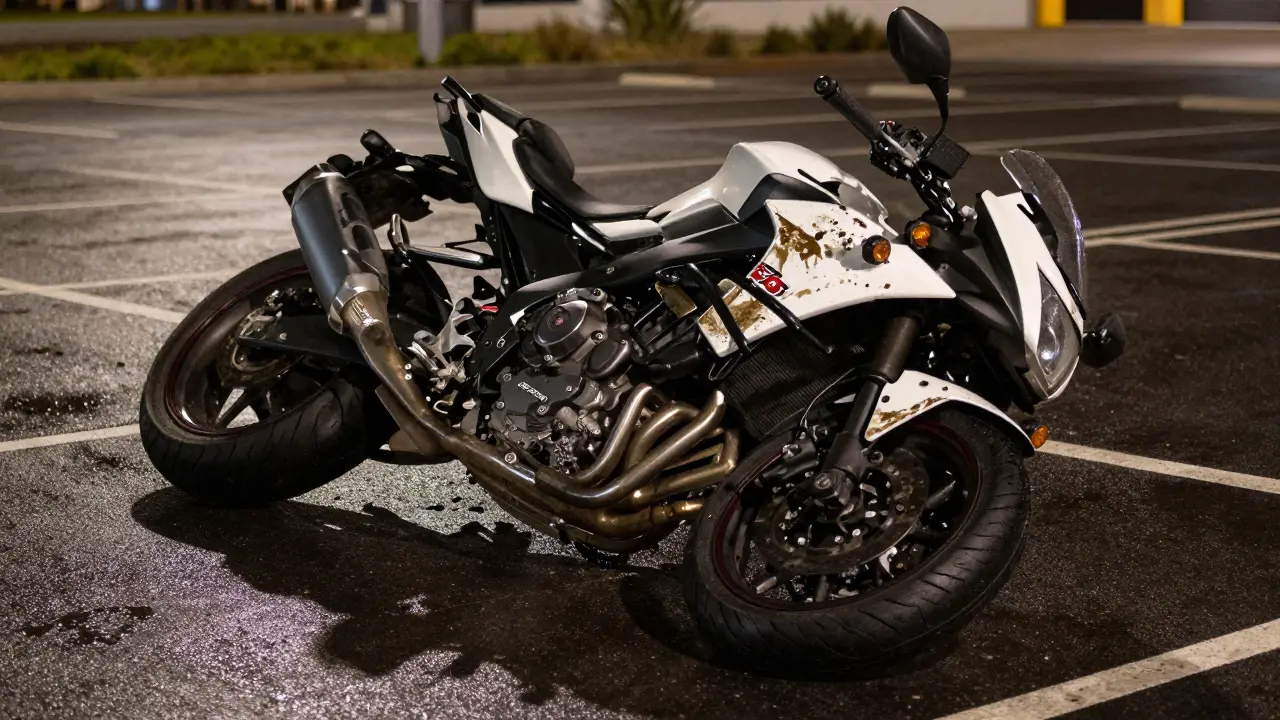
When you ride a motorcycle, you know the risks. One wrong turn, a slick patch of road, or a fender bender from a distracted driver can turn a fun ride into a costly repair job. That’s where engine guards and crash bars come in-not as flashy accessories, but as real, life-saving shields for your bike’s most vulnerable parts.
What Engine Guards and Crash Bars Actually Do
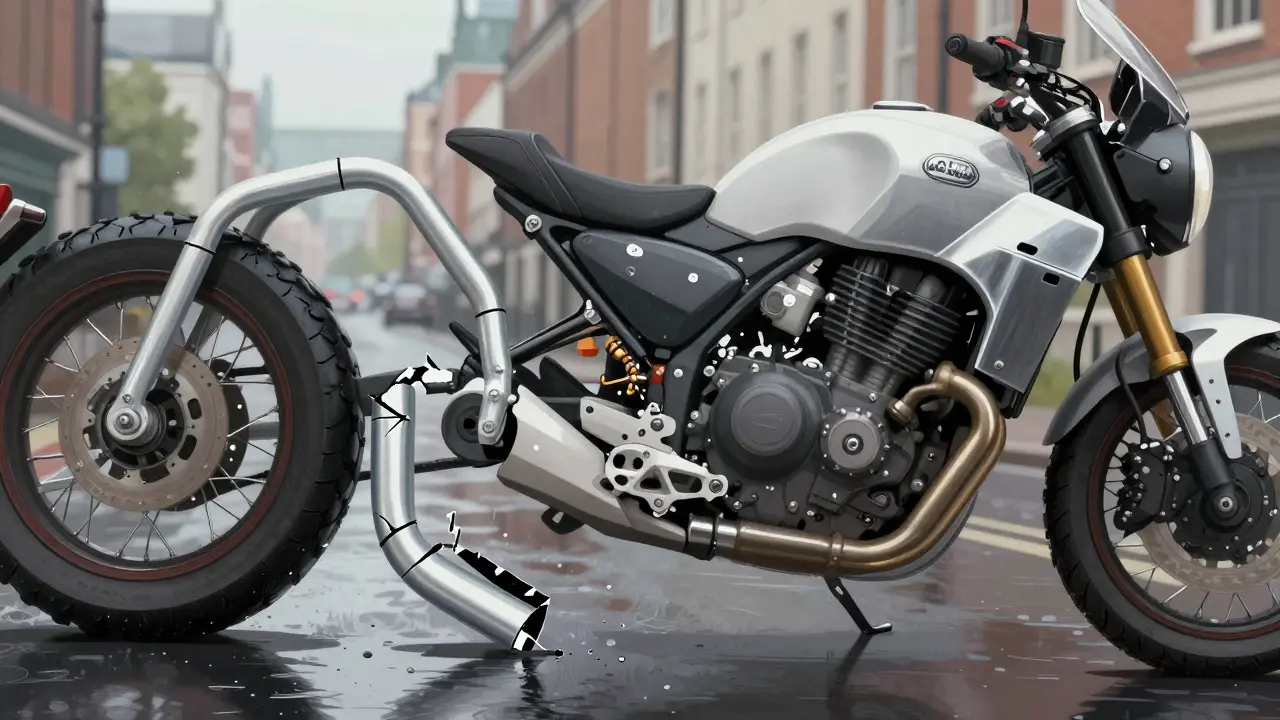
Engine guards and crash bars are metal frames, usually made from steel or aluminum, that wrap around the engine and frame of your motorcycle. They’re not meant to stop a crash, but to reduce damage when one happens. Think of them like a bumper on a car: they take the hit so your engine, radiator, and fairing don’t have to.
Most crashes involving motorcycles aren’t high-speed wipeouts. They’re low-side tumbles, parking lot stumbles, or slow-speed collisions. In these cases, the engine is often the first thing to hit the ground. A cracked engine case, a bent radiator, or a shattered fairing can cost hundreds-or even thousands-of pounds to fix. Engine guards prevent that. They keep the engine elevated and shielded, absorbing the impact instead of letting it crush your bike’s core components.
Steel vs. Aluminum: Which Material Wins?
Not all engine guards are built the same. The two main materials you’ll find are steel and aluminum. Each has clear trade-offs.
Steel guards are heavier, but they’re also tougher. They bend before they break, which means they can take multiple impacts without failing. If you ride off-road, commute through rough city streets, or just want maximum durability, steel is the way to go. Brands like Givi and SW-Motech offer steel models that have survived crashes where the bike slid for over 10 meters.
Aluminum guards are lighter, which matters if you care about handling and fuel efficiency. They’re also less likely to rust, which is a big plus in the UK’s wet climate. But aluminum doesn’t handle repeated impacts as well. If it bends too far, it can snap. For casual riders who mostly stick to paved roads, aluminum is fine. But if you’ve ever seen a bent aluminum guard after a minor tip-over, you’ll know it’s not always worth the weight savings.
Where Do These Guards Fit?
Engine guards aren’t one-size-fits-all. They’re designed for specific bike models. A guard made for a Honda CB500 won’t fit a Yamaha R6. That’s because every motorcycle has different engine shapes, frame mounts, and exhaust paths.
Good quality guards bolt directly to the frame using factory mounting points. No drilling, no cutting, no permanent changes. Installation usually takes under two hours with basic tools. Many riders install them themselves-there are plenty of YouTube videos for popular models like the Kawasaki Ninja 400 or BMW G310GS.
Some guards also double as footpeg extensions or provide mounting points for panniers. That’s a bonus if you ride long distances or carry gear. A well-designed guard doesn’t just protect-it adds functionality.
Real-World Impact: What Happens When You Use Them?
In 2024, a UK motorcycle safety group reviewed 127 crash reports from riders who had engine guards installed. The results were clear: 89% of those riders walked away with no engine damage. In contrast, riders without guards had engine damage in 76% of similar low-speed crashes.
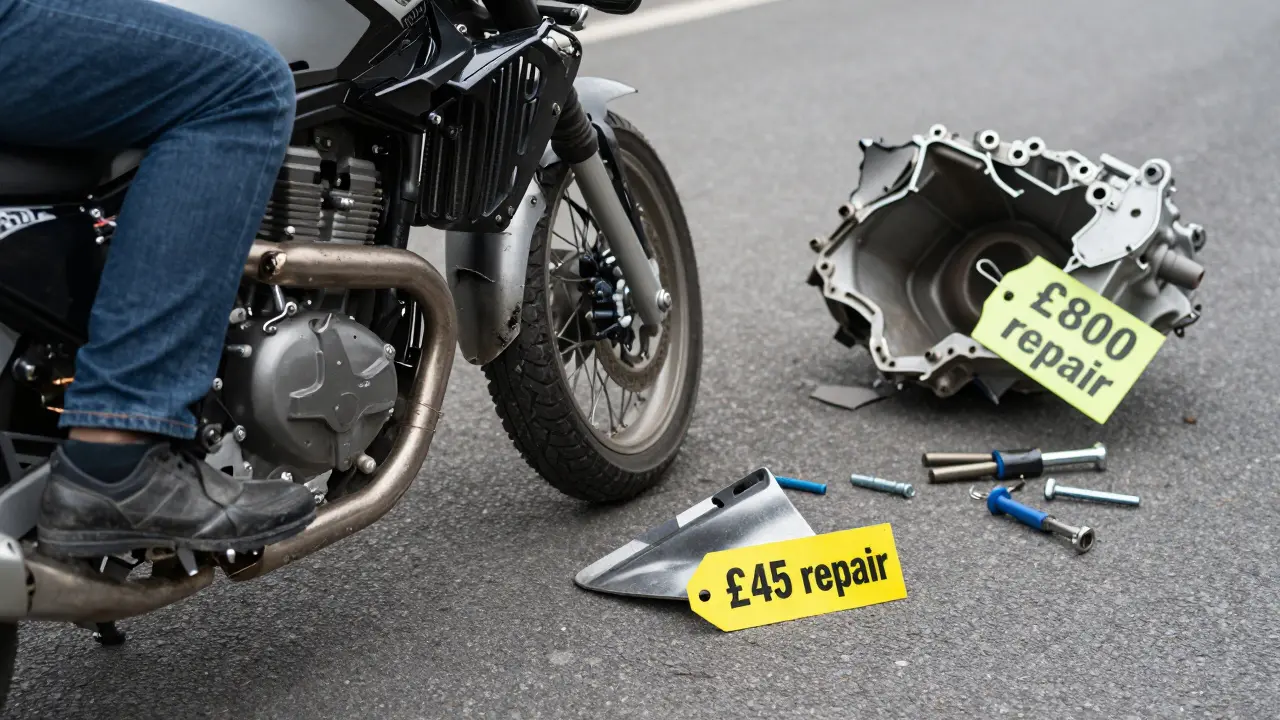
One rider in Bristol, riding a Suzuki V-Strom, slid into a curb while turning into a parking lot. The bike tipped over, and the engine hit the ground hard. Without the guard, the oil pan would’ve cracked. With it? The guard took the hit, bent slightly, and the engine was untouched. Repair cost: £45 for a new bolt. Without the guard? Over £800 in engine repairs.
These aren’t rare stories. They happen every week across the UK. Insurance companies have noticed. Some now offer small discounts for riders with certified crash bars installed.
What You Should Look For
Not all engine guards are created equal. Here’s what to check before buying:
- Material thickness: Look for at least 3mm steel or 4mm aluminum. Thinner bars bend too easily.
- Mounting points: Should connect to at least three solid frame points. Two points aren’t enough.
- Clearance: The guard shouldn’t interfere with the exhaust, chain, or swingarm. Check fitment guides for your exact model.
- Weight: A good guard adds 2-5 kg. Anything heavier might affect handling, especially on smaller bikes.
- Certification: Look for guards tested to ECE R107 or similar standards. Not all are, but certified ones have been crash-tested.
Avoid cheap, no-name brands sold on Amazon or eBay. Many are made from thin tubing that bends on impact and offers zero real protection. Stick to brands with proven track records: Givi, SW-Motech, Hepco & Becker, and Touratech.
Do They Make You a Better Rider?
Some riders say engine guards give them false confidence. They ride faster, take more risks, because they think they’re “protected.” That’s dangerous thinking.
Engine guards don’t make you invincible. They don’t stop you from crashing. They just make the crash less expensive. You still need good tires, proper brakes, and awareness. The guard is a safety net, not a parachute.
Think of it like wearing a helmet. It doesn’t mean you can ride recklessly. It means if you do fall, you’re more likely to walk away.
Who Needs Them Most?
Engine guards aren’t just for off-roaders or tourers. Here’s who benefits the most:
- Urban commuters: Constant stop-and-go traffic means more chances for low-speed bumps.
- Beginners: You’re learning. You’ll tip over. It’s normal. A guard saves you money and stress.
- Heavy bikes: Bikes over 500cc have expensive engines. Protecting them makes financial sense.
- Long-distance riders: A damaged radiator on a remote road can leave you stranded.
Even if you ride on quiet country roads, a sudden animal, a patch of gravel, or a pothole can flip your bike. Engine guards give you peace of mind-and a lot less repair bills.
Installation Tips
Installing engine guards is straightforward, but a few things make it easier:
- Remove the fairing or side panels if needed. This gives you clear access to the mounting bolts.
- Use threadlocker on all bolts. Vibration loosens them over time.
- Torque bolts to spec. Over-tightening can strip threads. Under-tightening means the guard moves.
- Check alignment before fully tightening. A misaligned guard can rub on the tire or exhaust.
- Test ride slowly at first. Listen for rattles. Check for interference with moving parts.
Most guards come with detailed instructions. If you’re unsure, watch a video for your exact bike model. Many manufacturers post step-by-step guides.
Final Thoughts
Engine guards and crash bars aren’t optional. They’re practical. They’re affordable. And for most riders, they’re the smartest investment you can make after a good helmet and quality tires.
A £150 guard can save you £1,200 in repairs. It can keep your bike rideable after a fall. It can mean the difference between walking away and needing a tow truck.
If you ride regularly, especially in the UK’s unpredictable weather and road conditions, you owe it to yourself-and your wallet-to install them. You won’t notice them until you need them. And when you do, you’ll be glad they’re there.
Do engine guards prevent crashes?
No, engine guards do not prevent crashes. They are designed to reduce damage after a crash or tip-over by protecting the engine, radiator, and frame. They absorb impact so your bike’s critical components don’t have to.
Are engine guards worth it for small bikes like the Honda CB500?
Yes. Even smaller bikes have expensive engines. A tip-over at a parking lot can crack the oil pan or bend the frame. For a bike like the CB500, a good engine guard costs less than £120 and can save you over £600 in repairs. Beginners especially benefit-learning to ride means occasional drops.
Can I install engine guards myself?
Most engine guards are designed for DIY installation. They use existing mounting points and require only basic tools like a wrench, socket set, and threadlocker. Installation usually takes 1-2 hours. Always follow the manufacturer’s torque specs and check for interference with the exhaust or chain after installation.
Do engine guards affect handling?
Well-designed guards add minimal weight-usually 2-5 kg-and don’t affect handling noticeably. Poorly designed or overly heavy guards can shift the bike’s center of gravity, especially on lighter models. Stick to model-specific guards made for your bike’s frame and weight class.
Are aluminum guards good for UK weather?
Yes. Aluminum doesn’t rust like steel, which makes it a good choice for the UK’s damp climate. However, aluminum is less durable under repeated impact. If you ride off-road or frequently tip over, steel is better. For paved roads and light use, aluminum works fine.
Do insurance companies offer discounts for crash bars?
Some UK insurers offer small discounts-usually 5-10%-for riders with certified engine guards installed. It’s not universal, but it’s worth asking your provider. Guards reduce claim payouts, so insurers have an incentive to reward riders who take preventive steps.
For riders in Bristol and beyond, engine guards aren’t about looking tough. They’re about riding smarter. When the road gets slick, the curb gets high, or the traffic doesn’t see you, these bars are the quiet heroes keeping your bike-and your ride-alive.
Comments
Soham Dhruv
just installed these on my cb500 last weekend. cost me like 90 bucks and saved me from buying a new oil pan when i dropped it at the gas station. no big deal really but way cheaper than a tow truck.
also the bolts came with threadlocker already on em so i didnt have to mess with anything. super easy.
March 16, 2026 at 23:45
Kayla Ellsworth
yeah right. next you’ll tell me seatbelts prevent car crashes. they just make the insurance company happier while you keep riding like an idiot.
if you’re that worried about your bike, maybe don’t ride it.
March 17, 2026 at 04:30
Jane San Miguel
The structural integrity of motorcycle engine mounts is fundamentally compromised without properly engineered crash protection systems. One cannot simply rely on anecdotal evidence from unverified crash reports to validate the efficacy of aftermarket hardware.
Furthermore, the claim that 'some insurers offer discounts' lacks peer-reviewed substantiation. One must question the methodology behind such assertions.
March 18, 2026 at 23:21
Kasey Drymalla
they’re lying. these guards are just government propaganda to make you spend money.
the real reason you crash is because the feds put magnets in the road to flip your bike. they want you to buy more crap so they can tax it.
also the oil pan thing? fake. your engine doesn’t even touch the ground. it’s all a scam.
March 20, 2026 at 17:32
Bob Buthune
i just want to say… i’ve been through so much. last year i lost my bike, my dog, and my job all in one week. then i got this steel guard for my v-strom and honestly? it felt like the first time in months someone cared.
when it hit the curb and bent just right… i cried. not because of the money saved, but because… it held on.
my bike didn’t die. and neither did i.
thank you to whoever designed this. you saved more than metal. you saved hope.
also i cried again when i saw the bolt. just one bolt. one little bolt. that’s all it took. i still have it. framed it. next to my dog’s collar.
you’re not just buying steel. you’re buying peace. you’re buying silence after the scream.
i don’t know why i’m telling you this. but i needed to.
you’re not alone.
March 21, 2026 at 11:31
Paul Timms
Agreed. This is one of the few motorcycle upgrades that actually makes sense. £150 to avoid £800 in repairs? No brainer.
Especially if you ride in the rain. Wet pavement + beginner = inevitable tip-over.
March 22, 2026 at 18:42
Jeroen Post
you think these guards help? what if they make the bike more likely to flip? they change the center of gravity. they act like levers. the real danger isn’t the crash-it’s the guard making it worse.
they’re selling you fear. the real problem is you’re not riding slower. not learning. not being humble.
you don’t need steel. you need awareness.
also who funded this study? the manufacturers? of course 89% of riders with guards didn’t get damage. they’re the ones who ride carefully. the ones without guards? they’re the reckless ones.
correlation isn’t causation. you’re being manipulated.
March 23, 2026 at 02:07
Nathaniel Petrovick
my buddy put these on his ninja 400 and it’s been a game changer. he’s a total noob but he dropped it twice already and both times the engine was fine. just bent the guard a little.
also the installation video on youtube was super easy. took him 90 mins with a friend helping.
if you’re on the fence-just do it. you’ll thank yourself later.
March 23, 2026 at 21:06
Dave Sumner Smith
they’re not for protection. they’re for tracking. the guard has a chip in it. they’re logging where you ride. who you ride with. how fast you go. insurance companies get the data. they’ll raise your rates if you go near a curve.
they’re not saving your bike. they’re saving your data.
you’re being watched. always.
March 25, 2026 at 13:05
Kayla Ellsworth
oh look. someone actually used their brain. good for you.
still think it’s all just marketing though.
March 26, 2026 at 08:02