
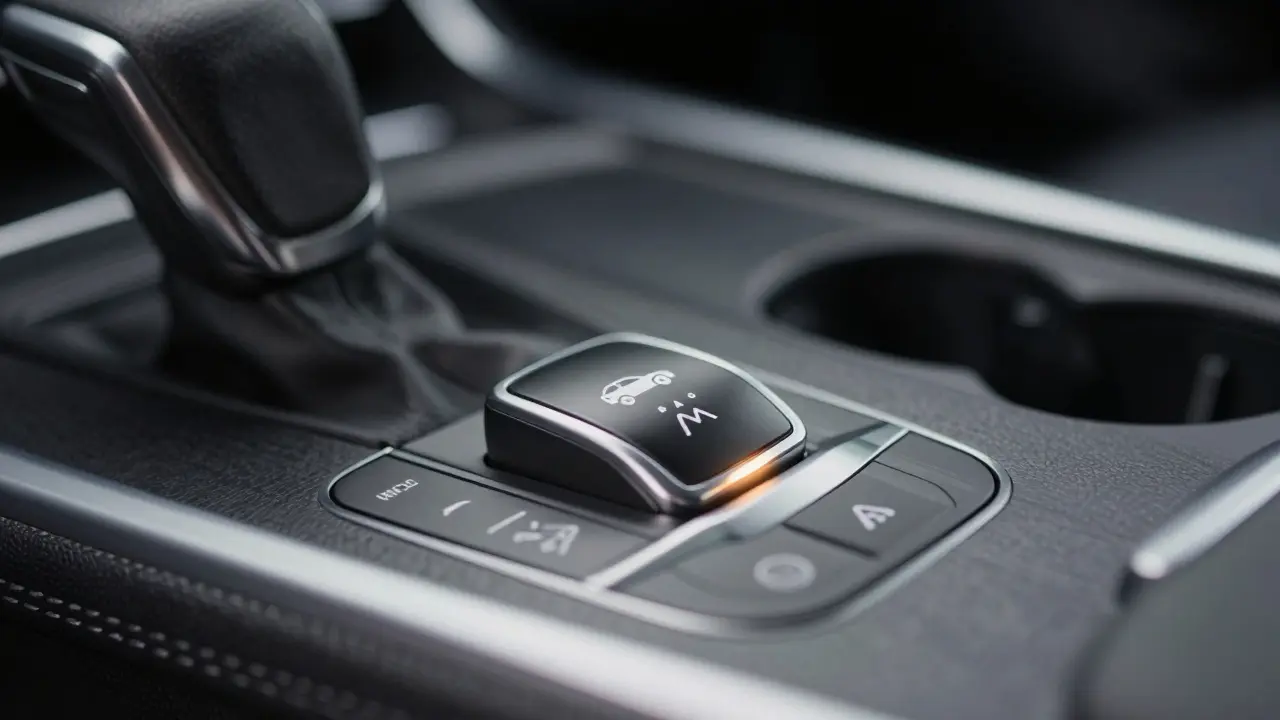
There is a small button in your car that most people ignore. It might say "ESC," "ESP," "VSC," or simply show a car with squiggly lines underneath it. For the vast majority of drivers, this button should never be touched. Electronic Stability Control is a critical safety system that prevents skidding and loss of control during emergency maneuvers. However, there are specific, rare scenarios where keeping this system active can actually hinder your progress or damage your vehicle. Knowing when to press that button-and more importantly, when not to-is a skill that separates cautious drivers from competent ones.
Disabling stability control is not about making your car faster on a Sunday drive. It is about managing physical limitations in extreme conditions. The system works by applying brakes to individual wheels and cutting engine power when it detects that your steering input doesn't match the car's actual direction. In normal traffic, this saves lives. In deep snow or mud, it can leave you stranded. Here is exactly how to use the ESC off switch correctly.
How Electronic Stability Control Works
To understand why you would turn it off, you first need to know what it does. ESC uses data from several sensors: yaw rate sensors (which detect if the car is spinning), lateral acceleration sensors, wheel speed sensors, and steering angle sensors. All this data feeds into an ECU (Engine Control Unit) hundreds of times per second.
If you turn the steering wheel left but the car starts sliding right, the ESC system instantly applies the brake to the outer front wheel. This creates a counter-force that pulls the car back in line. Simultaneously, it may reduce throttle input to prevent further slip. This happens faster than any human reflex. According to the National Highway Traffic Safety Administration (NHTSA), ESC has been proven to reduce single-vehicle fatal crashes by up to 61%. It is arguably the most important safety invention in automotive history since the seatbelt.
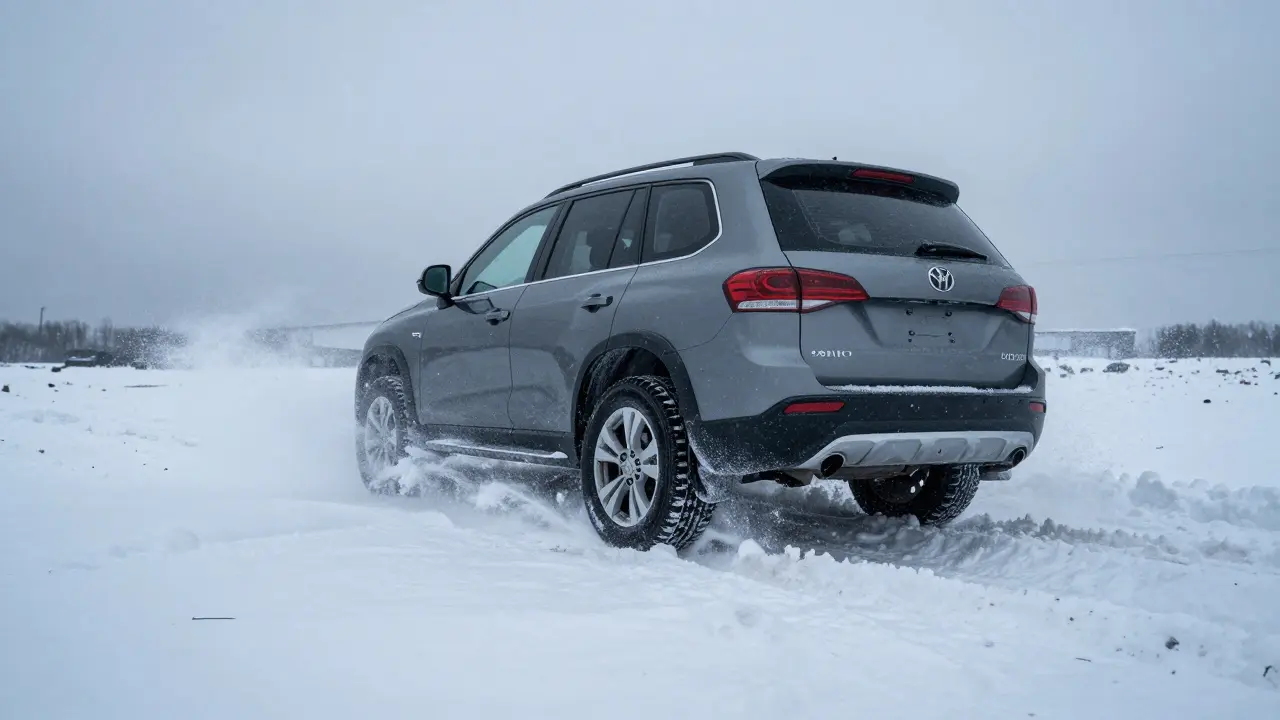
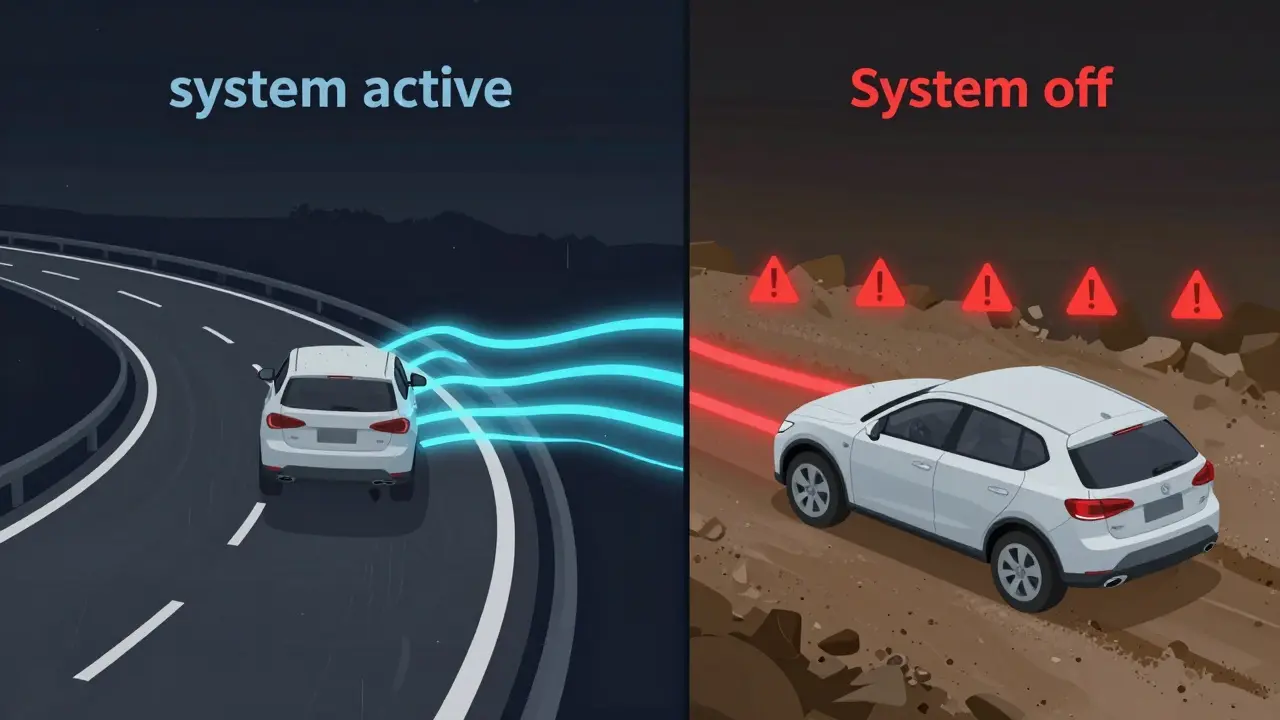
The problem arises because the system is designed for paved roads. It assumes that if the tires are slipping, they have lost grip. On pavement, this assumption is almost always correct. But on loose surfaces like deep snow, sand, or mud, some slip is necessary to move forward. When the ESC interprets necessary wheel spin as a dangerous skid, it cuts power and brakes the wheels, effectively locking you in place.
When You Should Absolutely Disable ESC
There are only three main scenarios where turning off stability control is beneficial. If you are not in one of these situations, leave the system on.
- Deep Snow: If you are stuck in deep, unplowed snow, the ESC will fight your attempts to gain momentum. By allowing the wheels to spin freely, you can pack snow under the tires to create traction. Once you have moved out of the deepest part, turn the system back on immediately.
- Mud or Sand: Similar to snow, soft terrain requires wheel spin to dig in or find purchase. Whether you are off-roading in mud or stuck on a sandy beach, the ESC’s intervention will likely cause you to bog down deeper.
- Towing Heavy Loads on Slippery Surfaces: Some modern vehicles have a specific "Tow/Haul" mode that adjusts shift points but keeps stability control on. However, in older vehicles or specific heavy-duty trucks, you might need to disable ESC to allow for controlled drifts when maneuvering a trailer out of a tight spot on gravel. This is advanced driving and should only be attempted by experienced drivers.
A common misconception is that you should turn off ESC for drifting or track days. While professional racers do disable it, amateur drivers should not. The margin for error is too small. Even on a track, losing control at high speeds without assistance can lead to expensive damage or injury. If you are using your car for performance driving, consider a vehicle with a dedicated "Sport" mode that relaxes the ESC thresholds rather than killing it entirely.
Partial Disable vs. Full Disable
Not all cars handle the "ESC Off" command the same way. It is crucial to read your owner’s manual to understand what exactly happens when you press the button.
| Mode Type | What Happens | Best Use Case |
|---|---|---|
| Full Disable | Both Stability Control and Traction Control are turned off. No braking intervention occurs. | Deep snow recovery, off-road crawling, professional racing. |
| Partial Disable (Sport Mode) | Traction Control remains active, but Stability Control thresholds are relaxed. Allows for slight oversteer before intervening. | Wet road performance driving, light snow. |
| Traction Control Only Off | Wheel spin is allowed, but the car will still apply brakes to correct yaw/spin. | Burning out (not recommended), launching from a standstill in low-grip conditions. |
In many modern cars, pressing the button once disables Traction Control but leaves Stability Control active. Pressing it twice or holding it for three seconds may fully disable both. Always check the dashboard indicator. A solid light usually means the system is off; a flashing light means it is actively working.
The Dangers of Driving with ESC Off
Driving with electronic stability control disabled on dry or wet pavement is dangerous. Without the system, your natural instincts might betray you. For example, if you hit a patch of black ice and steer sharply, your instinct might be to lift off the gas and brake hard. This often causes the rear end to swing out. With ESC on, the system would automatically brake the outside wheel to straighten the car. With ESC off, you must manually counter-steer and modulate the throttle-a skill that takes years to master.
Another risk is complacency. Drivers who disable ESC for a short trip through snow often forget to turn it back on. They then encounter a highway merge or a sudden rain shower with no safety net. Modern cars are designed to re-enable ESC automatically upon restarting the engine, but this is not universal. Some models require manual re-engagement. Make it a habit to check the status of the system every time you start the car.
Common Mistakes and Myths
One persistent myth is that disabling ESC improves fuel economy. It does not. In fact, constant wheel spin caused by aggressive acceleration without traction control can increase tire wear and fuel consumption due to inefficient energy transfer. Another myth is that ESC makes the car slower. While it limits maximum cornering speed by preventing excessive slip, it allows you to carry more average speed through corners because you don't have to slow down as much to stay safe. Professional race cars have sophisticated versions of stability control (often called TCS or Race ABS) precisely because it helps them lap faster safely.
Some drivers believe they can "outsmart" the system by being careful. But physics doesn't care about your confidence. A hydroplane event happens in milliseconds. Your reaction time is roughly 0.75 seconds. The ESC system reacts in less than 0.1 seconds. Relying on your own reflexes in an emergency is statistically risky.
Legal and Insurance Implications
In many regions, including the European Union and the United States, ESC is mandatory for new passenger cars. This is because the safety benefits are so significant. While there is no law against turning the system off temporarily, doing so permanently could void your insurance coverage in the event of an accident. If an adjuster finds that you had disabled a standard safety feature, they may argue contributory negligence.
Furthermore, some fleet management companies monitor the status of safety systems via telematics. If you are driving a company vehicle, disabling ESC might trigger an alert or violate company policy. Always check your employment contract or fleet guidelines before tampering with safety settings.
Practical Tips for Using the ESC Off Switch
If you find yourself in a situation where you need to disable the system, follow these steps:
- Identify the Button: Look for a button with a car icon and wavy lines. It is usually located near the gear shifter or on the center console.
- Check the Indicator: Press the button and look for the corresponding warning light on the dashboard. Ensure it is steady, not flashing.
- Drive Gently: Just because the system is off doesn't mean you can drive recklessly. Accelerate smoothly to avoid unnecessary wheel spin.
- Re-enable Immediately: As soon as you exit the low-traction area (snow, mud, sand), press the button again to restore full protection.
- Know Your Car: Read your owner’s manual. Some cars have a "Snow Mode" that automatically adjusts the ESC behavior without needing to turn it off completely.
Remember, the goal is not to disable safety features for fun. The goal is to use them intelligently. The ESC off switch is a tool for specific mechanical challenges, not a license to drive aggressively. Treat it with respect, and it will serve you well when you truly need it.
Does turning off ESC make my car faster?
No, not in real-world driving. While it removes limits on wheel slip, this leads to loss of control and slower average speeds due to caution. Professional racers use advanced stability aids to go faster safely. For street driving, ESC helps you maintain higher average speeds by preventing accidents.
Will my car restart with ESC off?
In most modern vehicles, yes. The system defaults to "on" for safety reasons. However, some older or specialized models may retain the last setting. Always check your dashboard indicators after starting the car to ensure the system is active.
Can I disable ESC permanently?
Technically, you can unplug the fuse or disconnect the sensor, but this is illegal in many jurisdictions and voids your warranty. It also significantly increases the risk of accidents. Never permanently disable a mandated safety system.
What is the difference between Traction Control and Stability Control?
Traction Control prevents wheel spin during acceleration. Stability Control (ESC) prevents skidding and loss of directional control during cornering or emergency maneuvers. Traction Control is a subset of the broader ESC system. Disabling one may or may not disable the other, depending on the vehicle.
Should I turn off ESC in the rain?
Absolutely not. Rain reduces tire grip, making stability control more important than ever. The system helps prevent hydroplaning and loss of control on wet roads. Only disable ESC in deep snow or mud where wheel spin is required for movement.