
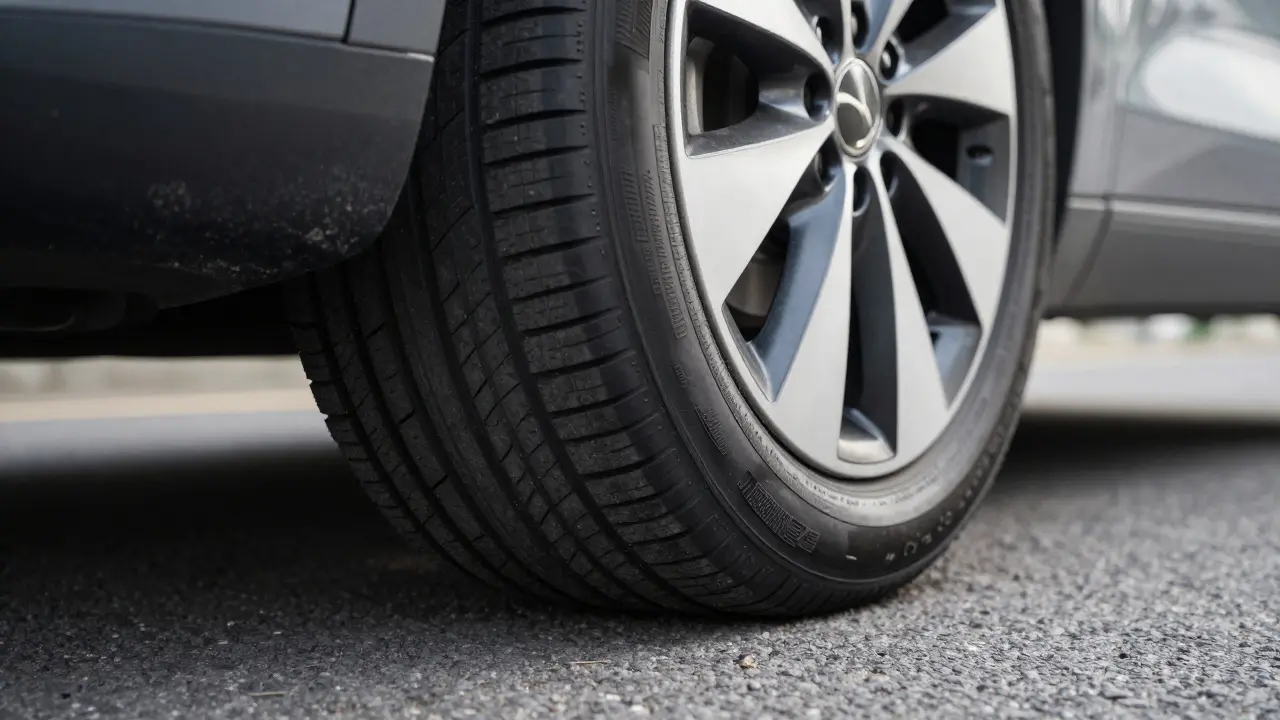
The Weight Factor: Why EV Tires Wear Down Faster
If you've noticed your tread disappearing quicker than it did on your old combustion car, you aren't imagining it. EV maintenance differences is most visible right where the rubber meets the road. Electric cars are significantly heavier due to the massive battery packs. A Tesla Model 3, for example, weighs considerably more than a Honda Civic. This extra mass puts constant pressure on the Tires, leading to faster degradation. But weight isn't the only culprit. The Electric Motor provides instant torque. The second you hit the pedal, the car lunges forward with full force. This aggressive acceleration scrubs the rubber off the tires much faster than a gradual internal combustion engine ramp-up. To combat this, you shouldn't just buy any tire. You need tires specifically designed for EVs. These usually have reinforced sidewalls to handle the weight and special rubber compounds to reduce rolling resistance and noise. Because EVs lack engine noise, the "hum" of the road becomes much more noticeable, so low-noise tires are a huge quality-of-life upgrade.| Factor | Internal Combustion (ICE) | Electric Vehicle (EV) |
|---|---|---|
| Average Vehicle Weight | Lighter | Heavier (Battery Weight) |
| Torque Delivery | Gradual build-up | Instant peak torque |
| Tread Life | Standard | Typically 20% shorter |
| Noise Profile | Masked by engine | Highly audible (requires specialized rubber) |
The Brake Paradox: Less Wear, More Maintenance
Here is the weird part: you'll likely change your brake pads far less often in an EV, but you might have to maintain the braking system more carefully. This is all thanks to Regenerative Braking. This system uses the electric motor as a generator to slow the car down, converting kinetic energy back into electricity for the battery. When you lift your foot off the accelerator, the car brakes automatically without you even touching the pedal. Because the Brake Pads and rotors are barely used for normal slowing, they can last for 100,000 miles or more in some cases. However, this lack of use creates its own set of problems. In wet or salty environments-like a rainy winter in Bristol-brake rotors can develop surface rust because they aren't getting hot enough to burn it off. Furthermore, the mechanical components of the braking system can actually "seize" or get stuck because they aren't moving as often. This means that while you aren't wearing down the pads, you still need to ensure the calipers are lubricated and the brake fluid is flushed. Brake Fluid is hygroscopic, meaning it absorbs moisture from the air. Even if you don't wear out your pads, the fluid still degrades and needs replacing every two to five years to prevent internal corrosion.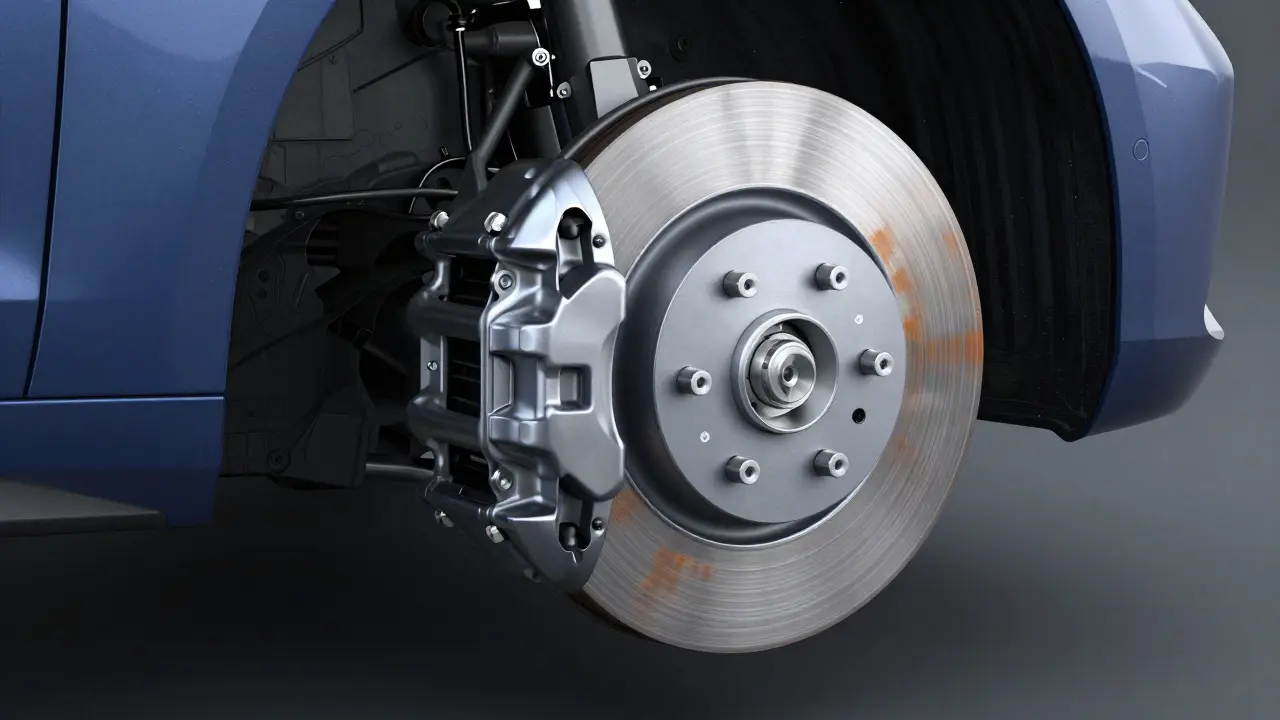
Coolant: Not Just for the Radiator Anymore
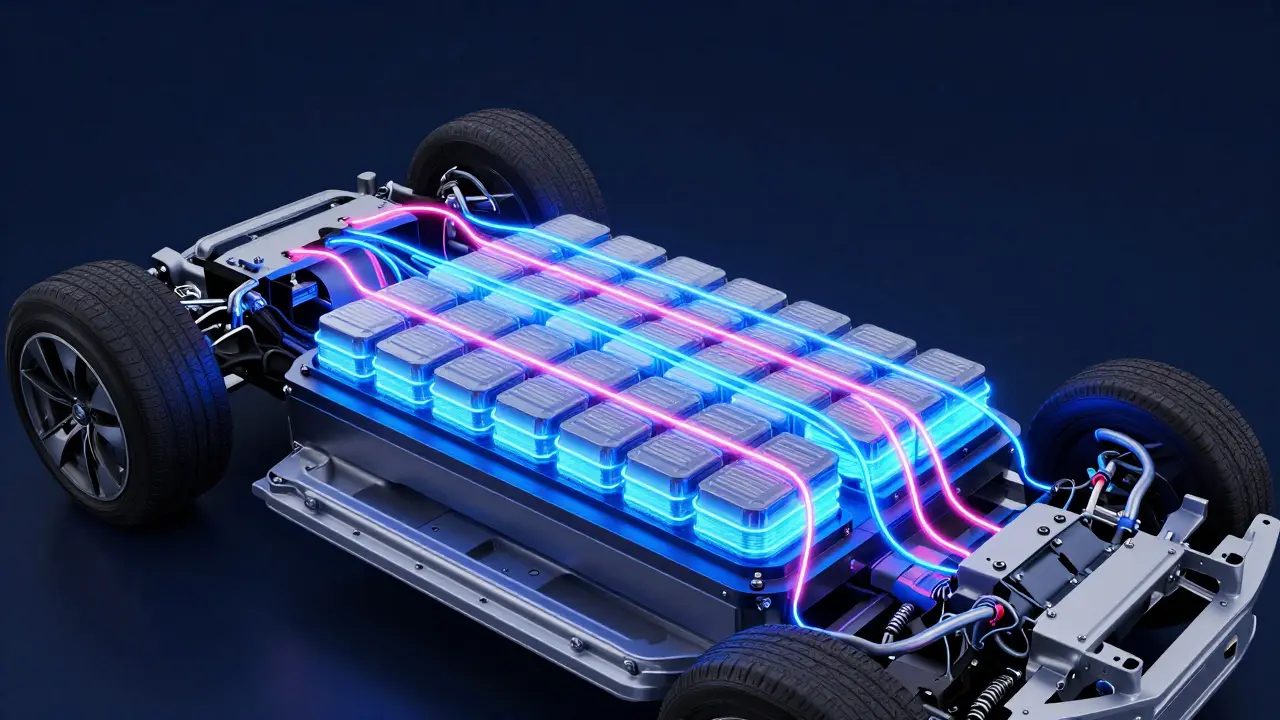
In a traditional car, coolant keeps the engine from melting. In an EV, the Coolant has a much more complex job: managing the temperature of the Battery Pack. Batteries are like humans-they hate being too hot or too cold. If a battery gets too hot during fast charging or aggressive driving, it loses efficiency. If it gets too cold, it can't accept a charge quickly. Most EVs use a sophisticated Thermal Management System that circulates liquid coolant through the battery cells to keep them in a "Goldilocks zone." This isn't just simple water and antifreeze. Many EVs use specialized dielectric fluids or low-conductivity coolants to prevent electrical shorts. Unlike a gas car where a coolant leak might just mean a hot engine, a failure in an EV's cooling system can lead to "thermal throttling," where the car intentionally slows down your charging speed or limits power to protect the battery. You need to keep an eye on coolant levels and follow the manufacturer's schedule for flushing the system. If you see a mysterious puddle of blue or pink fluid under your car, don't ignore it-your battery's longevity depends on that liquid staying put.Hidden Maintenance Tasks You Shouldn't Ignore
Since you aren't spending your Saturdays changing oil, it's easy to fall into a "set it and forget it" mentality. But there are a few other areas that need your attention to keep the car safe and efficient.- Cabin Air Filters: These are often overlooked but critical. Since EVs are so quiet, you'll notice smells or dust more quickly. Replace your HEPA or standard cabin filters every 12,000 to 15,000 miles.
- Windshield Wiper Fluid: You'll use this just as much as in a gas car. In an EV, where visibility is key for safety-critical sensors and cameras, keeping your glass clean is non-negotiable.
- 12V Battery Health: Yes, your EV has a giant battery, but it also has a small 12V Lead-Acid Battery to power the lights, infotainment, and computer systems. If this small battery dies, your car won't start, even if the main battery is at 100%. These usually need replacing every 3-5 years.
- Suspension Components: Because of that extra battery weight, your bushings, ball joints, and struts may wear out slightly faster. Listen for clunks or squeaks when driving over speed bumps.
Comparing the Long-Term Cost of Ownership
When you look at the big picture, the maintenance profile of an EV is significantly lower than an ICE vehicle. You've eliminated the oil filter, the air filter for the intake, the spark plugs, the alternator, and the starter motor. However, the costs shift toward the "wear and tear" items. For a typical driver, the biggest recurring expense shifts from engine service to tire replacement. You might find yourself buying a new set of tires every 30,000 miles instead of every 50,000. But when you subtract the cost of ten oil changes over that same period, the EV still wins on the wallet front. The key is being proactive. Don't wait for a warning light to tell you the coolant is low or the tires are bald.Do I really need special tires for my EV?
Yes. Standard tires aren't designed for the high torque and heavy weight of an EV. Using non-EV tires will likely lead to faster wear and a much noisier ride. Look for tires with "HL" (High Load) ratings and specific EV branding to ensure the best range and longevity.
If I use regenerative braking, do I still need to check my brakes?
Absolutely. While the pads last longer, the mechanical parts of the braking system can still corrode or seize from lack of use. You should still have your brake fluid tested and replaced according to the manufacturer's schedule, and have a mechanic check the calipers for sticking.
What happens if the battery coolant leaks?
A coolant leak can lead to overheating during fast charging or high-speed driving. The car's computer will typically limit your charging speed or performance to protect the battery. In extreme cases, it could lead to permanent battery degradation, so leaks should be fixed immediately.
Why does my EV have a 12V battery if it has a huge main battery?
The 12V battery acts as a "trigger" to wake up the car's computers and close the high-voltage contactors that allow power from the main battery to flow. It also powers accessories when the main system is off. If the 12V battery dies, the car cannot safely engage the main power source.
How often should I rotate my EV tires?
Because of the weight and torque, you should rotate your tires every 5,000 to 7,500 miles. This helps even out the wear and can significantly extend the life of the rubber, saving you money in the long run.
Comments
Peter Reynolds
the regenerative braking is a lifesaver honestly.. just gotta remember that fluid change every few years
April 21, 2026 at 03:56
Fred Edwords
It is absolutely crucial to adhere to the manufacturer's schedule for brake fluid flushes! Many owners mistakenly assume that the absence of pad wear equates to a maintenance-free system, which is a dangerous misconception.
April 22, 2026 at 05:05
Sarah McWhirter
Sure, the "goldilocks zone" sounds great, but let's be real. Why are these thermal systems designed to be so fragile? It's almost like they want us to go back to the dealership every six months for a "check-up" to keep the subscription active. Just a thought on how the corporate overlords keep the wheels turning, literally!
April 23, 2026 at 21:35
Ananya Sharma
The sheer audacity of suggesting that the EV "wins on the wallet front" is laughable at best, considering the astronomical cost of specialized EV tires and the inevitable battery degradation that no amount of coolant flushing can truly halt in the long run. One must analyze the systemic failure of the current infrastructure before claiming financial victory, as the hidden costs of battery replacement effectively nullify any meager savings from skipping an oil change every few months, making the entire argument for long-term cost efficiency a complete fallacy.
April 24, 2026 at 05:13
Nick Rios
I appreciate the tip about the 12V battery. I've seen a few people stranded simply because they forgot about that tiny part of the car.
April 25, 2026 at 08:00
Amanda Harkins
it's all just a different kind of chore. the universe just trades one burden for another, i guess.
April 25, 2026 at 11:55
Jeanie Watson
Tires are too expensive.
April 27, 2026 at 01:41
Tom Mikota
Oh, look at the big brain on this guide!!! I'm sure we're all just thrilled to discover that tires... you know... actually touch the road? Truly revolutionary stuff here!!!
April 28, 2026 at 21:25
Mark Tipton
One must observe that the 12V battery architecture is a remnant of legacy automotive design that serves as a critical fail-safe. However, it is highly probable that certain manufacturers intentionally utilize lead-acid components to maintain a dependency on traditional replacement cycles. The integration of the thermal management system is quite sophisticated, yet it remains a vulnerability that could be exploited via remote software updates to limit vehicle longevity, an occurrence that aligns perfectly with planned obsolescence theories. I find the emphasis on dielectric fluids particularly interesting, as it highlights the volatile nature of these high-capacity cells when not meticulously regulated by the onboard computer. It is an elegant system, provided one trusts the entity that wrote the code controlling the temperature thresholds. Most users are blissfully unaware that a minor coolant leak can trigger a cascade of software-induced performance throttling that effectively neuters the vehicle's acceleration. One should also consider the environmental impact of the specialized rubber compounds used in EV tires, which are often less recyclable than standard variants. The irony of a "green" vehicle creating faster-wearing, non-recyclable rubber waste is a paradox that is frequently omitted from such guides. It is essentially a redistribution of environmental harm from the tailpipe to the asphalt. Therefore, the claim of a lower cost of ownership must be scrutinized under a full lifecycle analysis. The reality is that we are simply shifting the maintenance burden from a mechanical realm to a chemical and digital one. This transition requires a level of technical literacy that the average consumer simply does not possess. It is an intriguing experiment in consumer psychology.
April 29, 2026 at 04:50
Adithya M
Who cares about the 12V battery when the main one is the problem? Just get a better car if you're worried about a few tires!
April 29, 2026 at 17:35