
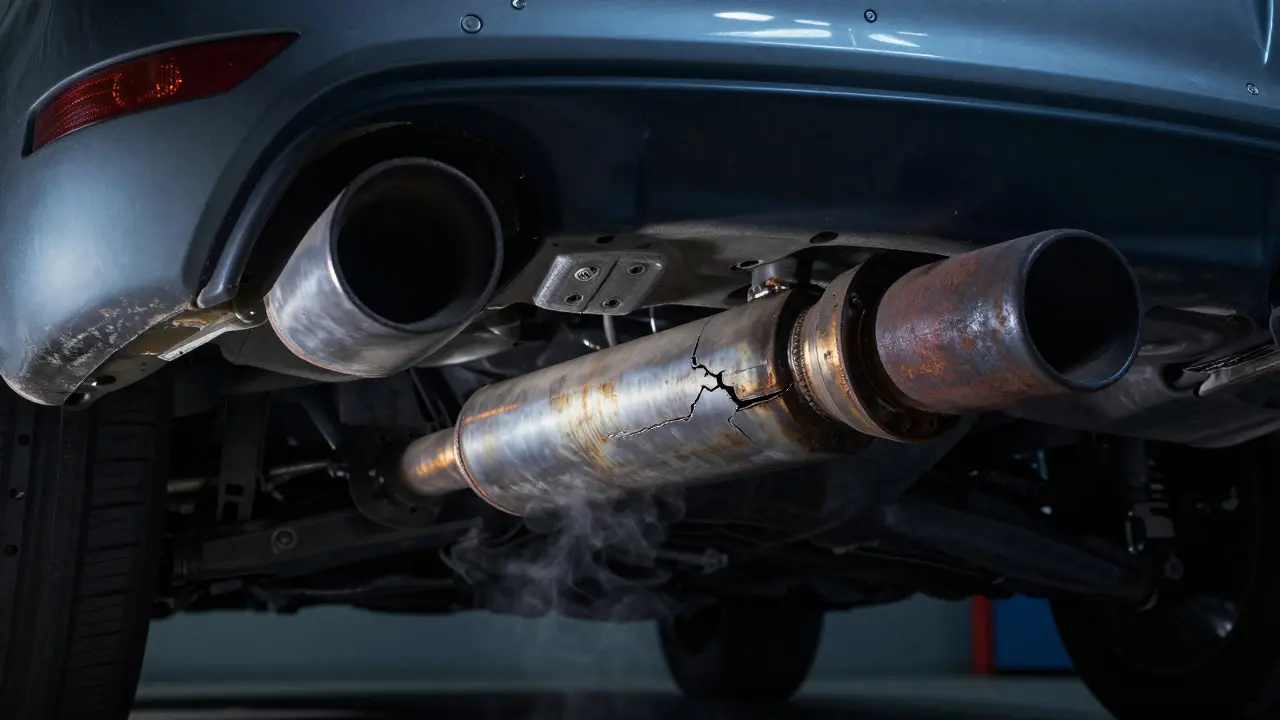
That little orange light on your dashboard isn't just a suggestion; it's a warning that your car is breathing badly. When you see the Check Engine Light (CEL) glow, your first instinct might be to ignore it, but if it's linked to an exhaust system problem a malfunction in the components that manage waste gases from the engine, including mufflers, pipes, and converters, you're likely facing more than a cosmetic issue. You are dealing with potential safety hazards, reduced fuel efficiency, and a guaranteed fail at your next state inspection. The good news? Most exhaust issues are diagnosable without a degree in engineering, and many repairs are straightforward if caught early.
Why Your Exhaust Matters More Than You Think
The exhaust system is often the forgotten part of a vehicle until something goes wrong. Its job is simple: take hot, toxic gases out of the engine and push them out the back, while cleaning up pollutants along the way. But when parts fail, the consequences ripple through the entire car. A small leak can let carbon monoxide into the cabin, which is dangerous. A clogged filter can strangle engine power, making your morning commute feel like you're driving uphill. Understanding the anatomy helps you pinpoint where the trouble starts.
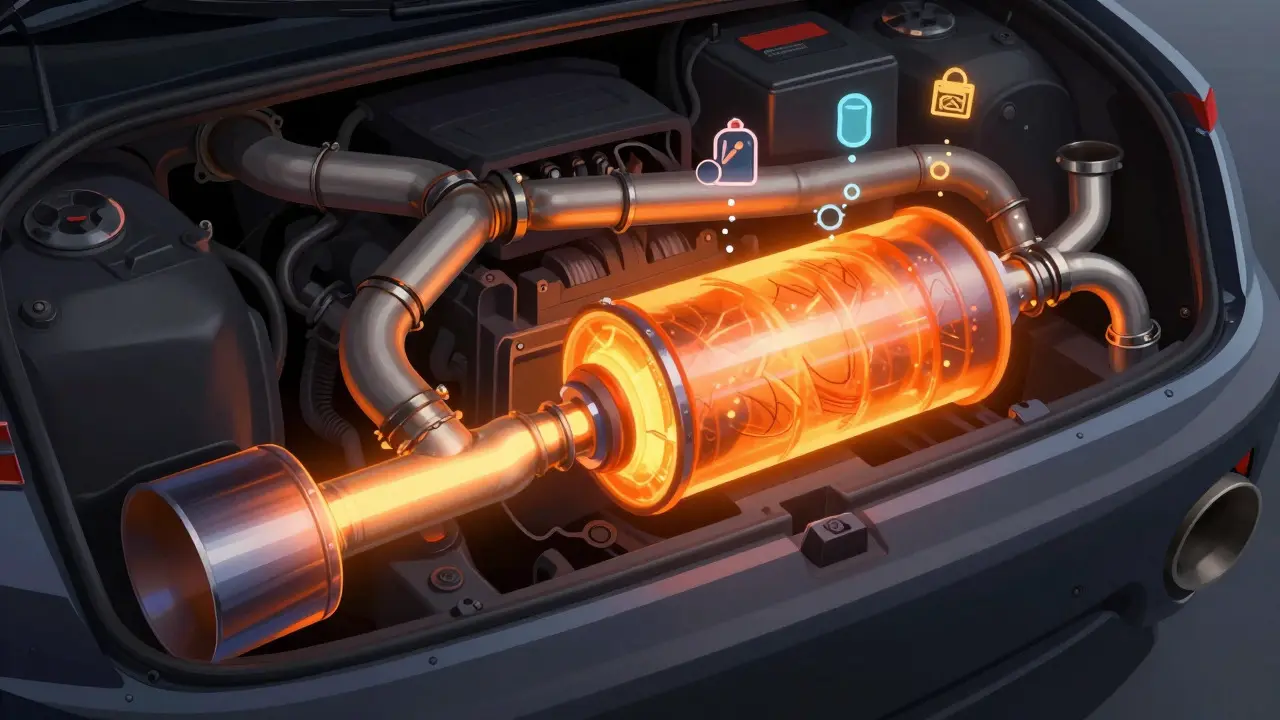
The core components include the manifold, the catalytic converter, the oxygen sensors, the resonator, the muffler, and the tailpipe. Each plays a specific role. The manifold collects gas from the cylinders. The catalytic converter cleans the gas. Oxygen sensors monitor the air-fuel mix. The muffler quiets the noise. If one fails, the others suffer. For instance, a bad oxygen sensor sends wrong data to the computer, causing the engine to run too rich or too lean, which then damages the catalytic converter over time.
Spotting the Signs Before They Get Expensive
You don't need a mechanic to spot early warnings. Listen, smell, and look. Here’s what to watch for:
- Loud noises: Rattling, hissing, or popping sounds usually mean a crack in the pipe or a loose heat shield. A deep rumble might indicate a perforated muffler.
- Smells: A rotten egg smell suggests a failing catalytic converter. Sweet smoke could mean coolant leaking into the exhaust, a serious head gasket issue.
- Reduced performance: If your car feels sluggish or uses more gas than usual, the exhaust flow is restricted.
- Visible leaks: Black soot under the car or steam rising from the undercarriage points to a hole in the pipe.
- Check Engine Light: This is the most common trigger. It doesn't always mean the exhaust is broken, but it's often connected.
Don't wait for the light to turn solid yellow. An intermittent light means the issue is coming and going, which makes diagnosis harder. A solid light means the computer has stored a permanent fault code. Addressing these signs early can save you hundreds of dollars in labor and parts.
Decoding the Error Codes
When the CEL comes on, the first step is reading the OBD-II codes. You can do this yourself with a cheap code reader from any auto parts store, or ask a shop to scan it for free. The codes tell you exactly which sensor or component triggered the alert. Common exhaust-related codes include:
- P0420: Catalyst System Efficiency Below Threshold. This is the big one. It means the catalytic converter isn't cleaning the exhaust as well as it should.
- P0130-P0135: Oxygen Sensor Circuit Malfunction. These point to a failing upstream or downstream oxygen sensor.
- P0441: Evaporative Emission Control System Incorrect Purge Flow. Often related to the gas cap or charcoal canister, but can mimic exhaust issues.
Here’s the trick: don’t fix the code; fix the cause. A P0420 code might be caused by a bad oxygen sensor sending false data, not a dead catalytic converter. Swapping the sensor first is cheaper than replacing the converter. Always start with the cheapest, most likely culprit.
Common Faults and How to Fix Them
Let’s break down the most frequent exhaust failures and what they actually require.
Oxygen Sensor Failure
Oxygen sensors measure the amount of unburned oxygen in the exhaust. They last about 100,000 miles. When they die, the engine computer can’t adjust the fuel mix correctly. Symptoms include poor fuel economy and a rough idle. The fix is simple: replace the sensor. Upstream sensors (before the converter) are critical for fuel management. Downstream sensors (after the converter) monitor the converter’s health. Use high-quality brands like Bosch or Denso to avoid repeat failures.
Catalytic Converter Clogging or Melting
This is the expensive one. Catalytic converters contain precious metals like platinum and palladium that convert harmful gases into harmless ones. Over time, they clog with soot or melt if the engine burns oil. A clogged converter restricts airflow, killing engine power. A melted one lets raw fumes escape. Replacement costs vary wildly based on car make and model, ranging from $800 to $2,500. Sometimes, cleaning the converter with a specialized additive works if it’s only lightly clogged, but severe cases need replacement.
Exhaust Leaks and Cracks
Heat cycles cause metal to expand and contract, leading to cracks at welds or flanges. Leaks are annoying because they’re loud, but rarely dangerous unless near the cabin. Repair involves welding or using high-temperature sealant. For rusted-through sections, cut out the damaged part and install a new pipe section. DIYers can handle this with basic tools, but professional welding ensures a better seal.
Muffler Perforation
If your car sounds like a motorcycle, the muffler is shot. Rust eats through the thin metal, creating holes. You can patch it temporarily with tape or clamps, but the real fix is replacing the muffler. Aftermarket mufflers are affordable and easy to swap. Just make sure the size matches the original to maintain proper backpressure.
DIY vs. Professional Repair: Where to Draw the Line
Not every exhaust job requires a shop. Here’s a quick guide:
- Do it yourself: Replacing oxygen sensors, swapping mufflers, tightening loose hangers, and checking for visible leaks. These tasks take under an hour and cost less than $100 in parts.
- Call a pro: Replacing catalytic converters, welding major cracks, and diagnosing complex electrical issues with oxygen sensors. These jobs require lift access, specialized tools, and expertise to avoid misdiagnosis.
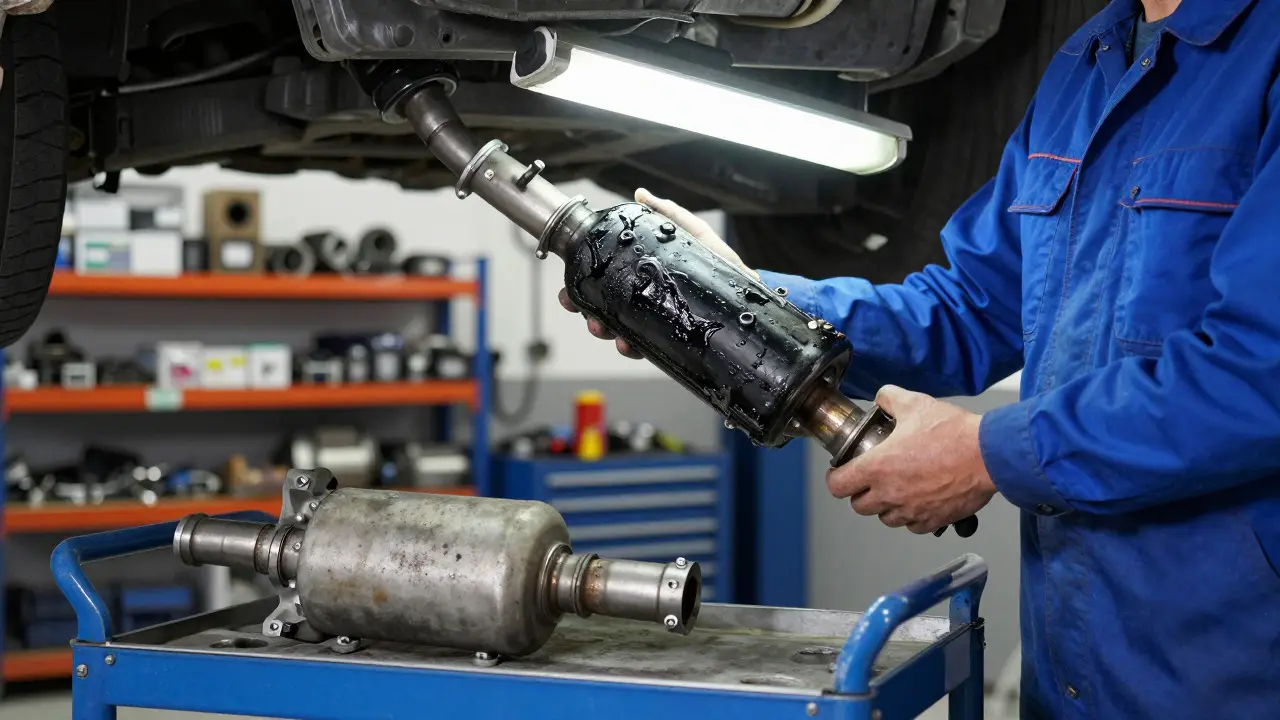
Always get a second opinion if a shop quotes over $1,000 for an exhaust repair. Ask for the old part to inspect it. If the catalytic converter looks black and shiny inside, it’s likely melted. If it’s gray and dusty, it might just be dirty. This visual check can save you money.
Preventing Future Failures
Exhaust systems fail due to neglect and age. Here’s how to extend their life:
- Fix leaks immediately: Small cracks grow fast. Don’t drive with a loud rattle for months.
- Keep the engine healthy: Burning oil or coolant destroys catalytic converters. Change your oil regularly and address any engine leaks promptly.
- Use quality fuel: Cheap fuel contains more impurities that clog sensors and converters.
- Inspect annually: Have a mechanic check the undercarriage for rust and damage during routine maintenance.
Driving in wet climates accelerates rust. Consider applying rust-proofing spray to exposed exhaust parts if you live in a snowy region. Also, avoid hitting potholes hard, as impact can crack manifolds and pipes.
Cost Breakdown and What to Expect
Budgeting for exhaust repairs depends on the severity. Here’s a realistic range for typical vehicles:
| Repair Type | Parts Cost | Labor Cost | Total Range |
|---|---|---|---|
| Oxygen Sensor Replacement | $50 - $150 | $100 - $200 | $150 - $350 |
| Exhaust Pipe Welding | $20 - $50 | $150 - $300 | $170 - $350 |
| Muffler Replacement | $100 - $300 | $100 - $200 | $200 - $500 |
| Catalytic Converter Replacement | $600 - $2,000 | $200 - $400 | $800 - $2,400 |
These prices vary by location and vehicle type. Luxury cars cost more due to tighter packaging and higher-grade parts. Independent shops often charge less than dealerships, but make sure they use OEM or equivalent quality parts.
Frequently Asked Questions
Can I drive with a bad exhaust system?
Yes, but it’s risky. Small leaks are mostly annoying, but large leaks can let carbon monoxide into the cabin. A clogged converter will reduce power and fuel economy. If the Check Engine Light is on, plan repairs soon to avoid failing emissions tests.
How long does a catalytic converter last?
Typically 100,000 to 150,000 miles. However, engine problems like oil burning or coolant leaks can destroy it much faster. Regular maintenance extends its life significantly.
Is it worth fixing a rattling exhaust shield?
It’s cosmetic, but the vibration can loosen other parts over time. Re-tightening bolts or adding rubber dampeners is a cheap fix that prevents future headaches.
What causes a rotten egg smell from the exhaust?
A failing catalytic converter. The sulfur compounds in fuel aren’t being converted properly, resulting in hydrogen sulfide gas, which smells like rotten eggs. Replace the converter or clean it if mild.
Can I clear the Check Engine Light myself?
You can reset the light with a code reader, but if the underlying problem isn’t fixed, it will come back within days. Clearing the light without repairing the issue hides the symptom, not the disease.