
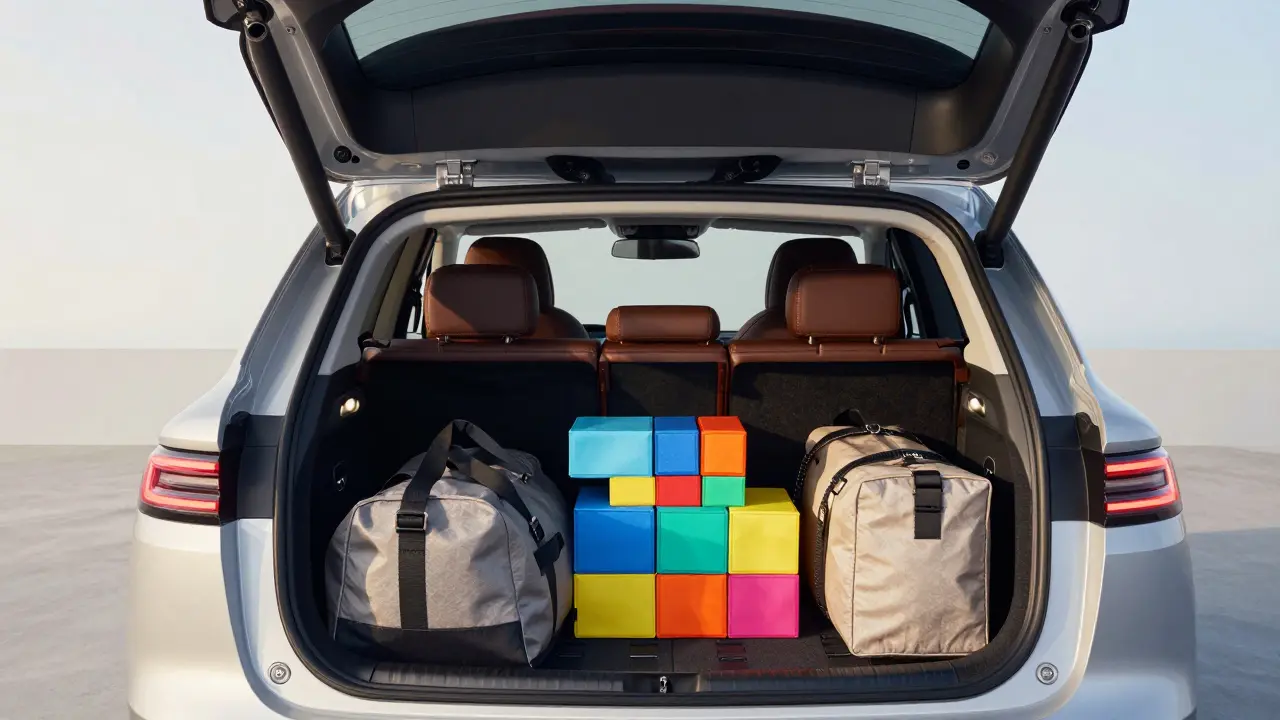
Ever feel like you're playing a high-stakes game of Tetris every time you try to close the boot of the car for a family holiday? You're not alone. Trying to fit three kids, a dog, a cooler, and enough clothes for a week into a standard SUV often leads to the "one more push" moment where a suitcase practically explodes. The real struggle isn't just the amount of stuff; it's the chaos that happens mid-journey when someone needs a wet wipe and you have to unload half the car to find them.
Key Takeaways
- Use vacuum bags and packing cubes to shrink clothing volume.
- Prioritize a "reach zone" for items used every 30 minutes.
- Swap bulky hard-shell suitcases for flexible duffels.
- Implement a rotating snack system to prevent crumbs and clutter.
The Secret to a Clutter-Free Boot
Most families make the mistake of packing the car based on what they have, rather than how they'll use it. To fix this, you need to stop thinking about the boot as a storage bin and start seeing it as a layered system. The goal is to maximize every cubic inch without blocking your rear-view mirror.
Start with the heavy, non-essential gear. The Roof Box is a lifesaver here. It's a weatherproof storage container mounted to the car roof that allows you to move bulky items like sleeping bags, oversized coats, or beach umbrellas out of the cabin. If you don't have one, stick to the "heavy and flat" rule: place the heaviest items at the bottom and furthest forward toward the seats. This keeps the car's center of gravity stable and prevents bags from sliding during sharp turns.
Instead of traditional suitcases, try Packing Cubes. These are fabric containers that group clothing by type or person. They act like drawers for your car. If your toddler needs a fresh set of clothes after a juice spill, you just pull out the "Toddler Outfit" cube rather than dumping the entire family's laundry on the roadside.
| Luggage Type | Space Efficiency | Accessibility | Best For |
|---|---|---|---|
| Hard-shell Suitcase | Low | Poor | Air travel / Hotels |
| Soft Duffel Bag | High | Medium | Cramping into boot corners |
| Packing Cubes | Very High | Excellent | Clothing organization |
| Vacuum Bags | Extreme | Low | Off-season bulky gear |
Designing the Passenger Experience
The back seat is where the battle for space is won or lost. When you have kids, the floor becomes a magnet for toys, tablets, and discarded wrappers. To keep the peace, you need to establish a family road trip packing strategy that focuses on individual zones.
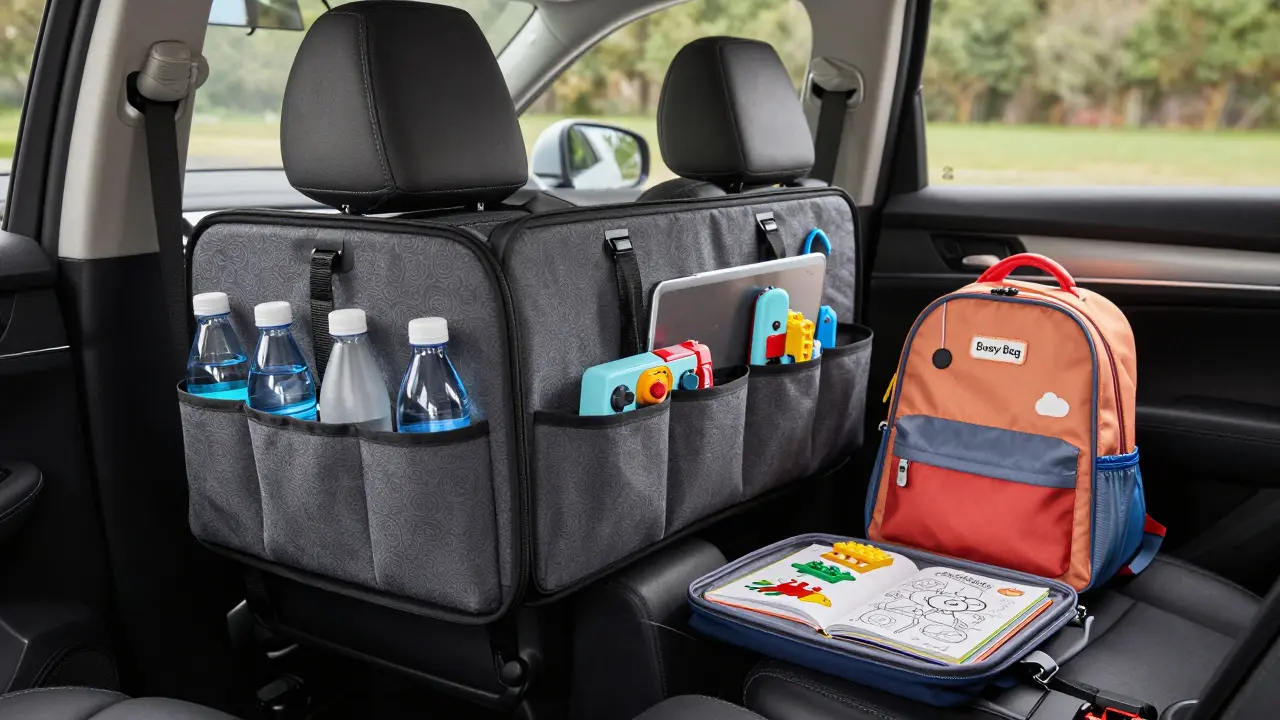
Invest in Backseat Organizers. These are hanging storage units that attach to the back of the front seats. They provide a dedicated home for water bottles, tablets, and handheld games. By moving these items off the seats and into pockets, you create more legroom and reduce the "Are we there yet?" friction caused by cramped knees.
For the electronics, a multi-port USB Car Charger is essential. Instead of having five different cables tangled around the gear stick, run a single heavy-duty power strip or a high-wattage adapter to the back. This keeps the cables managed and prevents the dreaded "my tablet is dead" meltdown. Pro tip: use Velcro cable ties to secure wires along the side of the center console so they don't interfere with the pedals or the driver's movements.
The "Reach Zone" and Survival Kits
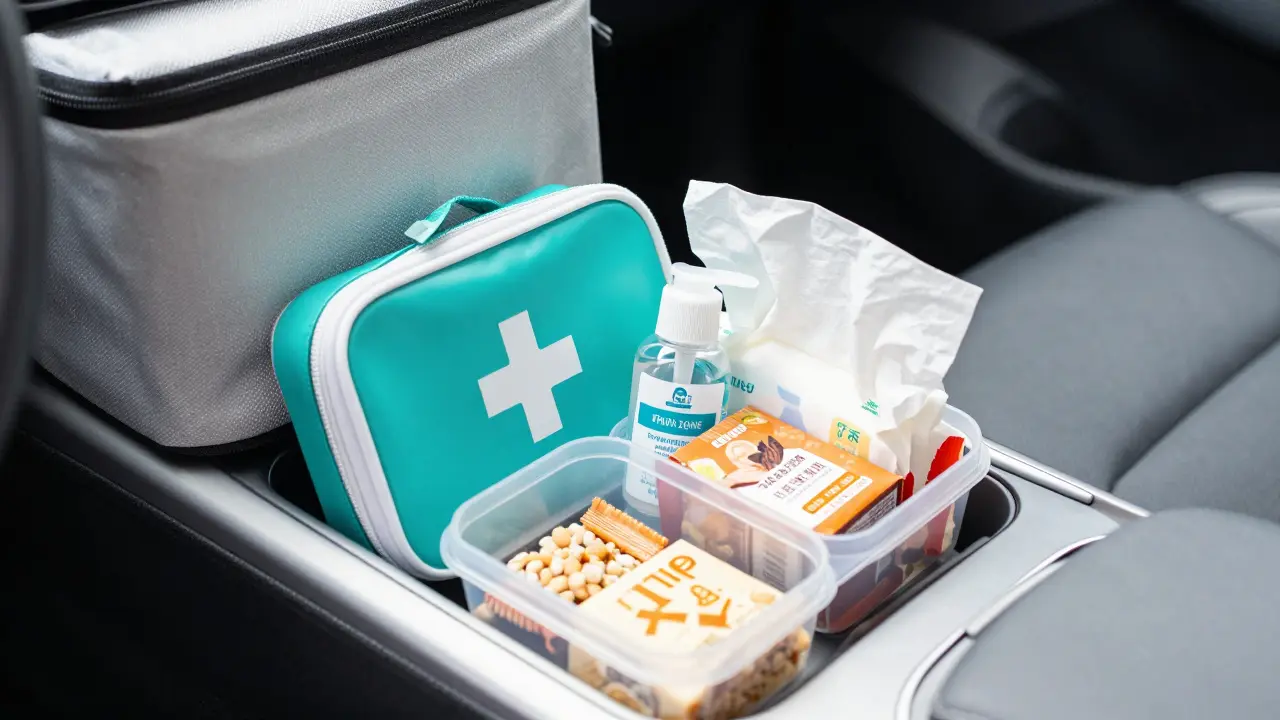
One of the biggest time-wasters on a trip is stopping at a service station just because someone forgot their sunglasses or a tissue. Create a "Reach Zone"-a small basket or bag kept in the front passenger footwell or the center console.
This zone should contain items you'll use every hour: hand sanitizer, a pack of tissues, a few high-protein snacks, and a small first-aid kit. Speaking of first aid, don't just pack a giant box of bandages in the boot. Create a Travel First Aid Kit, which is a compact, portable collection of medical supplies. Keep it small: antiseptic wipes, a few plasters, and children's ibuprofen. If you have to dig through four suitcases to find a plaster for a scraped knee, you've failed the organization test.
For the kids, give them a "Busy Bag." This is a small backpack containing a few rotating toys and activities. The trick here is the rotation. Don't give them everything at once. When they get bored of the coloring book, swap it for the LEGO set. This prevents a mountain of plastic blocks from ending up on the floor of the car.
Managing the Mess: Snacks and Trash
Food is the primary source of car clutter. A bag of chips can explode, and a leaked juice box can leave a permanent stain on the upholstery. To avoid this, switch from individual bags to reusable containers.
Use a Cooler Bag with separate compartments for drinks and perishables. To save space, freeze water bottles; they act as ice packs for the first two days and then become drinkable water as they melt. This eliminates the need for bulky bags of ice that eventually leak all over your carpet.
Trash management is where most families fail. A simple trick is to hang a small, leak-proof trash bin or a dedicated plastic bag from the headrest. If you make it incredibly easy to throw away trash, the kids are more likely to do it. If you don't, you'll spend three hours cleaning out old french fry boxes once you finally reach your destination.
Smart Clothing Choices
The volume of clothes you pack is often the biggest space-hog. The solution isn't necessarily packing fewer clothes, but packing smarter ones. Focus on Layering, which is the practice of wearing multiple thin garments to regulate body temperature. Instead of one massive winter coat that takes up half a duffel bag, pack three thinner layers. This is more versatile for different climates and significantly easier to compress.
Roll your clothes instead of folding them. This is a classic traveler's trick that prevents deep creases and fills those awkward gaps in your luggage. For a family of four, rolling clothes can save up to 20% of your total bag volume. If you're packing for a rainy destination, keep a separate "Wet Bag"-a waterproof nylon pouch-for damp swimsuits or rain gear so they don't soak the rest of your luggage.
How do I stop my kids' things from sliding all over the car?
The best way is to use non-slip mats or dedicated backseat organizers. If you have a gap between the seat and the center console, get "gap fillers" to prevent phones and crayons from disappearing into the abyss. Providing each child with their own small, secure bin or bag helps them feel ownership over their space and keeps the mess contained.
The best way is to use non-slip mats or dedicated backseat organizers. If you have a gap between the seat and the center console, get "gap fillers" to prevent phones and crayons from disappearing into the abyss. Providing each child with their own small, secure bin or bag helps them feel ownership over their space and keeps the mess contained.
What are the best items to put in a road trip "reach zone"?
Your reach zone should include high-frequency items: a bottle of water, hand sanitizer, wet wipes, a basic first-aid kit, sunglasses, and a small stash of mints or gum. Avoid putting heavy or bulky items here as they can become projectiles during sudden braking.
Your reach zone should include high-frequency items: a bottle of water, hand sanitizer, wet wipes, a basic first-aid kit, sunglasses, and a small stash of mints or gum. Avoid putting heavy or bulky items here as they can become projectiles during sudden braking.
Do vacuum bags actually work for car trips?
Yes, especially for bulky items like pillows, winter jackets, or sleeping bags. However, be careful not to over-compress items that can wrinkle easily. Use them for the stuff you won't need until you reach the hotel or campsite to avoid having to vacuum-seal and unseal them multiple times mid-trip.
Yes, especially for bulky items like pillows, winter jackets, or sleeping bags. However, be careful not to over-compress items that can wrinkle easily. Use them for the stuff you won't need until you reach the hotel or campsite to avoid having to vacuum-seal and unseal them multiple times mid-trip.
How can I organize snacks for a long drive without the mess?
Use a "snack tackle box" or a divided plastic container. Instead of six different bags of crackers and grapes, put a variety of bite-sized snacks in one organized container. This reduces the number of wrappers in the car and makes it easier for children to graze without needing a parent to open a new bag every ten minutes.
Use a "snack tackle box" or a divided plastic container. Instead of six different bags of crackers and grapes, put a variety of bite-sized snacks in one organized container. This reduces the number of wrappers in the car and makes it easier for children to graze without needing a parent to open a new bag every ten minutes.
Is it better to use a roof box or a roof bag?
A roof box is generally better for security and weatherproofing, as it's a hard shell that locks. Roof bags are cheaper and can be folded away when not in use, but they offer less protection and can be noisier at high speeds due to wind flapping. For long family trips, the hard-shell box is usually the superior choice for protecting your gear.
A roof box is generally better for security and weatherproofing, as it's a hard shell that locks. Roof bags are cheaper and can be folded away when not in use, but they offer less protection and can be noisier at high speeds due to wind flapping. For long family trips, the hard-shell box is usually the superior choice for protecting your gear.
Next Steps for Your Trip
Before you hit the road, do a "dry run." Pack the car a day early. This allows you to see if you've overpacked or if something is awkwardly positioned. If you find you're still struggling for space, look at your clothing list and see what can be left behind or laundered at your destination.
If you're traveling with infants, prioritize the "diaper station" right at the boot's edge. You don't want to be unloading the entire car at a service station for a quick change. Finally, check your tire pressure-especially if you're carrying a full load. A heavily laden car requires different pressure settings to maintain fuel efficiency and safety. Check your owner's manual for the "loaded' psi specifications to ensure a smooth ride.
Comments
kelvin kind
Soft bags are the way to go.
April 30, 2026 at 15:51
michael Melanson
The tip about freezing water bottles is actually genius. I've always used separate ice packs and they just end up making a soggy mess at the bottom of the cooler by day two. This is a much cleaner way to keep the drinks cold and you actually get to drink the water eventually.
May 1, 2026 at 03:19
Peter Reynolds
i use those gap fillers for my phone and it actually works pretty well just keeps everything from sliding under the seat
May 2, 2026 at 16:32
Fred Edwords
The advice regarding the "Reach Zone" is absolutely impeccable! It is far too easy to overlook the necessity of a designated area for high-frequency items, and implementing such a system significantly mitigates the stress of a long journey.
May 3, 2026 at 13:38
Ian Cassidy
Hard shell cases are a nightmare for packing efficiency. Just use duffels and jam them in the gaps. Much better workflow for the boot.
May 3, 2026 at 16:42
Sarah McWhirter
Oh sure, keep your stuff in a "secure bin" so the government tracking chips in the tablets have a nice little home while they monitor your every move through the GPS. It's just so convenient how we've all agreed to turn our cars into rolling Faraday cages of organized plastic, right? Truly a philosophical triumph of convenience over basic privacy in the modern age!
May 4, 2026 at 03:44
lucia burton
We absolutely need to optimize our logistical throughput by utilizing a high-density packing paradigm to ensure maximum volumetric efficiency within the cargo bay! If you aren't leveraging modular compression systems and synergistic organizational frameworks to mitigate the entropy of a family trip, you're basically just inviting a systemic failure of your travel itinerary! Let's get those packing cubes synchronized and maximize the spatial utility of every single cubic inch of that SUV to achieve a peak operational state of travel readiness!
May 4, 2026 at 19:08
Denise Young
Oh, because obviously, the peak of human achievement is utilizing a synergistic approach to cargo management by implementing modular compression units to solve the tragedy of a misplaced wet wipe. I'm just so thrilled that we've reached the stage of evolutionary development where we need a comprehensive white paper on how to put clothes in a bag without causing a domestic crisis. Truly, the optimization of the "reach zone" is the only thing standing between us and total societal collapse during a six-hour drive to the coast. Please, tell me more about the groundbreaking revolution of rolling your socks, because I'm sure that's the missing piece of the puzzle for every struggling parent in the developed world.
May 5, 2026 at 12:05
Sam Rittenhouse
My heart just breaks for the parents out there facing the sheer, unadulterated horror of a suitcase exploding in the boot! It is a tragedy of epic proportions when a child's toy is lost in the abyss of the seat gap, leaving a void of sadness that no amount of organizational bins can ever truly fill! I feel the struggle in my very soul, and we must all hold space for the emotional toll that a disorganized cooler takes on the family spirit!
May 7, 2026 at 05:24
Ananya Sharma
It is honestly quite naive to suggest that a "rotating snack system" is the solution to childhood behavioral issues in a confined space. One must analyze the root cause of the clutter, which is the inherent lack of discipline in modern parenting, rather than simply applying a superficial plastic bandage like a "snack tackle box." The obsession with "space-saving tips" is merely a symptom of a consumerist culture that encourages families to bring far too much unnecessary luggage on a simple trip, and pretending that vacuum bags solve this moral failing is a laughable exercise in denial.
May 8, 2026 at 04:07
Zach Beggs
The roof box recommendation is solid. I've used one for years and it makes a huge difference for the kids' legroom.
May 8, 2026 at 14:57