
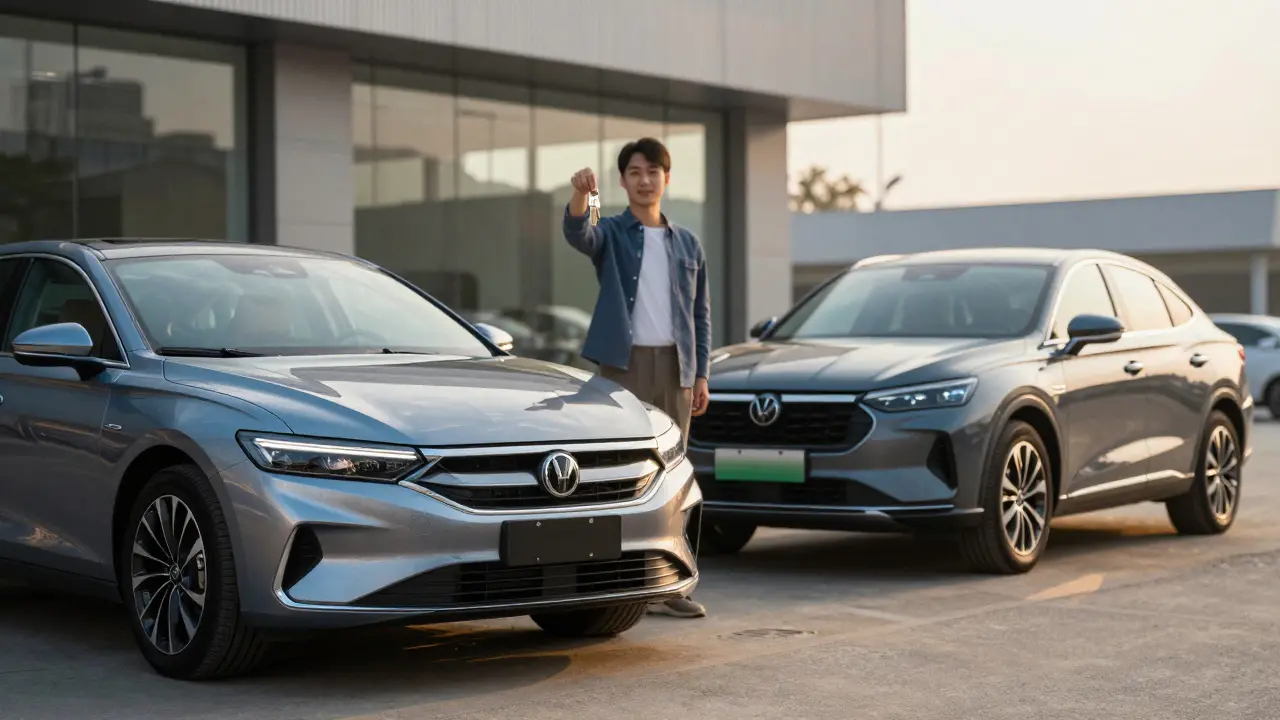
You’re standing in a dealership lot, staring at two very different sets of keys. One opens a shiny, brand-new sedan with the smell of fresh leather still hanging in the air. The other unlocks a three-year-old model that’s seen some miles but costs significantly less upfront. Both need financing. Which one actually makes more sense for your wallet?
The answer isn’t as simple as picking the cheaper sticker price. When you finance a vehicle, you aren’t just paying for the metal and rubber; you are paying for the time it takes to pay it off. That time is measured in interest rates, loan terms, and the relentless force of depreciation. In mid-2026, the landscape of auto financing has shifted again. Interest rates have stabilized compared to the volatility of previous years, but the gap between what lenders charge for new versus used vehicles remains wide.
To make the right choice, you need to look beyond the monthly payment number flashing on the dealer’s screen. You need to understand how loan structures differ, how depreciation eats into your equity, and where the hidden fees hide. Let’s break down the real cost of driving away in a new car versus a pre-owned one.
The Interest Rate Gap: Why Lenders Care About Age
The most immediate difference you will notice when comparing offers is the Annual Percentage Rate (APR). Lenders view new cars and used cars through completely different risk lenses. A new car is collateral that holds its value predictably. A used car is a depreciating asset with an unknown history.
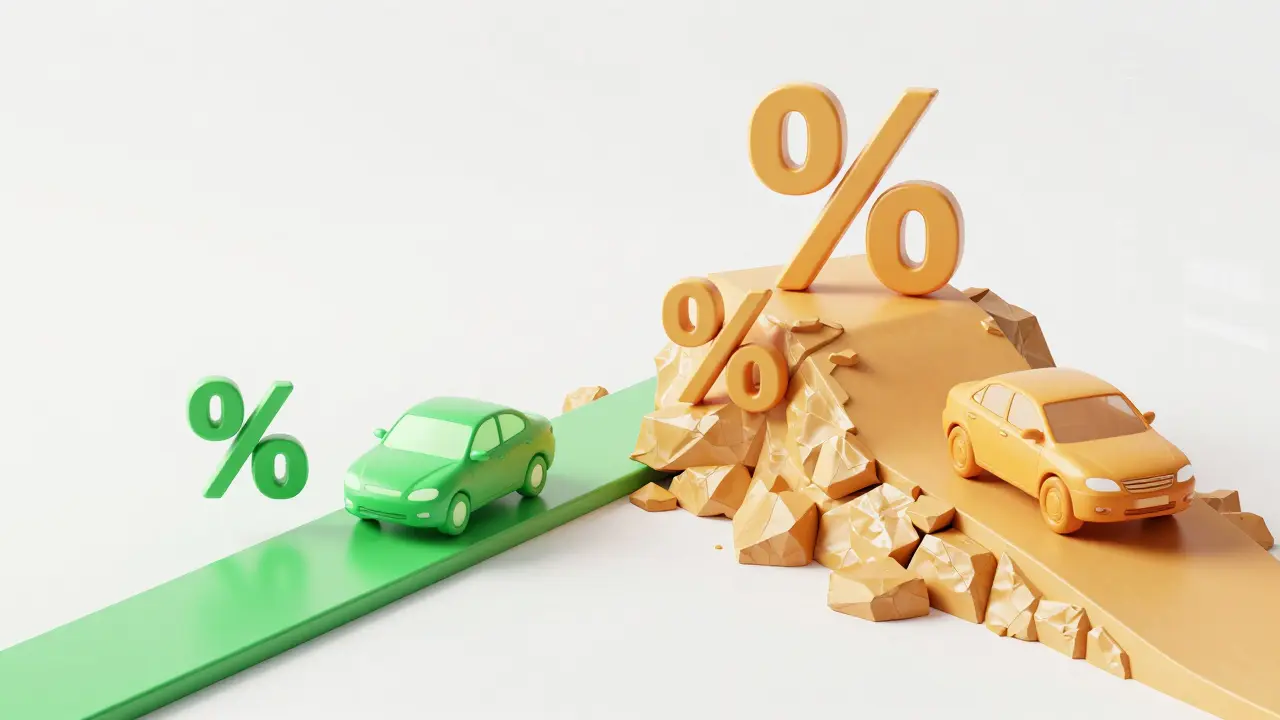
In the current market, prime borrowers-those with credit scores above 720-can often secure rates for new vehicles that hover near historic lows, sometimes dipping below 4% APR for specific promotional models. However, for used cars, even those only two or three years old, rates typically sit 1% to 3% higher. If your credit score dips into the 'near-prime' category (660-719), that gap widens further. For subprime borrowers, financing a used car can become prohibitively expensive, with APRs climbing well above 10%.
Why are interest rates higher for used cars?
Lenders charge higher rates for used cars because they pose a greater risk. If you default on the loan, the bank repossesses the car. With a new car, the resale value is predictable and usually covers the remaining loan balance. With a used car, especially older ones, the value drops faster, meaning the lender might not recover their money if they have to sell the repo. Higher interest compensates for this increased risk.
This rate differential matters more than you think. On a $30,000 loan over five years, a 1% difference in interest rate doesn’t just save you a few dollars; it saves you hundreds in total interest paid. Before you sign anything, ask yourself: Is the lower monthly payment of a longer-term used car loan worth the higher interest rate applied to the principal?
Loan Terms: The Trap of Longer Repayment Periods
Here is where many buyers get tripped up. Dealerships love to offer long loan terms to keep monthly payments low. For new cars, 72-month (six-year) loans are standard, and 84-month (seven-year) loans are becoming common. For used cars, terms of 60 to 72 months are typical, though some lenders stretch to 84 months for certified pre-owned (CPO) vehicles.
A longer term means a lower monthly payment, which feels good in the short term. But it also means you are paying interest for a longer period. More importantly, it increases the likelihood of being 'upside-down' on your loan-owing more than the car is worth. This is particularly dangerous with used cars. If you buy a five-year-old car with a seven-year loan, there is a high probability that by year three, the car’s market value has dropped below your outstanding balance. If you crash the car or lose your job, you are stuck owing money on a totaled vehicle.
- New Car Loans: Often capped at 72-84 months. Lower rates mitigate the cost of the extra time.
- Used Car Loans: Typically 48-72 months. Extending beyond 60 months on a used car is generally risky unless the vehicle is nearly new (CPO).
- The Golden Rule: Try to keep your loan term equal to or shorter than the expected useful life of the vehicle.
Depreciation: The Silent Wealth Killer
Depreciation is the enemy of every car owner, but it hits new cars hardest in the first few years. A new car can lose 20% to 30% of its value the moment you drive it off the lot. Over five years, the average new car loses about 50% of its original value. Used cars, however, have already taken that initial hit. A three-year-old car might only lose another 10% to 15% over the next two years.
This dynamic creates a fascinating financial trade-off. When you finance a new car, you are borrowing against an asset that is rapidly shrinking in value. You are paying interest on money that is disappearing. When you finance a used car, the depreciation curve flattens. You are paying interest on an asset that holds its value relatively steady.
Consider this scenario: You buy a new SUV for $40,000. After three years, it’s worth $24,000. You’ve lost $16,000 in equity. Now consider a three-year-old SUV bought for $24,000. Three years later, it might be worth $16,000. You’ve lost $8,000. Even if the interest rate on the used car loan is slightly higher, the total cost of ownership-including the loss of value-is often lower for the pre-owned vehicle.
Certified Pre-Owned (CPO): The Middle Ground
If you want the reliability of a new car without the brutal depreciation, Certified Pre-Owned (CPO) programs are worth exploring. CPO cars are typically less than five years old and under 80,000 miles. They undergo rigorous inspections and come with extended warranties that mimic new-car coverage.
From a financing perspective, CPO vehicles often qualify for better rates than standard used cars. Many manufacturers’ captive finance arms (like Toyota Financial Services or Ford Credit) offer special programs for CPO buyers that bridge the gap between new and used rates. While the upfront price of a CPO car is higher than a non-certified used car, the peace of mind and potentially lower insurance costs can make it a smart financial move.
| Feature | New Car Loan | Standard Used Car Loan | CPO Loan |
|---|---|---|---|
| Typical APR (Prime) | 3.5% - 5.5% | 6.0% - 9.0% | 4.5% - 7.0% |
| Max Loan Term | 84 months | 72 months | 72 months |
| Down Payment Required | 10% - 20% | 10% - 20% | 10% - 15% |
| Warranty Coverage | Full manufacturer warranty | Varies (often limited) | Extended manufacturer warranty |
| Depreciation Risk | High (first 3 years) | Low | Moderate |
Credit Score Impact and Qualification
Your credit score is the master key to auto financing. It determines not just whether you get approved, but how much you pay over the life of the loan. In 2026, lenders are using sophisticated algorithms that look at more than just your FICO score. They analyze your debt-to-income ratio, recent credit inquiries, and even your banking behavior.
For new cars, having a score above 720 unlocks the best deals. Scores between 660 and 719 still get decent rates, but you start seeing the premium kick in. Below 660, options become limited, and dealers may push you toward add-on products like extended warranties or GAP insurance to boost their profit margin.
Used car financing is stricter. Because the collateral is less valuable, lenders are more cautious. A score below 620 can make it difficult to find a traditional lender willing to finance a used car. You might end up looking at credit unions or online lenders who specialize in subprime auto loans. These institutions often charge higher fees and interest rates, so shop around carefully.

Hidden Fees and Add-Ons
When you walk into a dealership, the price you see online is rarely the price you pay. Dealers make money on the backend, through financing commissions and add-on products. Whether you buy new or used, be wary of these common upsells:
- GAP Insurance: Guaranteed Asset Protection covers the difference between what you owe and what the car is worth if it’s totaled. It’s essential for new cars with long loans, but often unnecessary for used cars where the loan amount is close to the car’s value.
- Extended Warranties: These can be lucrative for dealers. For new cars, the existing factory warranty is usually sufficient for the first few years. For used cars, check if the manufacturer’s warranty is still active before buying an aftermarket plan.
- Doc Fees: Documentation fees vary by state and dealership. They are non-negotiable in some places, but you can sometimes negotiate them down.
- Pre-Paid Registration: Dealers may try to charge you for registration and taxes upfront. Ask to handle this yourself to avoid markup.
Always read the contract line by line. If you don’t understand a fee, ask for it to be removed. Silence is not consent, but signing is.
How to Get the Best Deal in 2026
Don’t let the dealership control the financing conversation. Here is a step-by-step approach to securing the best possible terms:
- Check Your Credit Report: Pull your free report from annualcreditreport.com. Dispute any errors before you apply for a loan.
- Get Pre-Approved: Visit your local credit union or bank and get a pre-approval letter. This gives you a baseline rate to compare against the dealer’s offer.
- Shop Around Online: Use online lenders to compare rates. Some online platforms offer competitive rates for both new and used cars without the pressure of a salesperson.
- Negotiate the Price First: Never discuss monthly payments until you have agreed on the out-the-door price of the vehicle. Focus on the total cost, not the monthly installment.
- Compare the Dealer’s Offer: If the dealer offers financing, accept it tentatively while you finalize your purchase. Then, take the contract to your bank to refinance if they can beat the rate. Most banks allow you to refinance within 60 days without penalty.
Final Thoughts: Making the Right Choice
Choosing between financing a new car and a used car comes down to your personal financial goals. If you want the latest technology, full warranty coverage, and don’t mind paying more for the privilege, a new car loan makes sense. Just be prepared for higher depreciation and ensure your loan term doesn’t exceed five years.
If you are budget-conscious and want to minimize the impact of depreciation, a used car-or better yet, a Certified Pre-Owned vehicle-is the smarter financial play. You’ll pay a slightly higher interest rate, but you’ll save thousands in lost value. By understanding the nuances of rates, terms, and hidden fees, you can navigate the auto financing landscape with confidence and drive away knowing you made the best decision for your wallet.
Is it better to lease or finance a new car?
Leasing is essentially a long-term rental. It’s cheaper monthly because you’re only paying for the depreciation during the lease term. Financing means you own the car at the end. If you like changing cars every three years and drive under 12,000 miles annually, leasing might be appealing. If you want to build equity and drive the car until it dies, financing is the better route.
What is the ideal down payment for a used car?
Aim for at least 10% to 20% down. A larger down payment reduces the principal amount you borrow, which lowers your monthly payment and total interest paid. It also helps prevent you from being upside-down on the loan immediately.
Can I refinance my auto loan after buying?
Yes, refinancing is common. If your credit score improves or market interest rates drop, you can refinance to get a lower rate. Most lenders require you to have made at least six monthly payments and have positive equity in the vehicle before approving a refinance.
Do credit unions offer better rates than banks?
Often, yes. Credit unions are non-profit organizations that return profits to members in the form of lower interest rates and fewer fees. They tend to be more flexible with borrowers who have imperfect credit histories compared to large national banks.
What happens if I’m upside-down on my car loan?
Being upside-down means you owe more than the car is worth. If you need to sell or trade in the car, you must pay the difference out of pocket. If the car is totaled in an accident, your insurance payout will cover the car’s value, but you still owe the remaining balance to the lender unless you have GAP insurance.