

You’re driving down the motorway or navigating city streets when you feel that dreaded thump-thump-thump. The steering wheel vibrates, your dashboard lights up with a warning icon, and you realize you’ve got a flat tire. It’s one of those moments where panic sets in quickly. Do you patch it up cheaply at the nearest garage, or do you bite the bullet and buy a new set? The answer isn’t just about money-it’s about whether you want to stay safe on the road.
Many drivers assume any flat can be fixed for a few pounds. That’s a dangerous myth. Some flats are perfect candidates for a quick repair, while others are ticking time bombs waiting to blow out at high speed. Knowing the difference saves you from costly accidents and keeps your vehicle handling correctly. Let’s break down exactly how to decide between repairing and replacing, so you never guess again.
The Golden Rule: When Is a Repair Actually Safe?
Not every puncture is created equal. In fact, most professional tire technicians follow strict guidelines established by organizations like the Rubber Manufacturers Association (RMA) and the Tire Industry Association (TIA). These rules exist because tires are complex engineering structures, not simple rubber tubes. A bad repair compromises the structural integrity of the tire, which can lead to catastrophic failure.
Here is the non-negotiable checklist for a safe repair:
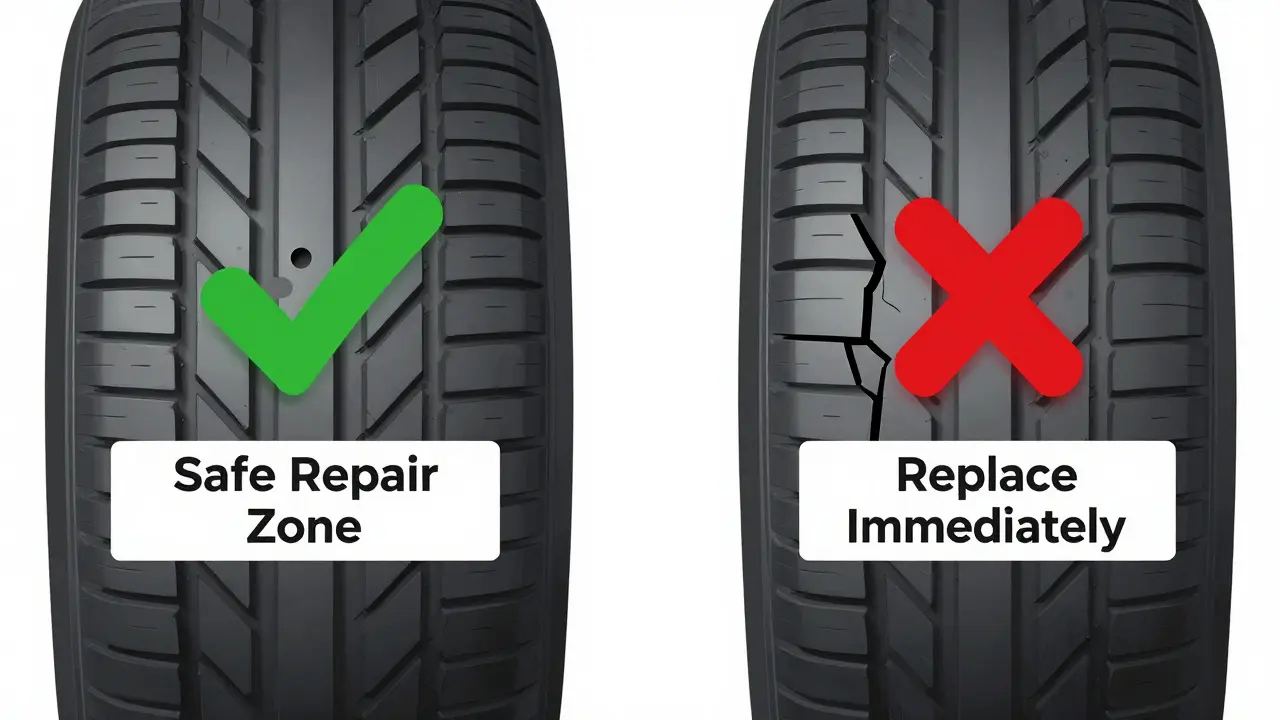
- Location matters: The damage must be in the "tread" area-the center part of the tire that touches the road. If the puncture is in the "sidewall" (the side of the tire) or the "shoulder" (where the tread meets the sidewall), it cannot be repaired safely. The sidewall flexes constantly as you drive; a patch here will eventually tear open.
- Size limits: The hole must be smaller than 1/4 inch (6mm). Larger holes weaken the internal structure too much to trust a plug or patch.
- Type of damage: It should be a clean puncture from a nail, screw, or similar object. Sidewall bulges, cuts, or tears are automatic replacements.
- No previous repairs: Most manufacturers recommend against repairing a tire that has already been patched. Two weak spots increase the risk of failure.
If your flat meets all these criteria, you likely have a candidate for repair. But don’t stop there. The method of repair matters just as much as the location.
Plug vs. Patch-Plug: Why Method Matters
You might have heard mechanics say they’ll "plug" your tire. This often causes confusion because there are two very different methods being described. One is temporary and risky; the other is industry-standard and safe.
A simple string plug involves inserting a sticky rubber cord into the hole from the outside without removing the tire from the rim. This is essentially a band-aid. It seals the air but does nothing for the inner liner. Moisture can seep in, corroding the steel belts inside the tire over time. String plugs are generally considered unsafe for long-term use and are often frowned upon by reputable shops.
The correct method is a combination patch-plug. Here, the technician removes the tire from the rim, inspects the inside, cleans the area, and applies a rubber patch that covers the hole from the inside while a stem plugs the channel. This creates an airtight seal that protects the tire’s internal structure. If a shop offers only a string plug, walk away. You deserve the combination repair.
| Feature | String Plug | Combination Patch-Plug |
|---|---|---|
| Tire Removal Required | No | Yes |
| Seals Inner Liner | No | Yes |
| Safety Rating | Low / Temporary | High / Permanent |
| Cost | Cheaper (£15-£25) | Moderate (£30-£50) |
| Longevity | Short (risk of leakage) | Life of the tire |
When Replacement Is the Only Option
Sometimes, no amount of patching will make a tire safe again. Recognizing these scenarios prevents you from wasting money on a repair that won’t hold or, worse, one that fails later.
Sidewall Damage: As mentioned, the sidewall is under immense stress. It bends thousands of times per mile. A cut, crack, or puncture here means the casing is compromised. There is no safe way to reinforce this area. If you see a bubble or bulge in the sidewall, replace the tire immediately. That bulge indicates the internal cords have snapped, and the tire could explode.
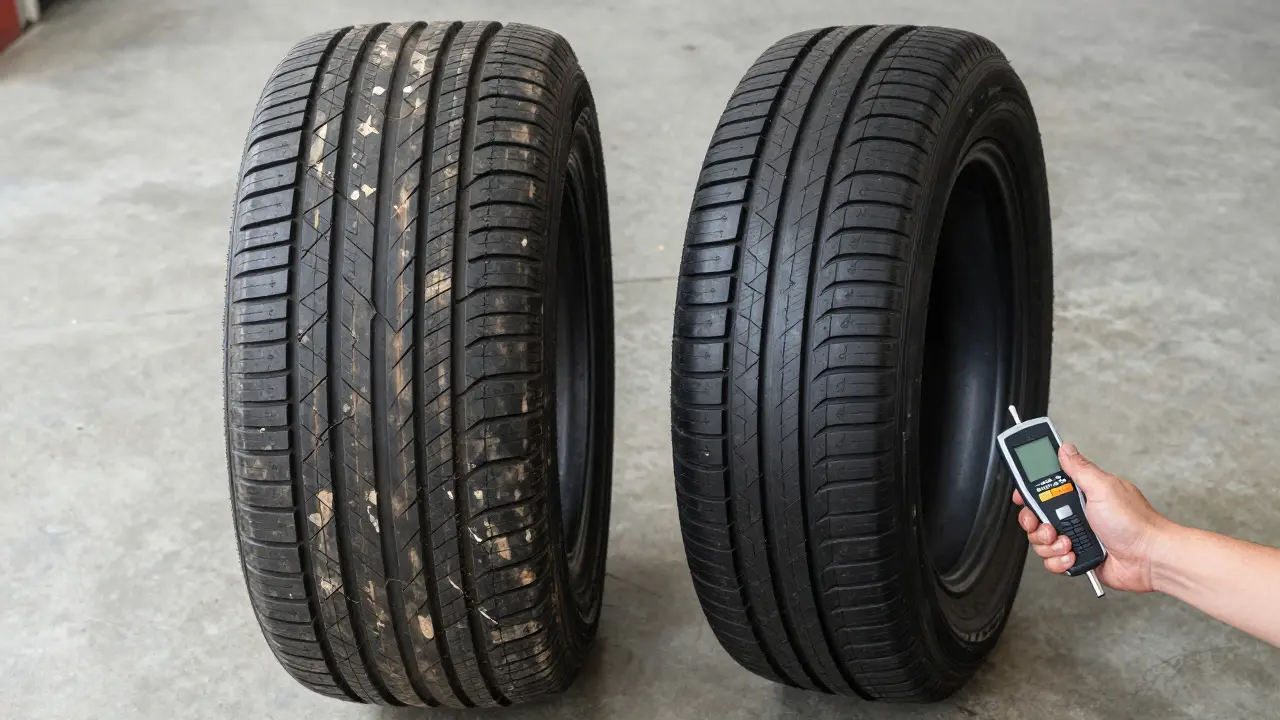
Excessive Wear: Even if the puncture is repairable, look at the rest of the tire. If the tread depth is below 1.6mm (the legal minimum in the UK) or close to the wear bars, repairing it is pointless. You’ll need to replace it soon anyway. In the UK, it’s strongly recommended to replace tires when they reach 3mm for better wet weather braking performance.
Age of the Tire: Tires degrade over time due to oxidation and UV exposure, regardless of mileage. If your tire is more than six years old, many manufacturers advise against repairing it. The rubber becomes brittle, and the risk of separation increases. Check the DOT code on the sidewall; the last four digits tell you the week and year of manufacture (e.g., "3521" means the 35th week of 2021).
Internal Damage: Sometimes, the impact that caused the flat also damaged the rim or bent the wheel. Or, the force was enough to separate the tire from the bead. These issues require a full replacement and potentially new wheels.
Cost Analysis: Repair vs. Replace in 2026
Let’s talk numbers. In the UK market of 2026, prices have stabilized somewhat after recent inflation spikes, but labor costs remain significant.
A professional combination patch-plug repair typically costs between £30 and £50, including mounting and balancing. This is significantly cheaper than buying a new tire. A standard passenger car tire ranges from £80 to £150 per unit, depending on brand and size. Premium brands like Michelin or Continental can exceed £200 for larger SUV sizes.
However, consider the total cost of ownership. If you repair a worn-out tire, you might save £40 now but spend £100+ next month when it fails or needs replacement anyway. Conversely, if you replace one tire, remember that you should ideally replace tires in pairs (both front or both rear) to maintain balanced handling. Mismatched tires can cause pulling, uneven wear, and reduced stability control effectiveness.
So, the financial decision isn’t just "repair vs. new." It’s "repair this tire vs. replace a pair." If your other three tires are nearly new, a repair makes financial sense. If they’re all worn, budget for a full set.
Safety Implications Beyond the Puncture
Driving on a damaged tire affects more than just your ability to keep air pressure. It impacts your vehicle’s dynamic behavior.
Alignment and Balance: Every time a tire is removed for repair or replacement, it must be rebalanced. Poor balance causes vibration at high speeds, leading to premature wear on suspension components and tires. Always insist on dynamic balancing after any tire work.
Handling Stability: Modern cars rely on Electronic Stability Control (ESC) and Anti-lock Braking Systems (ABS). These systems assume all four tires have similar grip levels. A mismatched tire-whether due to age, tread pattern, or repair quality-can confuse these sensors. In an emergency maneuver, the car might not respond as expected, increasing stopping distances or causing spin-outs.
Run-Flat Tires: If your car is equipped with run-flat tires, the rules change slightly. Run-flats are designed to support the vehicle’s weight for a limited distance (usually 50 miles) at reduced speeds (50 mph) after losing pressure. However, most manufacturers state that run-flat tires cannot be repaired once they’ve been driven on while deflated. The internal structure is heat-damaged during that short trip. Check your owner’s manual carefully.
Step-by-Step Decision Guide
To help you make the right call, follow this logical flow when you get a flat:
- Pull Over Safely: Don’t drive on a fully flat tire. It destroys the rim and the tire beyond repair. Drive slowly to a safe location.
- Inspect the Damage: Look at the tire. Is the object still in it? Don’t pull it out yet-that helps slow the leak. Note the location: tread, shoulder, or sidewall?
- Check Tread Depth: Use a coin or tread depth gauge. Is it above 3mm?
- Check Age: Find the DOT date code. Is it less than 6 years old?
- Consult a Professional: Take the car to a reputable garage. Ask specifically: "Is this a combination patch-plug repair?" If they say no, ask why.
- Make the Call:
- If damage is in tread, < 6mm, tire is young and has good tread → Repair.
- If damage is in sidewall/shoulder, > 6mm, tire is old/worn → Replace.
Common Myths Debunked
Misinformation spreads easily online. Let’s clear up some persistent myths that put drivers at risk.
Myth: "I can fix a flat myself with a kit."
Reality: Emergency sealant kits are for getting you home, not for permanent fixes. They unbalance the tire, clog TPMS sensors, and void warranties. Never treat a sealant job as a repair.
Myth: "If it doesn’t leak, it’s fine."
Reality: Internal damage like separated belts or broken cords may not show immediate leaks but will fail catastrophically later. Always have a pro inspect the inside.
Myth: "New tires last forever."
Reality: Rubber degrades. Even unused tires stored in a garage lose elasticity after five to ten years. Regular inspection is key.
How long does a tire repair last?
A professional combination patch-plug repair should last the entire life of the tire, provided the tire remains in good condition. If the repair starts leaking, it usually indicates secondary damage or poor initial workmanship.
Can I repair a run-flat tire?
Generally, no. Most manufacturers prohibit repairing run-flat tires if they have been driven on while deflated. The heat generated damages the internal structure. Check your specific tire manufacturer's guidelines, as some newer models allow repair under strict conditions.
Is it safe to drive with a plugged tire?
Only temporarily. A string plug is not a safe long-term solution. It does not seal the inner liner, allowing moisture ingress that corrodes steel belts. For permanent safety, always opt for a combination patch-plug repair performed by a professional.
What is the legal tread depth limit in the UK?
The legal minimum tread depth in the UK is 1.6mm across the central three-quarters of the breadth and around the entire outer circumference. However, for optimal safety, especially in wet conditions, experts recommend replacing tires at 3mm.
Should I replace one tire or all four?
Ideally, replace tires in pairs (both front or both rear) to ensure consistent handling and traction. Replacing all four is best if the existing tires are significantly worn or aged. Mixing old and new tires can affect vehicle stability and safety system performance.
Final Thoughts on Tire Safety
Your tires are the only point of contact between your vehicle and the road. They handle acceleration, braking, and cornering forces far greater than most people realize. Cutting corners on tire maintenance is never worth the risk. Whether you choose repair or replacement, prioritize professional assessment and high-quality materials. Your safety-and that of your passengers-depends on it.