
You’ve heard the term “full coverage” thrown around in ads and casual conversations. It sounds like the ultimate safety net for your vehicle. But here’s the hard truth: there is no such legal product as “full coverage car insurance” in the United Kingdom. If an agent tells you they are selling you a policy with that exact name, they are likely using American terminology or marketing fluff to sell you what we call Comprehensive Insurance, which is the highest level of motor insurance available in the UK, covering damage to your own vehicle as well as liability for others.
Understanding this distinction is critical. Buying the wrong type of cover can leave you paying thousands out of pocket after an accident, even if you did everything right. Let’s break down exactly what protections you actually get, what is missing, and how to ensure your policy works for you.
The Three Tiers of UK Motor Insurance
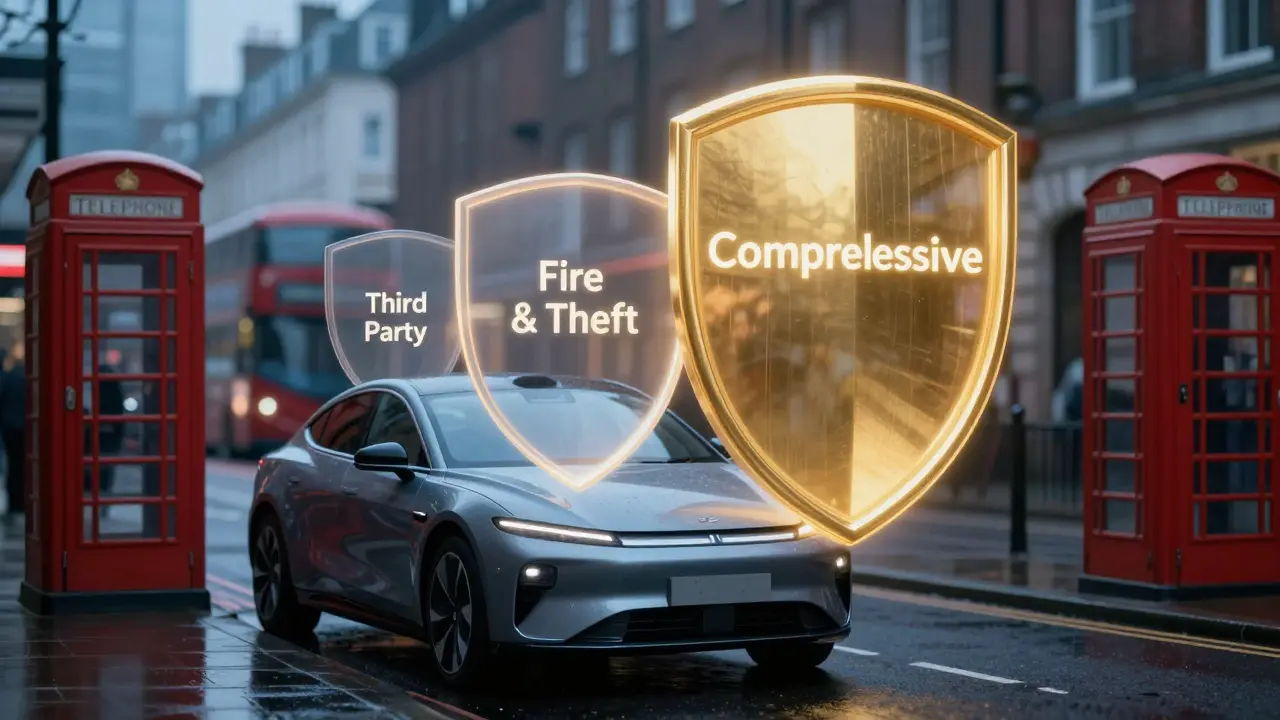
To understand where “full coverage” fits in, you need to look at the three mandatory levels defined by the Road Traffic Act 1988. These are not just marketing tiers; they are legal categories.
- Third Party Only: This is the bare minimum. It covers damage you cause to other people’s vehicles, property, and injuries to others. It does not cover damage to your own car. If you crash into a wall, you pay for your repairs. If someone crashes into you, their insurer pays for your car, but only up to the limits of their liability.
- Third Party, Fire and Theft (TPFT): This adds two specific perils to the base package. It covers your car if it is stolen or damaged by fire. However, it still excludes accidental damage. If you scrape your bumper against a parking post, you are on your own.
- Comprehensive: This is what most people mean when they say “full coverage.” It includes Third Party, Fire, and Theft, plus accidental damage to your own vehicle. It also often includes additional benefits like windscreen repair and personal injury protection.
When you search for “full coverage,” you are almost always looking for Comprehensive Insurance. It is the only tier that protects your asset’s value from accidental loss.
What Comprehensive Insurance Actually Covers
A standard comprehensive policy is robust, but it is not infinite. Here is the breakdown of what is typically included in a modern UK comprehensive policy:
- Accidental Damage to Your Vehicle: Whether you rear-end another car, hit a pothole, or misjudge a turn into a shop window, your insurer will pay for the repairs to your car. You will usually have to pay your excess first.
- Liability for Others: Unlimited cover for bodily injury and property damage caused to third parties. This is the core legal requirement.
- Fire and Theft: If your car is stolen and never recovered, or if it is destroyed by fire (including arson), you are covered for the market value of the vehicle.
- Windscreen and Glass: Most comprehensive policies include free or low-excess repair for cracked windscreens and broken windows. This is a high-value feature because replacing a modern windscreen with sensors can cost hundreds of pounds.
- Personal Accident Cover: Many policies include a small payout for death or permanent disability resulting from an accident while driving or entering/exiting the vehicle.
It is important to note that “comprehensive” does not mean “everything.” It means comprehensive against physical damage and liability. It does not cover mechanical failure, wear and tear, or lack of maintenance.
The Hidden Gaps: What Is Not Included
This is where drivers get burned. Assuming your comprehensive policy covers every scenario leads to expensive surprises. Here are the common exclusions you must know:
- Mechanical Breakdown: If your engine blows up due to age or lack of oil changes, insurance will not pay. This requires a separate Breakdown Cover, provided by organizations like AA, RAC, or Green Flag that assist with vehicle recovery and roadside repairs.
- Wear and Tear: Tires wearing down, brake pads needing replacement, or battery failure are considered maintenance, not insurance events.
- Driving Without Due Care: If you are driving recklessly, under the influence, or without a valid license, your claim will be denied. In some cases, your policy may be voided entirely.
- Consequential Loss: If your car is in the garage for repairs, insurance does not pay for your taxi fares or lost wages. Some premium policies offer “hire car” cover, but this is optional.
- Modifications: If you install a turbo kit, lower the suspension, or change the engine map, you must declare it. Failure to do so invalidates the policy. Even if declared, premiums rise significantly.
Many drivers assume that because they have “full coverage,” they are protected if their transmission fails. They are not. Insurance is for sudden, unforeseen events, not gradual deterioration.
Understanding Excess: The Price of Protection
Your excess is the amount you pay toward any claim. It is a fundamental part of risk sharing. There are two types:
| Type | Description | Typical Range (2026) |
|---|---|---|
| Compulsory Excess | Set by the insurer based on your age, car model, and risk profile. You cannot negotiate this. | £250 - £750 |
| Voluntary Excess | Chosen by you. A higher voluntary excess lowers your annual premium but increases your cost per claim. | £100 - £500+ |
If you have a £300 compulsory excess and choose a £200 voluntary excess, your total excess is £500. If you make a claim for £1,500 worth of damage, you pay £500, and the insurer pays £1,000.
Be wary of “young driver” excesses. Insurers often add hidden surcharges for drivers under 25, which can push the total excess over £1,000. Always check the policy schedule, not just the quote page.
Additional Add-Ons: Do You Need Them?
Insurers offer numerous extras. Some are valuable; others are profit centers for the company. Here is a quick guide:
- Courtesy Car: Provides a rental car while yours is being repaired. Useful if you rely on your car for work. Check the daily limit and maximum duration.
- Legal Expenses: Covers legal fees if you are involved in a dispute over fault. Rarely used, but cheap to add.
- Personal Belongings: Covers items stolen from your car. Usually has a low limit (£50-£100). It is often cheaper to claim this through your home contents insurance.
- European Cover: Essential if you drive abroad. Post-Brexit rules require a Green Card or proof of insurance for many countries. Ensure your policy explicitly covers EU travel.
- No Claims Discount (NCD) Protection: Allows you to make one or two claims without losing your discount. This is highly recommended if you have built up a significant NCD.
Do not buy add-ons blindly. Calculate the cost versus the likelihood of use. For example, if you walk to work and take trains, a courtesy car is unnecessary expense.
How to Choose the Right Level of Cover
Choosing between Third Party and Comprehensive depends on your car’s value and your financial resilience.
If you drive a car worth less than £1,000, Comprehensive might cost more than the car itself. In this case, Third Party, Fire and Theft may be sufficient. However, if your car is worth £5,000 or more, Comprehensive is almost always worth the extra premium. One minor accident could wipe out years of savings if you are underinsured.
Consider your No Claims Discount. A high NCD can reduce your premium by up to 60%. Protecting this discount is often more valuable than saving £50 on the annual premium by dropping comprehensive cover.
Common Mistakes When Claiming
Even with the best policy, claims can go wrong. Avoid these pitfalls:
- Failing to Report Minor Accidents: You must report all incidents, even if there is no visible damage. Hiding a claim can lead to policy cancellation later.
- Not Taking Photos: Document the scene immediately. Photos of damage, license plates, and road conditions are crucial evidence.
- Admitting Fault: Do not apologize or admit liability at the scene. Stick to facts. Let the insurers determine fault based on evidence.
- Using Non-Approved Garages: Some policies require you to use specific repair networks. Using an independent garage may result in reduced payouts.
Always read your Policy Document Certificate (PDC). It contains the specific terms, conditions, and exclusions that apply to your contract. The summary sheet is not legally binding; the PDC is.
FAQ: Full Coverage Car Insurance Questions
Is full coverage car insurance mandatory in the UK?
No. The law only requires Third Party insurance. However, most lenders and finance companies require Comprehensive insurance if you are financing or leasing your vehicle. It is strongly recommended for all drivers to protect their asset.
Does comprehensive insurance cover me if I am at fault?
Yes. Unlike Third Party only policies, Comprehensive insurance covers damage to your own vehicle even if you are solely responsible for the accident. You will still pay your excess, and your No Claims Discount may be affected.
What happens if my car is written off?
If your car is deemed a total loss (written off), your insurer will pay you the market value of the vehicle at the time of the accident, minus your excess. There are different write-off categories (A, B, S, N) that determine if the car can be repaired and returned to the road.
Can I switch from Third Party to Comprehensive?
You can upgrade mid-policy, but it may affect your premium and No Claims Discount. It is usually better to discuss this with your insurer before renewing. Some insurers allow upgrades without penalty, while others treat it as a new policy start.
Does comprehensive insurance cover theft of parts?
Yes, if parts like wheels, mirrors, or catalytic converters are stolen, this is covered under Comprehensive insurance. You will need to report it to the police and provide a crime reference number to your insurer.
How does No Claims Discount work with comprehensive insurance?
Each year you drive without making a claim, you build up a discount on your premium. With Comprehensive insurance, you can often purchase NCD protection, which allows you to make a limited number of claims without losing your accumulated discount.
Comments
michael rome
I appreciate the clarity on this because I always get confused by the American terminology when watching movies. It is genuinely helpful to know that comprehensive is the actual top tier here rather than some mythical full coverage package.
June 1, 2026 at 16:57
Andrea Alonzo
It is incredibly important for drivers to understand these distinctions because so many people assume they are protected when they are actually leaving themselves vulnerable to significant financial loss, and taking the time to read through the policy document certificate can save you from discovering those gaps only after an accident has occurred which is never a pleasant experience to have to deal with while you are already stressed about your vehicle being damaged or stolen.
June 1, 2026 at 23:16
Saranya M.L.
The distinction between mechanical failure and accidental damage is a fundamental concept in actuarial science that most laypeople fail to grasp, leading to frivolous claims that inflate premiums for everyone else who adheres to proper maintenance protocols and understands the contractual obligations outlined in the policy schedule.
June 3, 2026 at 04:08
om gman
oh wow another article explaining how insurance companies are basically just gambling houses waiting for you to slip up i crashed my car last week into a hedge because i was distracted by a squirrel and now im staring at a £750 compulsory excess bill like its a personal insult to my very existence
June 3, 2026 at 09:51
Jeanne Abrahams
We laugh at this in South Africa where we just call it comprehensive and move on with our lives but yes the point about wear and tear is crucial because nobody wants to pay out for a battery dying after three years of normal use.
June 5, 2026 at 05:32
Bineesh Mathew
The moral decay of society is evident in how we treat our vehicles as disposable entities rather than partners in our journey through life, and yet we demand that insurers cover the consequences of our negligence without acknowledging the spiritual void that exists within us all when we drive recklessly without due care or consideration for the fabric of reality itself.
June 5, 2026 at 18:35
Lisa Puster
typical british bureaucracy trying to confuse you with words like third party fire and theft when really they just want your money and if you think you need ncd protection then you probably shouldnt be driving in the first place because real drivers dont make claims
June 7, 2026 at 08:33
Joe Walters
i mean yeah sure comprehensive is better but honestly why bother if your car is worth less than the premium anyway just drive it till it dies and then walk i guess thats the american way of thinking bleeding over into the uk market now isnt it
June 8, 2026 at 00:33