
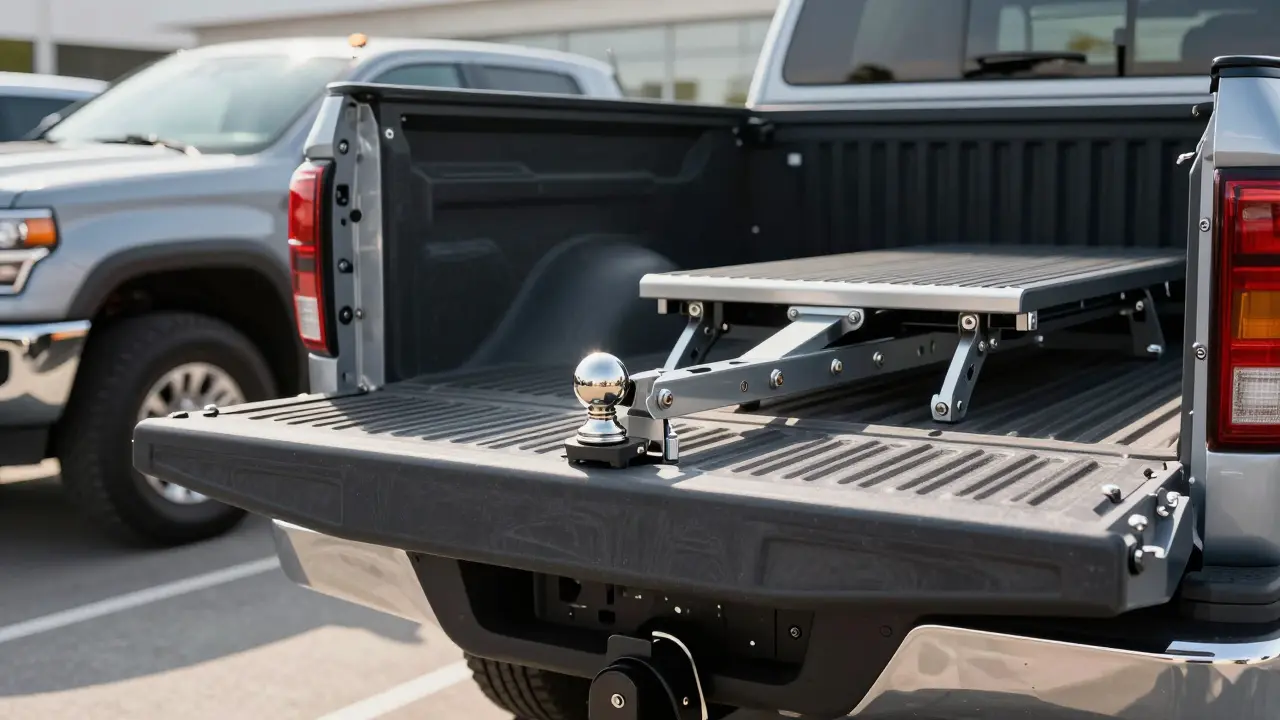
There is a moment every heavy-duty truck owner faces when standing in the dealer lot or staring at their empty bed. You need to haul something massive-a 30-foot travel trailer, a livestock hauler, or a lowboy for heavy machinery. The weight numbers on your window sticker look impressive, but the question remains: how do you actually connect that beast to your truck without losing control? This isn't just about brute strength; it's about geometry, pivot points, and safety.
The debate usually boils down to two contenders: Gooseneck hitches are towing systems installed in the center of the truck bed that allow for tighter turning radii and higher weight distribution. On the other hand, Fifth-wheel hitches are towing platforms mounted behind the cab that provide superior weight distribution and ease of entry into the truck bed. Both handle immense loads, but they behave differently on the highway and in tight spaces. Choosing the wrong one can mean fighting sway, struggling with clearance, or simply making your daily driving life miserable.
Understanding the Core Mechanics
To pick the right hitch, you have to understand where the pivot point sits relative to your rear axle. This single factor dictates how your truck handles under load. A gooseneck hitch sits directly above or slightly ahead of the rear axle. This creates a short wheelbase between the hitch and the rear wheels. Think of it like riding a motorcycle; the steering is quick, responsive, and allows for sharp turns. However, because the pivot is so close to the axle, any sudden movement from the trailer transfers directly to the truck’s chassis. You feel every bump and shift immediately.
A fifth-wheel hitch, by contrast, mounts further forward, typically 12 to 24 inches behind the front edge of the bed. This places the pivot point closer to the truck’s center of gravity. It acts more like a semi-truck setup. The longer distance between the hitch and the rear axle provides a stabilizing lever arm. When the trailer tries to sway, the physics work against it, dampening the oscillation before it becomes dangerous. For long-haul highway driving, this stability is often preferred by seasoned RVers who spend hours on the interstate.
Towing Capacity and Weight Ratings
When people ask about capacity, they often confuse Gross Vehicle Weight Rating (GVWR) with Tongue Weight. Let’s clear that up. Both gooseneck and fifth-wheel setups generally outclass traditional bumper hitches. Most heavy-duty pickups, like the Ford F-250/F-350, Ram 2500/3500, or Chevrolet Silverado 2500HD/3500, can tow between 14,000 and 20,000 pounds with either system. The difference lies in how that weight is distributed.
Gooseneck hitches often have slightly higher tongue weight ratings because the force is applied directly over the rear axle. Some industrial-grade goosenecks are rated for up to 30,000 pounds of towing capacity, primarily used for construction equipment and flatbeds. Fifth-wheel hitches typically cap out around 20,000 to 25,000 pounds for consumer applications. If you are hauling a fully loaded horse trailer with water tanks, feed, and animals, the tongue weight can easily exceed 2,000 pounds. In these cases, the gooseneck’s direct axle loading might be easier on the suspension than a fifth-wheel, which puts more stress on the rear springs due to the leverage effect.
| Feature | Gooseneck Hitch | Fifth-Wheel Hitch |
|---|---|---|
| Pivot Point Location | Above or near rear axle | Behind cab (12-24 inches) |
| Turning Radius | Tighter (better for tight spots) | Wider (requires more space) |
| Highway Stability | Less stable, more sway potential | More stable, less sway |
| Bed Access | Limited (ball in middle) | Full access (platform at front) |
| Typical Max Capacity | Up to 30,000 lbs | Up to 25,000 lbs |
| Cost | $500 - $1,500 | $800 - $2,500+ |
Maneuverability and Turning Radius
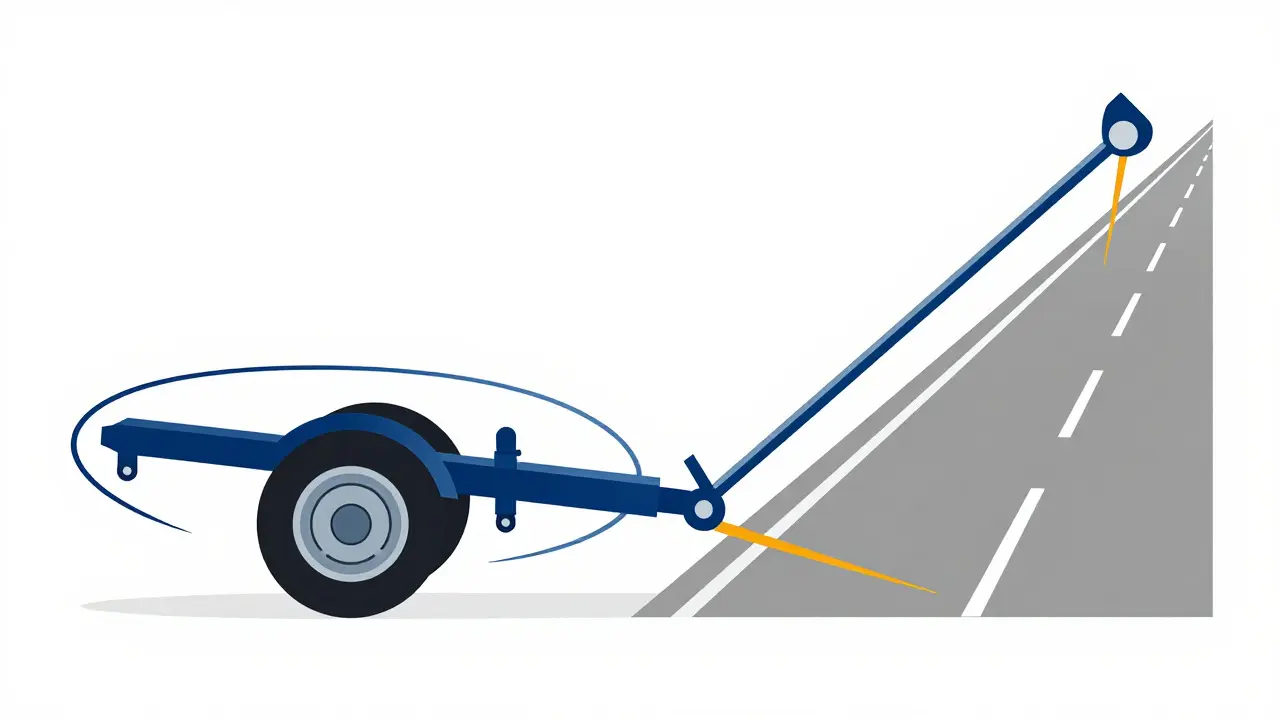
If you plan to camp in crowded state parks or navigate narrow city streets, the gooseneck hitch has a distinct advantage. Because the pivot point is centered in the bed, the trailer follows the truck’s path more closely. You can make sharper turns without the trailer jackknifing or clipping curbs. This is why farmers and contractors love goosenecks for moving equipment across tight job sites. The "track" of the trailer is narrower, meaning you don’t need as much room to swing wide.
Fifth-wheel trailers, however, require a wider arc. The pivot point is forward, so the trailer swings out more during a turn. If you are backing up a fifth-wheel, you have to account for this offset. It takes practice to master the "jackknife" prevention techniques with a fifth-wheel. For weekend warriors who mostly drive on open highways and park in spacious RV resorts, this isn’t a huge issue. But if you frequently back into tight driveways or maneuver around obstacles, the gooseneck feels more intuitive and forgiving.
Bed Utility and Storage Space
This is often the dealbreaker for many truck owners. With a gooseneck hitch, there is a large metal ball sitting in the dead center of your bed. Even when not towing, it protrudes several inches high. You cannot use a standard tonneau cover, and storing gear in the middle of the bed is impossible. Some manufacturers offer retractable gooseneck balls that flush with the bed floor, but they add cost and complexity. If you use your truck for hauling lumber, dirt, or motorcycles regularly, the gooseneck ball is a nuisance.
A fifth-wheel hitch occupies only the front portion of the bed, behind the cab. The rest of the bed remains completely flat and usable. You can install a tonneau cover, carry cargo, or even sleep in the bed if you’re camping. Many fifth-wheel owners appreciate this flexibility. They can tow their RV on weekends and use the truck for work during the week without removing the entire hitch assembly. Some modern fifth-wheel hitches, like the B&W Companion or Curt E16, also feature sliding mechanisms that move the hitch forward and backward to adjust weight distribution on steep grades, adding another layer of utility.
Safety Features and Sway Control
Safety is non-negotiable when towing heavy loads. Both systems rely on friction and locking mechanisms to prevent accidental disconnection. Gooseneck hitches use a kingpin that drops into a socket. The connection is robust, but the lack of lateral friction means the trailer can pivot freely. This freedom contributes to the tighter turning radius but also increases the risk of sway if the load shifts or wind gusts hit. Many gooseneck users install additional sway bars or use electronic brake controllers to mitigate this.
Fifth-wheel hitches, particularly the slider types, incorporate significant friction between the jaws and the kingpin. This resistance helps dampen side-to-side movement. Additionally, the forward pivot point creates a natural self-correcting tendency. If the trailer starts to sway, the geometry pulls it back into line. For those towing in high-wind areas or on steep mountain passes, this inherent stability is a major safety benefit. Always ensure your hitch matches the kingpin size of your trailer-most are 2.5 inches, but some older models use 2.0-inch pins.
Installation and Compatibility
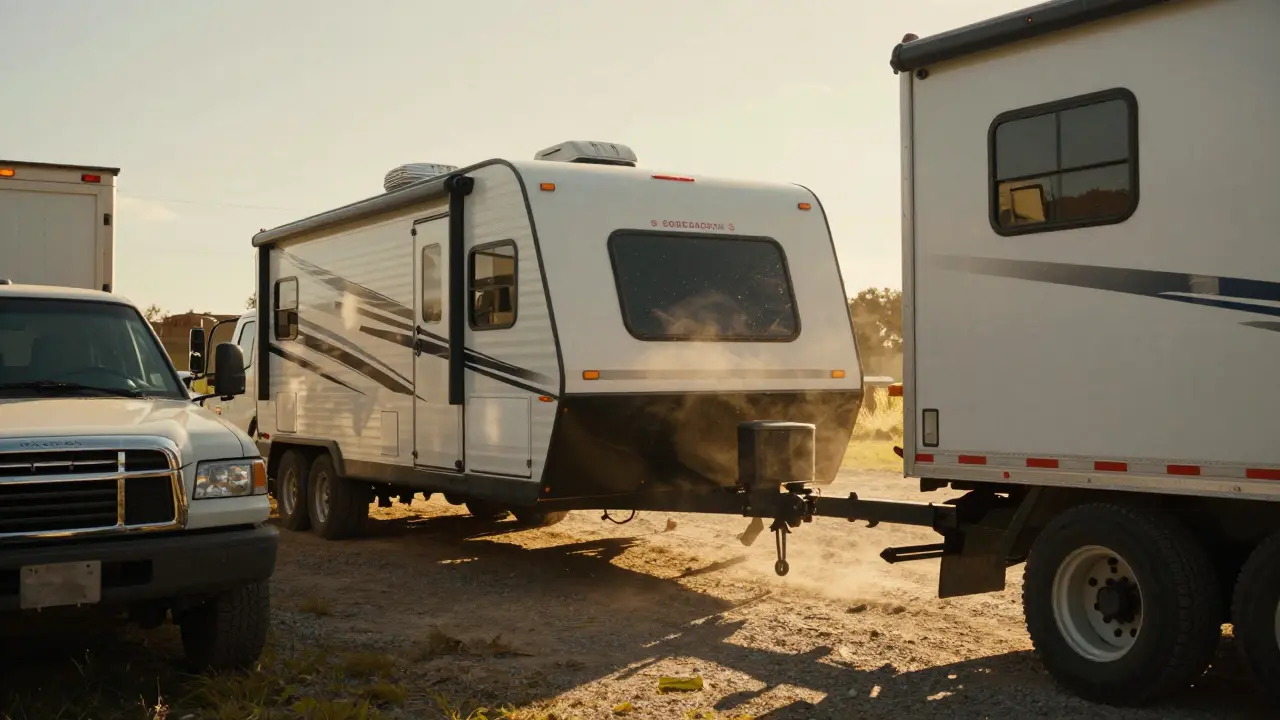
Installing either hitch requires drilling into your truck bed and reinforcing the frame rails. It’s not a bolt-on job for most trucks unless you buy a pre-drilled kit designed for your specific model year. Gooseneck installations are generally simpler because the hole is smaller and centered. Fifth-wheel installations require cutting a larger rectangular opening and often involve welding cross-members for support. If you’re not comfortable with fabrication, professional installation is recommended. Expect to pay between $300 and $600 for labor.
Compatibility matters too. Not all trucks are suited for fifth-wheel towing. Short-bed trucks (like the 6.5-foot bed on an F-150) often struggle with fifth-wheel clearance when turning sharply. The trailer nose can clip the cab. Goosenecks avoid this issue entirely because the pivot is further back. If you have a short-bed truck and want to tow a large trailer, a gooseneck is likely your only viable option. Long-bed trucks (8 feet) handle both systems well, giving you the freedom to choose based on preference rather than limitation.
Which One Should You Choose?
Your decision should hinge on three factors: what you’re towing, where you’re going, and how you use your truck daily. If you prioritize highway stability, easy bed access, and plan to tow a large travel trailer or fifth-wheel RV, go with the fifth-wheel hitch. It’s the standard for recreational towing for good reason. The comfort and safety on long trips are unmatched.
However, if you need maximum maneuverability, higher weight capacity for industrial loads, or have a short-bed truck, the gooseneck hitch is the better choice. It’s tougher, more versatile for tight spaces, and often cheaper to install. Just remember to factor in the loss of bed utility. There is no perfect solution, only the right tool for your specific job.
Can I switch between a gooseneck and a fifth-wheel hitch?
Yes, but it requires effort. You would need to remove the existing hitch, plug the holes, and drill new ones for the other type. Some adapters exist that convert a gooseneck ball mount to a fifth-wheel plate, but these are rare and not recommended for heavy loads due to added height and instability. It’s better to choose one system and stick with it.
Is a gooseneck hitch safer than a fifth-wheel?
Safety depends on usage. Goosenecks are mechanically very strong and secure, but they are more prone to sway on highways due to the pivot point location. Fifth-wheel hitches offer better inherent stability and sway resistance. Neither is inherently "unsafe," but fifth-wheels are generally considered safer for long-distance highway towing.
Do I need a special truck for a gooseneck hitch?
You need a truck with a reinforced bed and sufficient towing capacity. Most half-ton trucks (F-150, Silverado 1500) are not suitable for heavy gooseneck towing due to weak frames and suspensions. You typically need a three-quarter-ton or one-ton truck (2500/3500 series) to safely handle the weights associated with gooseneck towing.
How much does it cost to install a fifth-wheel hitch?
The hitch itself ranges from $800 to $2,500 depending on features like sliders and brand. Professional installation costs between $300 and $600. DIY installation saves labor but requires tools like a welder and drill press. Total investment usually falls between $1,100 and $3,100.
Can I use a tonneau cover with a gooseneck hitch?
Standard tonneau covers will not fit over a fixed gooseneck ball. You must either remove the ball (which defeats the purpose if you’re towing), use a specialized cover with a cutout, or invest in a retractable gooseneck ball system that flushes with the bed floor. Fifth-wheel hitches are much more compatible with standard covers.