
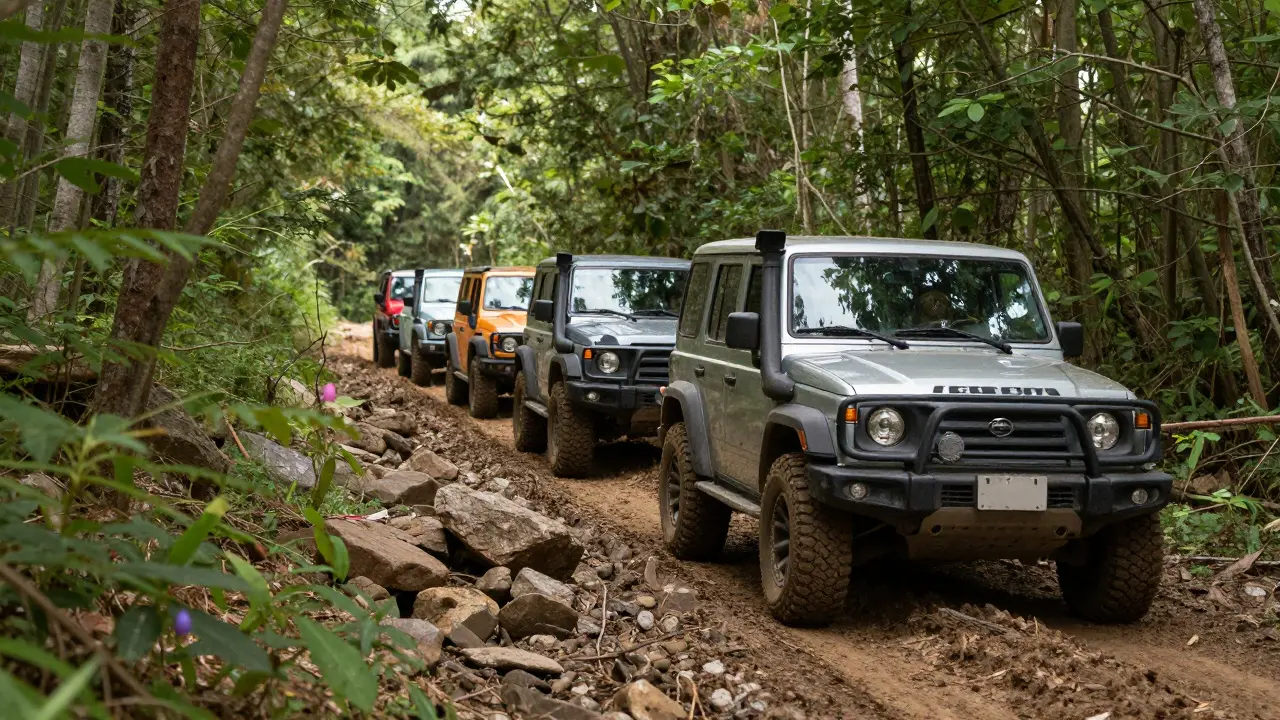
Driving through mud, rocks, and forests with a group of friends sounds like the ultimate adventure. But if everyone’s doing their own thing, you’re not just risking your vehicle-you’re damaging the land, annoying other users, and making it harder for everyone to enjoy the trails next time. Group off-roading isn’t just about who has the biggest tires or the most powerful engine. It’s about how you behave when you’re out there together.
Know Before You Go
You wouldn’t show up to a hiking trail without checking the weather or packing water. Off-roading is the same. Before you even start the engine, find out if the trail is open, who manages it, and what rules apply. Some trails are only open seasonally. Others require permits. A few are off-limits entirely to protect endangered plants or wildlife habitats.Check with local off-road clubs, state park websites, or the Bureau of Land Management (BLM) for current trail conditions. In the UK, the Trail Riders Fellowship (TRF) maintains detailed maps and updates on legal access points. Don’t rely on Google Maps or a random Facebook group. Those can be outdated or wrong. A trail that was open last year might be closed this spring because of erosion or nesting birds.
Also, know your vehicle’s limits. A lifted Jeep with 35-inch tires doesn’t mean you can tackle every rock pile. Most trails are rated from easy (E) to extreme (X). If your group is mixing beginners with veterans, pick a trail that matches the least experienced driver. No one should be pressured into a run they’re not ready for.
Drive in Single File
One of the biggest mistakes groups make is spreading out. When five vehicles drive side-by-side through a narrow trail, they widen the track, crush vegetation, and create ruts that hold water and cause erosion. That’s not adventure-it’s destruction.Always drive in single file, following the vehicle in front. Stay in the existing ruts, not beside them. Even if the trail looks wide enough, sticking to the path reduces damage by up to 70%, according to a 2023 study by the Off-Road Vehicle Environmental Impact Project. The person in front sets the pace. The rest follow. No passing unless it’s safe and approved by the group leader.
If you’re the lead driver, slow down at tricky sections. Don’t blast through mud just because you can. Wait for the group to catch up. If you’re in the middle or back, don’t rush. Let the leader choose the line. If they stop to assess a rock or a steep climb, you stop too. Patience keeps everyone safe and the trail intact.
Leave No Trace
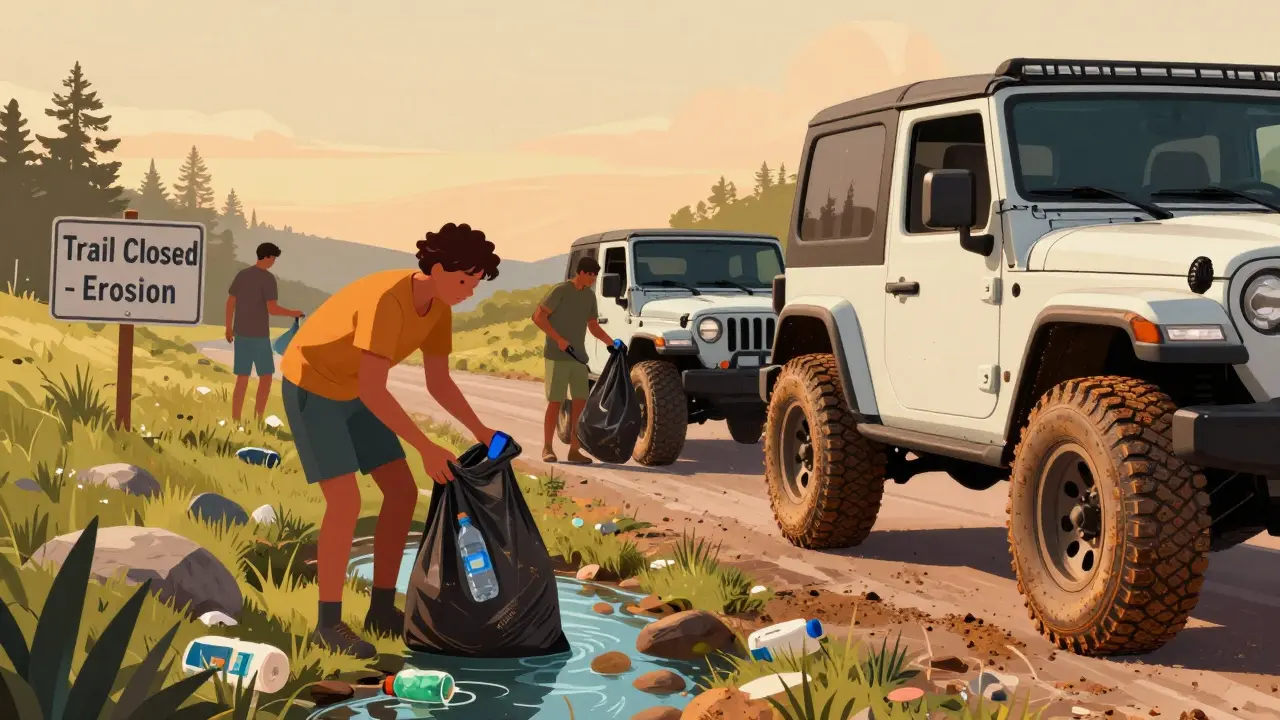
You wouldn’t leave trash behind after a picnic. Don’t do it on the trail either. That includes food wrappers, water bottles, cigarette butts-even biodegradable stuff like apple cores. Animals get sick from human food. Plastic doesn’t break down in the wild. And a single bottle cap can wash into a stream and kill fish.Bring a trash bag. Every vehicle. Even if you’re just out for a few hours. When you stop for a break, pick up after yourself and your group. If you see trash left by others, pick it up too. That’s not being a busybody-it’s being part of the community. Many trails have volunteer clean-up days. Show up. It’s the easiest way to give back.
Also, avoid cutting switchbacks. If you take a shortcut across a hillside to avoid a muddy patch, you’re creating a new trail. That’s called “social trail creation,” and it’s one of the top reasons trails get closed. Stick to the marked path, no matter how tempting it is to go around.
Respect Other Trail Users
Off-road trails aren’t just for jeeps and ATVs. Hikers, horseback riders, mountain bikers, and even hunters use them too. You might not see them, but they’re there.Always yield to non-motorized users. If you hear hoofbeats or see a hiker ahead, pull over and stop. Let them pass. Don’t rev your engine or honk to scare them out of the way. That’s not cool. It’s rude. And it makes people afraid of motorized vehicles.
Keep noise down. Loud exhausts, booming stereos, and shouting don’t make you look tough-they make you look irresponsible. Many trails have quiet hours, especially early morning and evening. Even if there’s no sign, keep it low. You’re in nature, not a music festival.
And if you’re camping nearby, don’t set up right on the trail edge. Give space. Don’t leave fires unattended. Don’t dump gray water on the ground. Use designated sites or portable toilets. These aren’t rules made to annoy you. They’re rules made to keep trails open for everyone.
Group Leadership Matters
A group without a leader is chaos. Someone needs to be in charge-not because they have the fanciest rig, but because they know the trail, the rules, and how to handle problems.Before you leave, appoint a lead driver and a sweep (the last vehicle). The lead sets the pace and route. The sweep makes sure no one gets stuck or left behind. They also carry extra tools, a first-aid kit, and a charged radio or satellite messenger. If someone breaks down, the sweep stays with them while the rest go for help.
Use hand signals. Not everyone has radios. Learn the basic ones: stop, slow down, turn left, turn right, danger ahead. Practice them before you hit the trail. A thumbs-up means “all good.” A waving arm means “stop immediately.” These aren’t optional. They’re lifesavers.
Also, agree on a meeting point if someone gets separated. Don’t just say “we’ll find you.” Pick a landmark-a big rock, a trail junction, a creek crossing-and stick to it. If you’re late, wait. Don’t drive around looking. That just makes things worse.
Help Each Other-But Do It Right
Getting stuck is part of off-roading. But how you respond matters. If someone’s stuck, don’t just rush over with your winch and start pulling. First, assess. Is the vehicle on soft ground? Is it on a slope? Is there a risk of rolling over?Ask the driver what they think happened. Sometimes, a little air down in the tires or a few rocks under the tires is all they need. Don’t assume you know better. Listen. Offer help, don’t take over.
Use recovery boards, not just winches. Winches can snap, pull trees over, or yank the vehicle into worse terrain. Recovery boards give you control. They’re cheaper, safer, and less damaging to the environment.
And never tow another vehicle on a rope unless you’ve both agreed on the method. A loose tow strap can become a deadly projectile. Use proper tow hooks, rated shackles, and a spotter. If you don’t know how, don’t try it.
Leave It Better Than You Found It
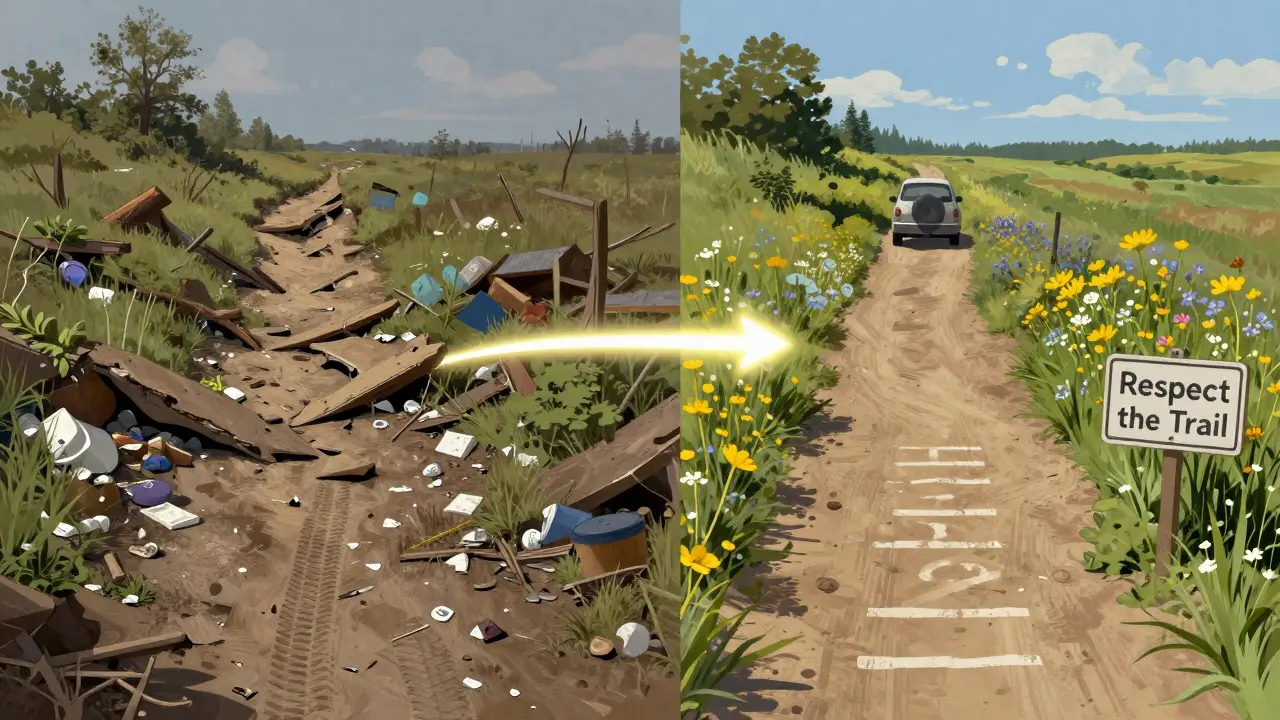
The best off-roaders aren’t the ones with the loudest exhausts or the highest ground clearance. They’re the ones who make sure the trail looks just as good-or better-when they leave.After your trip, check your vehicle for mud, seeds, or debris. Clean your tires before hitting pavement. You don’t want to spread invasive plants to new areas. Seeds from invasive species like Japanese knotweed or Himalayan balsam can hitch a ride on your treads and take over entire ecosystems.
Report trail damage. If you see a washed-out section, a fallen tree blocking the path, or signs of illegal dumping, let the managing agency know. Most have online forms or hotlines. Your report might be the reason they fix a dangerous spot before someone gets hurt.
Join a local off-road club. These groups often organize trail maintenance days, advocate for legal access, and teach new drivers proper techniques. Being part of the community means you’re part of the solution-not the problem.
Why This All Matters
Every time you disrespect a trail, you’re not just risking a fine or a tow. You’re risking the future of off-roading. In the last five years, over 120 trails in the UK and US have been permanently closed due to erosion, user conflict, or environmental damage. Many of those closures started with small, repeated offenses-cutting corners, driving off-trail, leaving trash, ignoring signs.Responsible off-roading isn’t about being perfect. It’s about being aware. It’s about choosing to do better, even when no one’s watching. It’s about remembering that the trail doesn’t belong to you. It belongs to the land, the animals, the next person who wants to drive it-and the people who will be left to clean up after you if you don’t.
Next time you head out with your group, ask yourself: Will the trail still be here for someone else to enjoy? If the answer isn’t a clear yes, then you’re not ready to drive it.
What should I do if I see someone breaking off-road trail rules?
Don’t confront them directly-it can turn dangerous. Instead, note the vehicle’s license plate, location, and what they did. Report it to the trail manager or local off-road club. Many agencies have anonymous tip lines. Your report helps protect the trail without putting you at risk.
Do I need a permit to go off-roading?
It depends on where you are. In the UK, public bridleways and byways usually don’t require permits, but some national parks and protected areas do. In the US, BLM land often requires a permit, and many state parks charge fees. Always check the official website of the land manager before you go. Never assume it’s free or open.
Can I drive my street-legal SUV on off-road trails?
Some trails allow street-legal vehicles, but not all. A regular SUV lacks the ground clearance, tire traction, and underbody protection needed for serious terrain. Driving one on a rugged trail can damage the vehicle and the trail. Stick to designated beginner trails if you’re in a stock SUV. For anything harder, a purpose-built off-road rig is safer and more responsible.
How do I know if a trail is too difficult for my group?
Look for trail ratings: Easy (E), Moderate (M), Difficult (D), Extreme (X). If your group has anyone new, choose Easy or Moderate. Watch for signs like steep inclines over 30 degrees, deep water crossings, or large boulders. If you’re unsure, ask a local club or check online reviews from verified users. Don’t guess-ask.
What gear is essential for group off-roading?
Every vehicle should carry: recovery boards, a tire pump, a first-aid kit, a full-size spare tire, a shovel, water, non-perishable food, a charged phone or satellite messenger, and a fire extinguisher. The sweep vehicle should also carry extra fuel, a tow strap with rated shackles, and a CB or ham radio. Don’t forget a map and compass-GPS can fail.
Comments
Chris Heffron
I love how this post doesn't sugarcoat it. Single file? Yeah. I've seen groups spread out like they're in a parade. Total mess. 🙃
December 18, 2025 at 17:28
Adrienne Temple
I used to think bigger tires = better. Then I got stuck in a wet meadow while my friend’s stock Tacoma just rolled through. Turned out he knew the trail, respected it, and didn’t try to be a hero. 🙏 Now I always ask before I go. It’s not about the rig-it’s about the mindset.
December 19, 2025 at 13:39
Sandy Dog
Okay but have you SEEN what happens when someone ignores the sweep? Last month, my cousin got stuck for SIX HOURS because the leader didn’t wait. They had to call a tow truck, left a trail of tire marks like a dragon crawled through it, and then posted pics like it was a victory lap. I cried. 🥺 I literally cried.
December 21, 2025 at 01:10
Nick Rios
I’ve been off-roading for 15 years and this is the most balanced, thoughtful piece I’ve read. No yelling, no flexing-just clear, practical stuff. People forget we’re guests on this land. Not owners.
December 21, 2025 at 13:17
Amanda Harkins
Honestly? I don’t care about permits or trail ratings. I just want to go where the mud is deep and the trees are thick. If someone else doesn’t like it? That’s their problem. 😐
December 21, 2025 at 20:54
Jeanie Watson
I read this whole thing. I didn’t agree with half of it. But I also didn’t feel attacked. Weird. Maybe I’m just tired of the drama.
December 23, 2025 at 10:53
Tom Mikota
So you're telling me I can't blast through a creek because my exhaust is 'too loud'? Next you'll tell me to stop breathing too hard. 🤡
December 24, 2025 at 01:45
Mark Tipton
Let’s be real. The BLM and TRF are controlled by environmental lobbies who want to eliminate off-roading entirely. They use 'erosion' as a pretext. The real reason? They hate freedom. If you follow these rules, you’re playing into their hands. I’ve seen satellite images-most trails are barely used. But they close them anyway. Wake up.
December 25, 2025 at 14:40
Adithya M
This is gold. I’m from India, and we don’t have organized off-roading here. But I’ve seen guys wreck forests with their bikes. This guide should be translated and shared everywhere.
December 25, 2025 at 22:22
Jessica McGirt
I appreciate how this doesn’t shame people-it educates. I taught my 16-year-old nephew the hand signals last weekend. He got so excited about being the sweep. That’s the future right there.
December 27, 2025 at 13:43
Donald Sullivan
You people act like we’re out here committing war crimes. It’s dirt. It grows back. Chill out. I’ve been doing this for 20 years and no one’s ever complained. Until now.
December 27, 2025 at 23:41
Tina van Schelt
The trail doesn’t belong to us? Nah. It belongs to the dirt, the roots, the beetles, the silent birds watching from the pines. We’re just passing through. If we leave it smelling like burnt rubber and regret, we’re not adventurers-we’re squatters.
December 28, 2025 at 19:56
Aaron Elliott
While I appreciate the sentiment, the document exhibits a marked tendency toward prescriptive moralism, bordering on the pedantic. One must question whether the imposition of standardized behavioral protocols upon inherently anarchic recreational activities constitutes a form of cultural hegemony. The notion that 'leave it better than you found it' is universally applicable presumes an ontological equivalence between human recreation and ecological stewardship-an assumption not empirically substantiated.
December 29, 2025 at 17:17