
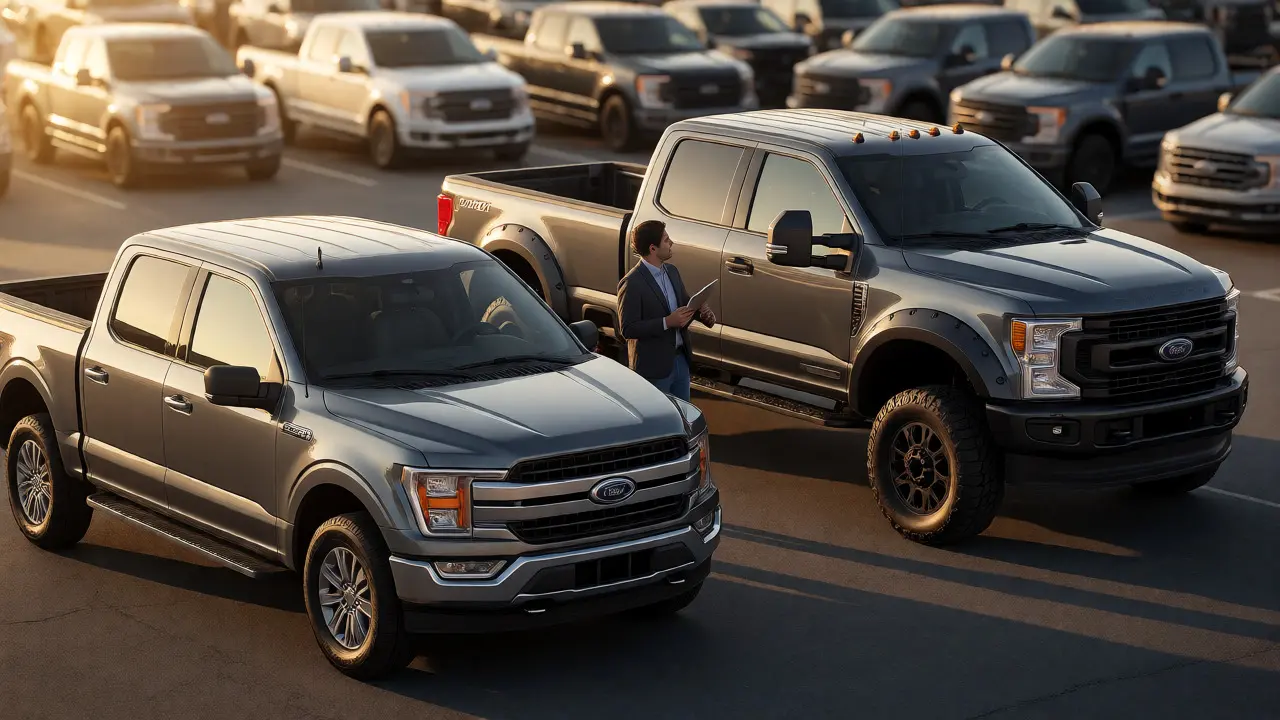
You’re standing in the dealership lot, staring at two trucks that look almost identical from the outside. One is a Ford F-150 or a Chevy Silverado 1500, and the other is its beefier sibling, the F-250 or Silverado 2500HD. The salesperson talks about "capability," but you just want to know which one won’t make your back hurt on the highway or leave you stranded when you need to haul a boat.
This isn’t just about picking the bigger number on the window sticker. It’s about understanding the engineering trade-offs between a half-ton truck (a light-duty pickup designed for daily driving with moderate hauling needs) and a three-quarter-ton truck (a heavy-duty pickup built for serious towing and payload demands). Choosing wrong means either paying for stiffness you don’t need or struggling with a ride quality that feels like sitting on a brick. Let’s break down exactly what changes under the metal so you can buy with confidence.
The Core Difference: Chassis and Suspension Architecture
The biggest misconception is that these trucks are just different trim levels of the same vehicle. They aren’t. While they might share the same cab shell and interior plastics, the foundation-the frame and suspension-is completely different. A half-ton truck uses a lighter gauge steel frame designed to balance strength with fuel efficiency and ride comfort. A three-quarter-ton (3/4-ton) truck uses a much heavier, thicker frame rail design to handle massive stress without twisting.
Suspension is where you feel this difference most immediately. Half-tons typically use coil springs in the rear (on newer models like the Ram 1500 or Ford F-150) or softer leaf springs. This setup absorbs bumps well, making it feel closer to an SUV. Three-quarter-ton trucks almost exclusively use multi-stage leaf springs with higher spring rates. These are stiff. Unloaded, a 3/4-ton truck will bounce over small cracks in the road. Loaded, however, those springs compress into their sweet spot, providing a stable platform that a half-ton simply cannot match when carrying weight.
If you drive mostly empty and care about gas mileage, the half-ton wins. If you spend your weekends towing a 10,000-pound travel trailer, the 3/4-ton’s rigid architecture prevents the frame flex that causes long-term wear on drivetrain components.
Payload Capacity: What You Can Actually Carry
Payload is the maximum weight you can put inside the truck-passengers, cargo, and aftermarket accessories combined. This is often where buyers get burned because manufacturers advertise impressive numbers that assume a base-model truck with no options. Every option you add, from a sunroof to a larger infotainment screen, eats into your payload.
A typical modern half-ton truck offers a payload range of 1,500 to 2,200 pounds. That sounds like a lot until you realize that four adults, a dog, a toolbox, and a cooler already account for 800 pounds. Add a bed liner and a tonneau cover, and you’re dangerously close to the limit before you even load lumber or gravel.
Three-quarter-ton trucks step up significantly, offering payloads between 3,000 and 4,000+ pounds. This extra headroom is crucial if you regularly carry heavy materials like pallets of concrete blocks, large appliances, or construction equipment. The stronger axles and reinforced frames in 3/4-ton models ensure that the truck doesn’t sag excessively under load, maintaining proper alignment and tire contact patches.
| Feature | Half-Ton (e.g., F-150, Silverado 1500) | Three-Quarter-Ton (e.g., F-250, Silverado 2500HD) |
|---|---|---|
| Typical Payload Range | 1,500 - 2,200 lbs | 3,000 - 4,200 lbs |
| Max Towing Capacity | 7,000 - 14,000 lbs | 12,000 - 22,000+ lbs |
| Ride Quality (Unloaded) | Smooth, car-like | Bouncy, stiff |
| Braking System | Standard disc brakes | Larger discs, often hydraulic boosters |
| Tire Size | Light Truck (LT) or P-Metric | Heavy Duty LT tires required |
Towing Performance: Power and Braking Dynamics
Towing is where the gap widens further. While some high-output half-ton engines claim towing capacities up to 14,000 pounds, real-world performance tells a different story. At that upper limit, a half-ton is operating near its mechanical breaking point. Transmission temperatures run high, and stopping distances increase dramatically.
Three-quarter-ton trucks are engineered for sustained towing. They feature larger transmissions with more cooling capacity, higher gear ratios for better torque multiplication, and more robust cooling systems for the engine and transmission. But the real advantage lies in braking. A 3/4-ton truck comes standard with larger brake rotors and calipers. Many also offer integrated exhaust brakes or engine compression brakes, which help slow the rig down without overheating the service brakes. This is critical when descending steep grades with a heavy load.
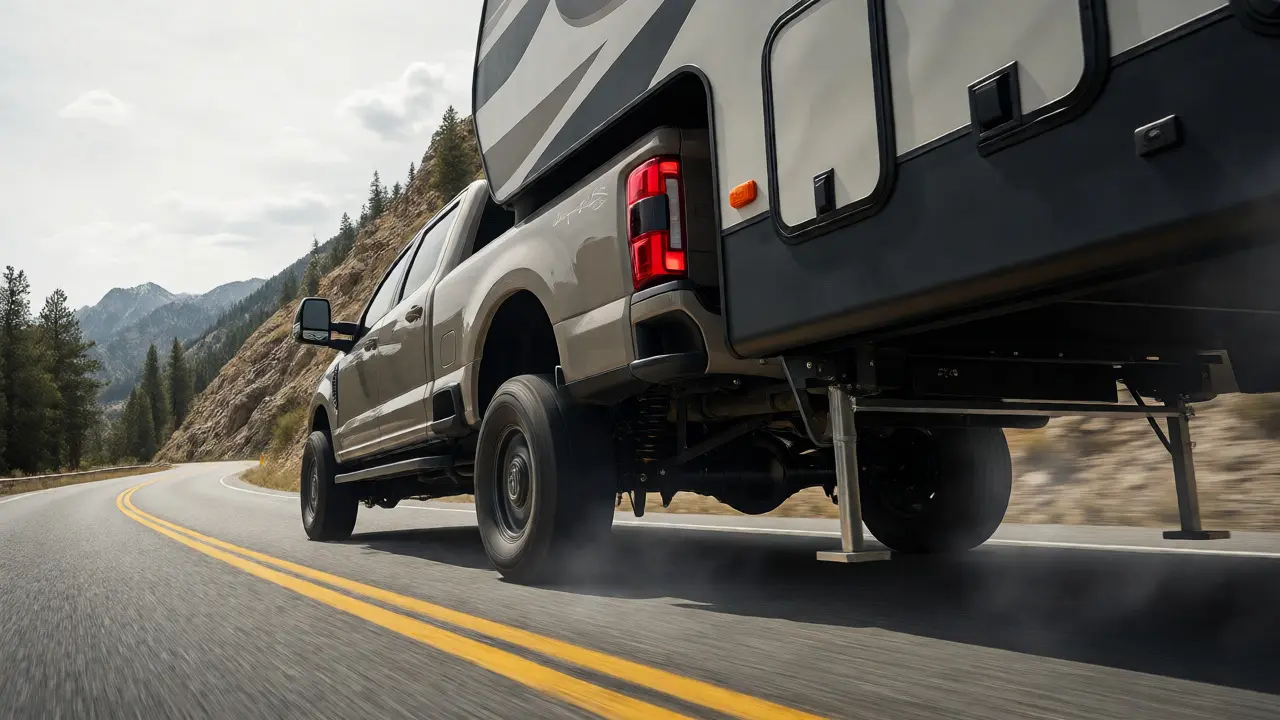
Consider this scenario: You’re towing a 12,000-pound fifth-wheel camper. In a half-ton, you’ll likely be riding the brakes constantly, risking fade. In a 3/4-ton, the combination of stronger brakes and lower gearing allows you to maintain a safe speed with less effort. If you tow more than 10,000 pounds regularly, the 3/4-ton isn’t just a luxury-it’s a safety requirement.
Ride Comfort and Daily Drivability
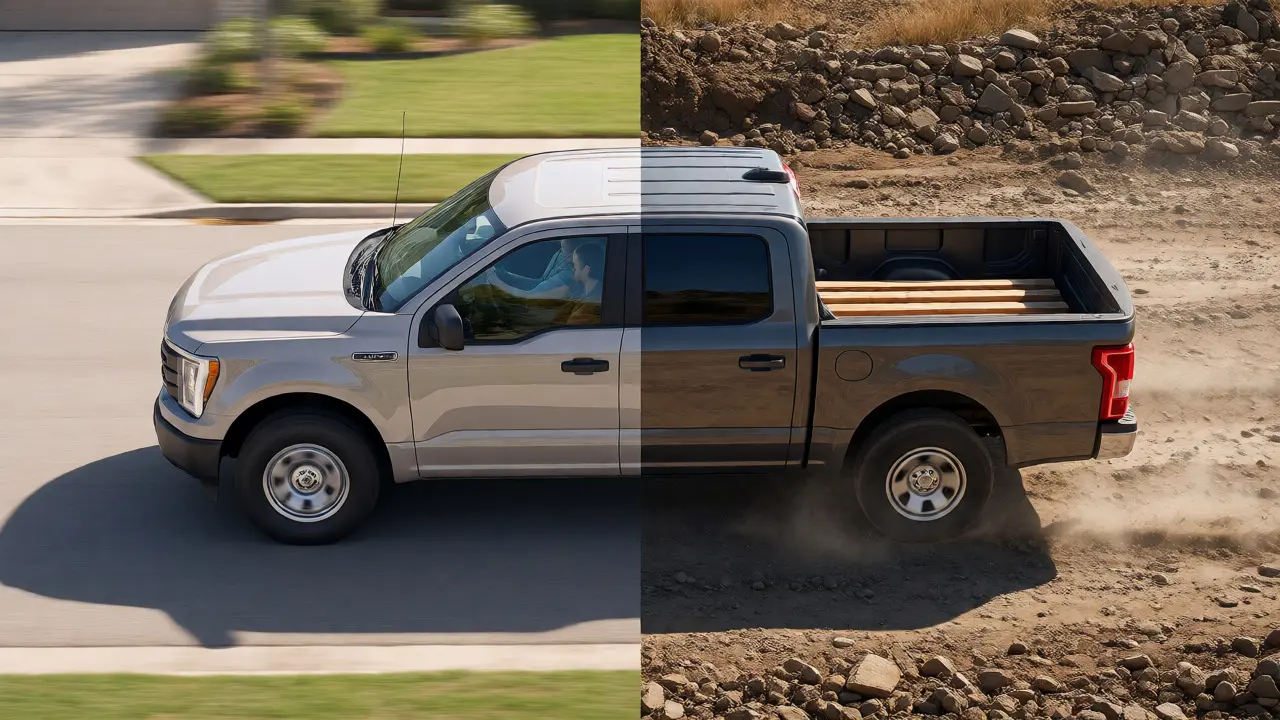
Here is the catch: capability comes at the cost of comfort. Driving a three-quarter-ton truck as your daily commuter is a commitment. The steering is heavier due to the larger tires and solid front axle (on many 4WD models). The turning radius is wider, making parking lots tighter. And yes, the ride is harsher. Even with adaptive air suspensions available on some premium trims, the fundamental physics of a stiffer chassis mean you feel every pothole.
Half-ton trucks have evolved to become incredibly refined. Modern independent rear suspensions and advanced shock absorbers allow them to mimic the comfort of full-size SUVs. Fuel economy is also better, though the gap has narrowed slightly with the introduction of diesel options in both classes. A gasoline half-ton might get 20-22 MPG combined, while a 3/4-ton gasoline model might drop to 15-17 MPG. Diesel versions of both classes hover around 18-22 MPG depending on load, but diesel maintenance costs are significantly higher on the 3/4-ton platform.
If you value quiet cabins and smooth acceleration, stick with the half-ton. If you prioritize stability at high speeds while towing, accept the trade-off of a firmer ride.
Cost of Ownership: Purchase Price and Maintenance
The sticker price difference is substantial. A comparable three-quarter-ton truck often costs $5,000 to $10,000 more than its half-ton counterpart. But the purchase price is just the beginning. Insurance premiums are higher because repair costs are greater. Parts are more expensive-brake pads, rotors, and tires for a 3/4-ton truck can cost double what they do for a half-ton.
Tires are a major hidden cost. Three-quarter-ton trucks require Heavy-Duty (LT) tires, which are stiffer, louder, and more expensive. They also tend to wear faster if not properly aligned, which is common given the truck’s tendency to wander on highways. Fuel costs add up quickly too. If you drive 15,000 miles a year, the difference in fuel economy could cost you an extra $500-$800 annually in gas alone.
Resale value tends to favor the half-ton in general markets because there are more buyers looking for daily drivers. However, in rural areas or among contractors, 3/4-ton trucks hold their value exceptionally well because they are seen as tools rather than lifestyle vehicles.
Making the Right Choice: Decision Checklist
Don’t let the salesman upsell you into a truck you don’t need. Use this quick decision tree:
- Do you tow more than 10,000 pounds regularly? Yes? Buy a 3/4-ton. No? Consider a half-ton.
- Do you carry loads exceeding 2,000 pounds in the bed? Yes? Buy a 3/4-ton. No? Half-ton is sufficient.
- Is this your primary family vehicle? Yes? Prioritize the half-ton for comfort and fuel economy. No? 3/4-ton is acceptable.
- Do you live in a hilly or mountainous region? Yes? The 3/4-ton’s braking and gearing advantages become critical.
- Are you planning to modify the truck heavily? Lift kits and oversized tires reduce payload capacity. Start with a 3/4-ton if you plan significant modifications.
Remember, the best truck is the one that fits 90% of your use cases. Buying a 3/4-ton for occasional heavy loads means suffering through 90% of your drives with a rough ride and poor fuel economy. Buying a half-ton for frequent heavy towing risks premature wear and safety issues.
Can I upgrade a half-ton truck to handle 3/4-ton loads?
You can improve a half-ton’s capability with upgrades like helper springs, better shocks, and higher-rated tires, but you cannot change the fundamental limits of the frame, axles, and transmission. Overloading a half-ton beyond its rated capacity leads to blown transmissions, bent frames, and unsafe braking conditions. Upgrades help within the existing limits; they don’t transform the vehicle’s class.
Are three-quarter-ton trucks always harder to park?
Generally, yes. They have wider turning circles due to larger tires and solid front axles on 4WD models. However, many modern 3/4-ton trucks come with optional 360-degree cameras and trailer backup assist systems that mitigate this issue. Still, physically maneuvering a longer wheelbase requires more space than a standard half-ton crew cab.
Which truck class holds its resale value better?
It depends on the market. In suburban areas, half-ton trucks retain value better because they appeal to a broader audience of daily drivers. In agricultural or industrial regions, three-quarter-ton trucks often command higher resale prices because they are viewed as durable work assets. Condition and mileage matter more than class in most individual transactions.
Do I need a special license to drive a three-quarter-ton truck?
In most US states, no. As long as the Gross Combined Weight Rating (GCWR) stays below 26,000 pounds, a standard driver’s license is sufficient. However, if you tow a very heavy trailer that pushes the GCWR over this limit, you may need a Commercial Driver’s License (CDL), especially if the vehicle is used for commercial purposes. Always check your local state regulations.
Is diesel worth it in a half-ton versus a three-quarter-ton?
Diesel engines shine in three-quarter-ton trucks because the added torque is essential for moving heavy loads efficiently. In half-ton trucks, diesel options are less common now and often provide marginal fuel savings compared to modern turbocharged V6 gasoline engines. Unless you tow heavy frequently, the higher upfront cost and maintenance complexity of a diesel usually don’t pay off in a half-ton platform.