

Winter mornings in Bristol feel like you’re sitting on an ice block before the engine even warms up. Summer drives? Your seat sticks to your jeans like glue. That’s why millions of drivers turn to heated seat cushions and cooling seat covers - not as luxury add-ons, but as daily necessities. The truth? Not all of them work the same. Some promise comfort but deliver uneven heat. Others claim to cool but just blow warm air. Here’s what actually makes a difference, based on real use, not marketing.
How Heated Seat Cushions Actually Work
Heated seat cushions don’t just plug in and glow red like old space heaters. Modern ones use thin, flexible carbon fiber or wire mesh heating elements woven into a soft, breathable fabric. These elements spread heat evenly across your lower back and thighs - not just one hot spot. Most run on 12V car power and draw less than 5 amps, so they won’t drain your battery even if left on for hours.
Look for models with at least three heat settings. A low setting (around 30°C) is perfect for mild chill. Medium (38°C) works for frosty mornings. High (45°C) is for freezing commutes, but don’t use it for more than 20 minutes - prolonged high heat can reduce blood flow and cause discomfort. Brands like ComfiLife and AutoVox have tested their products for over 5,000 hours of continuous use without degradation.
Thermostats matter too. Cheap cushions just stay on until you unplug them. Better ones have auto-shutoff after 90 minutes. That’s not just a safety feature - it’s a battery saver. And if you drive a Tesla or a Hyundai Ioniq, make sure the cushion is slim enough to fit over the built-in seat heaters without bunching up.
Cooling Seat Covers: More Than Just a Fan
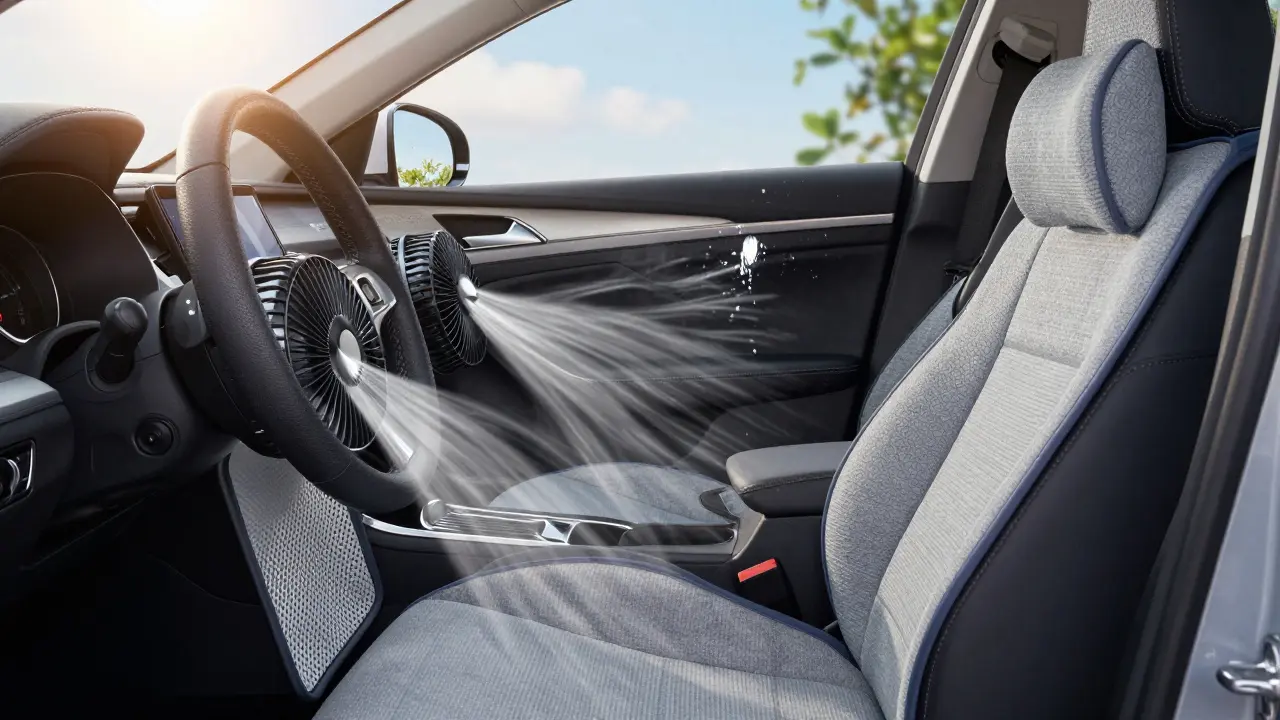
A cooling seat cover isn’t a desk fan glued to a pillow. Real cooling uses active airflow with a small, quiet fan and moisture-wicking fabric. The fan pulls air through channels in the cover, then pushes it against your skin. The fabric doesn’t just absorb sweat - it spreads it out to evaporate faster, which lowers skin temperature by up to 8°C.
Most effective models, like the SeatCooler Pro and the LumaComfort CoolSeat, use dual fans - one for intake, one for exhaust. That’s key. Single-fan models just push air around the seat, not through it. You’ll feel a breeze, but your back stays sticky.
Power draw is another big difference. A good cooling cover uses 2-3 amps. The cheap ones? They pull 5+ amps and can trip your car’s fuse if you’re running the AC and radio at the same time. Look for USB-C power inputs - they’re more efficient than old micro-USB ports. And if your car has ventilated seats already, a cooling cover might be overkill. But if you drive an older model or a budget car without factory ventilation, this is one of the best upgrades under £50.
Heated vs. Cooling: Which One Do You Need?
It’s not about which is better. It’s about what your climate and commute demand.
If you live in the UK, where winters are damp and cold but summers rarely hit 30°C, a heated cushion is the smarter buy. You’ll use it 6-8 months a year. In places like Texas or Arizona, where summer heat feels like sitting in a sauna, a cooling cover is the priority. But here’s the twist: many drivers in Bristol and Manchester now buy both. Why? Because they use them seasonally.
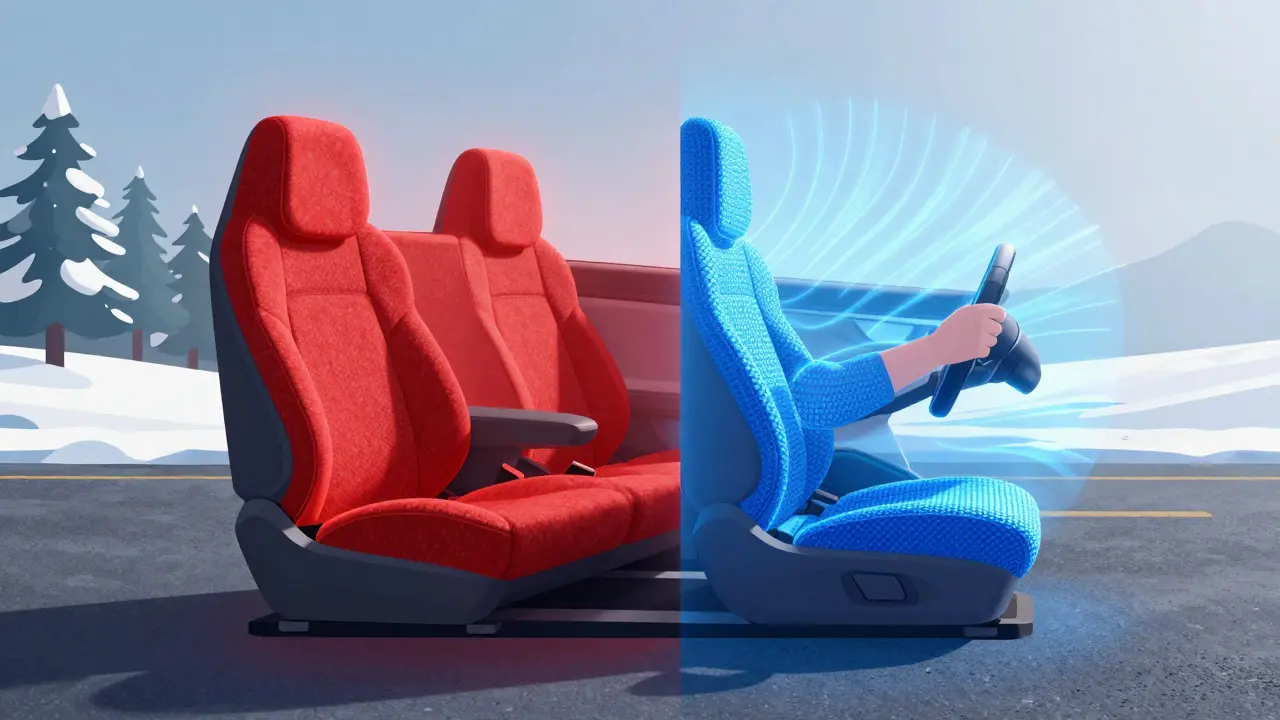
There’s also a third option - combo units. These have a heating element on one side and a cooling fan on the other. You flip the cover depending on the weather. Models like the DualClimate Pro let you switch modes with a single button. They cost more - around £80-£120 - but if you drive year-round in unpredictable weather, they cut down on clutter and cost less than buying two separate products.
What to Avoid
Not all seat covers are created equal. Here’s what to skip:
- Thick, non-breathable materials - PVC or cheap polyester traps heat and sweat. Look for mesh, polyester-cotton blends, or bamboo fabric.
- No safety certifications - If the product doesn’t mention CE, RoHS, or UL certification, walk away. Cheap electronics can overheat or short-circuit.
- One-size-fits-all designs - If it doesn’t mention compatibility with your car model (like Ford Focus, VW Golf, or Toyota Corolla), it probably won’t fit right. Seat shapes vary. A cushion that works in a sedan might slide around in an SUV.
- Non-removable covers - You’ll want to wash it. If the cover can’t be unzipped and machine-washed, you’re stuck with sweat stains and odors after a few months.
Also avoid gimmicks like built-in Bluetooth speakers or LED lights. They add bulk, drain power, and distract you. Focus on the core function: comfort.
Installation and Maintenance
Installing a heated or cooling seat cover takes under 5 minutes. Most slip over the seat like a pillowcase, with elastic straps or non-slip grips to hold them in place. Plug the power cord into your 12V socket - usually the one near the center console. Don’t route the cord under the seat; it can get pinched and fray.
For cleaning: Unplug the unit. Remove the cover (if removable) and wash it in cold water on a gentle cycle. Air dry. Never put the heating or cooling unit itself in water. Wipe it down with a damp cloth. If the fan gets dusty, use a soft brush or compressed air. A clogged fan is the #1 reason cooling covers fail after 6 months.
Check the power cord every few months. Fraying or stiff spots mean it’s time to replace it. Most brands offer 1-2 year warranties. Keep your receipt.
Real User Experience: What Drivers Say
One driver in Leeds told us he switched from a cheap £20 heated cushion to a ComfiLife model after his first one melted in summer heat. He now uses it daily in winter and leaves it in the car year-round. "It’s the only thing that makes my 7 a.m. commute bearable," he said.
A nurse in Bristol who drives 40 miles each way for night shifts swears by her cooling cover. "I used to come home soaked. Now I get out of the car dry. I didn’t think something so small could make that much difference."
Another user in Glasgow bought a combo unit and said he used the heat in December and the cooling in July. "I thought I’d hate the bulk, but it’s thinner than my old leather seat cover. I forget it’s even there."
Final Recommendation
If you drive in cold, wet weather more than half the year - go for a heated seat cushion. Pick one with three heat levels, auto-shutoff, and a washable cover. The ComfiLife Heated Seat Cushion (around £45) is reliable, well-reviewed, and works with almost all car seats.
If you battle summer heat and sweat, get a cooling seat cover with dual fans and moisture-wicking fabric. The SeatCooler Pro (around £55) is quiet, efficient, and fits snugly without slipping.
If you want one product for all seasons and don’t mind spending a bit more, the DualClimate Pro is the only combo unit that actually works without compromising on comfort or safety.
Don’t buy the cheapest option. Don’t buy the flashiest. Buy the one that matches your climate, your car, and your daily drive. That’s the real upgrade.
Can I use a heated seat cushion with factory heated seats?
Yes, but you might not need to. Factory heated seats are usually more powerful and evenly distributed. Adding a cushion on top can make them too hot and cause discomfort. If you do use one, stick to the low setting and avoid using both at the same time for long periods.
Do cooling seat covers work in humid weather?
They work better in humidity than you’d think. The key is moisture-wicking fabric. It pulls sweat away from your skin and lets air flow through to evaporate it. In very humid conditions, evaporation slows down, so cooling isn’t as strong - but you still feel less sticky. It’s not a fridge, but it’s better than nothing.
Will these drain my car battery?
Not if you use them properly. Heated cushions use 3-5 amps; cooling covers use 2-3. Most car batteries can handle that while the engine is running. But if you leave them plugged in with the engine off for more than an hour, you risk a dead battery. Always unplug when parked overnight.
Are heated and cooling seat covers safe for pregnant women?
Heated cushions should be used with caution. Medical guidelines recommend avoiding prolonged direct heat on the abdomen during pregnancy. If you use one, keep it on low and limit use to 15-20 minutes at a time. Cooling covers are generally safe and can help with overheating, which is common during pregnancy.
Can I use these in a motorcycle seat?
Most car seat cushions are too wide and bulky for motorcycle seats. There are specialized versions made for bikes, but they’re rare and often not as effective. For motorcyclists, thermal liners or heated jackets are more practical and safer.
How long do these products usually last?
With proper care, a good-quality heated cushion lasts 3-5 years. Cooling covers with dual fans last about 2-4 years. The fan is usually the first part to fail. Avoid exposing them to extreme heat or moisture, and clean them regularly to extend their life.
Comments
Anand Pandit
I've been using the ComfiLife cushion for two winters now and it's a game changer. No more numb legs at 7am. The low setting is perfect for mild chill and the auto-shutoff saves my battery. Washable cover is a must-have - I’ve had mine for over a year and it still looks new.
Just make sure you don’t stack it on top of factory heated seats. I tried that once and my lower back felt like it was being grilled. Low setting only, and only when the car’s cold.
January 6, 2026 at 08:58
Reshma Jose
Same here. I got the SeatCooler Pro last summer and I swear I’ve lost 10 pounds of sweat. My husband thought I was crazy spending £55 on a seat cover but now he steals it when he drives. The dual fans actually move air through the fabric - not just around it. And no, it doesn’t sound like a hairdryer. Quiet as a whisper.
Also, don’t buy the cheap ones with micro-USB. USB-C is the future and it charges faster and runs cooler.
January 7, 2026 at 14:55
rahul shrimali
Heated cushion for winter cooling cover for summer that’s it no need to overthink it. I have both and I use them like socks. One season one tool. Don’t waste money on combo stuff unless you’re driving in two climates at once. And stop buying plastic crap that doesn’t wash.
ComfiLife and SeatCooler Pro are the only two that don’t die after six months.
January 7, 2026 at 16:45
Eka Prabha
Let’s be honest - these products are engineered to create dependency. The auto-shutoff isn’t for safety, it’s to make you think you need to re-engage with the device every 90 minutes. The moisture-wicking fabric? A marketing buzzword designed to make you feel like you’re wearing tech instead of cotton.
And let’s not forget the battery drain concern - manufacturers want you to believe their 3-amp draw is harmless, but what about cumulative parasitic drain across millions of vehicles? This isn’t comfort - it’s corporate conditioning. You’re being trained to rely on external thermal regulation because the car industry stopped designing for human comfort decades ago.
Also, why are there no studies on long-term skin exposure to carbon fiber heating elements? I’m not saying it’s dangerous - I’m saying nobody’s looking. And that’s terrifying.
January 9, 2026 at 12:25
Rajat Patil
I appreciate how detailed this post is. It’s rare to see someone take the time to explain not just what works, but why. I’ve been using a basic heated cushion for years and never realized how much the fabric mattered. I thought all seat covers were the same.
Thank you for mentioning the washable cover point - I’ve had two cushions die because I couldn’t clean them. Now I know to look for that before buying. Small things make a big difference.
January 10, 2026 at 15:53
Jitendra Singh
Just bought the DualClimate Pro last week. Was skeptical because of the price but wow. Flip it, plug it in, done. Used the heat this morning in 4°C weather and the cooling today at 32°C. No bulk, no noise, no hassle.
It’s not perfect - the switch is a bit stiff - but for £110, it’s worth it if you live where the weather flips every month. No more storing two things in the trunk.
January 12, 2026 at 14:27
Madhuri Pujari
Oh please. You’re all falling for the ‘thermal comfort industrial complex.’ Who decided we need heated seats in the first place? Corporations. Who profits? Corporations. Who gets addicted? You.
And let’s talk about the ‘moisture-wicking’ fabric - it’s just polyester with a fancy name. You think sweat evaporating faster is magic? It’s physics. And you’re paying £55 for a fan and a sheet of fabric that your great-grandparents didn’t need.
Also - why are you all ignoring the fact that these things can interfere with airbag deployment? No one talks about that. Because the manufacturers don’t want you to know. Check the fine print. I dare you.
January 13, 2026 at 07:36
Sandeepan Gupta
For anyone considering the combo unit - don’t. It’s a compromise. The heating element is weaker than a standalone cushion. The fan is quieter but less powerful. You’re paying double for mediocrity.
Buy the ComfiLife. Buy the SeatCooler Pro. Use them seasonally. Keep them in your glovebox. It’s cheaper, more reliable, and you won’t feel like you’re carrying a thermal Swiss Army knife in your car.
Also, if your car has factory ventilation - don’t buy a cooling cover. It’s redundant. You’re just adding another power draw for zero benefit.
January 14, 2026 at 02:57
Tarun nahata
Man, I used to think seat heaters were for rich folks until I drove my cousin’s old Corolla in January. Felt like my butt was made of ice cubes. Bought the ComfiLife on a whim - now I’m addicted. It’s like hugging a warm blanket while driving.
And the cooling cover? Absolute lifesaver during monsoon season. No more sticky back sweat. I used to come home looking like I’d been swimming in my clothes. Now I just wipe off a little and walk in dry.
These aren’t luxuries - they’re survival gear for modern life. Don’t let anyone tell you otherwise. Your spine will thank you.
January 15, 2026 at 15:54
Aryan Jain
What if this is all a distraction? What if the real problem is that we’ve been forced to sit in plastic and metal boxes for hours every day while the world burns? Heated seats? Cooling covers? We’re not fixing the system - we’re just making the cage more comfortable.
They want us to think the solution is a £120 cushion. But what about public transport? What about walkable cities? What about reducing car dependency?
I’m not saying don’t buy it. I’m saying ask yourself - why do I need this in the first place?
January 17, 2026 at 13:39
ANAND BHUSHAN
I use the cooling cover in summer and leave the heated one in the car all year. Doesn’t hurt anything. Just plug it in when needed. No drama. No fuss. Works fine. Don’t overthink it.
January 17, 2026 at 18:16
Indi s
My mom has arthritis and she swears by the heated cushion. Says it’s the only thing that lets her drive without pain. I didn’t believe her until I saw her face after a 2-hour trip. She looked like she’d been on vacation. I bought her the ComfiLife for Christmas. Best gift I ever gave her.
January 18, 2026 at 04:21