
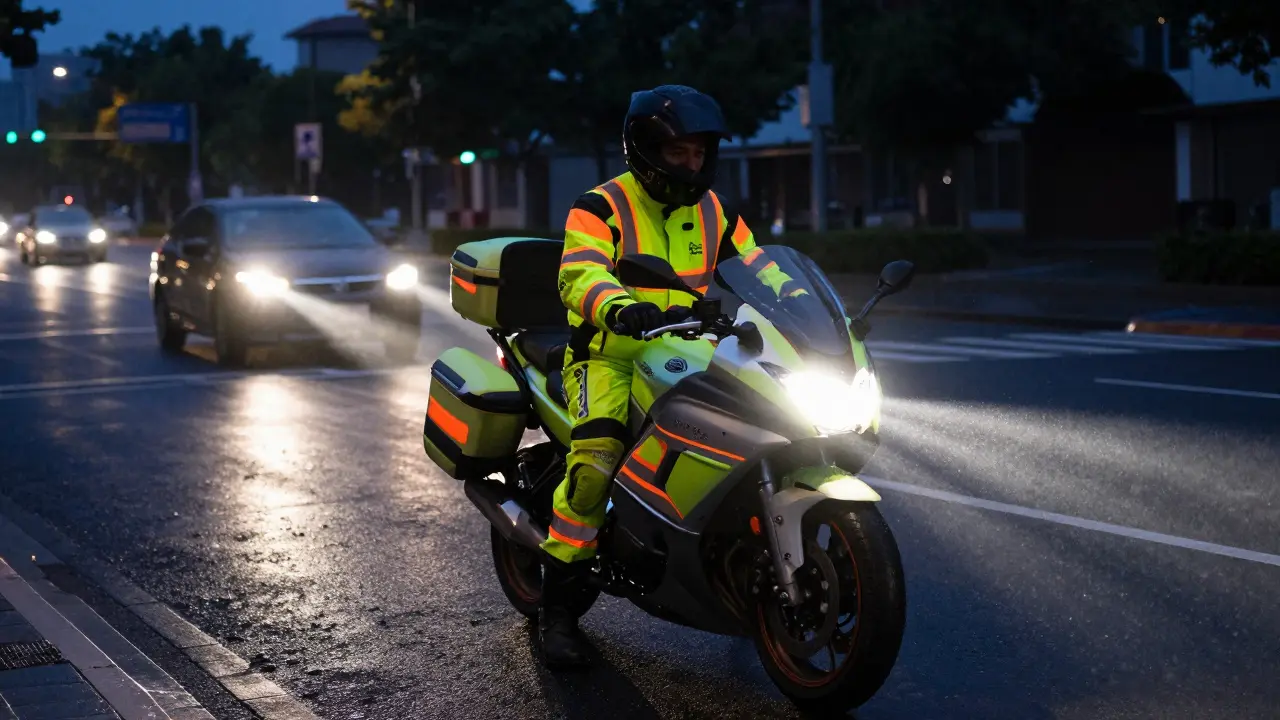
Riding a motorcycle means accepting one harsh truth: you are small, fast, and incredibly vulnerable. In the United Kingdom alone, hundreds of accidents occur annually because a car driver simply fails to see a rider. It happens faster than you think. One moment you are merging onto the M4, and the next, a van door swings open. High-visibility motorcycle gear isn't just about looking cool; it is your primary defense system. When you equip yourself correctly, you move from being invisible to undeniable.
The Physics of Being Seen
Your eyes work differently depending on the environment. During the day, cones in your retina detect color and detail. At night or in low light, rods take over, sensing brightness and motion. Most car drivers rely heavily on their peripheral vision. This biological fact changes how you choose gear. A dark-colored jacket blends into road asphalt perfectly. Your peripheral detection threshold for black objects drops significantly against a grey tarmac background. That is why fluorescent pigments, which absorb UV light and re-emit it as visible yellow or orange, are so powerful. They glow brighter than the surrounding environment, forcing the eye to focus on the source before the brain even processes movement.
Passive vs. Active Visibility Systems
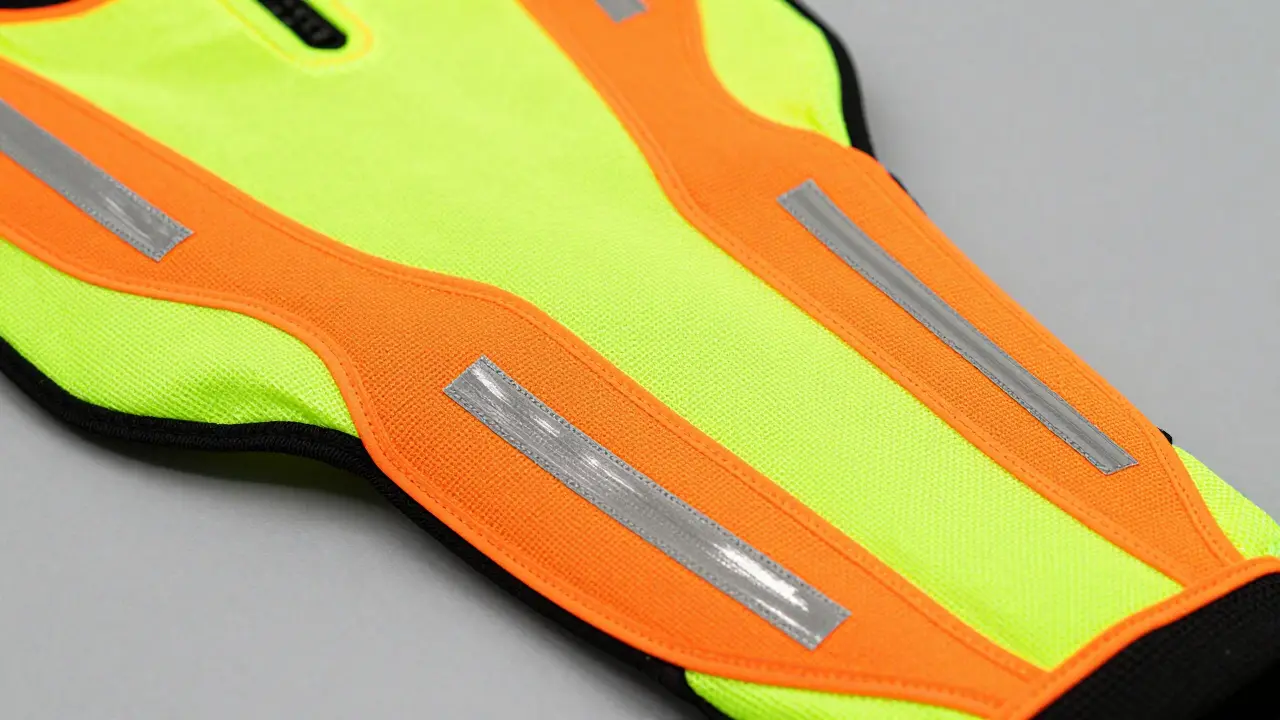
Gear falls into two camps: passive and active. Passive gear works without electricity. Think retroreflective strips found on rain jackets. These materials contain millions of tiny microprisms. When a car's headlight hits them, the light bounces straight back to the driver. Active gear generates its own light, like LED blinking strobes. The best setup combines both. You want passive reflectors to catch headlights at dawn or dusk, plus active LEDs for tunnels or heavy rain where ambient light is zero.
Key Equipment Breakdown
Jackets and Textile Armor
A good textile jacket offers abrasion resistance and impact protection. However, many lack sufficient visibility panels. Look for jackets featuring Class 3 certification. This standard requires high-contrast colors covering large surface areas on the torso. Brands often weave fluorescent material directly into the nylon rather than stitching patches on later. Integrated construction ensures the fabric holds up when you slide. Cheap reflective stickers peel off after a few washes. Woven-in reflectives last the life of the jacket. If you ride in the rainy climate of places like Bristol, a waterproof membrane is essential to prevent fogging on your visor and keep your core dry.
Pants and Leg Protection
Cars frequently miss cyclists and riders near the ground. Rear-ending or side-swiping incidents happen at intersections. Your legs are often the lowest point of contact. Dedicated motorcycle trousers with vertical reflective columns on the calves help outline your silhouette. Black leather chaps without bright panels are dangerous. You want the same intensity on your lower body as your upper body. Some riders attach clip-on lights to their boots, but integrated gear is less bulky and more reliable.
| Type | Mechanism | Battery Required | Best For |
|---|---|---|---|
| Fluorescent Fabric | Solar UV absorption | No | Daylight Riding |
| Retroreflective Tape | Light bouncing back | No | Night Driving |
| LED Strobes | Active Light Emission | Yes | Tunnels/Rain |
| Smart Vests | Bluetooth Control | Yes | Fleet Management |
Helmets and Visor Technology
The head is the most dangerous part of your body. A bright helmet makes the target location obvious to other drivers, encouraging them to aim for the sides or rear rather than the center. Matte finishes reduce glare compared to glossy paint, which blinds others. Many modern helmets feature built-in lighting ports. Some have cameras, but simpler units just house battery-operated blinkers on the forehead. Don't forget the visor tint. Even in summer, polarized visors cut through haze and exhaust fumes, improving your view of brake lights ahead.
Standard Compliance and Ratings
You cannot buy gear blindly. The European Union sets strict performance standards. Look for CE marks. Specifically, EN 1934 defines motorcycle protective clothing standards regarding abrasion and tensile strength. While safety padding stops injuries, the visual aspect relies on ISO 20480 for personal protective equipment. This standard governs the performance of high-visibility signaling garments. Class 2 gear covers larger areas than Class 1. If you ride daily on public highways, aim for Class 2 or Class 3 specifications. These markings ensure the vest isn't just fashion-it meets legal testing for reflectivity angles.
Maintaining Your Visibility
Gear degrades. Dirt dulls fluorescent colors. Dust on reflective tape reduces bounce-back efficiency by half. Washing instructions matter. Do not iron directly onto reflective tape, as heat can melt the prism layer. Hang gear to dry. Store helmets away from direct sunlight, which bleaches bright dyes over months. Check your LED straps monthly. Battery corrosion can stop units mid-ride. A quick test involves shining your flashlight on your jacket in a dark room. If the shine looks weak, replace the strip. Your life depends on that reflection returning to the driver’s windshield.
Adapting to Weather Conditions
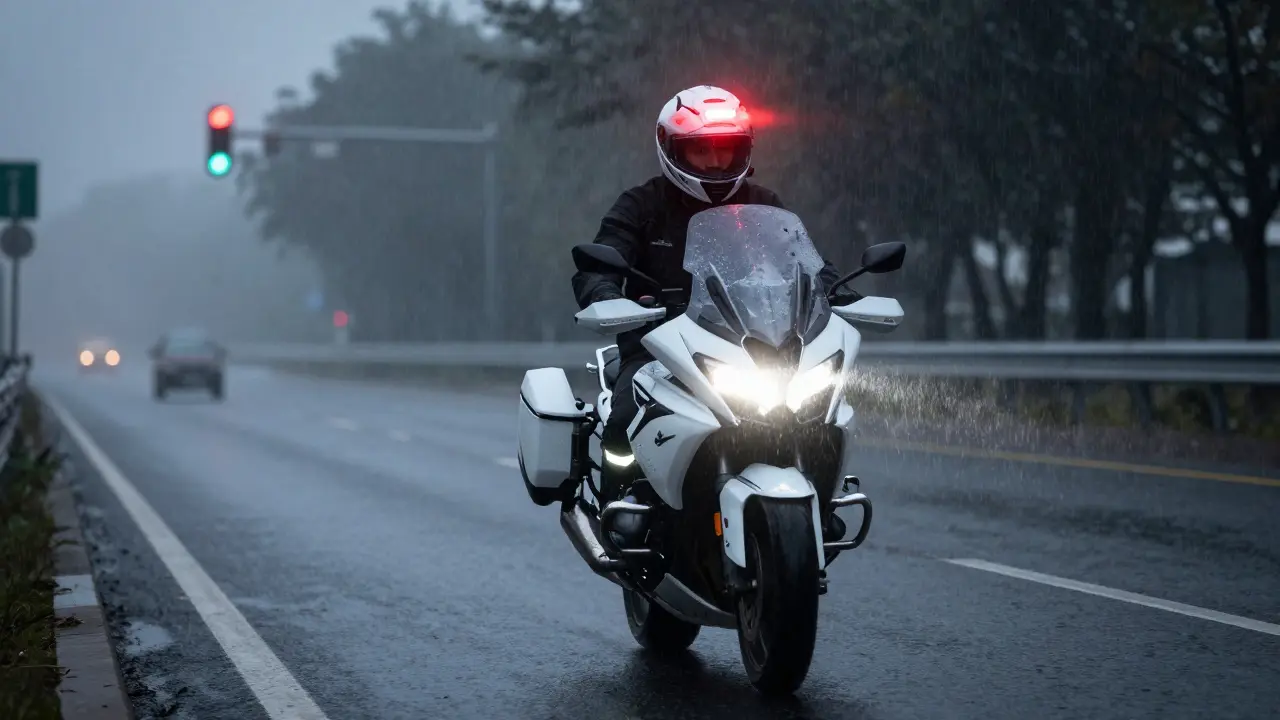
Riding conditions dictate your gear choice. On sunny days, fluorescent yellow or orange dominates. In the rain, water droplets scatter light, making colors blur. You need stronger contrast here. White pants on dark wet roads work well. Heavy snow or fog requires red reflectors for depth perception. Always adjust your kit based on the forecast. A layered approach allows you to add high-vis vests over your leathers quickly. Never ride in plain street clothes on public roads. Regular clothing absorbs light; safety gear reflects it.
Legal Requirements and Insurance
In the UK, wearing high-visibility clothing isn't strictly mandated by law for motorcycles, unlike construction sites. However, insurance companies may deny claims if your gear was deemed inappropriate for the conditions. If a claim states you were wearing black jeans on a stormy evening, coverage becomes shaky. Insurers prefer proof of risk mitigation. Carrying high-vis gear demonstrates due diligence. It shows you planned for the worst scenario. This proactive stance can save thousands of pounds during an injury claim process.
Next Steps for Riders
Start by auditing your current wardrobe. Are you riding in dark clothing? Swap out those pieces immediately. Invest in a modular jacket that zips together with trousers. This creates a full suit of armor. Add LED accessories if you haven't already. Practice stopping distances in a parking lot to understand your blind spots. Finally, share this knowledge with local riding groups. Safety improves the whole community.
Is neon green better than fluorescent orange?
Both colors are highly visible during daylight. Fluorescent orange is often preferred for urban riding because it contrasts strongly against city structures and foliage. Neon green performs exceptionally well on greenery-heavy routes or rural backgrounds. Ultimately, personal preference matters less than consistent usage of the bright material.
How often should I replace reflective gear?
Inspect your gear annually. Washable reflective strips last longer than adhesive ones. If the fabric backing tears or the material peels, replace the item immediately. Generally, professional-grade gear lasts three to five years depending on usage frequency.
Do LED lights distract other drivers?
Properly rated LED lights should not flash excessively. Fast strobe patterns can cause temporary blindness. Constant flashing or slow pulses are safer options. Always ensure your rear light mimics standard traffic brake signals to avoid confusion.
Can I use reflective tape on non-motorcycle clothing?
You can apply tape, but it is less durable than woven material. Adhesive-backed tape can lose grip in heat or heavy rain. For serious commuting, buying purpose-built motorcycle gear is safer. DIY modifications offer a basic level of protection but not certified safety ratings.
Does high-visibility gear improve survival rates?
Statistics suggest yes. Accidents caused by "looked but failed to see" errors drop significantly with proper attire. While it doesn't guarantee immunity from collision, early detection gives drivers time to react and slows reaction times down.
Comments
sonny dirgantara
Honestly i think most peple dont wear enugh bright colrs when they ride their bikes.
March 27, 2026 at 20:01
Andrew Nashaat
Most riders simply ignore basic laws of optics!
This negligence leads directly to fatal accidents. The data does not lie about survival rates. Passive visibility is insufficient on its own. Active lighting demands battery attention constantly. You cannot cut corners on safety protocols. Regulatory bodies enforce these rules for a reason. Failure to comply indicates poor judgment! Reflective tape degrades over time inevitably. Inspect your vest weekly without fail. Neglect invites disaster onto your path! Responsibility remains with the individual operator alone. Never blame the driver for missed visual cues. You made yourself invisible initially. Accept this harsh reality immediately. Protect yourself with certified equipment today!
March 28, 2026 at 11:51
Akhil Bellam
Your scolding tone reveals a profound lack of empathy for working class commuters who cannot afford premium woven textiles. This elitist perspective overlooks the financial barriers inherent to the industry. True safety advocacy acknowledges economic disparity. Condescending lectures rarely inspire behavioral change among the masses.
March 29, 2026 at 04:58
Janiss McCamish
ISO 20480 is the standard to watch for certification compliance. Ensure vendors display correct labeling. Verification prevents false claims. Safety relies on verified performance.
March 30, 2026 at 04:06
Megan Blakeman
I totally agree with that approach :)
Checking labels really makes me feel safer knowing what I bought actually works! :)
March 30, 2026 at 20:42
Lauren Saunders
One might argue that aesthetics should also be considered alongside utilitarian function in any comprehensive gear review. Functionality alone rarely sustains long-term adherence to safety regimes. A balance between form and protection yields superior outcomes.
April 1, 2026 at 11:51
Pamela Tanner
The distinction between passive and active systems is indeed quite significant regarding operational environments. Proper terminology assists in clearer communication regarding protective capabilities. Precision in language enhances understanding of technical specifications.
April 2, 2026 at 10:27
Nathan Jimerson
Riding motorcycles is genuinely a fantastic hobby for many enthusiasts. The thrill of speed brings a sense of freedom to the rider. However, we must prioritize protection above mere aesthetic choices. Wearing bright clothing changes how others perceive our presence. Drivers scan the road quickly while commuting through city streets. Bright colors capture the eye much faster than dark tones do. This simple adjustment increases the margin of safety significantly. We should view gear as essential rather than optional equipment. Families rely on their loved ones returning home safe every night. Risk management starts with personal responsibility on the road. Statistics consistently show lower accident rates with high-vis items. Ignoring basic physics puts unnecessary strain on reaction times. Maintenance ensures the gear works exactly when the moment arises. Regular washing keeps the reflective properties at optimal levels. Ultimately, living to tell the story matters far more than fashion trends. Please consider upgrading your kit before your next season trip.
April 3, 2026 at 23:31
Kendall Storey
EN 1934 certification is non-negotiable for abrasion resistance metrics. Impact energy dissipation thresholds require verified textile testing. Modular integration offers superior coverage against sliding mechanics.
April 5, 2026 at 06:28
Ashton Strong
I would like to extend my regards for sharing such insightful material regarding protective equipment. The detailed breakdown facilitates informed purchasing decisions for prospective riders. Gratitude is expressed for the educational value provided herein.
April 6, 2026 at 21:41
Amber Swartz
This is exactly why I refuse to ride during rush hour ever again. The stress levels become completely unmanageable for anyone with half a brain. Why put your body in harm's way when the odds are stacked so heavily against us?
April 8, 2026 at 03:27
Richard H
Our roads are better than those overseas locations. Infrastructure quality dictates visibility requirements here. Domestic standards exceed foreign benchmarks significantly.
April 8, 2026 at 12:48
Steven Hanton
Perhaps considering both options could yield beneficial results for the group dynamic. Local conditions vary greatly depending on geographic location. Flexibility in strategy allows for better adaptation to changing weather patterns.
April 10, 2026 at 01:33
ravi kumar
It is quiet here but I feel the gear helps silently. Watching others ride makes me appreciate the preparation. Safety is a shared burden among the community.
April 11, 2026 at 22:17
Lauren Saunders
Silence does not equate to safety in the grand scheme of traffic dynamics. Visible assertiveness creates a psychological barrier between vehicle operators. Quiet confidence is insufficient when facing distracted motorist populations.
April 13, 2026 at 15:22